Use this as a starting estimate
A calorie result is an estimated starting range, not a prescription. Adjustments may be needed for body condition, age and life stage, neuter status, activity, medical conditions, food calorie density, and weight trend over time.
The short answer
Feed a kitten a complete food labeled for growth or all life stages, follow the package as a starting guide, and adjust with veterinary monitoring of growth and body condition. Kittens do not have the same feeding needs as adult cats.
Use the calorie calculator only as an estimate and do not treat its adult-oriented result as a kitten prescription.
Why kitten feeding is different
Kittens are growing, developing, and often highly active. Their nutritional needs and capacity for each meal differ from those of a mature cat. A food intended only for adult maintenance should not be assumed to support growth, even if a kitten is willing to eat it.
Age alone does not produce one correct number of cans or grams. Current weight, growth rate, body condition, activity, health, whether a kitten has been spayed or neutered, and the calorie density of the exact food all influence the practical plan. Package directions provide a starting point, while repeated growth and body-condition checks show whether it remains appropriate.
Choose a complete growth-appropriate food
Read the nutritional adequacy statement, not just the product name or picture. The main diet should state that it is complete and balanced for growth or for all life stages. Products labeled for supplemental or intermittent feeding should not make up the entire diet.
Check the calorie statement and package size at the same time. Two kitten foods can provide different calories per can, pouch, cup, or gram. If you change recipe, texture, or brand, recheck both the feeding guide and calorie density rather than carrying the old portion forward.
Wet, dry, and mixed feeding can all be practical when the foods are nutritionally appropriate. Wet food supplies water with meals; dry food is easy to weigh and use in feeders. Mixed feeding requires one combined daily plan so two full allowances are not served together.
A safer kitten-feeding workflow
- Confirm the food is appropriate for growth.
- Read the package directions for the kitten's size and age.
- Divide the daily amount into consistent meals.
- Track growth, body condition, appetite, and stool changes.
- Review the plan at veterinary visits.
Younger kittens may need more frequent meals. As they mature, their food and schedule can change; transition gradually and follow professional advice.
1. Establish age and current weight
Use reliable adoption or veterinary records when available. A veterinarian can help estimate age when history is unknown and can check for health issues that affect feeding. Weigh the kitten with a consistent method and record the date rather than relying on memory.
2. Read the exact package guide
Kitten feeding charts may be organized by age, current weight, or expected adult size. Follow the manufacturer's units carefully and determine whether the amount refers to one meal or the entire day. If feeding more than one product, do not use each chart as though it were the only food.
3. Divide the daily amount
Small, regular meals are often practical because young kittens may not comfortably eat a large portion at once. The number of meals can change as the kitten matures. Divide the stated daily amount rather than repeating it at every meal.
4. Measure and record
Weigh dry food in grams when practical, and track partial cans or pouches consistently. Include treats and food used for training. A daily container or checklist helps prevent multiple caregivers from providing duplicate meals.
5. Monitor growth and adjust with guidance
Record weight at sensible intervals and ask your veterinary team to assess body and muscle condition. Growth should not be managed by chasing a universal chart alone. A kitten can gain weight while still needing closer assessment of body condition, development, or health.
How often should a kitten eat?
Very young kittens generally need smaller, more frequent opportunities to eat than adults. The appropriate schedule depends on age, weaning status, health, and the food. A newly weaned kitten may need a different routine from an adolescent approaching adulthood.
Choose times the household can maintain. Timed feeders can help with measured dry meals, and feeders designed to keep wet food appropriately cool may be useful when operated according to their instructions. Do not leave wet food at room temperature for extended periods.
Predictable meals make appetite easier to observe. If several kittens live together, watch that each one eats rather than assuming an empty shared plate means equal intake.
Wet food, dry food, or both?
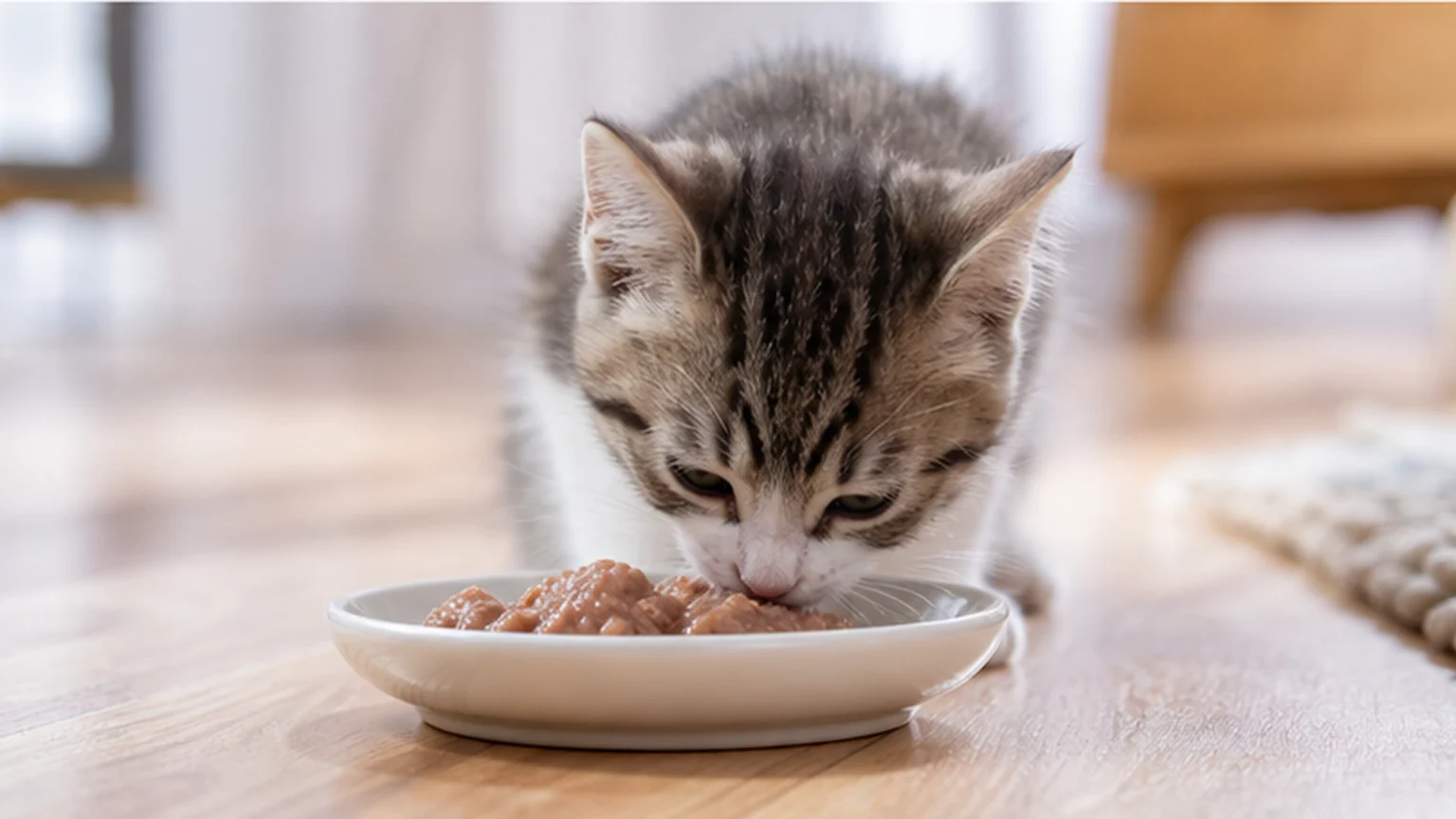
The format matters less than nutritional adequacy and total intake. Wet food may be easy for a newly weaned kitten to eat and contributes water. Dry food is convenient for measured small meals and food puzzles once a kitten can use them safely.
For mixed feeding, allocate the day before serving. If wet meals provide part of the package-guided or veterinary-reviewed allowance, reduce dry food accordingly. Treats should remain a small, tracked part of the routine so they do not crowd out complete growth food.
Provide fresh water regardless of food format. Use stable, shallow bowls in accessible places, refresh them regularly, and keep them away from litter trays.
Monitor more than the number on the scale
Weight trend is useful, but body condition, muscle, appetite, stool, coat, energy, and development provide context. Use the same scale and similar timing when practical, and record results so a veterinary professional can interpret the pattern.
Do not respond to one reading with a sharp portion change. First confirm the scale, food, label, and measurement method. Check whether the kitten shares food, receives unrecorded extras, or leaves meals unfinished.
A noticeably round abdomen is not proof that a kitten is simply well fed. Likewise, a highly active kitten is not automatically receiving enough. Concerns about appearance, growth, or appetite deserve an examination rather than a home diagnosis.
Treats and human food
Use treats sparingly and choose products appropriate for kittens. Kibble from the measured daily allowance can be used for simple training or enrichment. Avoid making the diet depend on table scraps, milk, or improvised supplements.
Cow's milk is not a necessary kitten food and can cause digestive upset in some cats. Orphaned, unweaned, or incompletely weaned kittens require specialized guidance and an appropriate kitten milk replacer—not a general article's meal plan. Contact a veterinarian or experienced rescue professional promptly.
Transitioning foods
When possible, change food gradually over about a week by increasing the new food while reducing the old. A slower transition may be appropriate for a hesitant kitten. Keep meal times and measurements consistent so you can distinguish preference from a broader appetite problem.
Never try to force acceptance by allowing a kitten to go without eating. If a kitten refuses food, eats much less, or develops persistent digestive signs, seek veterinary advice.
Common kitten-feeding mistakes
- Feeding an adult-maintenance food as the complete diet.
- Treating the package's daily amount as the amount for every meal.
- Combining full wet and dry feeding-chart allowances.
- Using an adult calorie estimate as a precise kitten prescription.
- Letting several kittens share food without observing individual intake.
- Adding supplements without professional guidance.
- Making a sharp restriction because a kitten looks round.
- Waiting through persistent poor appetite or abnormal growth.
Ask a veterinarian promptly if a kitten is not eating, has persistent vomiting or diarrhea, is weak, or is not gaining appropriately. Do not place a kitten on a weight-loss diet or supplements without veterinary guidance.
Frequently asked questions
How many cans should a kitten eat?
There is no universal number. Check calories and the growth-feeding directions on the exact package, account for any other food, and review growth and body condition with a veterinarian.
Can a kitten eat adult cat food?
An occasional taste is different from relying on it as the complete diet. The main food should carry a nutritional adequacy statement for growth or all life stages unless a veterinarian directs otherwise.
When should a kitten switch to adult food?
The timing depends on development, product guidance, and veterinary assessment rather than one universal birthday. Plan a gradual transition with your veterinary team.
What if one kitten eats the others' food?
Use separate bowls and supervised spaces, or feed kittens in different rooms. Individual observation matters when growth rates, appetites, or portions differ.
Key takeaway
Feed kittens a complete growth-appropriate food, use the exact package directions as a starting point, and divide the daily amount into manageable meals. Measure consistently and monitor growth, body condition, appetite, and digestion. Because kittens can change quickly, use veterinary review—not an adult formula or universal serving size—to guide meaningful adjustments.
Continue with feeding frequency, daily calorie estimates, and the main feeding guide.
Estimate your cat's daily calorie range
Use PurrWise's calculator for a practical starting estimate, then compare it with body condition and weight trend.
Sources & Scientific References (3)
Share this guide
Help another cat parent find it.