The short answer
Choose a low-dust, unscented litter that your kitten can enter easily and will reliably use. There is no universal best material; safety, supervision, cleaning, and preference matter more than marketing claims.
For a newly adopted kitten, begin with the litter and box style they already know when possible. Familiarity reduces simultaneous changes. You can compare or transition later after the kitten is eating, resting, and toileting reliably.
Kitten Litter Types Compared
| Type | Potential advantages | Trade-offs to consider |
|---|---|---|
| Non-clumping clay | Simple, widely available | Heavier; full changes may be frequent |
| Clumping clay | Easy urine removal | Dust varies; supervise kittens that mouth litter |
| Paper pellets | Often low dust and light | Texture differs from sand-like litter |
| Wood pellets or granules | Absorbent with a distinct texture | Scent and breakdown vary; some kittens dislike pellets |
| Plant-based clumping litter | Lightweight options and easy scooping | Texture, dust, fragrance, and ingestion risks vary |
| Silica crystal litter | Absorbent and lightweight | Hard texture or sound may deter some kittens |
Product category does not guarantee safety or preference. Read the label, check the kitten's age and behavior, and supervise the introduction.
What to look for
- A box with a low enough entry for the kitten to reach comfortably.
- Minimal fragrance and dust.
- A texture the kitten accepts.
- Easy daily scooping and regular full cleaning.
- A backup option if the kitten avoids the first litter.
Unscented and Low-Dust Are Practical Starting Points
Strong fragrance may be pleasant to people but overwhelming or unfamiliar to a kitten. Odor control should come primarily from scooping, suitable box numbers, ventilation, and cleaning rather than perfume.
All loose litter creates some particles, but visible clouds, residue on the kitten, or coughing during pouring are reasons to reconsider the product and handling. Pour gently with the kitten away from the box and follow package instructions.
“Natural” does not automatically mean dust-free, edible, or universally safe. Plant-based materials can still be fragranced, dusty, or tempting to chew.
Clumping or Non-Clumping?
Clumping litter makes urine easier to remove and helps caregivers notice output. Non-clumping litter avoids firm clumps but may require more frequent full replacement. Neither is the universal answer for every kitten.
Very young kittens explore with their mouths and may lick litter from paws. If a kitten repeatedly eats litter, remove access to that product, provide a safe temporary setup, and contact a veterinarian. Persistent ingestion can reflect behavior, nutrition, or health concerns.
Ask the adoption organization and veterinary team what they recommend for the kitten's age, development, and history. Follow product age restrictions.
The Box Matters as Much as the Litter
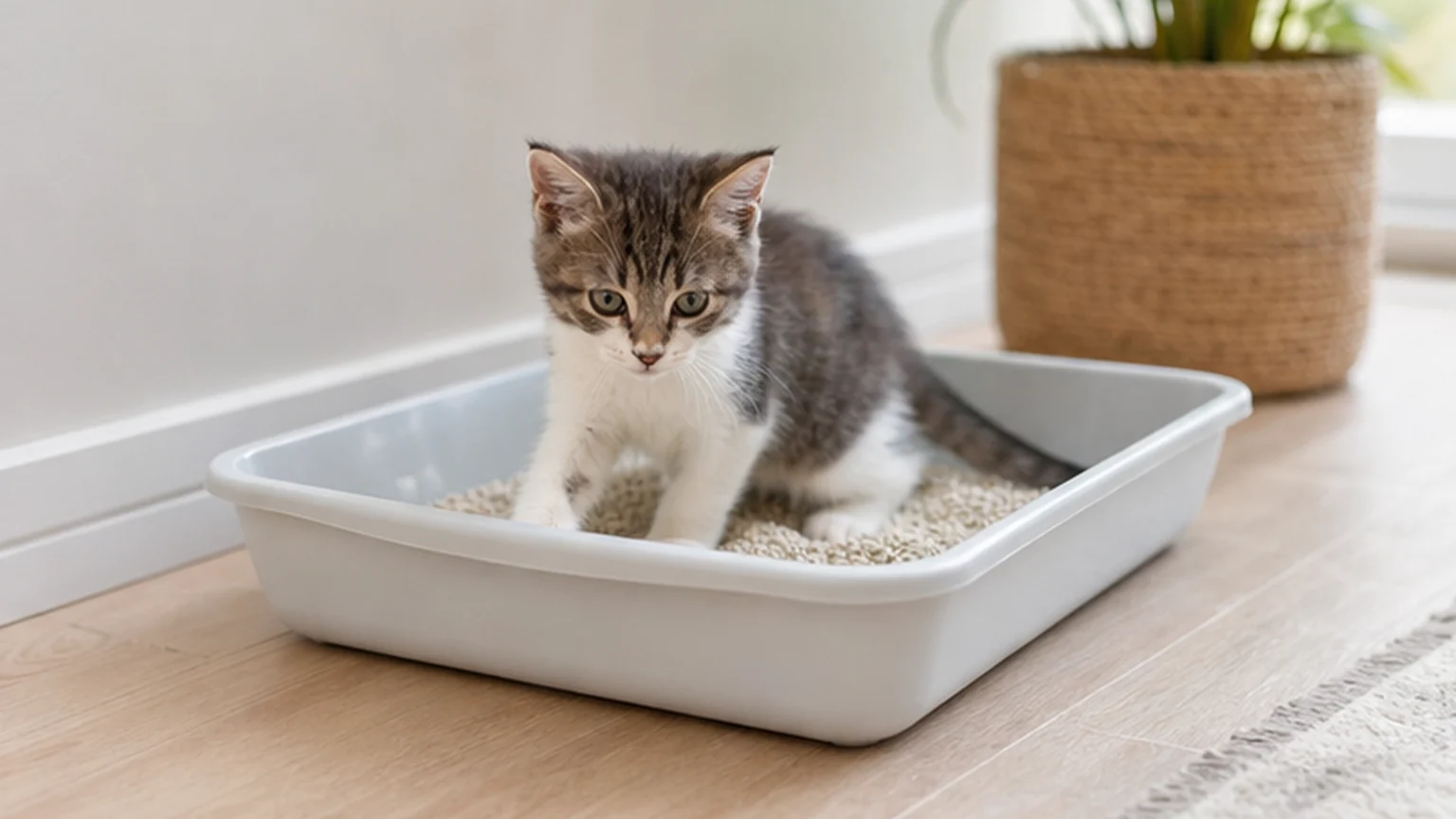
A kitten may avoid a reasonable litter if the box is difficult to enter. Use a low entry, stable base, and enough floor space to turn and dig. A large box with one safely lowered entrance may last longer than a tiny kitten tray.
Avoid liners that catch claws or slide unless the kitten uses them comfortably. Covered boxes can contain mess but may trap odor and reduce visibility or escape routes. Start with an open box when unsure and offer choice before removing alternatives.
Some owners start with the litter used by the shelter or breeder and transition gradually. Keep the box away from food and in a quiet, accessible location.
How to Change Litter Gradually
Do not change litter, box style, and location at the same time unless safety requires it. Either add a second box with the new litter beside the familiar setup or mix increasing amounts of the new product over several days.
Watch which box the kitten chooses and whether digging, posture, and covering remain comfortable. If avoidance begins, restore the last accepted setup and reconsider the texture, scent, depth, box, or location.
Never place a kitten in the box and hold them there. After waking, eating, or active play, calmly show the box location and allow voluntary use. Reward normal exploration without interrupting elimination.
Litter Depth and Cleaning
Follow product instructions and begin with a moderate depth that allows digging without making the kitten wade through loose material. More litter is not always better: very deep substrate can feel unstable and creates unnecessary tracking.
Scoop urine and stool at least daily and more often when possible. Add fresh litter only after removing waste. Wash the box on a routine suited to the product using a mild method, rinse well, and avoid strong residual fragrance.
Do not use ammonia-based odor as a reason to add perfume. Persistent odor usually means waste, box number, litter depth, ventilation, or cleaning needs attention.
Replace boxes that are deeply scratched, cracked, unstable, or impossible to clean. Keep a spare scoop and box available for accidents, isolation, or product changes.
How Many Boxes Does a Kitten Need?
A common household starting point is one box per cat plus one extra, distributed across separate locations. A single kitten in a small starter room may begin with one immediately accessible box, but additional access becomes useful as the home expands.
Several boxes lined up together behave like one location. Put them where the kitten spends time, including different floors when needed. Each route should be open and not easily guarded by another pet.
Prevent Common Accidents
Limit a newly arrived kitten to a comfortable starter area containing all essential resources with sensible separation. Too much territory too quickly can make the box hard to find.
Clean accidents promptly with a product appropriate for the surface and keep the kitten away until it is safe and dry. Do not punish, rub the kitten's nose in waste, or carry them angrily to the box. Punishment can create fear without explaining the preferred location.
If the kitten repeatedly chooses one inappropriate surface, add a box there temporarily while checking the existing boxes for access, cleanliness, texture, or social pressure.
Multi-Cat and Multi-Kitten Homes
Watch individual use rather than assuming every kitten shares comfortably. One animal can block a route, chase another after toileting, or occupy the preferred box. Spread boxes so they cannot all be controlled from one position.
Use box size and entry heights appropriate for every cat. An adult housemate may need a larger box while the kitten needs a lower entrance. Separate options can satisfy both.
Common Litter-Selection Mistakes
- Choosing fragrance to mask inadequate cleaning.
- Switching litter, box, depth, and location all at once.
- Using a high-sided box the kitten cannot enter.
- Providing one box in a hard-to-reach laundry room.
- Assuming “natural” means safe to eat.
- Punishing accidents.
- Letting several cats share one poorly placed box.
- Treating straining or diarrhea as a preference issue.
If a kitten repeatedly strains, cries, has diarrhea, or stops using the box, contact a veterinarian. Do not assume a litter preference explains persistent urinary or digestive signs.
Seek prompt care for repeated litter-box trips with little or no urine, blood, vomiting, weakness, collapse, or a kitten that is not eating. Keep notes or photos of unusual stool or urine patterns when safe, but do not delay care to gather perfect evidence.
Frequently Asked Questions
Is non-clumping litter always safest for kittens?
It is a common cautious starting option, especially for kittens that mouth litter, but age, product, supervision, and individual behavior matter. Ask your veterinary or adoption team.
Can kittens use scented litter?
Some will, but unscented litter is a simpler starting point and avoids using fragrance to cover waste. Cleanliness matters more than perfume.
Why is my kitten eating litter?
Exploration can occur, but repeated ingestion deserves veterinary advice. Remove the tempting product and do not assume a brand switch alone solves the cause.
When can I switch to adult litter?
There is no universal milestone because “adult litter” is not one category. Choose based on age, behavior, product directions, and veterinary guidance, then transition gradually.
Key Takeaway
Start with an unscented, low-dust litter in a stable, low-entry box, preferably matching the kitten's familiar setup. Supervise mouthing, scoop frequently, provide enough separated boxes, and change texture or type gradually. The best litter is safe, maintainable, and reliably used—not the one with the strongest marketing claim.
See the new cat owner checklist and how many litter boxes a cat needs.
Sources & Scientific References (3)
Feline Environmental Needs: Kitten Litter Selection
American Association of Feline Practitioners • Accessed 2026-07-23
Litter Box Setup for Young Kittens
International Cat Care • Accessed 2026-07-23
Feline Substrate Preferences and Litter Box Hygiene
Cornell Feline Health Center • Accessed 2026-07-23
Share this guide
Help another cat parent find it.