Use this as a starting estimate
A calorie result is an estimated starting range, not a prescription. Adjustments may be needed for body condition, age and life stage, neuter status, activity, medical conditions, food calorie density, and weight trend over time.
The short answer
There is no single calorie number that fits every cat. Life stage, body condition, neuter status, activity, health, and whether the goal is to maintain, gain, or lose weight can all change the estimate.
Use the cat calorie calculator to find a sensible starting range. Then compare that estimate with your cat's body condition and weight trend. The result is a starting point, not an exact feeding prescription.
Estimate your cat's daily calories
The practical workflow is:
- Enter your cat's current weight.
- Select the closest life-stage and activity information.
- Review the estimated daily calorie range.
- Compare it with the calories listed on the exact food label.
- Monitor body condition and weight over time.
A calculator organizes an estimate; it cannot account for every individual difference or medical condition.
Why calorie needs vary
Two cats of the same weight may need different amounts of food. Factors include:
- Age and life stage: Kittens, adults, seniors, and pregnant or nursing cats have different nutritional needs.
- Body condition: An ideal amount depends on whether a cat is underweight, at an appropriate condition, or carrying excess body fat.
- Neuter status and activity: Spaying or neutering and a sedentary or active routine can affect energy needs.
- Health and weight goal: Medical conditions and supervised weight loss or gain require individualized advice.
- Food calorie density: Equal-looking portions of two foods can contain very different calories.
Package feeding directions are broad starting information, not a personalized prescription.
Resting needs versus a daily estimate
Veterinary nutrition calculations often begin with resting energy requirements—the energy needed for essential body functions at rest. That baseline may then be adjusted for life stage, activity, body condition, and other factors.
Those adjustments are where individual variation matters. Treat a mathematical result as an estimate to test and monitor, not a guaranteed correct amount.
Worked example: converting calories into food
Suppose the calculator estimates approximately 200 calories per day. The label says:
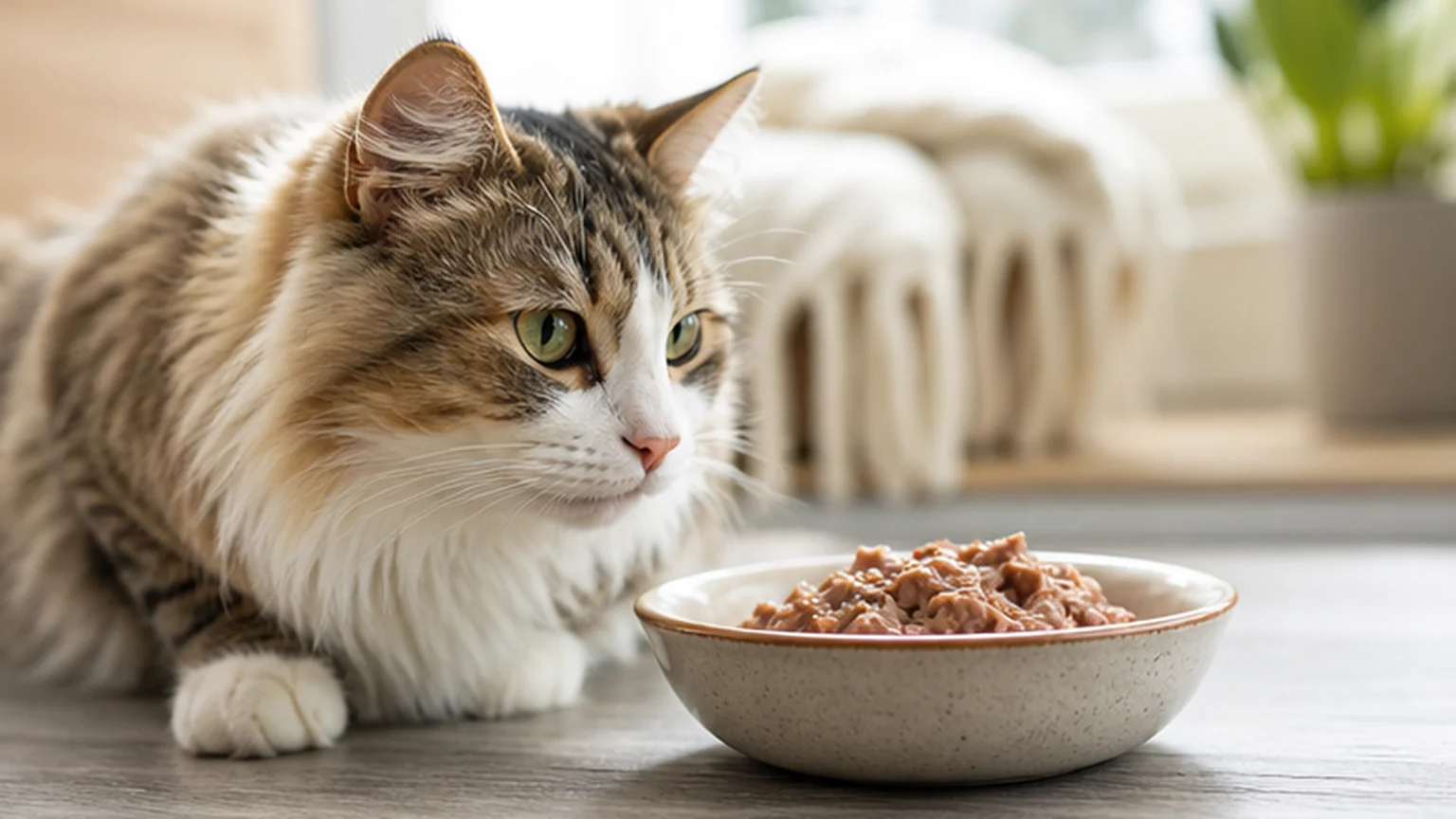
- one can contains 100 calories: about 2 cans;
- one pouch contains 80 calories: about 2.5 pouches; or
- dry food contains 400 calories per cup: about 1/2 cup.
These examples demonstrate the conversion only. They are not universal feeding recommendations. Include treats, toppers, supplements with calories, and food offered by other household members.
Convert calories into a portion
Find the calorie statement on the package. It may be listed per can, pouch, tray, cup, kilogram, or gram. Then use:
Daily calorie estimate ÷ calories per unit = daily amount
For food listed by kilogram:
Calories per kilogram ÷ 1,000 = calories per gram
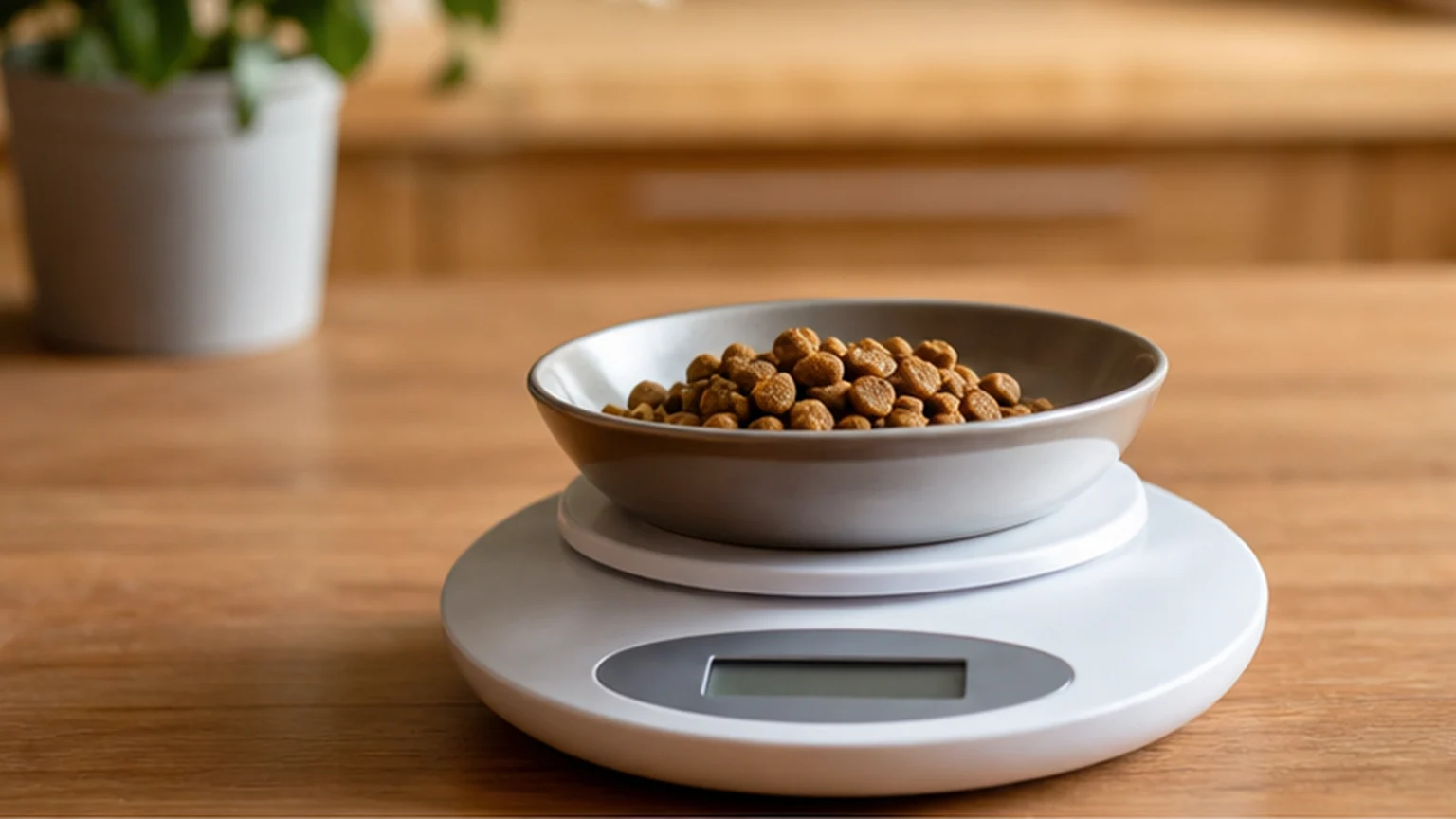
Weighing dry food in grams is often more consistent than estimating with a household cup. For wet food, check the exact recipe and package size because calorie amounts vary.
Include treats and extras
Treats add to the daily total. If a cat receives 20 calories from treats, those calories should generally be included rather than added on top of the full food allowance. Unmeasured extras can make weight gain difficult to explain.
Read the calorie statement carefully
The feeding table on a package and the calorie statement answer different questions. The feeding table suggests a broad starting amount, while the calorie statement tells you how much energy the food contains. Look for wording such as kilocalories per can, pouch, cup, kilogram, or gram. In everyday feeding discussions, one kilocalorie is commonly called one calorie.
Package sizes and recipes matter. Two cans from the same brand may have different weights or calorie densities, and a “cup” on one label cannot be assumed to match another product. Recheck the label when changing flavor, texture, package size, or formula rather than transferring the old portion automatically.
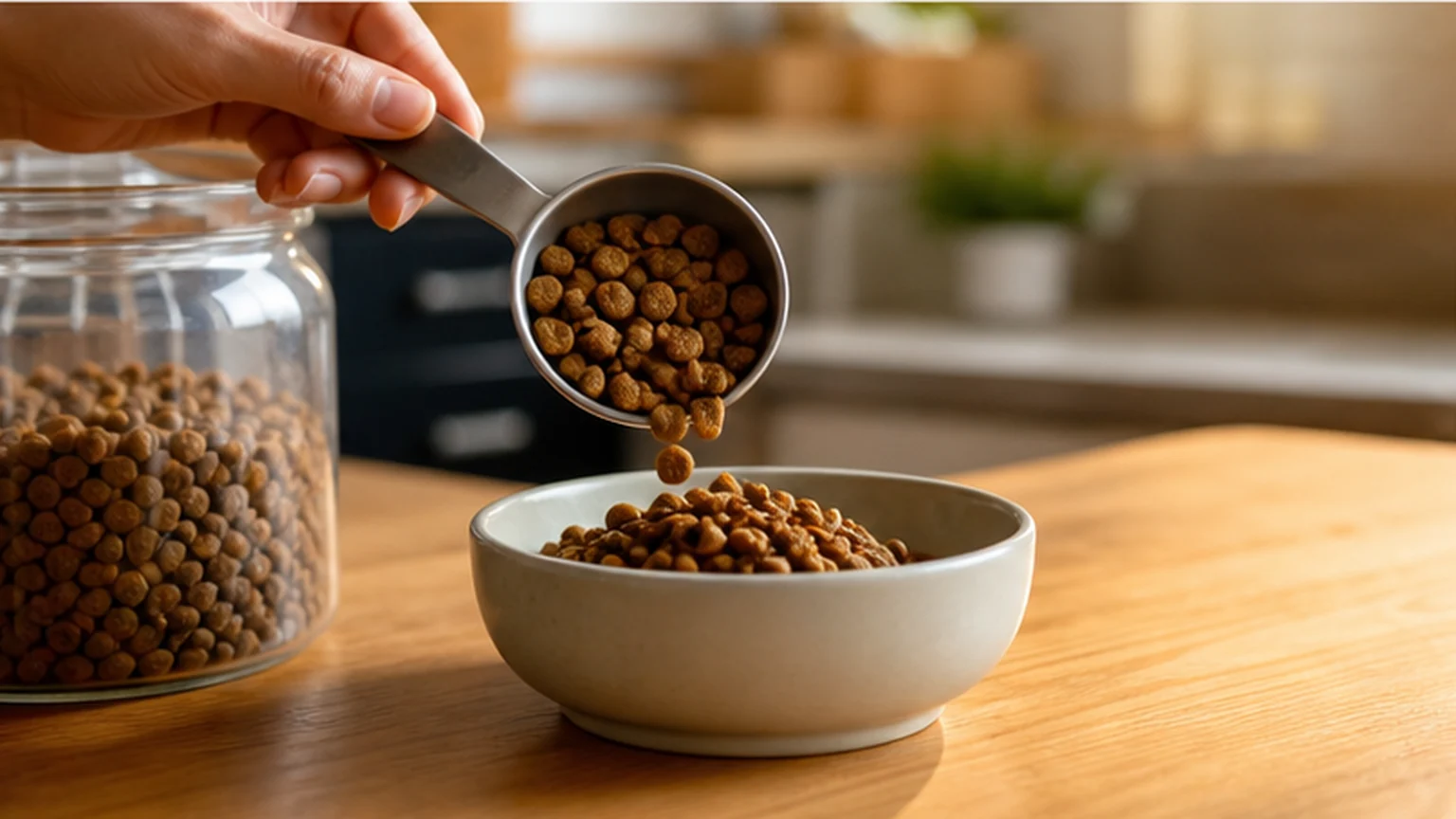
For dry food, weighing grams is usually the clearest approach. If the label lists only calories per cup, use the manufacturer's stated cup weight when available. Avoid guessing that every household scoop holds the labeled cup amount. For wet food, record how much of a can or pouch is actually served, including any portion saved for later.
Build a repeatable feeding routine
A useful calorie estimate becomes meaningful only when the daily routine is consistent enough to evaluate. Decide who feeds the cat, how each portion will be measured, and where treats fit into the total. In multi-person households, a simple checklist or container holding the day's measured allowance can prevent accidental double feeding.
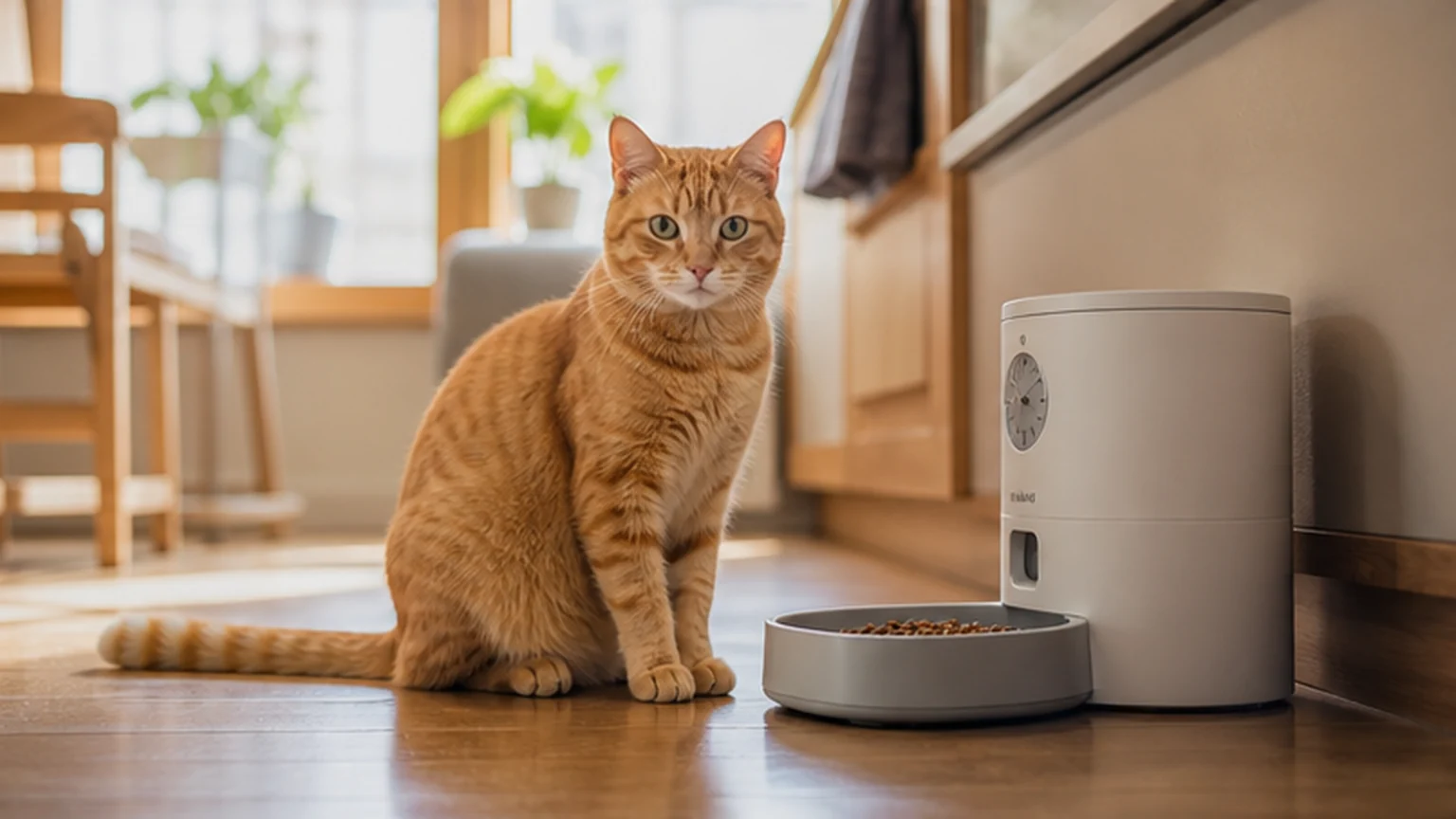
Dividing the daily amount into several meals may suit a cat that prefers small portions. Timed feeders can help with scheduling, while puzzle feeders can add activity for cats that eat dry food. These tools do not change the calorie total; they change how and when it is delivered.
In a multi-cat home, shared bowls make individual intake difficult to see. Separate rooms, supervised meals, or microchip feeders can help when cats need different portions. Clear separation is especially important if one cat routinely finishes another cat's food.
Use body condition and weight trend
Measure food the same way each day, weigh your cat at regular intervals when practical, and watch gradual body-condition changes around the ribs, waist, and abdomen. Record major appetite or weight changes and discuss unexpected trends with a veterinarian.
Do not make aggressive calorie reductions to produce faster weight loss. Cats need a nutritionally complete diet, and inadequate intake can be dangerous.
When and how to adjust the starting estimate
Do not react to a single scale reading by repeatedly changing the portion. Body weight can vary with the scale, timing, and normal daily factors. Use the same scale and a consistent method when practical, then look for a trend. Body condition, appetite, energy, and veterinary assessment add context that a number alone cannot provide.
If weight is moving away from the intended direction, first check the measurements. Confirm the current food's calorie statement, account for treats and shared food, and make sure every household member follows the same plan. If the records are consistent, ask a veterinarian how to adjust the amount safely. Small, monitored changes are more informative than large swings.
Kittens and pregnant or nursing cats should not be managed as scaled-down adults. Their needs change with growth and reproduction. Senior cats are also not a single nutritional category: some maintain weight easily, while others lose weight or muscle and need assessment.
Common calorie-counting mistakes
- Using volume without checking density: Half a cup of one kibble may contain a different number of calories from half a cup of another.
- Adding rather than substituting: A wet-food meal, topper, or dental treat adds calories unless another portion is reduced.
- Following the bag indefinitely: Package guidance is a starting point, not proof that the amount remains right as weight, activity, or life stage changes.
- Ignoring uneaten food: The amount served is not always the amount consumed, especially when wet food dries out or several cats share bowls.
- Chasing an “ideal” number: A calculator cannot replace body-condition assessment, weight trends, and individualized veterinary advice.
When to contact a veterinarian
Ask for individualized guidance when your cat is a growing kitten, pregnant or nursing, underweight or significantly overweight, changing weight unexpectedly, eating noticeably more or less, leaving meals uneaten, has a diagnosed medical condition, or is starting a weight-loss plan. Also ask when the calculator estimate conflicts substantially with current veterinary advice.
Seek prompt veterinary advice when a cat stops eating or consumes much less than usual, especially if the change continues or appears with vomiting, weakness, pain, breathing changes, or other signs of illness.
Calorie results are estimates, not exact feeding instructions. Ask a veterinarian for individualized guidance if your cat is growing, pregnant, losing or gaining weight unexpectedly, or has a medical condition.
Frequently asked questions
Should I feed the exact calculator result?
Treat it as a starting estimate. Convert it using the exact food label, measure consistently, and compare the result with your cat's weight trend and body condition. Individual needs can fall above or below a calculated value.
Do indoor cats always need fewer calories?
Indoor living can be associated with lower activity, but “indoor” does not describe every cat's energy use. Age, play, body condition, neuter status, and individual variation still matter. Use actual monitoring rather than applying one automatic reduction.
Do wet and dry calories count differently?
A calorie represents energy regardless of food format. Wet food often contains fewer calories per gram because it includes more water, while dry food is commonly more energy-dense. Always compare the calorie statements on the specific products.
How often should I reassess the amount?
Reassess when changing foods, package sizes, life stages, activity patterns, or weight goals, and whenever your cat's weight or appetite changes unexpectedly. Routine veterinary visits are also a good time to review body condition and feeding records.
Continue the feeding cluster
Read how much wet food to feed, how much dry food to feed, or the complete cat feeding guide. You can also use the cat calorie calculator again when reviewing a new food label.
Estimate your cat's daily calorie range
Use PurrWise's calculator for a practical starting estimate, then compare it with body condition and weight trend.
Sources & Scientific References (3)
Share this guide
Help another cat parent find it.