Use this as a starting estimate
A calorie result is an estimated starting range, not a prescription. Adjustments may be needed for body condition, age and life stage, neuter status, activity, medical conditions, food calorie density, and weight trend over time.
The short answer
Feed a measured daily amount divided into a routine your cat and household can maintain. The right frequency depends on age, health, food type, appetite, and whether the total daily calories are being controlled.
Use the calorie calculator to estimate the daily amount first; frequency determines how that amount is divided, not how much extra food is added.
Meal frequency at a glance
| Situation | Practical starting consideration |
|---|---|
| Healthy adult cat | Divide the measured daily allowance into a predictable schedule the household can maintain. |
| Growing kitten | Smaller, more frequent meals may be practical; use growth-formulated food and veterinary guidance. |
| Cat that eats too quickly | More small portions or a suitable slow/puzzle feeder may help. |
| Cat that grazes | Offer a pre-measured daily amount so intake remains visible. |
| Multi-cat household | Separate feeding may be needed to know who ate each portion. |
| Medical condition or prescribed diet | Follow the veterinarian's specific timing and food instructions. |
This table describes routine choices, not fixed prescriptions. A cat's age, health, preferences, food format, and household schedule can change what is practical.
Build a practical schedule
- Estimate daily calories.
- Convert calories into wet, dry, or mixed portions.
- Divide the total into consistent meals.
- Include treats and toppers.
- Track body condition and weight trend.
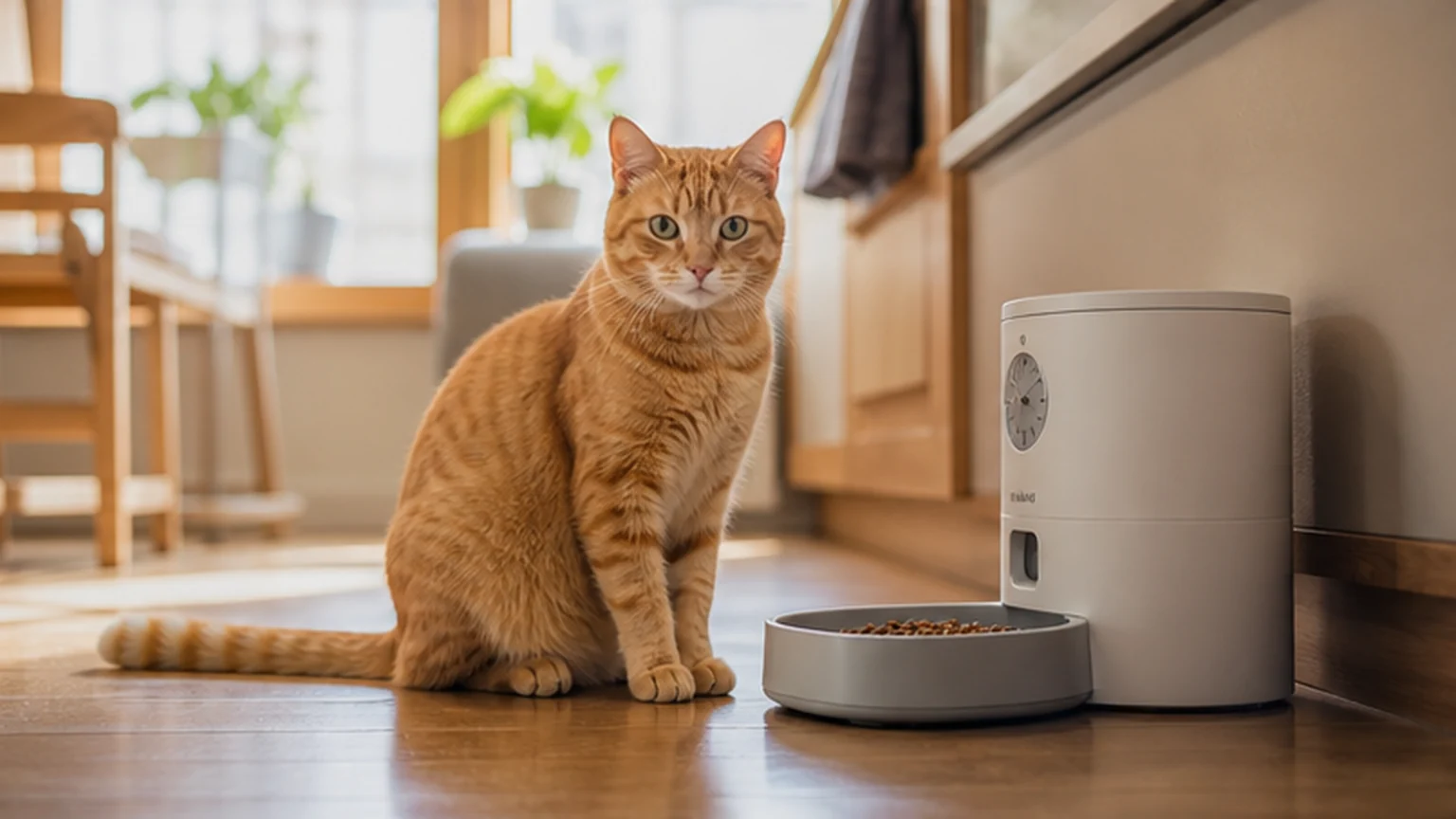
Multiple smaller meals may suit some cats, while others do well with a simpler routine. Automatic feeders can help with consistency but do not replace portion control.
Start with one daily allowance
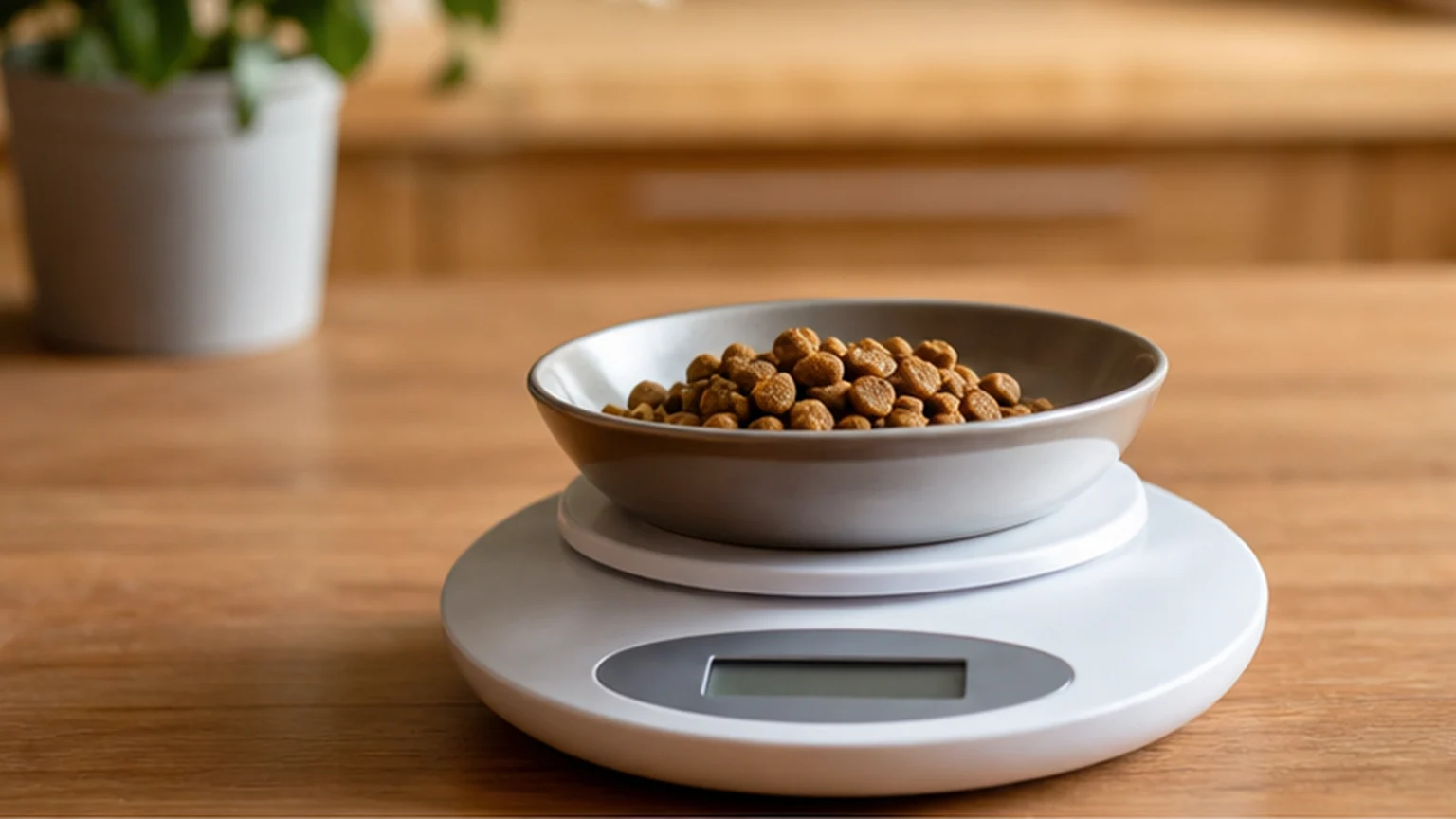
Before choosing times, determine how much food will be offered across the entire day. Read the exact product's calorie statement and count wet food, dry food, treats, toppers, and food used for training or medication.
If the full allowance is divided into four meals, each meal represents part of the same total. Adding a bedtime meal without reducing the earlier portions increases daily calories. Write down the plan so every caregiver uses the same numbers.
Fit meals to the household
A schedule is useful only if it can be followed. Two or three measured meals may work for people who are home at predictable times. A timed feeder can provide additional portions during work hours or overnight. Avoid creating a complex schedule that leads to frequent guessing and topping up.
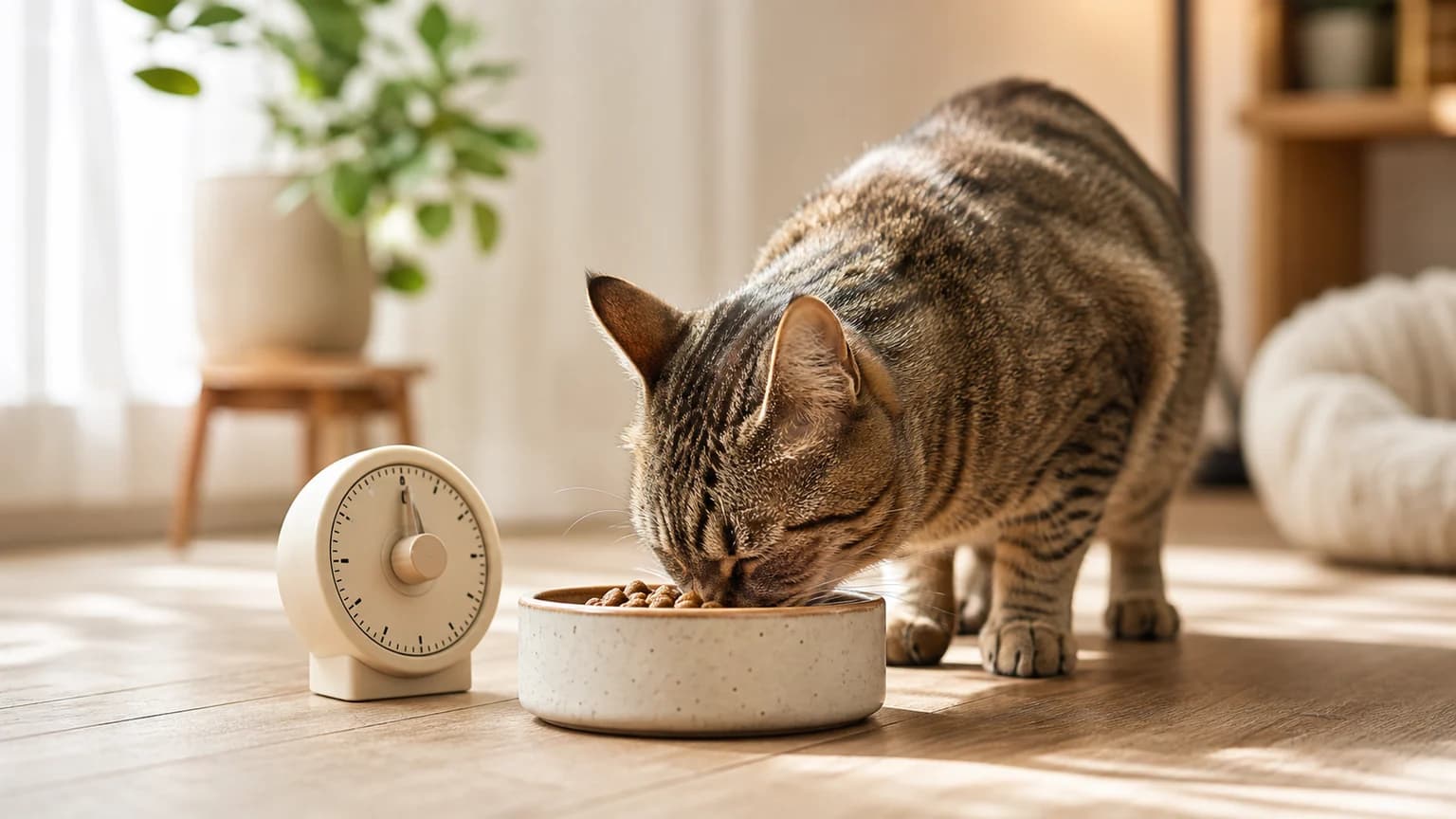
Keep meal times reasonably consistent without expecting minute-by-minute precision. Predictability can reduce confusion and makes a missed meal easier to notice.
Life-stage differences
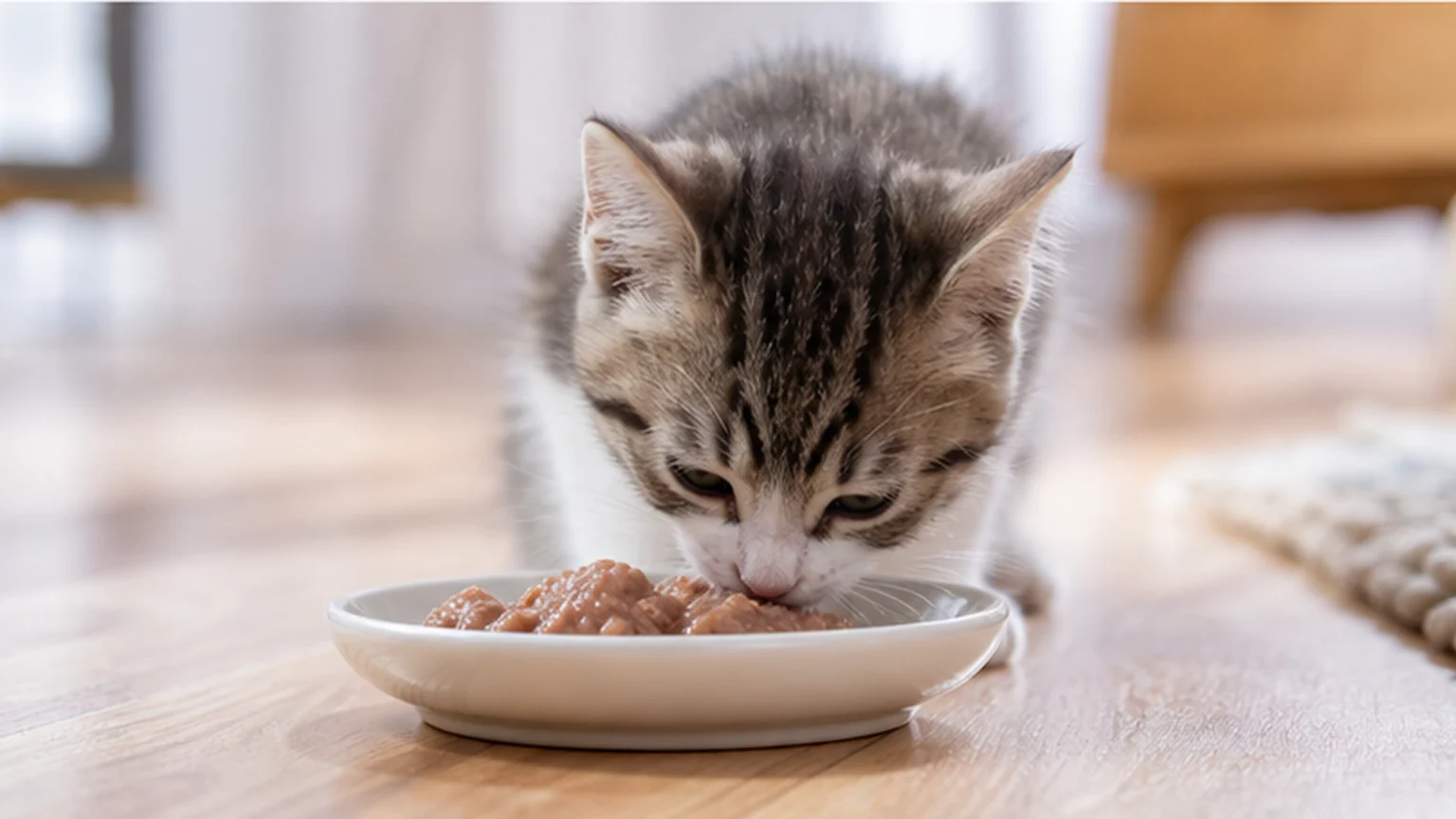
Growing kittens need food appropriate for growth and may need more frequent meals. Adults often thrive on a predictable routine. Seniors or cats with health conditions may need a veterinarian-directed schedule.
Kittens have small stomachs and changing energy needs, so use a food complete for growth and review portions as they develop. Do not simply divide an adult plan into smaller bowls. Your veterinary team can help assess growth and body condition.
Healthy adult cats can follow many workable schedules as long as daily intake and body condition are appropriate. Neuter status, activity, and food calorie density still matter.
“Senior” does not describe one appetite or nutritional need. Older cats may maintain their routine, prefer smaller servings, or develop changes that require assessment. A new appetite or weight change should not be dismissed as normal aging.
Wet food, dry food, and mixed schedules
Wet food is usually served in meals because opened portions require refrigeration and food should not remain at room temperature indefinitely. Offer an amount your cat is likely to finish and follow the package's storage guidance.
Dry food can be used in bowls, timed feeders, or puzzle feeders. Its convenience can make unmeasured grazing easy, so weigh the daily allowance before distributing it. Kibble placed in toys still belongs to the total.
With mixed feeding, assign portions before the day begins. For example, wet meals might be scheduled morning and evening while a measured dry allowance is divided through a feeder. Do not use complete suggested amounts for both formats at once.
Scheduled meals versus free-feeding
Scheduled meals provide clear information about appetite and portions. They can also simplify separate feeding in a multi-cat home. The trade-off is that the household must serve or automate meals reliably.
Free-feeding allows a cat to eat small amounts throughout the day, but an endlessly refilled bowl makes intake difficult to measure. A better-monitored version is to weigh one daily allowance and make only that amount available. Check what remains before refilling.
Free-feeding is especially hard to assess when several cats share a bowl. One cat may eat most of the food while another appears to be grazing normally. Separate rooms, supervised meals, or microchip feeders can provide clearer information.
If your cat wakes you for food
Early waking can become a learned routine when vocalizing reliably makes a person serve breakfast. First verify that the daily allowance and schedule are suitable. Then shift timing gradually rather than adding an extra unmeasured meal.
A timed feeder can deliver a pre-measured early portion without linking food directly to a person getting out of bed. Evening play followed by the planned final meal may also fit some households. Respond consistently; occasional bonus meals can make persistent requesting more likely.
Do not assume all new food-seeking is behavioral. A marked increase in appetite, particularly with weight loss, thirst, restlessness, or other changes, deserves veterinary discussion.
If your cat eats too fast
Divide the same daily amount into smaller portions, spread wet food across a wide suitable dish, or use a slow or puzzle feeder designed for the food type. Introduce puzzles at an easy level so the cat can succeed without frustration.
In multi-cat homes, fast eating may reflect competition. Give each cat a quiet feeding area where another animal cannot approach. Observe the meal rather than assuming a slow feeder alone addresses the cause.
Repeated regurgitation, difficulty swallowing, pain, or other signs require veterinary advice. Do not rely on feeding equipment to explain persistent physical symptoms.
Use the schedule to monitor appetite
A consistent routine creates a useful baseline. Notice whether your cat arrives, begins eating normally, finishes a usual portion, and behaves as expected afterward. Record leftovers rather than estimating from memory.
One skipped bite is different from a meaningful reduction across meals. Cats should not be left to eat nothing while caregivers repeatedly wait for them to “get hungry enough” to accept a new food. Contact a veterinarian promptly if your cat stops eating or consumes much less than usual, particularly with vomiting, weakness, pain, breathing changes, or other illness signs.
Common scheduling mistakes
- Adding meals without dividing the daily allowance.
- Refilling a grazing bowl before checking leftovers.
- Ignoring treats, toppers, and puzzle-feeder food.
- Assuming one schedule suits kittens, adults, seniors, and medically managed cats.
- Letting several cats share food when individual intake matters.
- Changing both food and meal timing abruptly.
- Treating a sudden appetite change as stubbornness.
Do not use a general feeding schedule to manage diabetes, kidney disease, weight loss, pregnancy, or another medical condition. Ask a veterinarian for individualized instructions, and seek prompt advice if your cat stops eating or eats much less than usual.
Frequently asked questions
Is twice a day enough?
It can be a workable routine for some healthy adult cats if the measured daily amount, appetite, and body condition are appropriate. Other cats and life stages may benefit from more divisions.
Are many small meals better?
They can suit feline eating preferences and help some cats pace intake, but the practical benefit disappears if portions are unmeasured or the schedule cannot be maintained.
Can an automatic feeder replace a feeding plan?
No. It delivers food at set times but still needs the correct measured portions, cleaning, reliable operation, and observation of what the cat actually eats.
Should I feed on demand?
Repeated on-demand feeding makes daily intake difficult to track. A predictable schedule plus appropriate attention and enrichment usually provides clearer boundaries. Investigate meaningful new hunger or weight changes.
Key takeaway
Choose meal frequency only after setting one daily allowance. Divide that amount into a schedule suited to your cat's life stage, food format, eating style, and household. Measure every portion, make individual intake visible, and use a consistent routine to notice appetite or weight changes early.
Read how much to feed, kitten portions, and daily calorie requirements.
Estimate your cat's daily calorie range
Use PurrWise's calculator for a practical starting estimate, then compare it with body condition and weight trend.
Sources & Scientific References (3)
Share this guide
Help another cat parent find it.