
The short answer
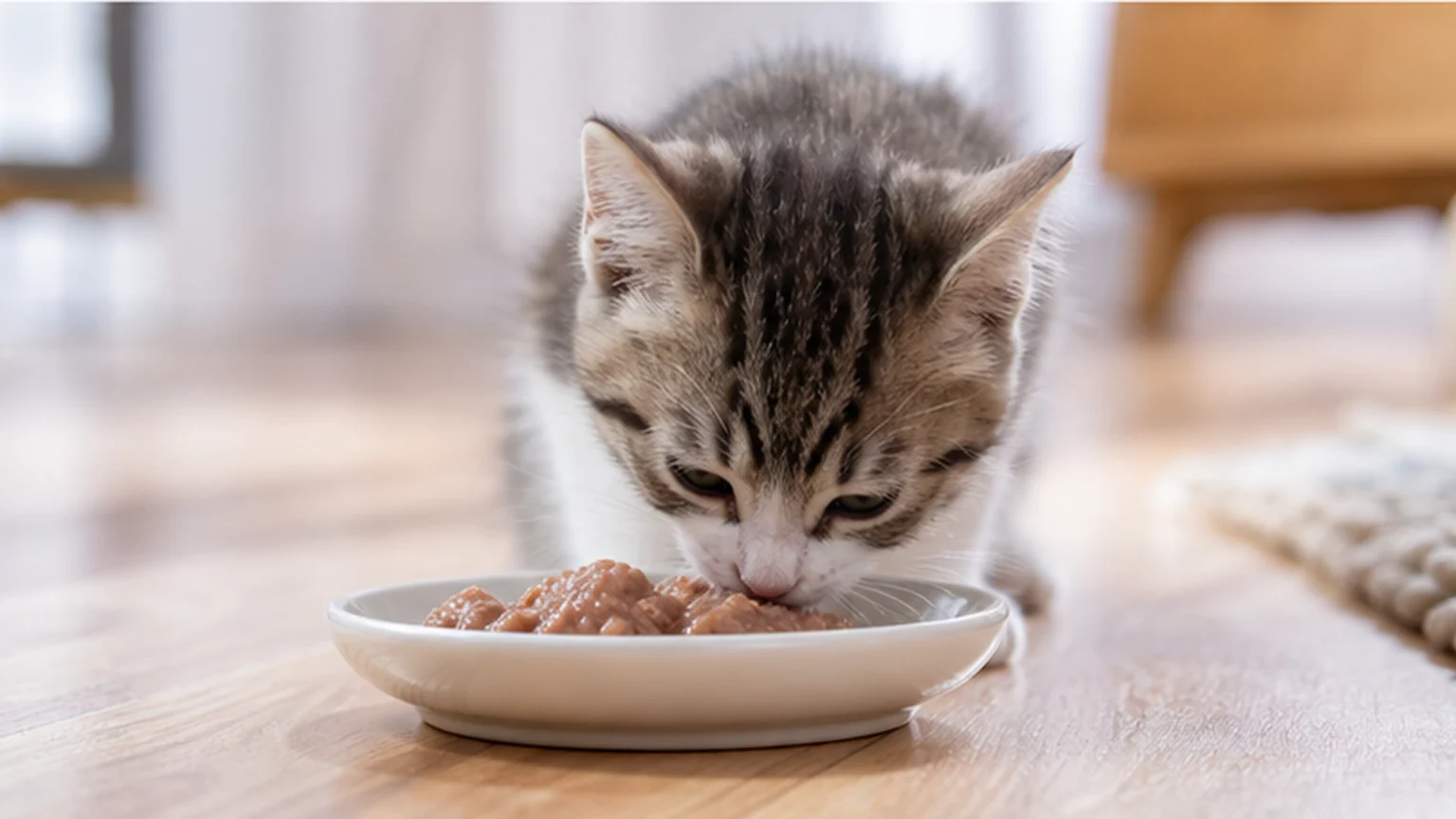
Kitten food and adult cat food are not just marketing categories. Kitten food is a higher-energy formula with more protein, fat, and key minerals like calcium and phosphorus, all aimed at supporting rapid growth. Adult cat food is a maintenance formula for a fully grown cat. Feed a complete and balanced kitten food until your cat is about 12 months old, then switch gradually to adult food.
Why kittens need different nutrition
Kittens do an enormous amount of building in their first year. Their bones lengthen, muscles form, teeth come in, and the brain and eyes finish developing. Because all of that work needs fuel, a kitten's energy requirement per pound of body weight is much higher than an adult cat's. Kittens also have small stomachs, so they cannot simply eat more adult food; they need a concentrated diet that delivers protein, essential fatty acids, and minerals without filling them up too quickly.
Protein is the most obvious difference. Growth formulas are typically higher in protein than adult maintenance formulas. Fat provides dense energy, and the calcium-to-phosphorus balance supports bone development. You will also often see omega-3 fatty acids such as DHA in kitten foods for brain and eye development. Adult foods, by contrast, are designed for a cat whose body is no longer growing. They contain less energy per cup, which helps prevent weight gain in less active adults.
That difference is exactly why food-swapping can cause problems. Offer a growing kitten a steady diet of adult food, and the kitten may struggle to take in enough calories and nutrients. Offer a less active adult cat unlimited kitten food, and the extra calories can quickly show up as extra body weight.
Nutritional experts set different targets for growth and adult maintenance because the needs are genuinely different. The Association of American Feed Control Officials divides complete and balanced cat foods into two nutritional profiles: growth/reproduction and adult maintenance. A food that meets the growth profile is allowed to call itself a kitten food; a food that only meets the maintenance profile is not. So a 'kitten formula' label is not just a smaller kibble in a brighter bag—the nutrient levels have been designed around a standard for growing cats.
What's actually different in the bowl
Here is a simple comparison. This table is a guide, not a prescription; exact numbers on the label should be your final authority.
| Feature | Kitten food | Adult cat food |
|---|---|---|
| Calories | Higher per serving | Lower per serving |
| Protein | Higher, often around 30% or more | Moderate, around 26% |
| Fat | Higher for dense energy | Lower |
| Calcium and phosphorus | Higher for bone growth | Set for maintenance |
| DHA | Often added | Usually not a focus |
| Kibble size | Small, easy to chew | Often larger |
| Life stage claim | Growth or all life stages | Adult maintenance |
This table reflects widely recognized nutritional profiles. The growth profile is more nutrient-dense in almost every category, because the cost of a kitten missing a nutrient is much higher. A gap in calcium or taurine during growth can influence bone development and heart health later on. Once growth is done, the same high-density food becomes more than the adult cat needs.
The "all life stages" label wrinkle
Food labels can be confusing. If a bag says "all life stages," it means the food meets the nutritional requirements for both growth and maintenance. That makes it acceptable for kittens. The catch is that "acceptable" does not mean "ideal for every adult." An all-life-stage food is formulated to support growth, so it tends to be calorie-dense. If an indoor, neutered adult cat eats it in the same amount as kitten food, weight gain is likely. Check the label for an AAFCO statement that says "growth" or "all life stages," and adjust portions to the cat in front of you.
How to read a kitten food label before you buy
A kitten food label should include a nutritional adequacy statement. The best statements come from feeding trials: "Animal feeding tests using AAFCO procedures substantiate that this food provides complete and balanced nutrition for growth." The "formulated" version is also acceptable, but feeding trials are stronger evidence. Look for the words "growth and reproduction" or "all life stages." If the package is decorated with a kitten photo but does not have a clear life-stage statement, keep looking. Also check that the food is appropriate for your kitten's age once it is weaned, which is usually around eight weeks.
When and how to switch to adult food
Most kittens can move to adult food around their first birthday. That timing is flexible. A kitten who is neutered early may need fewer calories soon after the operation, while a large-breed kitten might stay on a growth formula a little longer. Your veterinarian is the best person to set a target date.
When the time comes, do not swap bowls overnight. A sudden change can upset the digestive system. Use a seven-day plan:
- Days 1-2: 75% kitten food, 25% adult food
- Days 3-4: 50% kitten food, 50% adult food
- Days 5-6: 25% kitten food, 75% adult food
- Day 7: 100% adult food
Kittens are small and can become dehydrated quickly. If your kitten refuses food for more than a day, or develops vomiting or diarrhea during a food change, stop the transition and contact a veterinarian right away. This advice is not a substitute for veterinary care.
How much and how often to feed
Most kitten food packages give a suggested daily amount based on age and weight. Use that as a starting point, but adjust for the kitten in front of you. Kittens are individuals: a growing, active kitten may need more; a kitten who prefers to snooze may need less. The best ways to check are body condition and weekly weight. You should be able to feel the ribs with a light touch of fat, and you should see a noticeable waist when you look down at your standing kitten.
Until about six months, kittens often do well with three or four meals a day, or free feeding if the food is dry and the kitten is not overeating. From six months to a year, two or three meals are usually enough. Wet kitten food can be offered, but because it is high in water, it may take more volume to meet calories. If you choose wet, check the label for how many cans per day and divide the amount across meals. Your veterinarian can help you set a target weight and adjust portions as the kitten grows. Remember that treats count toward calories too.
Frequently Asked Questions
Can adult cats eat kitten food?
An adult cat can eat a bite of kitten food now and then, but it should not be a regular meal. Kitten food is calorie-dense, and a sustained extra calorie load can lead to obesity in adult cats.
Can kittens eat adult cat food?
As a main diet, no. Adult food usually has less protein, fat, and calcium than a growing kitten needs. In an emergency, a meal or two is better than nothing, but do not rely on it.
When should I switch from kitten to adult food?
Most cats are ready around 12 months. If your kitten has been spayed or neutered, or if you are feeding a large-breed kitten, ask your veterinarian for a more personal recommendation.
Is grain-free kitten food better?
Not for healthy kittens. There is no evidence that grain-free formulas are more nutritious, and the Food and Drug Administration has investigated a possible link between grain-free diets and heart disease in dogs. For cats, the evidence is less clear, but a standard complete and balanced kitten food is safer and usually cheaper.
Does wet or dry kitten food matter?
Both can be good. Wet food provides extra water, while dry food is convenient and may be more calorie-dense. The most important thing is the life-stage statement, not the texture.
Key Takeaway
Kitten food is built for a specific window of fast growth. It has more calories, protein, and key minerals than adult food, and it should be the main diet until your cat is about a year old. Make food changes slowly, read the label for a growth or all-life-stages statement, and let your veterinarian guide the timing. With the right food, normal-sized portions, and regular weigh-ins, your kitten can grow into a healthy adult cat.
Share this guide
Help another cat parent find it.