The short answer
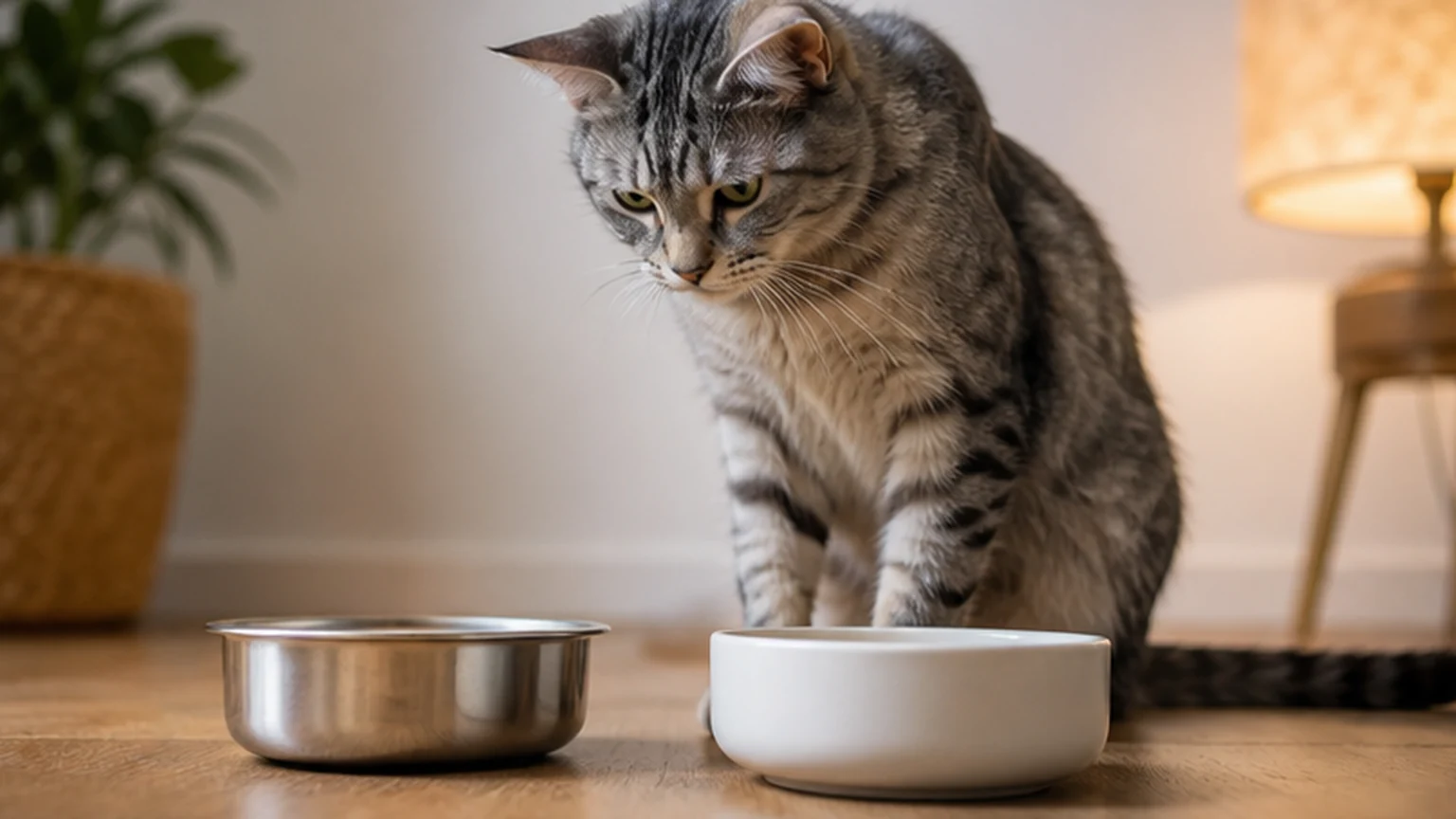
Both stainless steel and ceramic can work well. Choose a stable, easy-to-clean bowl with a shape your cat accepts; the material matters less than hygiene, condition, and fit.
If you want the simplest durable option, good-quality stainless steel is often practical. If your cat pushes light bowls around or you prefer a heavier dish, intact food-safe ceramic may fit better. Inspect either bowl and replace it when damage prevents thorough cleaning.
Stainless Steel vs Ceramic at a Glance
| Feature | Stainless steel | Ceramic |
|---|---|---|
| Weight | Usually light | Usually heavier |
| Stability | May need a non-slip base | Often stable because of its weight |
| Breakage | Resists chips and shattering | Can chip, crack, or break |
| Cleaning | Smooth and generally easy to wash | Easy to wash while glaze remains intact |
| Noise | Tags or kibble may sound louder | Often quieter |
| Design | Usually simple | Wide variety of shapes and finishes |
| Travel | Light and durable | Heavy and more fragile |
| Inspection | Check dents, rust, seams, and base | Check glaze, chips, cracks, and crazing |
Neither column proves a health outcome. The exact product, manufacturing quality, shape, cleaning routine, and cat preference matter.
Stainless steel
Stainless steel is lightweight, durable, and usually straightforward to wash. It is a practical choice for households that want a bowl that tolerates frequent cleaning and is less likely to chip.
Advantages
- Durable for daily handling and travel.
- Smooth surfaces are easy to inspect.
- Many products are dishwasher-safe when the manufacturer says so.
- Less likely than ceramic to crack after a small impact.
- Available in shallow dishes and bowls that fit feeding stands.
Trade-Offs
Light bowls may slide, tip, or move when a cat eats. Choose a wide base or a removable non-slip mat that can be cleaned and dried. Rubber bonded permanently to the bottom can trap moisture or degrade, so inspect the underside as carefully as the food surface.
Metal tags striking the rim can create noise. Some cats ignore it; others prefer a quieter dish. Stainless steel can also dent or develop damaged seams. Replace bowls with sharp edges, persistent rust, peeling coatings, or areas that cannot be cleaned.
The term “stainless steel” covers different products. Buy from a reputable supplier that identifies the bowl for food use. Decorative plating or paint adds another surface that may wear.
Ceramic
Ceramic can be heavier and more stable, with many shapes and designs available. Inspect it regularly for chips or cracks, and replace damaged bowls rather than continuing to use them.
Advantages
- Weight can reduce sliding and tipping.
- Available in many wide, shallow shapes.
- Often quiet during eating.
- Can retain a chosen location without a separate stand.
Trade-Offs
Ceramic can chip or crack when dropped. Fine glaze cracks may be difficult to clean, and an exposed rough edge can collect residue or injure a mouth. Run your fingers carefully around the rim and inspect under good light. Replace damaged dishes rather than sealing or continuing to use them.
Use products sold as food-safe. Handmade, antique, decorative, or unknown ceramics may not have finishes intended for repeated food contact. Follow the maker's cleaning instructions; not every ceramic bowl is dishwasher- or microwave-safe.
Heavier is not always better. A large ceramic bowl is less convenient for travel, and a person with limited grip may find it harder to wash safely. Choose a weight the household can handle without frequent dropping.
Bowl Shape Matters
A wide bowl gives the cat space to approach the food without pressing the face against steep sides. Some cats prefer a shallow plate, while others scatter food from one. Observe actual use rather than treating “whisker-friendly” as a medical requirement.
The bowl should be large enough for the portion without food being packed to the rim. Very deep bowls can hide wet food in corners; very flat plates may allow food to spill. Rounded internal corners are easier to wipe than narrow seams.
Raised bowls are marketed for many benefits, but no one height suits every cat. A stable low bowl works for most routine feeding. Cats with mobility or swallowing concerns need individualized veterinary guidance rather than a generic elevated product claim.
Stability and Feeding Location
Place the bowl on a level, clean surface where the cat can eat without another animal or person blocking the exit. A washable mat can protect flooring and add grip, but it should lie flat and be large enough that the bowl does not slide off.
In multi-cat homes, separate bowls help you monitor appetite and reduce competition. Several bowls placed side by side are still one crowded feeding station. Spread them across suitable locations or feed in separate rooms when individual intake matters.
Keep food away from litter trays and cleaning chemicals. Water can be offered in separate locations so food crumbs do not enter every water bowl.
Cleaning and Replacement
Wash food bowls after wet meals and regularly after dry meals. Empty old food rather than topping up residue. Use hot water and dish-cleaning products appropriate for the bowl, rinse thoroughly, and dry as needed.
Water bowls also develop residue and need routine washing, not just refilling. If using a dishwasher, confirm the product is dishwasher-safe and position it according to the manufacturer's directions.
Replace a bowl when:
- ceramic is chipped, cracked, crazed, or rough;
- stainless steel has sharp dents, rust, failed seams, or peeling decoration;
- a non-slip base is separating, sticky, moldy, or impossible to clean;
- odors or residue remain after proper washing; or
- the bowl no longer sits safely and securely.
What About Plastic?
Plastic bowls are light, inexpensive, and difficult to break, but surfaces can scratch and retain wear. If using plastic, inspect it often, follow cleaning instructions, and replace damaged products. Do not assume plastic automatically causes a skin condition or that another material automatically prevents one.
For a cat with chin irritation, sores, swelling, hair loss, or discomfort, clean the feeding setup and contact a veterinarian. Changing the bowl may be one practical step, but it does not diagnose the cause.
Choosing a Bowl for Wet Food
Look for a smooth surface, rounded corners, and a size that holds the meal without smearing food into difficult seams. Because wet food should not sit out indefinitely, choose a bowl the household can wash after each use.
Ceramic can remain stable during enthusiastic eating, while stainless steel is easy to handle when several bowls rotate through the day. Owning two or more bowls allows a clean replacement while another is being washed.
Choosing a Bowl for Dry Food
Either material works. Measure dry food before it enters the bowl rather than using bowl size as the portion. A large bowl can make an appropriate amount look small, and repeatedly filling to a visual level makes intake difficult to track.
For puzzle or slow-feeding products, assess the entire product's material, cleanability, openings, and moving parts. A standard bowl comparison does not cover every feeder design.
Choosing either material
Prioritize a wide, stable bowl; wash food and water bowls regularly; and keep feeding areas clean. Observe whether your cat prefers a particular shape or location.
Use this checklist:
- Is the product intended for food contact?
- Is it stable on the chosen surface?
- Is the shape comfortable and large enough for the meal?
- Can every surface be reached and cleaned?
- Does the household have a safe washing method?
- Is the bowl free from chips, cracks, rust, sharp dents, and peeling finishes?
- Does the cat reliably eat or drink from it?
Frequently Asked Questions
Is stainless steel always more hygienic?
It is durable and easy to inspect, but any unwashed bowl develops residue. Hygiene depends on the product's condition and cleaning routine, not material alone.
Is a ceramic bowl safe if the glaze has tiny cracks?
Replace it. Fine cracking can make cleaning difficult and may worsen. Choose intact food-safe ceramic.
Does my cat need a raised bowl?
Most cats can use a stable bowl at floor level. If posture, mobility, swallowing, or regurgitation is a concern, seek veterinary guidance rather than relying on a universal height.
How many bowls should I own?
Enough to provide clean food and water containers while used bowls are being washed. Multi-cat homes need enough separated resources for individual access.
Key Takeaway
Stainless steel and food-safe ceramic are both reasonable choices. Stainless steel emphasizes durability and easy handling; ceramic offers weight and design variety but needs careful damage checks. Choose a wide, stable shape, clean it consistently, replace it when worn, and let your cat's actual use settle the comparison.
See the new cat owner checklist and cat food label guide.
Sources & Scientific References (3)
Feeding Your Cat: Dish Materials and Food Hygiene
Cornell Feline Health Center • Accessed 2026-07-23
Feline Environmental Needs Guidelines: Food Dish Selection
AAFP Cat Friendly Homes • Accessed 2026-07-23
Choosing Food and Water Bowls for Your Cat
International Cat Care • Accessed 2026-07-23
Share this guide
Help another cat parent find it.