
The short answer
Bonding with your cat doesn't mean forcing cuddles or bribing with treats. It means building a trusting relationship where your cat feels safe enough to choose you. The highest-impact techniques you can use today are the slow blink, interactive play, and a predictable feeding routine. All three rely on your cat's natural behavior: they signal that you are not a threat, that you can be a play partner, and that you are a reliable source of food. Start by noticing your cat's body language and responding to it. A cat who is hiding needs space, not a grabbing hand. A cat who looks at you with soft eyes is already offering an invitation. Bonding is not a single gesture but a daily pattern of small, respectful interactions that tell your cat: you matter, you are safe, and your choices are honored. In the sections below, I'll walk you through each technique in depth.
Trust is the foundation of bonding
Many cat owners misinterpret a cat's distance as dislike. In reality, cats form attachments around a feeling of control. When you approach your cat too quickly or pick her up without warning, you bypass her ability to choose, and trust erodes. Start every interaction by letting your cat make the first move. Crouch down to her level, extend a hand for her to sniff, and then wait. If she rubs against your hand, you can give her a slow scratch under the chin. If she stays still or avoids you, respect that. Over time, your cat learns that you are predictable, and predictability is the bedrock of bonding. A cat who knows that your hand appears calmly and only offers contact when she approves will actively seek you out later. Do not use treats to lure a cat who is scared, either; that can create a conflict between the treat and the fear. Instead, let proximity be its own reward.
Master the slow blink
In cat language, a slow blink is a thank-you. When a cat closes her eyes halfway and then slowly opens them, she is signaling that she is relaxed and trusts you enough to ignore a bit of visual vigilance. Try copying this gesture when you and your cat are in the same room: sit still, look at her, and deliberately lower your eyelids for one or two seconds. Some behaviorists call this a cat smile. You might see your cat mirror the blink, or she might simply stay calm. Both are positive signs. Slow blinking is powerful because it uses the exact visual signal cats give to friends. Avoid doing this while staring at your cat directly; instead, look slightly to the side and blink slowly. Pair the blink with a whisper of a purr-like sound if you want, but silence works best. Use the slow blink when your cat is resting, eating, or sitting near you, but not when she is stalking a toy or feeling startled.
Play to your cat's inner hunter
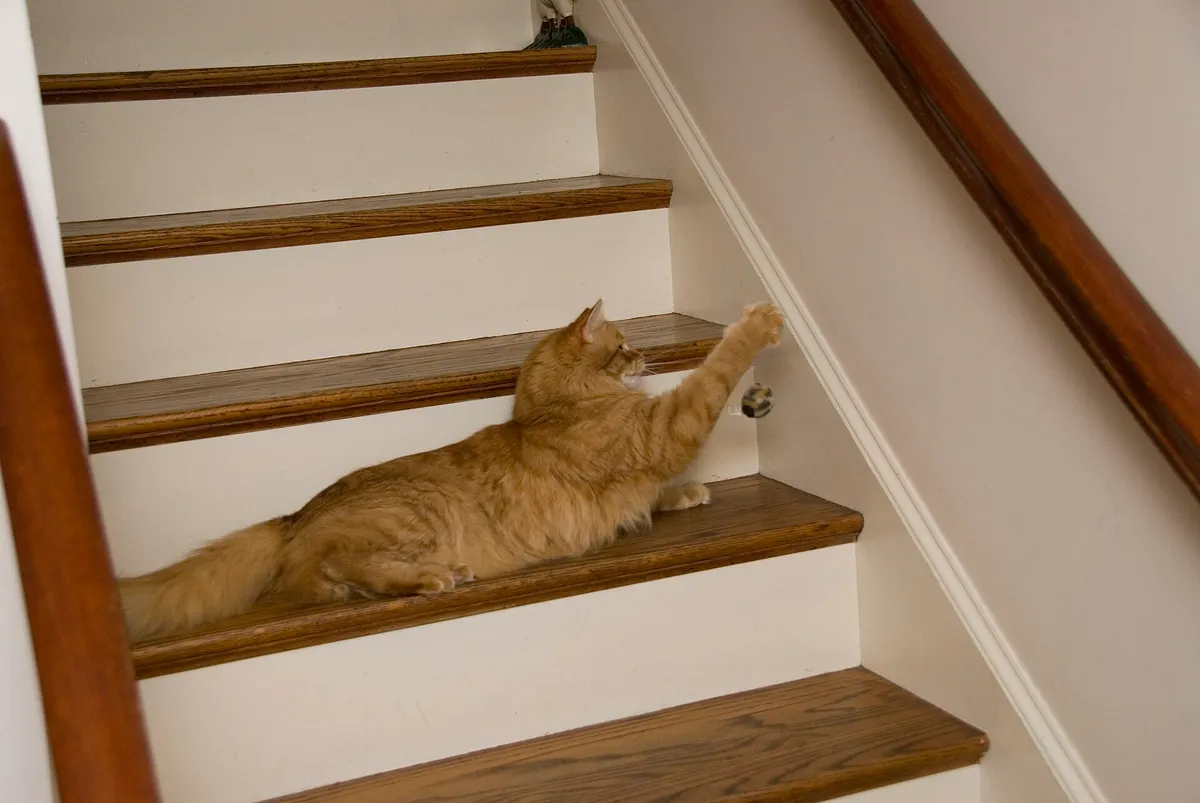
Play is a bonding shortcut because it lets you and your cat succeed together. Cats do not play for obedience; they play to practice hunting. A wand toy that mimics a mouse, lizard, or bird gives your cat an outlet for that predatory drive. Use quick, darting movements that end in a capture your cat can bring to her paws. After she catches the toy, let her have it for a moment, then gently remove it or give her a little piece of food. That reward finishes the sequence like a real hunt. Play session length matters: many cats prefer 10 to 15 minutes, once or twice a day. If you have a high-energy kitten, she may want three sessions. Always let your cat win. Once the game is over, give her some food or a treat. This creates a clear rhythm: play, catch, eat. It's the same rhythm cats experience when they hunt with a family, and it deepens your bond.
Never use your hands or feet as toys. Wrestling with your cat can teach her that your body is prey, which may lead to scratches or bites. Always use an interactive toy, and when the session ends, offer a treat or small meal to finish the hunting game positively.
Grooming and touch: let your cat lead
Touch is a sensitive communication channel for cats. While some cats love belly rubs, many are ambivalent about being touched in vulnerable areas. A good rule: only stroke your cat in zones she voluntarily offers. Soon after your cat was a kitten, she groomed her mom and littermates with her tongue; you can mimic that gentle action with a soft brush or your palm. Start with a few strokes along the cheeks or the top of the head, then stop and watch. If your cat leans in and purrs, she is asking for more. If she flicks her tail or pinches her ears, pause. This is called consent-based handling, and it's the gold standard in modern feline care. Never scruff your cat, hold her down, or force her into your lap for grooming. Yes, you might finish the task faster, but you'll lose trust. The table below shows what your cat's signals are trying to tell you.
| Cat signal | What it likely means | How to respond |
|---|---|---|
| Slow blink | Comfort and trust | Blink back and stay still |
| Tail straight up with a curved tip | Welcome and confidence | Offer a treat or soft head scratch |
| Ears flattened backward | Fear or irritation | Give space and lower your body |
| Tail thumping or swishing | Overstimulation | Stop petting and turn away |
Feed on a routine
A predictable daily routine is a powerful trust builder. When your cat can predict when food will appear, she feels secure in her territory and in you. Choose two or three meal times that fit your schedule and stick to them as closely as you can. Before you put the bowl down, say a short phrase such as 'dinner time' in a calm voice. Your cat will associate your voice with a safe, tasty event. Slowly place the bowl in its usual spot, then step back to give her space to eat. If you have multiple cats, make sure each has her own feeding station so no one feels threatened. You can use meal time to practice short training sessions: ask for a sit or a target touch before giving a portion of the meal. That tiny exchange turns something routine into an interaction that builds your bond.
Keep treats and meal add-ons to no more than 10% of your cat's daily calories. Too many treats can quickly lead to weight gain. If you aren't sure how many calories your cat needs, ask your veterinarian for a target number based on her age, weight and activity level.
Respect your cat's space and boundaries
Cats are territorial animals, and safe zones are not a polite preference, they are a biological need. Your cat's space might be a window perch, a box, or under the couch. When you move, remove, or hover over it, you signal that you don't respect her safety. To build trust, let your cat choose where you meet. Sit by her bed, on the floor, and read a book or scroll your phone, without reaching for her. Let her come to you. If she settles beside you, that's a huge compliment. Also, learn when not to intervene: if your cat is staring at a bird or scratching furniture, interrupting her can feel like a violation. The bond grows when you are the one who honors her agenda. A cat who has a safe room or a hiding spot will come out and socialize more, not less, because she knows she can retreat at any moment.
Bonding takes time
There's no fixed timetable for bonding. A social kitten might attach within a week, while a shy adult rescue might need several months. The good news is that every calm, patient interaction builds on the last. Watch for small victories: your cat staying in the room when you enter, showing you her belly (without demanding a touch), or giving you a gentle head butt. If you have a setback, like a hiss when you pet her, don't punish yourself or your cat. Just back off, give her space, and resume the routine later. Consistency is the cure for most trust issues. Even a few minutes of quality interaction each day, at your cat's pace, will transform your relationship. Remember that bonding is not about how many pictures you can get of a lap cat; it's about creating a life where your cat feels safe, seen, and happy to share her world with you.
Frequently Asked Questions
How long does it take to bond with a cat?
Bonding time ranges from days to over a year. Kittens who are handled gently often bond within weeks; adult cats from a shelter might take months to feel safe. Give your cat space, stay consistent, and let her initiate.
What if my cat won't let me pet her?
That's common, especially early on. Instead of stroking, use a slow blink, offer a treat from a distance, and let her sniff your hand. Once she rubs against you, that's your green light to try a gentle cheek scratch.
Can play help a shy cat bond?
Yes, but start with distance toys like a feather wand. Moving prey away from you lets the cat feel successful without needing to approach. Over time, you can move the toy closer, and the cat will associate you with fun, not pressure.
Is a laser pointer good for bonding?
Yes, only if you let your cat catch the dot at the end. A laser is not a tangible reward, so finishing on a toy or a treat prevents frustration. Use it as one small piece of your play routine, not the only one.
Key Takeaway
The bond with your cat is built one interaction at a time, using her own language. Slow blink to say hello, play like a prey animal she can catch, feed her on a calm routine, and always honor her need for space. Trust isn't won; it's offered. When you offer your cat security and choice, she will reward you with a closeness that cannot be demanded, only earned.
Sources & Scientific References (3)
Share this guide
Help another cat parent find it.