
Bringing a new cat into your home is an exciting milestone. Preparing your home ahead of time ensures a smooth transition for your new feline family member.
Quick Answer
The Short Answer: Essential new cat supplies include a spacious litter box, cat-safe food and water bowls, scratching posts, interactive toys, a sturdy carrier, and a quiet sanctuary room.
Buy for function first. You can add beds, toys, and furniture after learning the cat's size, mobility, eating style, scratching angle, and preferred resting places.
Before Adoption
- Confirm that everyone in the household agrees on care, cost, and boundaries.
- Check housing rules, pet deposits, window and balcony safety, and emergency contacts.
- Identify a routine veterinary clinic and the nearest after-hours service.
- Ask about the cat's food, litter, medications, medical records, temperament, and previous home.
- Budget for setup, recurring supplies, preventive care, and unexpected veterinary costs.
- Plan transport in an appropriately sized secure carrier.
- Decide who feeds, scoops litter, plays, administers medication, and provides holiday care.
If another pet lives in the home, prepare separate spaces and a gradual introduction plan before arrival.
Essential Supply Checklist
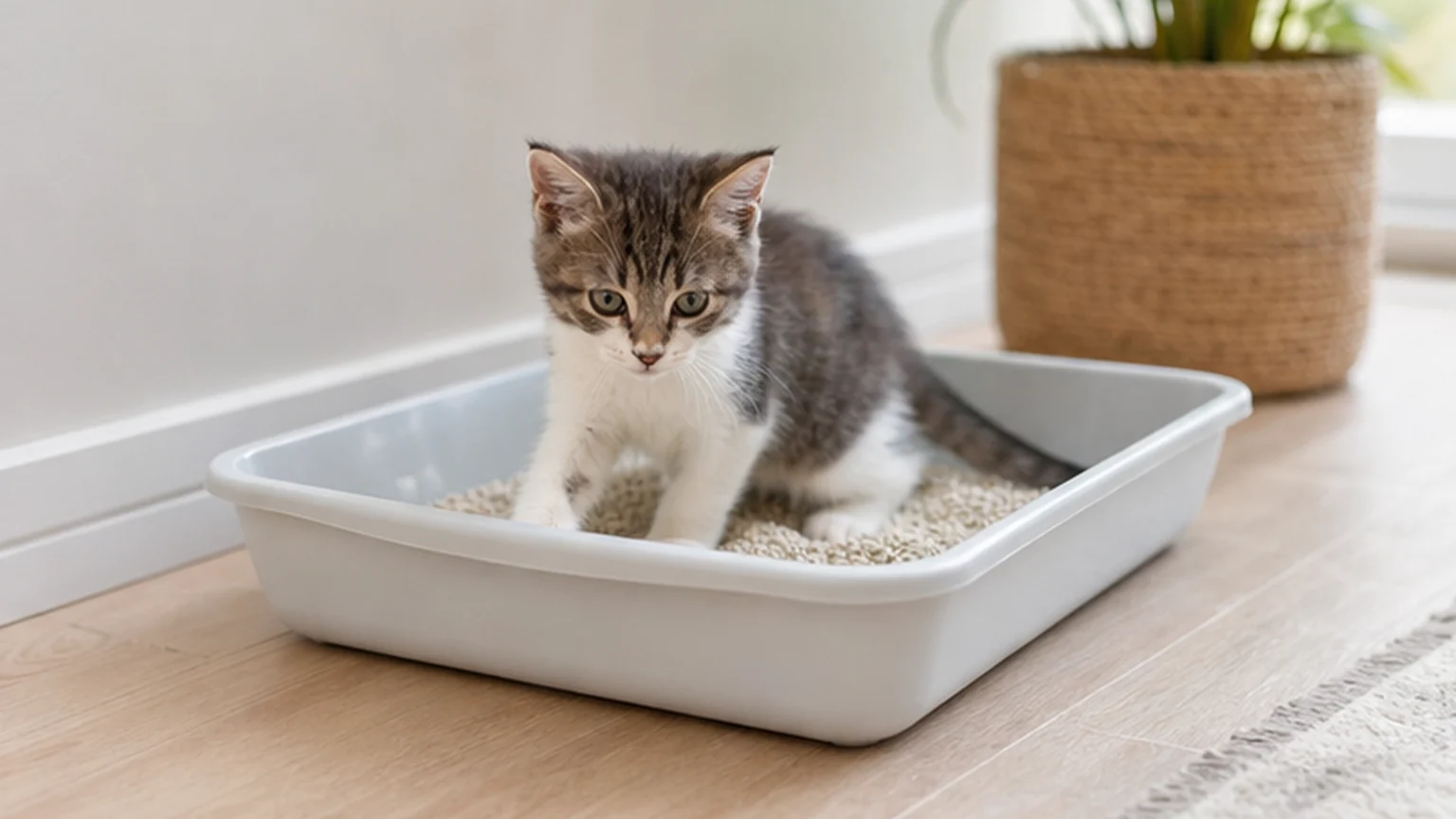
- Litter Box & Clumping Litter: Choose an un-covered, low-entry box placed in a low-traffic area.
- Stainless Steel or Ceramic Bowls: Separate food and water bowls to match feline preferences.
- Scratching Posts: Sturdy sisal posts tall enough for full stretching.
- Sanctuary Room: Set up a small, quiet bedroom or bathroom for the first 3–7 days.
Carrier
Choose a secure, ventilated, cleanable carrier with enough internal space to stand, turn, and lie down. A removable top or wide opening can simplify handling. Inspect latches, zippers, seams, and handles before every trip.
Leave the carrier open at home with familiar bedding so it becomes a resting place rather than an object that appears only before stressful travel.
Food
Start with the food used by the shelter, rescue, breeder, or previous home when possible. Confirm that it is complete and balanced for the cat's life stage. Transition gradually if changing recipes.
Measure portions using the exact product's calories and package directions as starting information. Kittens, adults, seniors, pregnant or nursing cats, and cats with health conditions need different context.
Food and Water Bowls
Stainless steel and intact food-safe ceramic are practical, washable options. Choose stable, wide shapes the cat accepts. Provide more than one water station in quiet locations and consider a fountain only if the cat prefers it and the household can maintain it.
Litter Boxes and Litter
A common starting point is one box per cat plus one extra, distributed across separate locations. Use large boxes with appropriate entry height and an unscented, low-dust litter the cat already knows when possible.
Boxes lined up in one room do not provide the same access as boxes in independent areas. Keep them away from food, water, noisy appliances, and routes another pet can guard.
Scratching Options
Offer a tall, stable vertical scratcher and a horizontal option. Match materials and angles the cat uses, and place scratchers near sleeping areas, room entrances, and furniture targets.
Scratching is a normal need. Plan redirection rather than punishment or declawing.
Resting and Hiding Places
Provide open beds, covered retreats, boxes, and elevated options where safe. A hiding place should have a clear exit and should not be inside reclining furniture, behind an appliance, or near electrical hazards.
Do not force a cat out of a safe retreat. Choice helps a new cat regulate exposure to the home.
Toys and Enrichment
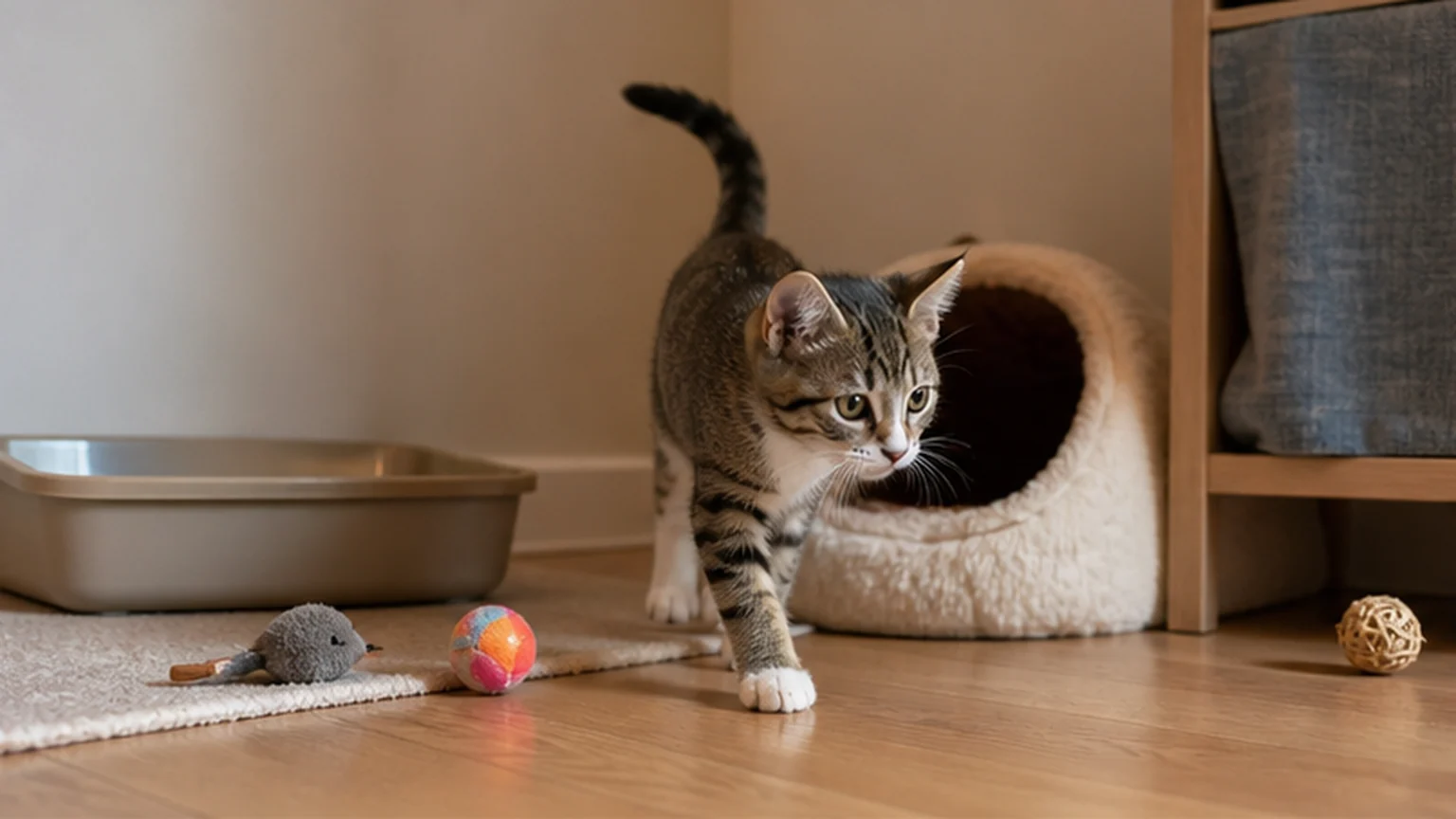
Start with a few interactive wand toys, lightweight toys, food puzzles appropriate for the diet, and climbing or observation opportunities. Store strings, ribbons, and toys with detachable pieces after supervised play.
Use toys—not hands or feet—for chasing and biting. Rotate rather than constantly buying more.
Cleaning and Care Supplies
Keep a litter scoop, waste bags, enzyme cleaner appropriate for household surfaces, washable bedding, food-storage equipment, spare bowls, nail trimmers, and a brush suited to the coat.
Do not buy medication, supplements, flea products, or essential-oil products speculatively. Ask a veterinarian what is appropriate for the individual cat and location.
Home-Safety Checklist
Walk through the home at cat level:
- Remove lilies and identify every plant before allowing access.
- Lock away medication, cleaners, pesticides, essential oils, and chemicals.
- Secure cords, chargers, blind cords, thread, yarn, rubber bands, and hair ties.
- Remove small objects that can be swallowed.
- Check windows and screens; a screen is not automatically cat-proof.
- Secure balconies and prevent access to unsafe ledges.
- Close washers, dryers, dishwashers, ovens, recliners, and cabinets before use.
- Store food, trash, alcohol, chocolate, onions, garlic, and other hazards securely.
- Check gaps behind appliances, under cabinets, and around vents.
- Keep exterior doors controlled and update identification.
Recheck safety as kittens grow and learn to jump, climb, open cabinets, and reach new shelves.
Practical Guidance: What You Can Do
- Cat-proof cords, remove toxic houseplants (like lilies), and secure loose window screens.
- Establish a consistent feeding schedule from day one.
- Schedule an initial wellness check with a local veterinarian.
Prepare the Safe Room
Choose a quiet room that can close securely. Place the carrier or another hiding spot, bed, scratcher, and toys there. Separate food, water, and litter so they are not crowded together.
Bring the cat directly to this room, close the door, and open the carrier. Let the cat emerge without being pulled. Limit visitors and keep resident pets outside.
The safe-room period is not automatically three to seven days for every cat. Expand access when the cat is eating, toileting, resting, and exploring comfortably and when pet introductions are ready to proceed.
First Week Checklist
- Track food, water, urination, stool, and behavior.
- Keep food and litter familiar while the cat settles.
- Update microchip and identification details.
- Review adoption and veterinary records.
- Arrange the recommended veterinary visit.
- Begin carrier familiarity with the door open.
- Schedule short, gentle play without forcing interaction.
- Start scent-based, separated pet introductions rather than face-to-face meetings.
- Keep routines predictable and visitors limited.
Existing Pets
Prepare duplicate, separated resources before the newcomer arrives. Keep animals apart initially. Exchange scent through bedding, feed at comfortable distances on opposite sides of a closed door, and proceed to controlled visual access only when both animals remain calm.
Do not hold animals together or allow them to “work it out.” Introductions can take days, weeks, or longer. Seek veterinary and qualified behavior help for intense fear, aggression, or persistent conflict.
Records and Contacts
Keep digital and paper copies of:
- adoption or purchase documents;
- vaccination and parasite records;
- spay/neuter and microchip information;
- medications and dosing instructions;
- food and litter details;
- veterinary and emergency-clinic contacts;
- insurer or emergency-fund information; and
- a recent photo and identifying features.
Give pet sitters written care and emergency authorization. Update contacts after moving or changing phone numbers.
Purchases That Can Wait
You do not need a designer bed, large toy collection, automatic feeder, fountain, self-cleaning litter box, stroller, or extensive furniture before arrival. These items may be useful after preferences and household needs become clear.
Avoid buying a large stock of one food or litter until you know it is suitable and accepted. Keep receipts and check return policies for carriers, feeders, and furniture.
Common New-Owner Mistakes
- Giving immediate access to the whole home.
- Forcing contact or pulling the cat from hiding.
- Changing food and litter on arrival without need.
- Introducing pets face to face.
- Providing too few or poorly placed litter boxes.
- Using hands as toys.
- Leaving string toys or toxic plants accessible.
- Assuming a cat who hides is ungrateful.
- Delaying care when appetite, urination, breathing, or energy changes.
Frequently Asked Questions
What is the most important item to buy?
A secure carrier is essential for safe transport and emergencies, while litter, complete food, water, and a safe room support immediate daily needs. The setup works as a system.
Do I need everything before adoption?
Have safety and core resources ready. Optional furniture and technology can wait until you understand the cat's preferences.
How much should the setup cost?
Prices vary by location and product. Use the cat ownership cost guide to build a local dated budget rather than relying on one universal total.
When should the new cat meet resident pets?
Not on a fixed day. Begin with separation and proceed gradually based on behavior. Rushing can create setbacks.
Key Takeaway
Prepare safety, transport, food, water, litter, scratching, hiding, enrichment, veterinary care, and household responsibilities before arrival. Start the cat in a quiet room, preserve familiar routines, and let exploration and relationships develop gradually. The best checklist is not the longest shopping list—it is a practical system your household can maintain.
Share this guide
Help another cat parent find it.