
Use this as a starting estimate
A calorie result is an estimated starting range, not a prescription. Adjustments may be needed for body condition, age and life stage, neuter status, activity, medical conditions, food calorie density, and weight trend over time.
The short answer
Start with the label's life-stage adequacy statement, calorie information, feeding directions, and package size. Then use the calorie calculator and the exact label to estimate portions.
Do not judge a food from the front-of-package marketing or one ingredient. A label is most useful when read as a set: product identity, intended life stage, nutritional adequacy, calories, guaranteed analysis, ingredients, feeding directions, manufacturer details, and package size.
Four label areas to check
- Life stage: Confirm the food is complete and balanced for growth, adult maintenance, or the stated life stage.
- Calories: Look for calories per can, pouch, cup, kilogram, or gram.
- Feeding directions: Use them as broad starting guidance, not a personalized prescription.
- Guaranteed analysis and ingredients: These provide context, but a label alone cannot diagnose a need or prove a food is best for every cat.
A practical label-reading order
When comparing foods, read in this order:
- Confirm it is cat food and identify whether it is a main diet, treat, topper, or supplement.
- Find the nutritional adequacy statement and intended life stage.
- Check calories and package weight.
- Review feeding directions and convert them into a measurable daily starting amount.
- Read the guaranteed analysis and ingredient list in context.
- Find the manufacturer or distributor and contact information.
- Record the lot code and best-before date after purchase.
This order prevents an appealing ingredient phrase from distracting from the more fundamental question: can this product serve the intended nutritional role?
1. Product name and intended use
The product name can indicate flavor, primary ingredient emphasis, or format, but it is partly marketing. More important is whether the package describes a complete food, treat, topper, supplement, or product for intermittent feeding.
A complementary or supplemental food may be appropriate in a limited role, but it should not quietly replace a complete diet. Treats and toppers also add calories and can dilute overall nutritional balance when they occupy too much of the daily intake.
2. Nutritional adequacy statement
Look for wording that says the food is complete and balanced and identifies the life stage or stages for which it is intended. Common contexts include growth, adult maintenance, gestation or lactation, or all life stages.
A kitten needs food appropriate for growth, while an adult-maintenance statement does not make the same claim. “All life stages” includes growth requirements; it does not mean every portion suits every cat. Calorie density and individual needs still require attention.
The statement may also indicate how adequacy was established under the applicable framework. It is more informative about intended nutritional use than broad phrases such as “premium,” “natural,” or “holistic,” which do not by themselves establish suitability for your cat.
3. Calorie statement
Calories may be listed per can, pouch, tray, cup, kilogram, or gram. Check the exact recipe and package size. Similar-looking containers and foods within the same brand can have different calorie densities.
For a food listed in calories per kilogram:
Calories per kilogram ÷ 1,000 = calories per gram
You can then divide an estimated daily calorie range by calories per gram to calculate a starting mass. For food listed per container, divide the estimate by calories per can, pouch, or tray. These are arithmetic conversions, not universal feeding prescriptions.
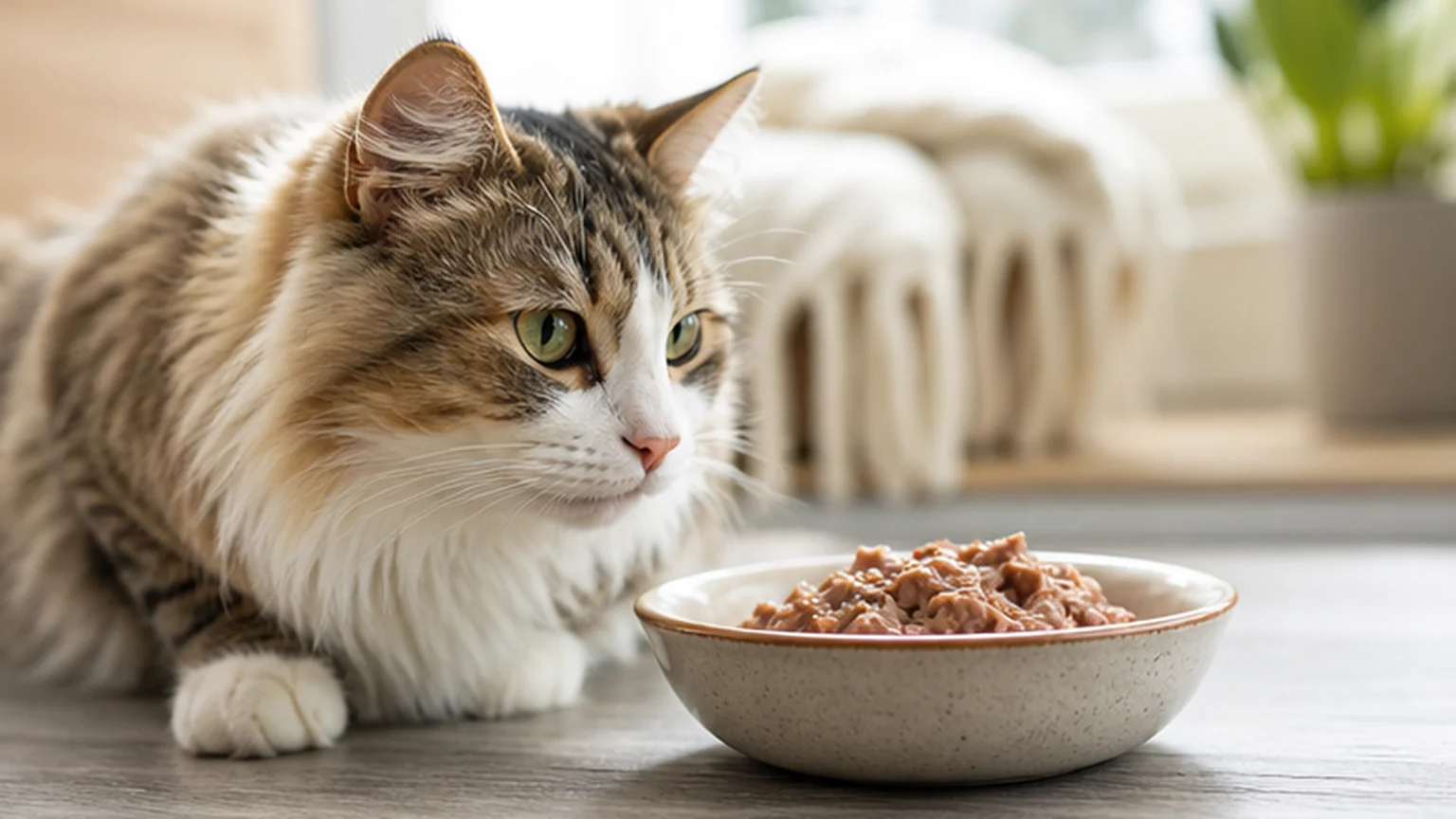
If you feed wet and dry food together, convert each to calories first. A full suggested amount of each product may add up to more than the intended daily total.
4. Feeding directions
Feeding charts usually group cats by weight, age, or life stage. They offer broad starting guidance, not a guarantee that every cat in a row needs the same amount. Activity, body condition, neuter status, health, treats, and individual metabolism can change the result.
Check whether the stated amount is per day or per meal. If it is a daily amount, divide it among meals rather than repeating it every time. Measure consistently and monitor body condition and weight trend.
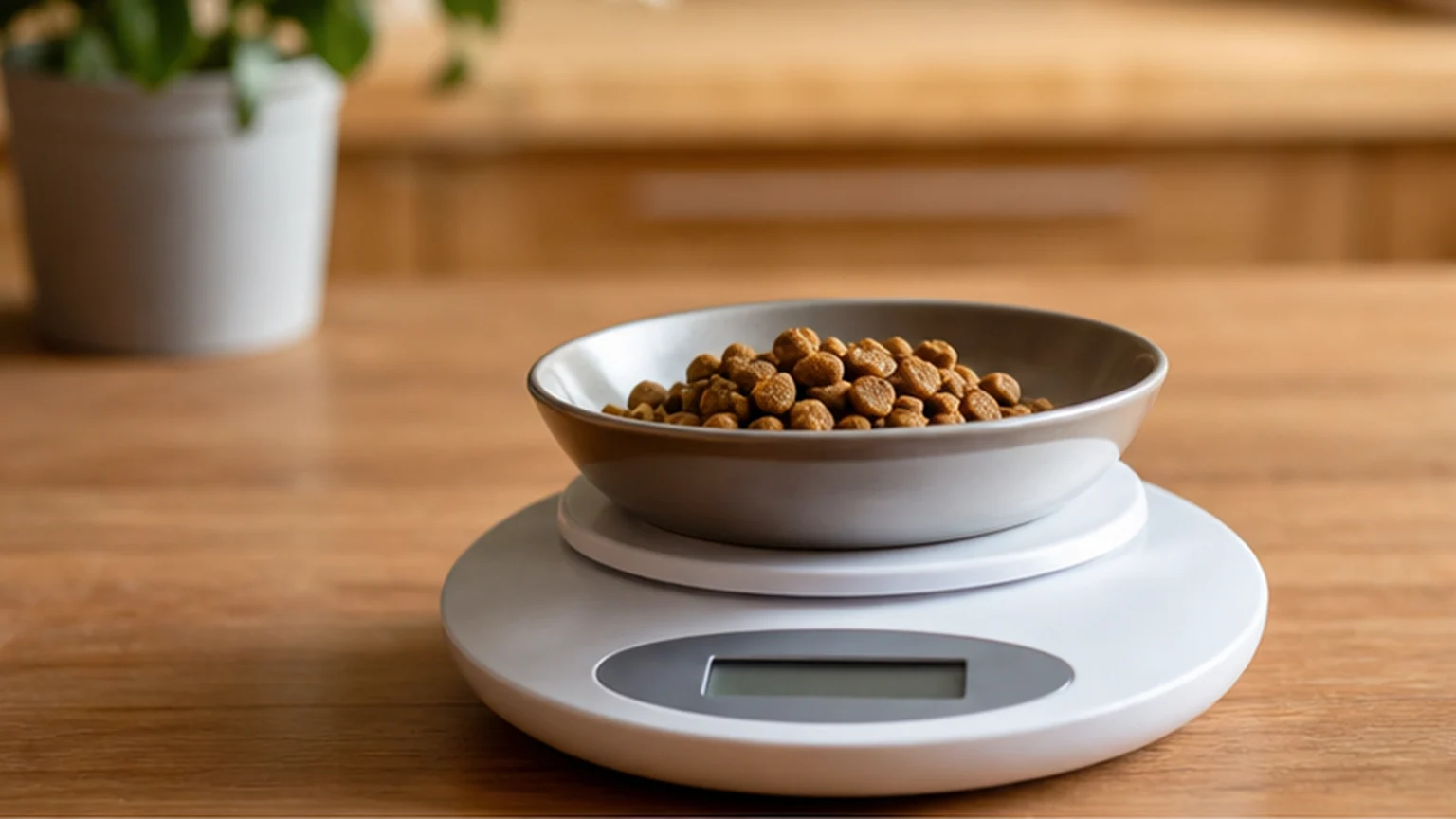
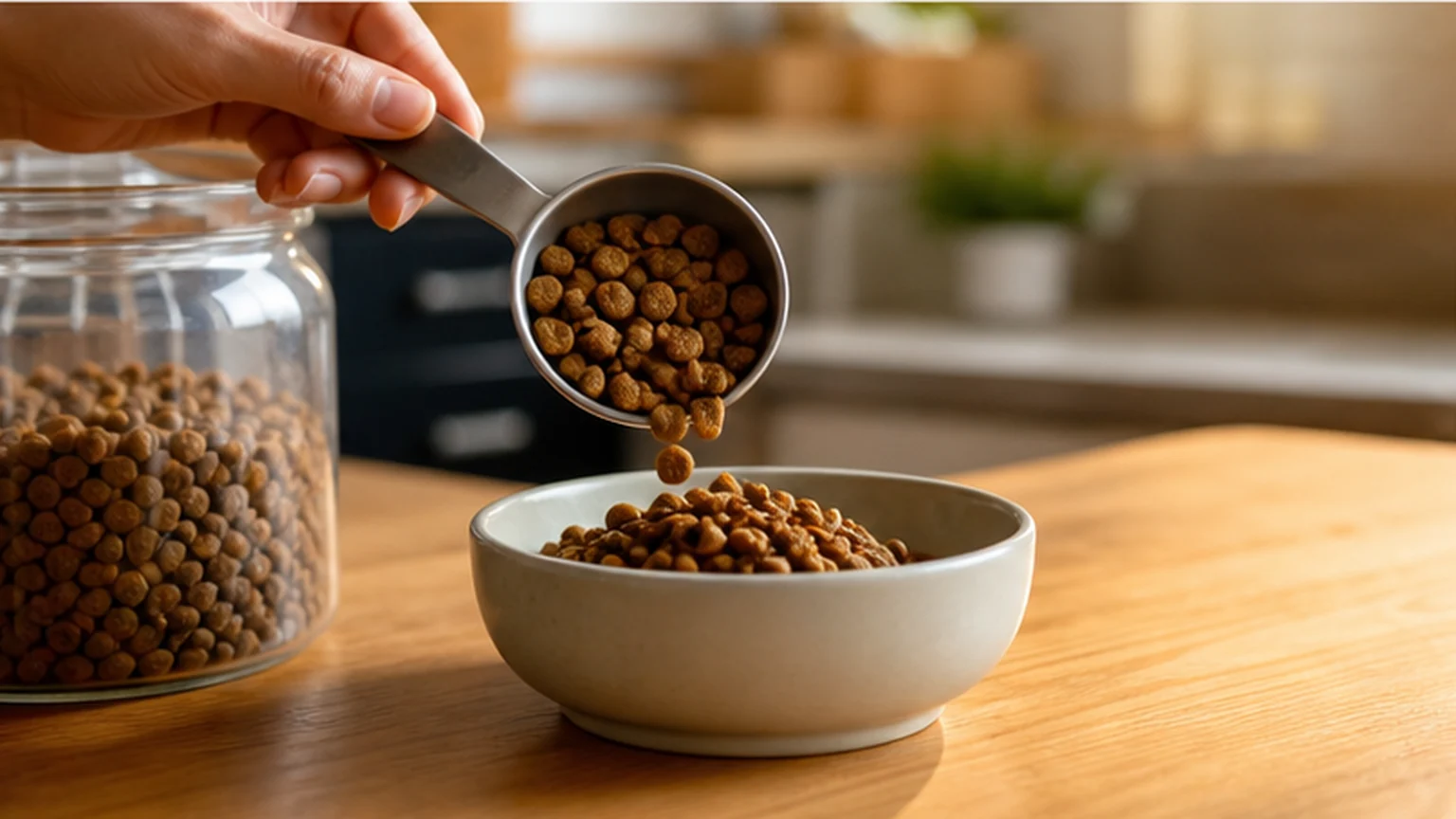
For dry food, grams are often more reproducible than a household scoop. For wet food, pay attention to container size and any partial package. Recalculate after changing recipe, even if the new feeding chart looks similar.
5. Guaranteed analysis
The guaranteed analysis reports specified nutrient minimums or maximums on an as-fed basis. It can help you understand the product, but direct comparisons require care because wet and dry foods contain very different amounts of water.
A dry food may appear to have a higher protein percentage than a wet food simply because the wet food includes much more moisture. Comparing percentages without accounting for water can be misleading. Even a dry-matter comparison does not by itself prove digestibility, ingredient quality, calorie suitability, or clinical benefit.
Use guaranteed-analysis values to answer a defined question, ideally with veterinary guidance when the question concerns a medical condition. Avoid choosing a food solely because one displayed percentage is higher or lower.
6. Ingredient list
Ingredients are generally listed by weight before processing. Water-rich ingredients can appear high on the list partly because of their moisture. Related ingredients may also appear separately. The list tells you what ingredients are present, but not the finished food's complete nutrient profile, digestibility, quality control, or suitability for an individual cat.
Cats require nutrients rather than fashionable ingredient lists. A recognizable first ingredient does not guarantee nutritional adequacy, and an unfamiliar scientific name may be a vitamin, mineral, amino acid, or other necessary nutrient.
Ingredient lists are important when a veterinarian is helping investigate a suspected adverse food reaction, but self-diagnosing an allergy from the label can lead to unnecessary restriction. Therapeutic elimination trials require controlled selection and follow-through.
7. Manufacturer information
Find the company responsible for the product and a way to contact it. Useful questions may include:
- Who formulates the diets, and what are their qualifications?
- Where is the food manufactured?
- What quality-control and testing processes are used?
- Is full nutrient and calorie information available?
- How should the food be stored after opening?
A responsive manufacturer can provide context that does not fit on the package. Keep the original bag or photograph the lot code and best-before date in case of a quality concern or recall.
Compare like with like
Compare calorie density and the same moisture basis where relevant. A larger-looking wet portion may contain fewer calories than a smaller-looking dry portion. Count treats and toppers separately.
Use a small comparison table rather than relying on memory:
| Item | Food A | Food B |
|---|---|---|
| Life-stage adequacy | ||
| Calories per container or gram | ||
| Package weight | ||
| Suggested daily amount | ||
| Wet, dry, or other format | ||
| Main diet or supplemental use | ||
| Storage after opening |
Calculate estimated daily cost from the amount actually fed, not just shelf price. A larger or more expensive package may last longer, while a lower-priced food may be more calorie-dense. Cost still should not replace nutritional suitability and safe handling.
Marketing terms and front-label claims
Words such as “premium,” “gourmet,” “ancestral,” “holistic,” or “indoor” can shape expectations but do not provide a complete nutritional assessment. “Grain-free” states the absence of grain; it does not automatically mean higher quality, fewer carbohydrates, or better suitability.
Claims about hairballs, weight, urinary health, digestion, or dental benefits should be evaluated product by product. A general article cannot determine that a marketed claim is appropriate treatment for a medical condition. Ask what evidence applies to the exact food and discuss health-related selection with a veterinarian.
Common label-reading mistakes
- Choosing from the ingredient list before checking nutritional adequacy.
- Comparing wet and dry guaranteed-analysis percentages directly.
- Assuming the package feeding table is an individualized prescription.
- Ignoring calories from treats, toppers, and mixed feeding.
- Treating “one can” or “one cup” as a standard amount across products.
- Assuming a marketing term has a regulated nutritional meaning.
- Using an over-the-counter food to manage a diagnosed disease without guidance.
- Discarding the package and losing the lot and date information.
A label cannot replace veterinary guidance for a kitten, pregnancy, weight-loss plan, food allergy, or diagnosed disease. Ask a veterinarian before using a therapeutic diet or supplements.
Frequently asked questions
Is the first ingredient the most important part of the label?
No. It is one piece of an ingredient list ordered by pre-processing weight. Nutritional adequacy, calories, the complete formulation, quality control, and your cat's needs provide broader context.
Does “natural” mean complete and balanced?
Not by itself. Find the nutritional adequacy statement rather than inferring completeness from marketing language.
Why do wet and dry protein percentages look so different?
Wet food contains much more water, which changes percentages on an as-fed basis. A fairer nutrient comparison may require a common moisture basis, but even that does not identify the best food for every cat.
Should I avoid by-products or unfamiliar ingredients?
An ingredient's name alone does not show the finished diet's nutritional quality. If you have a specific concern, ask the manufacturer or veterinarian what the ingredient contributes and how the product is formulated.
Key takeaway
Read a cat-food label from the inside out: nutritional role and life-stage adequacy first, then calories, feeding directions, guaranteed analysis, ingredients, manufacturer information, and package details. Compare exact products using consistent units, and remember that a label supports a feeding decision—it does not diagnose nutritional needs or select a therapeutic diet.
Read wet-food portions, dry-food portions, and daily calorie requirements.
Estimate your cat's daily calorie range
Use PurrWise's calculator for a practical starting estimate, then compare it with body condition and weight trend.
Share this guide
Help another cat parent find it.