The short answer
Yes, cats can eat plain cooked oatmeal in small amounts as an occasional treat. Oatmeal is not a necessary part of a cat's diet, and it should never replace complete and balanced cat food. A small spoonful of plain oats cooked in water is generally considered safe for most healthy adult cats. The most important part is preparation: skip milk, sugar, salt, butter, and all toppings.
Why cats don't need grains (but can handle them)
Cats are obligate carnivores, meaning their bodies are built to get nutrients from animal tissue. They have a high protein requirement and a limited ability to break down carbohydrates. In the wild, a cat's diet is mostly small prey such as birds and rodents, not grains. Because of this, oats are not an ingredient your cat needs in order to thrive. The nutrients in oats, like fiber and B vitamins, are already present in a good quality cat food. If your cat gets a complete diet, adding oats is purely optional and should be treated as a fun novelty, not a nutritional boost.
Nutritional benefits and limitations of oatmeal
Oatmeal has a reputation as a healthy, comforting food for people. For cats, the picture is more balanced. A serving of plain oats provides complex carbohydrates, some plant protein, soluble fiber, and small amounts of minerals like magnesium and zinc. These can be useful in the right situations, but they are not essential for a cat. The table below gives a quick look at what oats offer and where they fall short.
| Nutrient | What it does | Oatmeal's role for cats |
|---|---|---|
| Fiber | Supports normal digestion and stool formation | A tiny amount may help a constipated cat, but too much can cause loose stools or gas. |
| Plant protein | Helps maintain muscle, but incomplete | Lacks taurine and arginine, two amino acids cats cannot make on their own. |
| Carbohydrates | Provide quick energy | Cats can use carbs for energy, but they are not required and can add excess calories. |
| B vitamins | Assist in energy metabolism | Oats contain some B vitamins, but balanced cat food already provides them. |
How to serve oatmeal safely to your cat
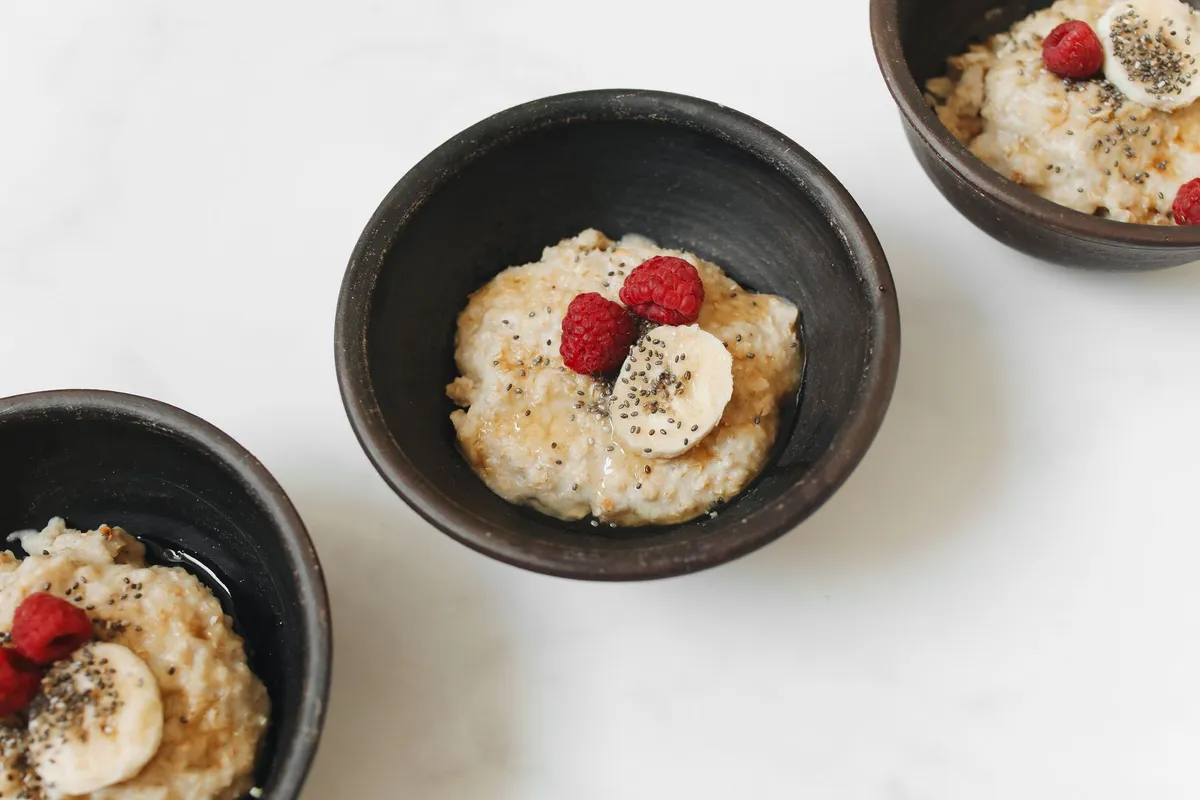
The safest way to give oatmeal to a cat is to cook plain oats in water. Use rolled oats or steel-cut oats. Instant oats are fine only if they contain no added flavors, sugar, or salt, but plain rolled oats are a better choice. Start by cooking the oats according to the package directions, but use water instead of milk. Do not add butter, sugar, honey, salt, cinnamon, nutmeg, or any other seasoning. Once the oats are cooked and soft, let them cool down to a comfortable warm or room temperature. Cats can be sensitive to hot food, and steam can irritate their mouth. Offer a small amount, such as one teaspoon, on a plate or shallow bowl. Some cats will not be interested, and that is fine. Oatmeal is not something you need to persuade a cat to eat. If your cat refuses it, simply move on. Do not force the food or mix it into their favorite meal without a veterinary reason.
Oatmeal should only be an occasional treat. A one-teaspoon serving is enough for a typical 10-pound adult cat, and it should never replace a complete and balanced cat food. If your cat has diabetes, kidney disease, obesity, or a history of dietary sensitivities, speak to your veterinarian before offering oatmeal. Treats of any kind can affect medication schedules and daily calorie goals, so checking with your care team is wise.
Toppings and additives to skip
The oatmeal that is safe for cats is very different from the oatmeal served at a human breakfast table. Many common oatmeal toppings are unsafe for cats. Milk and cream can cause stomach upset because most adult cats are lactose intolerant. Sugar, honey, and maple syrup add empty calories and can be problematic for cats with diabetes or weight issues. Artificial sweeteners are even more concerning. Xylitol, in particular, is extremely dangerous to dogs and should also never be intentionally given to cats. Raisins and chocolate are known to be harmful to many pets, and nuts are hard to digest and can be high in fat. Spices such as cinnamon, nutmeg, and cloves may also irritate a cat's stomach. Always read the ingredient list of instant oatmeal packages, because they often contain flavorings, added sugar, and salt. If you are ever unsure whether a human ingredient or topping is safe, check it in our Toxic Food Checker before sharing anything from your bowl. If you cannot confirm that the oats are plain, it is safer to skip them.
How much and how often
Treats should always be limited, and oatmeal is no exception. For a healthy adult cat, a serving of one to two teaspoons of cooked oatmeal is reasonable. Even if your cat seems to love it, keep this treat to no more than once or twice a week. The calories in oatmeal are not enormous, but they can still disrupt a weight management plan if you are not careful. Treats in general should not exceed about 10 percent of your cat's daily calories. A typical indoor cat needs around 200 calories per day, so the treat budget is roughly 20 calories. One tablespoon of cooked oatmeal has about 25 calories, and a teaspoon is about 8 calories. That leaves room for a small serving, but only if you account for other treats and snacks. If your cat is on a prescription diet or has a chronic condition, ask your veterinarian for a specific recommendation. Never use oatmeal as a way to fill up a cat who seems hungry at mealtime; that hunger is often a sign that the main diet needs reevaluation.
Signs your cat didn't tolerate it
Every cat is different, and a new food can sometimes cause digestive upset. After your cat eats oatmeal for the first time, keep an eye out for vomiting, diarrhea, gas, or a decrease in appetite. These reactions are more likely if your cat eats too much or if the oats were prepared with milk, sugar, or other ingredients. A single soft stool may not be a reason to panic, but ongoing symptoms are worth attention. If your cat vomits more than once, has diarrhea for more than 24 hours, seems unusually tired, or stops eating, contact your veterinarian. Be ready to describe what and how much your cat ate. This helps the vet decide whether a simple sensitivity is present or whether something more serious is going on.
Oatmeal as a treat: what the rules say
Veterinary nutritionists often summarize the treat rule in a simple way: treats are for enjoyment, not for meeting nutritional needs. Giving a cat a piece of plain cooked oatmeal will not harm a healthy cat, but it will not make the cat healthier either. Many cat owners find oatmeal a convenient way to bond with their cat, and that is acceptable as long as portions are tiny and ingredients are safe. If you are in doubt, remember that no vet has ever admitted a cat to a hospital because it was missing oatmeal in its life. The more relevant concern is treats that crowd out balanced nutrition. Keep oatmeal as a rare, fun activity and rely on your cat's regular food for nutrients.
Frequently Asked Questions
Can oatmeal help with constipation in cats?
Oatmeal contains fiber, so a tiny amount might offer mild support for a cat with occasional constipation. However, constipation in cats can be caused by dehydration, hairballs, pelvic injuries, or underlying disease. Adding a new food without knowing the cause can delay treatment. If your goal is gentle, vet-recommended digestive fiber, a small spoonful of plain canned pumpkin for cats is generally much better tolerated and lower in carbohydrates than grains. Talk to your veterinarian first if your cat is straining in the litter box.
Can kittens eat oatmeal?
Kittens have specific dietary needs that support rapid growth and development. A kitten food formula is designed to deliver far more protein, taurine, and calcium than oatmeal can provide. Giving a kitten oatmeal is not a medical emergency, but it is also not a good idea because it can fill a small stomach and displace the complete food the kitten needs. Wait until your cat is an adult before offering oat-based treats, and even then ask your veterinarian first.
Is instant oatmeal safe for cats?
Plain instant oatmeal made only with oats and no added flavors is usually safe, but it is harder to find. Many instant oatmeal products contain sugar, artificial flavors, and other additives. For a cat, plain rolled oats cooked in water are the most reliable option. If you use instant oats, read the ingredient list carefully and choose a product with nothing but oats.
Can cats eat oatmeal cookies or flavored oatmeal?
No. Oatmeal cookies and many flavored oatmeals contain sugar, butter, chocolate, raisins, or artificial sweeteners. Those ingredients are not safe for cats and can cause stomach upset or more serious harm. Flavored oatmeal might seem like a small taste, but even a few bites can deliver more sugar than a cat's body can manage. Reserve those foods for people and keep the cat's treat bowl separate.
What should I do if my cat ate a large bowl of oatmeal?
If the oatmeal was plain and cooked with water, the most likely result is mild stomach upset. Remove any remaining food and give your cat access to fresh water. Watch for vomiting, diarrhea, or changes in energy over the next 24 hours. If the oatmeal contained milk, raisins, chocolate, nuts, or artificial sweeteners, contact your veterinarian immediately. Provide details about the ingredients and the amount eaten so the vet can assess the risk.
Key Takeaway
Yes, cats can eat plain cooked oatmeal in small amounts as an occasional treat. The safe version is simple: oats cooked in water, served cool, with no milk, sugar, salt, or toppings. A teaspoon or two, once or twice a week, is enough for most adult cats. Oatmeal is not a nutritional requirement for cats, and it should never replace a complete and balanced diet. If you have any questions about your cat's specific needs, your veterinarian is the best person to ask.
Check a food before you guess
Search the PurrWise food checker for a specific ingredient and review the recommended safety action.
Share this guide
Help another cat parent find it.