The short answer
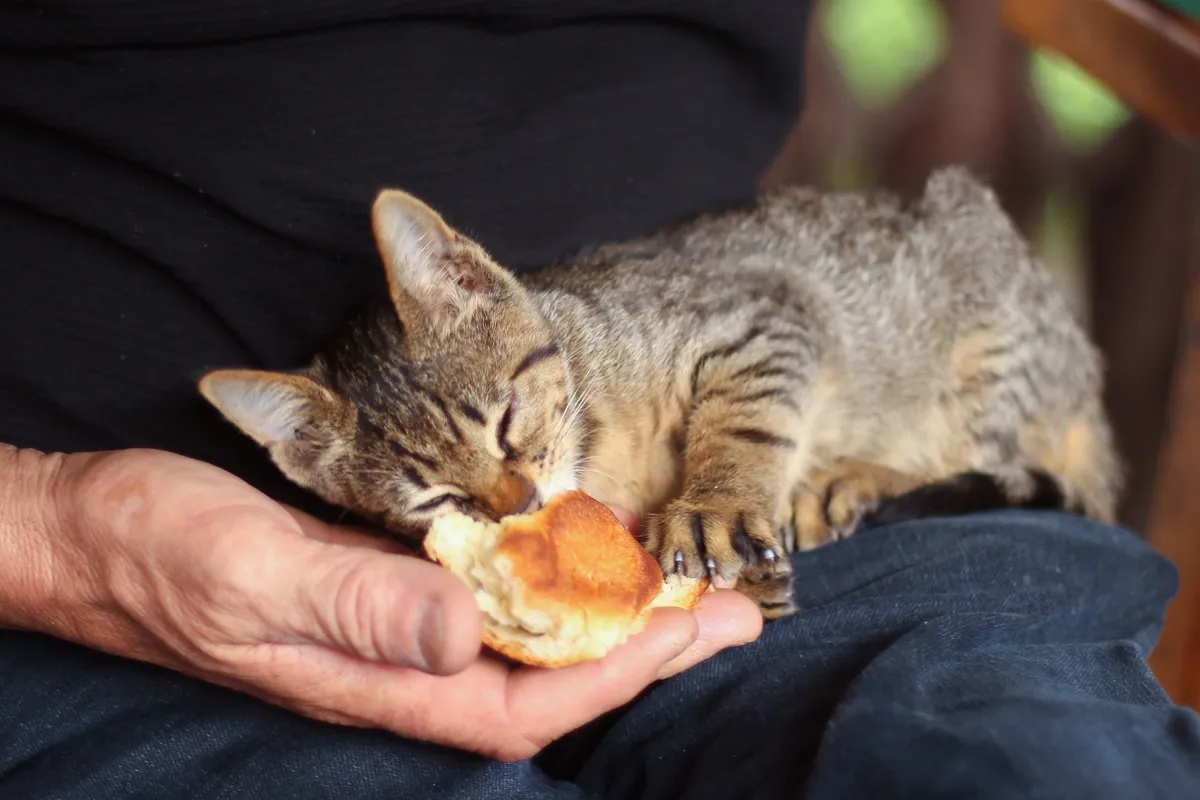
Yes, cats can eat plain cooked white rice in small amounts — it isn't toxic — but it shouldn't become a habit. Cats are obligate carnivores, which means their bodies are built to run on nutrients found in animal tissue, not grains. A few bites of plain rice every once in a while won't hurt a healthy adult cat, but rice provides almost nothing your cat actually needs. Think of it as a novelty treat, not a food, and always keep it plainly cooked with no salt, butter, oils, spices, or sauces.
Why cats don't need rice (or many carbs at all)
To understand whether rice belongs in your cat's diet, it helps to look at how a cat's body works. Cats are obligate carnivores — a term veterinary nutritionists use to describe animals that must eat meat to survive. Over millions of years of evolution, cats lost the ability to efficiently use many nutrients found in plants. They have a constant, high demand for protein, which they use for everything from building muscle to fueling their immune systems. Unlike dogs or humans, cats can't easily downshift their protein-burning machinery when food is scarce, and they need certain nutrients — like taurine, arachidonic acid, and preformed vitamin A — that only exist naturally in animal tissue.
Carbohydrates, on the other hand, are not an essential part of a cat's diet. The Association of American Feed Control Officials (AAFCO) sets nutritional standards for cat food, and interestingly, there is no minimum carbohydrate requirement for adult cats. Cats can and do digest cooked starches like rice — they have the enzymes for it — but their bodies simply don't need them. When your cat eats a few grains of rice, those carbs are mostly converted to energy. Fine in a pinch, but not a nutrient your cat is missing out on if it never touches the stuff.
Rice also brings very little to the table nutritionally. Plain cooked white rice is mostly starch with small amounts of protein (around 2–3 grams per cooked cup) and trace minerals, and it contains no taurine. So while it won't harm your cat, it also isn't doing any nutritional heavy lifting.
When rice is actually helpful
There is one situation where rice can play a genuinely useful role: as part of a bland diet for a cat with minor digestive upset. Veterinarians sometimes recommend feeding small amounts of plain white rice alongside a mild protein source like boiled chicken or plain turkey to help settle an upset stomach. The gentle, low-fiber texture of white rice is easy on the digestive tract and can help firm up loose stools.
Important: you should only do this under your veterinarian's guidance.
If your cat has diarrhea, vomiting, or other digestive symptoms lasting more than a day, don't play chef or doctor. Cats can dehydrate quickly, and digestive issues can be signs of something more serious. Always call your vet before switching to a home-made bland diet — they'll tell you whether rice is appropriate, how much to give, and for how long.
How to serve rice safely: dos and don'ts
If you decide to offer rice as an occasional treat, the way you prepare it matters more than the rice itself. A single grain of plain boiled rice is not the same as a helping of chicken fried rice.
The only safe version: plain, cooked, white rice. Boil or steam it without adding salt, butter, oil, broth, or any seasoning, and let it cool to room temperature before offering it. White rice is lower in fiber than brown rice, which makes it gentler on a cat's stomach. You can mix a small amount of it into your cat's regular meal or offer a few grains as a hand-fed novelty.
Never feed seasoned or flavored rice. Many ingredients humans love are dangerous for cats. Garlic and onions (in any form — powder, flakes, or pieces) can damage a cat's red blood cells and lead to anemia. Excessive salt can strain the kidneys, and added fats or oils can trigger a painful inflammation of the pancreas. Fried rice, rice pilaf, rice dishes with sauces, or rice cooked in broth are all off the table.
Here's a quick reference for common rice varieties:
| Type of rice | Can cats eat it? | Notes |
|---|---|---|
| Plain cooked white rice | Yes, occasionally | Easiest to digest; neutral on the stomach; use as a rare treat |
| Plain cooked brown rice | In very small amounts | Higher fiber than white rice; may cause gas or an upset stomach in some cats |
| Wild rice | Best avoided | Tough texture and hard to chew; no meaningful nutritional benefit for cats |
| Seasoned, fried, or garlic/onion rice | No | Ingredients like garlic, onion, salt, and oil are unsafe for cats |
How much rice can a cat have?
Keep rice firmly in 'treat' territory. Veterinary nutritionists generally recommend that treats — including human foods — make up no more than 10 percent of a cat's daily caloric intake. For an average 10-pound (4.5 kg) cat eating about 200–250 calories a day, that leaves room for only about 20–25 calories worth of treats. Plain cooked white rice contains roughly 200 calories per cooked cup, so even a tablespoon is pushing toward the top of that budget.
Practically speaking, a teaspoon of rice, a few grains, or a small pinch mixed into food is plenty. Any more and you're displacing the nutritionally complete food your cat actually needs.
Some cats should skip rice entirely. Cats with diabetes may have trouble managing the blood-sugar spikes that come from starchy carbs. Overweight cats don't need the extra empty calories. And kittens, whose small bodies are growing quickly, need every bite to count — they should stick to a complete kitten food rather than nibbling on rice.
If your cat has diabetes, kidney disease, food allergies, or any chronic health condition, check with your veterinarian before offering rice or any other human food.
What about rice in commercial cat food?
You'll notice rice listed as an ingredient in many commercial cat foods — sometimes in the top five ingredients. That's not necessarily a bad thing. In a complete and balanced commercial diet, rice typically serves as a digestible carbohydrate source that helps bind the kibble, provide energy, and keep the formula affordable. When a food is labeled as 'complete and balanced' according to AAFCO standards, it means all the essential nutrients are present in the right proportions — the rice in it is just a vehicle.
There's a meaningful difference between a professionally formulated diet that includes rice and you serving a bowl of leftover rice at the dinner table. Commercial cat food is carefully balanced with taurine, arginine, vitamins, and minerals; a bowl of plain rice is just starch. So a little rice in kibble is fine, and a few grains as a treat is fine — but rice as a meal base at home is where cats get into nutritional trouble.
Frequently Asked Questions
Is white or brown rice better for cats?
White rice is the better choice. It's lower in fiber, which makes it easier for a cat's short digestive tract to process, and it's the variety veterinarians typically recommend if a bland diet is called for. Brown rice has more fiber and can cause gas, bloating, or loose stools in some cats.
Can rice help settle my cat's stomach?
In some cases, yes. Plain white rice is sometimes used as part of a bland diet for minor digestive upset, usually paired with a mild protein like boiled chicken. But it's not a remedy you should invent on your own — if your cat is vomiting, has diarrhea, or is refusing food, call your veterinarian first. Digestive symptoms can be a sign of something more serious.
Are there cats that shouldn't eat rice at all?
Yes. Cats with diabetes should generally avoid starchy carbs like rice because they can spike blood sugar. Overweight or obese cats don't need the extra calories. Kittens should stick to nutritionally complete kitten food. And any cat with a chronic health condition should only eat rice if your vet gives the green light.
Is rice good or bad in commercial cat food?
Neither — it's neutral. Rice in a complete-and-balanced commercial food is simply a digestible carbohydrate source. It's not toxic, and it isn't the nutritional core of the food. What matters is that the food meets AAFCO standards for complete nutrition, not whether rice appears in the ingredient list.
Key Takeaway
Yes, cats can eat plain cooked white rice in small amounts — it's safe, bland, and easy to digest. But rice is a treat, not a meal. Cats are obligate carnivores with no dietary requirement for carbohydrates, so rice offers them little beyond calories. Serve it plain, keep portions to a teaspoon or less, and never use rice to replace a complete and balanced cat food. When in doubt — especially if your cat has health issues or digestive symptoms — check with your veterinarian first.
Check a food before you guess
Search the PurrWise food checker for a specific ingredient and review the recommended safety action.
Share this guide
Help another cat parent find it.