The short answer
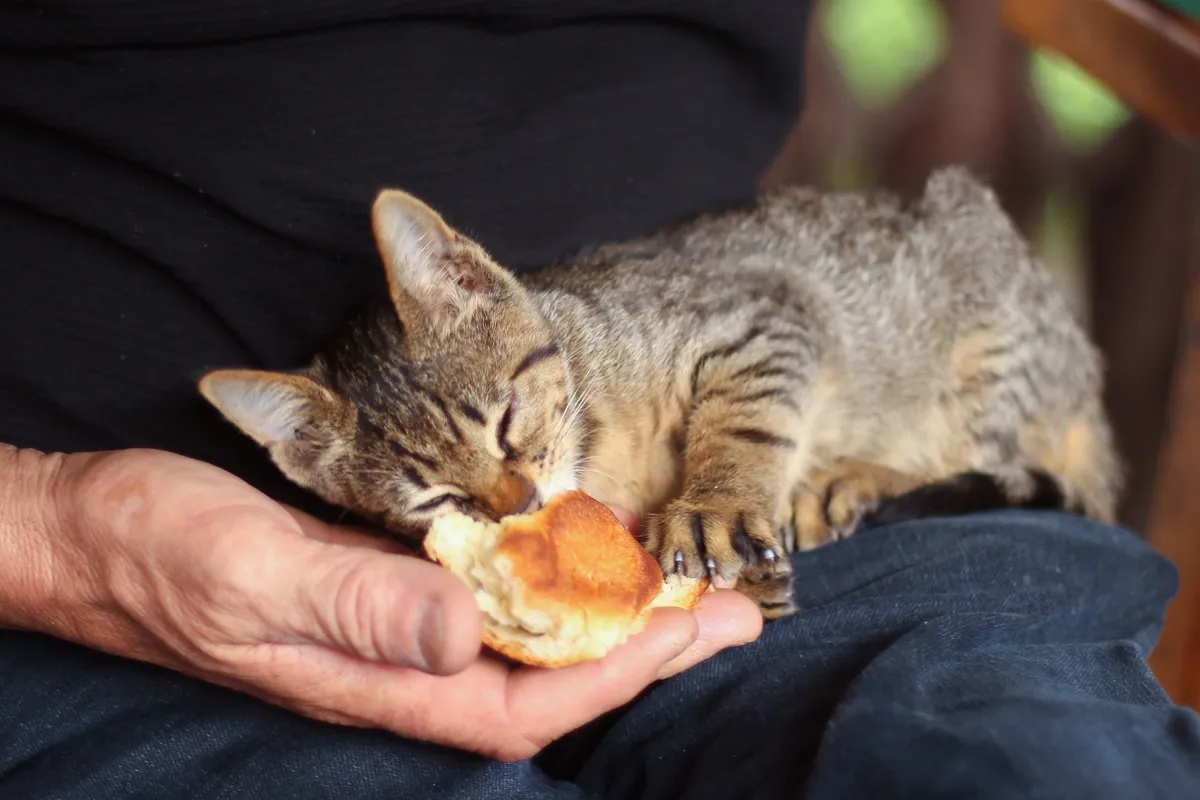
Yes, a small piece of plain bread is safe for most healthy cats to eat as an occasional treat. It is not unsafe or poisonous in itself, but bread also has almost no nutritional value for a cat. Cats are obligate carnivores, which means their bodies are designed to run on animal protein and fat, not grain-based carbohydrates. A tiny bite of plain white or whole wheat bread usually won't cause harm, but the real dangers come from raw dough, bread that contains unsafe add-ins, and making a habit of offering too many carbs.
Why cats don't need bread in their diet
Cats have no dietary requirement for carbohydrates. In the wild, a cat's diet consists mostly of prey like mice and birds, which provide protein, fat, and just a small amount of carbohydrate from the stomach contents of their prey. Domestic cats still have the same basic nutritional needs as their wild relatives. Their bodies produce the enzymes needed to digest carbohydrates, but they can't use grain-based foods as efficiently as they can use animal tissues.
Bread is essentially flour, water, and yeast, with some recipes adding sugar, salt, oil, or milk. These ingredients are not harmful in tiny amounts, but they crowd out the nutrients a cat actually needs. Feeding bread regularly can fill a cat's stomach with empty calories and make them feel full, which may cause them to eat less of their complete and balanced cat food. Over time, that can lead to nutrient deficiencies and weight gain.
What happens when a cat eats bread?
A small piece of plain bread usually passes through the digestive tract without incident. The cat's body will break down the starch into simple sugars and use them as quick energy, but that energy comes at the cost of a lot of extra carbohydrates. Unlike humans, who benefit from whole grains and fiber, cats get very little benefit from the fiber in bread. Some cats may enjoy the texture or the smell of bread, but that doesn't mean it's a good snack for them.
If a cat eats a moderate amount of bread, you might notice a temporary increase in thirst or a softer stool. This is usually nothing to worry about. However, if a cat eats a large quantity of bread in one sitting, it could cause digestive upset, including gas, bloating, or mild stomach discomfort. In most cases, the signs pass within a day or two. If they don't, or if your cat seems truly unwell, contact your veterinarian.
The real risks to watch for
The biggest concerns with cats and bread aren't about the bread itself. They come from what is in the bread, or what the bread turns into inside a cat's stomach.
Raw dough is a serious danger
One of the most important things to understand is that raw bread dough can be dangerous for cats. When a cat eats raw dough, the warm and moist environment of the stomach causes the yeast to ferment. This produces two problems. First, the dough expands and gases build up, which can stretch the stomach and cause severe pain, bloating, and even a life-threatening condition called gastric dilation. Second, yeast fermentation produces alcohol, which can enter the bloodstream and lead to alcohol poisoning. If your cat has eaten raw dough, contact a veterinarian immediately.
:::caution Never give your cat raw bread dough. If you suspect your cat has eaten raw dough, especially in a large amount, get veterinary help right away. It can cause dangerous stomach expansion and alcohol absorption. :::
Unsafe add-ins
Many breads and baked goods contain ingredients that are unsafe for cats. Raisins and currants can cause kidney problems in some dogs and are best avoided in cats too. Garlic and onion powder are often used in savory breads and can damage red blood cells. Xylitol, a sugar substitute sometimes found in certain breads or baked goods sold as low-sugar, can cause a rapid drop in blood sugar. Chocolate chips, seeds coated in salt, and other toppings can also cause issues. Always check the ingredients list before sharing any human food with your cat.
Choking and weight gain
A large piece of bread can be a choking hazard, especially for small cats or cats that gulp their food. Always tear bread into very small pieces. Also, bread provides calories that add up quickly. A typical slice of white bread contains around 70 to 80 calories. For an average 10-pound cat, that's about 15% of their daily calorie needs. A whole slice is a significant portion of a cat's daily intake, and offering it regularly can contribute to obesity. Obesity in cats raises the risk of diabetes, joint problems, and other health issues.
How to offer bread safely (if you do)
You don't have to give your cat bread at all, but if you enjoy sharing a tiny bite, there are some simple rules to follow.
- Only offer plain bread with no add-ins, no sugar, no salt coatings, and no savory seasonings.
- Tear off a small piece about the size of your thumbnail or a large pea. That's roughly 5 to 10 calories.
- Limit bread treats to once or twice per week at most, and reduce other treats on the same day.
- Watch your cat after the first bite to make sure they chew it and don't try to swallow it whole.
- Never give bread to a cat on a restricted diet for medical reasons unless your vet approves.
Compare common breads for safety
The table below gives a quick reference for different bread types.
| Bread type | Is it safe for cats? | Notes |
|---|---|---|
| Plain white bread | Safe in tiny amounts | Low nutritional value; okay as an occasional treat |
| Plain whole wheat bread | Safe in tiny amounts | Slightly more fiber, but still not useful for cats |
| Sourdough bread | Safe after baking | Must be completely cooled and plain; raw sourdough starter is unsafe |
| Rye bread | Safe in tiny amounts | Check for caraway seeds, onion, or other seasonings |
| Bread with raisins | Unsafe | Raisins can cause kidney problems; avoid entirely |
| Bread with garlic/onion | Unsafe | Both are harmful to cats in even small amounts |
| Bread with xylitol | Unsafe | Can cause a dangerous drop in blood sugar |
| Raw bread dough | Unsafe | Expands in the stomach and produces alcohol; call your vet |
Are some breads better than others?
Whole grain bread has more fiber than white bread, but that doesn't make it a healthier choice for a cat. Cats don't digest grain fiber well, and the extra bulk can cause mild stomach upset or changes in stool. Sourdough bread is often easier to digest because the fermentation process breaks down some of the gluten, but again, that only matters if you're giving significant amounts, which you shouldn't. In the end, the safest bread is the most plain one: no added salt, no sugar, no butter, and no seeds.
If you're looking for a treat that will actually benefit your cat, there are much better options. Small pieces of cooked chicken, turkey, or fish, plain canned pumpkin, or commercial cat treats made with real meat are far more appropriate. These treats provide protein and other nutrients cats can use, while still being a special snack.
Frequently Asked Questions
Can kittens eat bread?
Kittens need every bit of their limited calorie intake to come from a high-quality kitten food that supports rapid growth and development. Bread offers no nutrients that kittens need, so it's best to avoid giving bread to kittens altogether. If a kitten sneaks a tiny piece of plain bread, it's unlikely to cause serious problems, but it shouldn't become a habit.
What if my cat ate a whole loaf of bread?
If your cat got into a loaf of plain, baked bread, they will likely experience a very full stomach, maybe some vomiting or diarrhea, and possibly a lot of gas. Monitor them closely. If the bread contained raisins, garlic, onion, xylitol, or chocolate, call your veterinarian immediately. Also call if your cat is showing signs of distress like retching, a swollen stomach, lethargy, or inability to keep water down.
Is whole wheat bread better than white bread for cats?
Not really. Whole wheat bread has more fiber, but cats have no need for that extra fiber, and it can even cause digestive upset in larger amounts. Neither type is harmful in tiny bites, but neither is beneficial either. Plain white bread is actually less likely to contain seeds or grains that could be problematic, so there's no strong reason to pick whole wheat over white for a cat.
Can bread help with hairballs?
Some people have heard that giving bread can help cats pass hairballs, but this is not a recommended or reliable strategy. There are much safer and more effective options, such as specialized hairball diets, cat grass, or veterinary-recommended hairball remedies. Adding bread to your cat's diet for hairball control is not supported by veterinary evidence and can simply add unnecessary calories.
Key Takeaway
Plain bread is safe for cats in small, occasional bites, but it is never a necessary part of their diet. The main things to avoid are raw dough, bread with unsafe ingredients like raisins or garlic, and overfeeding. If you want to treat your cat, choose a protein-rich snack that supports their carnivorous nature. When you do decide to share that tiny corner of your sandwich, remember: a thumbnail-sized piece, once in a while, is plenty.
Check a food before you guess
Search the PurrWise food checker for a specific ingredient and review the recommended safety action.
Share this guide
Help another cat parent find it.