The short answer
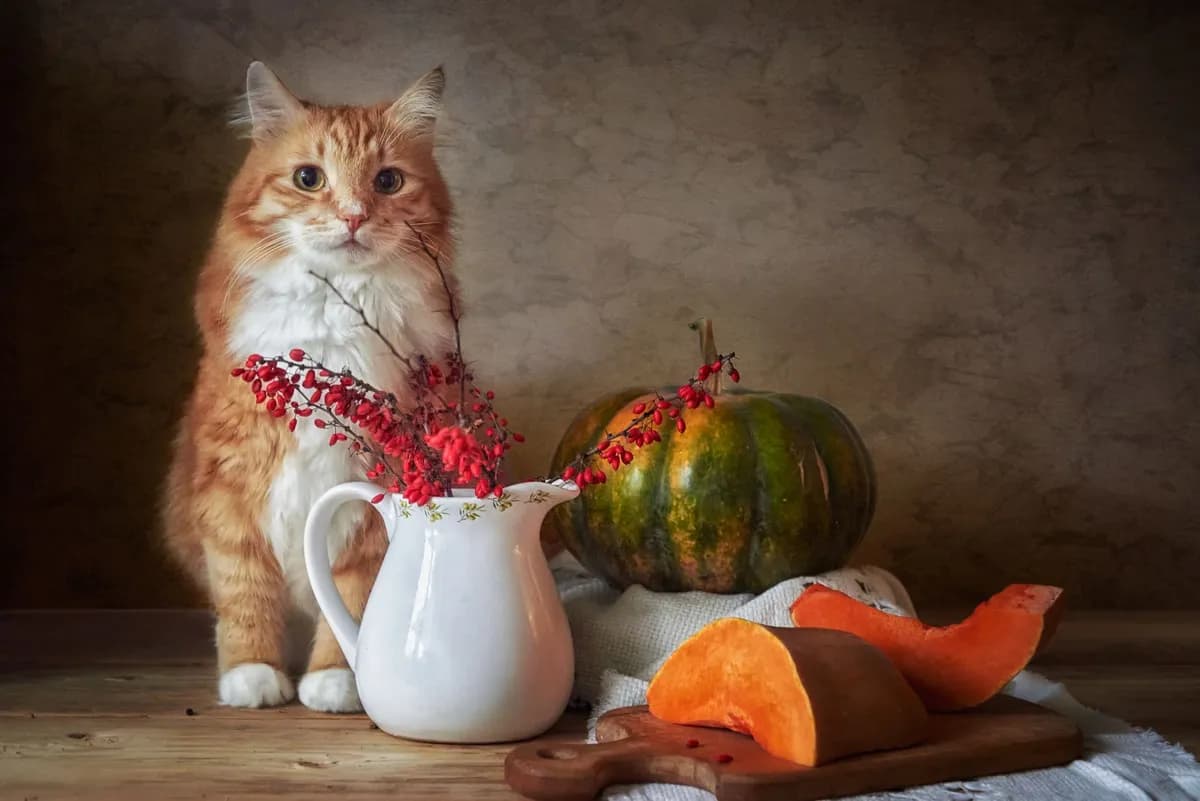
Yes, cats can eat pumpkin — but only the plain, cooked kind, and only in small amounts. A teaspoon or two of plain canned pumpkin puree (not pie filling) is a safe occasional snack for most healthy adult cats. Pumpkin is not a nutritionally complete food, so it should never replace a balanced cat meal, and it shouldn't be used as a home remedy for ongoing digestive problems without your veterinarian's input.
Why pumpkin can be a good occasional snack
Pumpkin is a whole food, which means the ingredient list is refreshingly short: pumpkin. Cats are obligate carnivores, so pumpkin isn't a necessary part of their diet — but it's not harmful either, and it offers a few practical perks:
- Moisture. Pumpkin is mostly water. Mixing a little into a meal can add gentle hydration for cats who don't drink much.
- Fiber. The fiber in pumpkin can help keep things moving along the digestive tract for some cats, which is why it sometimes gets mentioned in hairball chatter. It's a "sometimes" tool, not a guarantee — and not a substitute for veterinary advice.
- Vitamins and minerals. Pumpkin provides vitamin A, vitamin C, and potassium in modest amounts. At the tiny serving sizes recommended here, these nutrients are a bonus, not a meaningful dietary source.
- Low calories. Plain pumpkin is low in calories — about 8–10 calories per ounce — which makes it a lighter treat compared with many commercial cat treats.
That said, pumpkin has almost no protein and next to no taurine, the amino acid cats must get from animal tissue. That's exactly why it's a treat, not a meal. Think of it this way: pumpkin can be a nice change of texture and flavor, a bowl-moistening garnish, or a tiny low-calorie reward. It is not a protein source, not a vitamin supplement, and not a meal replacement.
The right kind of pumpkin (and the kinds to avoid)
Not everything that says "pumpkin" is cat-safe. The label is your best friend.
- Safe: 100% plain pumpkin puree, canned or freshly cooked and mashed, with no added salt, sugar, spices, or fat.
- Safe: plain cooked pumpkin flesh — steamed, boiled, or roasted without seasoning.
- Avoid: pumpkin pie filling. It contains added sugar and spices, and nutmeg in particular can upset a cat's stomach — in large doses it can even cause neurological signs.
- Avoid: raw pumpkin. It's tough, hard to chew, and difficult for cats to digest, and the skin is a choking hazard.
- Avoid: pumpkin seasoned with butter, salt, garlic, or onions — garlic and onions are toxic to cats.
Pumpkin seeds are generally not toxic, but they're hard, shelled, and easy to choke on, so there's no good reason to offer them. Keep the snack simple: plain mash or puree.
| Kind of pumpkin | Safe for cats? | Why |
|---|---|---|
| Plain canned pumpkin puree (100% pumpkin) | Yes — best choice | Smooth, no additives, easy to portion |
| Fresh cooked, mashed pumpkin | Yes | Just as good, as long as it's unseasoned |
| Raw pumpkin chunks | No | Hard to chew and digest; choking risk |
| Pumpkin pie filling | No | Loaded with sugar and spices like nutmeg |
| Pumpkin seeds with shells | No | Choking and blockage risk |
Never serve pumpkin pie filling, spiced pumpkin, or pumpkin cooked with onions or garlic. These additions can upset a cat's stomach — and onions, garlic, and large amounts of nutmeg can be genuinely dangerous. When in doubt, the only "pumpkin" your cat should see is the one with a single ingredient on the label.
How much pumpkin can a cat eat?
Pumpkin is a treat, not a food group. A sensible starting point:
- Healthy adult cats: 1–2 teaspoons of plain puree, no more than once a day, and only a few times per week.
- Kittens: skip it unless your veterinarian says otherwise. Growing kittens need every calorie to be dense in protein and essential nutrients.
- Cats with health conditions: if your cat has diabetes, kidney disease, or any chronic condition, clear any treat food with your vet before offering it.
A handy rule of thumb is that all treats combined — including pumpkin — should stay under about 10% of your cat's daily calories. For an average 10-pound cat eating roughly 200–250 calories a day, that's about 20–25 calories of wiggle room, and a teaspoon of pumpkin comes in around 2 calories. It adds up quickly if you're not counting. Think of it in treat currency: swapping one small commercial treat for a teaspoon of pumpkin keeps the calorie math in the same neighborhood. And choose the treat that earns the budget slot — keep pumpkin as one of several rotating options.
Start with a smaller-than-usual amount, like a quarter-teaspoon, the first time. A sudden burst of fiber can cause gas or loose stool in a cat who isn't used to it, so slow introductions are kinder to everyone involved.
What about pumpkin in commercial cat food?
You might notice pumpkin in the ingredient list of some commercial wet foods or treats. That's different from spooning it into the bowl yourself — a nutritionally complete product with pumpkin has been formulated to meet your cat's nutrient requirements, with pumpkin playing a background role. The label should carry an AAFCO statement confirming the food is complete and balanced for a cat's life stage.
What's not a good idea is adding pumpkin to a homemade or raw diet on your own. Those diets are already hard to balance, and unmeasured extras can push nutrient ratios further out of whack. Keep pumpkin as an occasional add-on to a complete commercial diet, not a regular ingredient in recipes you're inventing at home.
When pumpkin should not be used as a remedy
Pumpkin has a reputation as a gentle digestive helper, and you'll see it recommended for constipation, diarrhea, and hairballs. There's a kernel of logic there — fiber and water can support normal digestion — but this is where you need to be careful. Fiber can be a double-edged sword: for a cat who is already dehydrated from vomiting or diarrhea, pushing more fiber can make matters worse.
Vomiting, diarrhea, constipation, and appetite loss are symptoms, not conditions in their own right. They can point to parasites, inflammatory bowel disease, a blockage, or ingestion of something toxic — situations where pumpkin doesn't help and delayed care can hurt. If your cat has diarrhea or vomiting for more than a day, stops eating, seems painful, or is lethargic, call your veterinarian before changing the diet.
Do not use pumpkin as a home treatment for vomiting, diarrhea, constipation, or lack of appetite. These signs can indicate serious illness, and treating them with food can delay a proper diagnosis. Always let your veterinarian weigh in first.
How to serve pumpkin safely
Simple steps, done right:
- Check the label. It should say "pumpkin" — nothing else.
- Serve it at room temperature; straight-from-the-fridge pumpkin is less appealing.
- Offer it on its own in a small dish, or mixed into a little wet food.
- Don't season it, don't sweeten it, and don't re-cook it with anything else.
- Refrigerate leftovers in a sealed container and use them within a few days.
- If your cat is a pumpkin fan, freeze extra puree in an ice-cube tray for single portions.
Frozen cubes are handy, but thaw them before serving so you're not offering an ice pop to a sensitive stomach.
And if your cat sniffs it and walks away? That's fine. A treat you have to coax a cat into eating isn't doing anyone any favors. Some cats love it, others couldn't care less — either answer is normal.
Frequently Asked Questions
Can cats eat raw pumpkin?
Raw pumpkin isn't classified as toxic, but it's still not a good idea. It's tough, hard to chew, and difficult to digest, and the skin is a choking hazard. Cooked, plain, mashed pumpkin is the safe version.
Is pumpkin good for cats with hairballs?
It might help some cats move swallowed hair through the digestive tract a bit more easily, thanks to the fiber and moisture. But it's not a treatment, and frequent hairballs are a good reason to talk to your vet.
Can kittens eat pumpkin?
A tiny taste probably won't hurt, but kittens have very small calorie budgets that need to go toward complete, balanced kitten food. Skip pumpkin for kittens unless your vet suggests it.
How often can I give my cat pumpkin?
For most healthy adult cats, a teaspoon or two a few times per week is a reasonable ceiling. Remember that treats of all kinds should stay under about 10% of daily calories.
Can cats eat pumpkin seeds?
Pumpkin seeds aren't toxic, but they're not a good treat: the shells are tough, easy to choke on, and hard to pass. If you want to give your cat pumpkin, stick to plain puree.
Key Takeaway
Plain cooked pumpkin is a safe, low-calorie, and low-stakes occasional treat for most healthy adult cats — think of it as a seasonal snack, not a dietary superhero. Serve it unseasoned, keep portions to a teaspoon or two, and never use it as a stand-in for veterinary care when your cat actually seems unwell. Handled that way, pumpkin earns a perfectly nice spot in your cat's treat rotation.
Check a food before you guess
Search the PurrWise food checker for a specific ingredient and review the recommended safety action.
Share this guide
Help another cat parent find it.