The short answer
Raw cat food can be nutritionally complete when it is commercially formulated, handled carefully, and chosen with veterinary guidance — but the evidence does not show it is inherently better than a balanced cooked diet, and the risks are real. Pathogenic bacteria like Salmonella and Listeria can live in raw meat, endangering both your cat and your family. If raw feeding appeals to you, the safest path is a commercial product with a complete-and-balanced statement, handled with the same caution you would use for raw chicken meant for humans.
What counts as "raw" cat food
The raw category is broader than many owners realize. It includes:
- Commercially frozen raw: ground blends of meat, bone, and organs, sometimes with added vitamins and minerals, sold frozen.
- Freeze-dried raw: raw meat dehydrated at low temperature; you rehydrate it with water before serving.
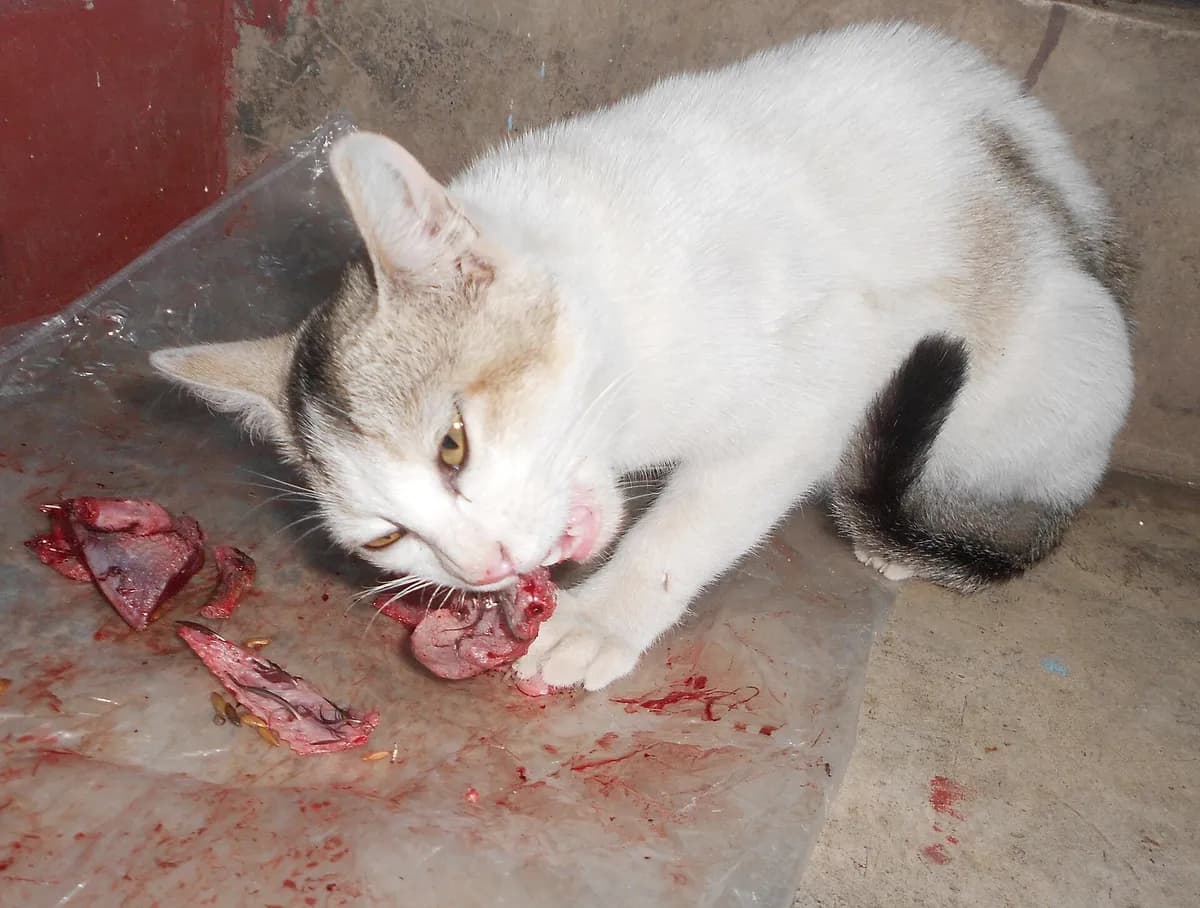
- Homemade raw: recipes you prepare yourself, from ground meat mixes to whole prey such as mice or chicks.
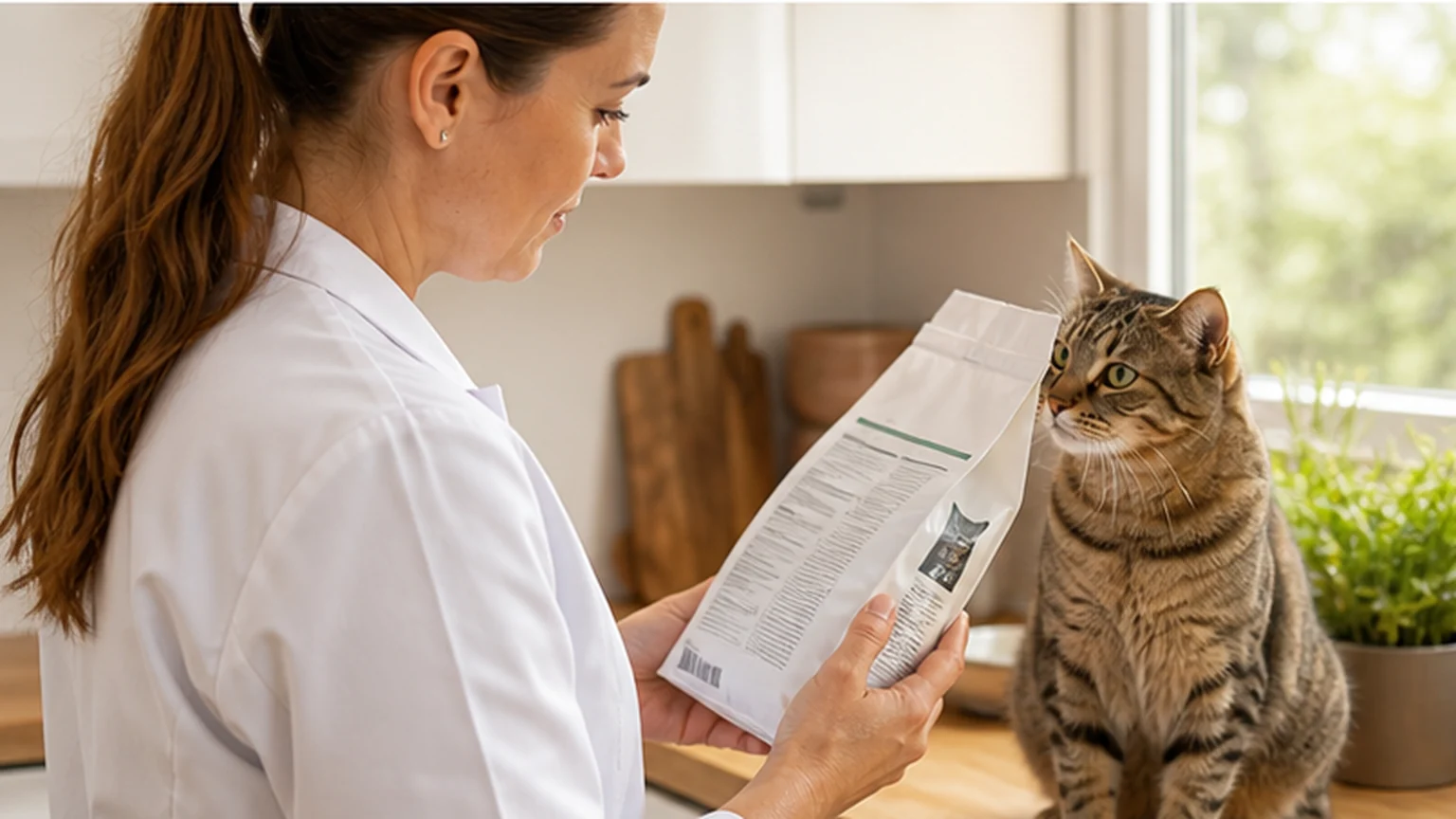
Not every product labeled "raw" is nutritionally complete. A trustworthy product carries an AAFCO statement of nutritional adequacy on the label, often phrased as "complete and balanced." Homemade raw diets rarely meet AAFCO standards unless formulated by a board-certified veterinary nutritionist — and most online recipes have not been.
What the evidence actually says about the benefits
Advocates of raw feeding are right that cats are obligate carnivores. In the wild, a cat eats whole prey: muscle meat, organs, skin, and small bones. Compared with most kibble, raw diets are typically higher in moisture and animal protein and lower in carbohydrates. That profile genuinely appeals to owners who want a more species-appropriate diet.
The science is more modest. Very few large, long-term, peer-reviewed studies compare raw and cooked diets in healthy pet cats. Much of the evidence is anecdotal or drawn from small studies. Owners often report shinier coats, better energy, and smaller stools — but the same reports occur with high-quality canned diets, so the raw format itself is hard to credit.
Dental health is a common claim: chewing raw meaty bones may scrape off plaque. In theory that works; in practice it carries hazards, including tooth fractures and intestinal blockages. No major veterinary organization recommends raw diets for dental health; brushing and veterinary dental care are safer routes.
The risks you should not brush off
Bacteria and foodborne illness. The best-documented risk is contamination. The FDA has tested commercial raw pet foods and found Salmonella and Listeria in a meaningful share of samples. These bacteria can cause diarrhea, vomiting, and fever in cats — and they can spread to people through contact with the food, bowls, counters, and hands. A cat can carry Salmonella without appearing sick and still shed it into your kitchen.
Anyone who is pregnant, under 5, over 65, or immunocompromised — and any household that includes such a person — should avoid raw pet food entirely. A balanced cooked diet delivers the same nutrients without the pathogen load, so the human health risk outweighs the nutritional appeal.
Nutritional imbalance. This is where homemade raw diets concentrate danger. Cats need taurine, arginine, arachidonic acid, preformed vitamin A, and a careful calcium-to-phosphorus ratio. A recipe built mostly from muscle meat can end up deficient in taurine and other nutrients, while too much liver can cause vitamin A toxicity. Kittens, seniors, and cats with chronic illness are especially vulnerable.
Bones and physical hazards. Whole or chopped bones can splinter, fracture teeth, lodge in the esophagus, or obstruct the intestines. Finely ground bone in commercial products is far safer than whole bones. Never offer cooked bones, which splinter more easily — but raw bones are not risk-free either.
Handling and cross-contamination. Raw pet food deserves the same kitchen caution as raw poultry. Juices from a thawing raw patty can contaminate countertops, sponges, and human food. A surprising share of infections traced to raw pet food are actually human infections acquired in the kitchen.
Raw feeding at a glance
| Claim | Possible benefit | What to weigh instead |
|---|---|---|
| "It's natural" | High moisture, high protein, low carbohydrate | Natural does not automatically mean balanced or safe |
| "Better coat and energy" | Anecdotal improvements | Similar reports occur with balanced cooked diets; little controlled evidence |
| "Cleaner teeth" | Chewing may reduce plaque | Tooth fractures and obstruction risk; brushing is safer |
| "Great for picky cats" | Highly palatable | Palatability is not proof of nutritional adequacy |
| "Easier digestion" | Some cats with sensitivities improve | No strong evidence raw beats a cooked novel-protein diet |
The safety checklist if you choose raw
If you and your veterinarian decide raw feeding fits your cat, this checklist reduces the biggest risks:
- Buy commercial, not homemade. Choose products with an AAFCO complete-and-balanced statement. If you insist on homemade, have a veterinary nutritionist formulate the recipe.
- Thaw in the refrigerator, never on the counter, and feed promptly.
- Keep raw food separate. Use dedicated cutting boards, bowls, and utensils for pet food, or sanitize them thoroughly after each use.
- Wash your hands with soap and warm water for at least 20 seconds after handling raw food, packaging, or the feeding bowl.
- Serve only what your cat will eat in about 30 minutes and discard leftovers. Do not let raw food sit out, and do not refreeze leftovers.
- Clean the bowl after every meal with hot, soapy water, ideally in the dishwasher.
- Choose stainless steel bowls, which are easier to sanitize than scratched plastic.
- Reconsider for kittens and vulnerable households. Kittens have narrow nutritional margins, and homes with children, older adults, or immunocompromised people should skip raw entirely.
Raw meat can carry Salmonella, Listeria, and E. coli even when it looks and smells normal — even when the label says "human grade" or "safe to eat raw." Those labels describe the quality of the meat going in, not the absence of bacteria. Safe handling is your responsibility at every single meal.
The nutritional bottom line
Cats are obligate carnivores, so feeding them like cats rather than like small dogs resonates for good reason. But the scientific consensus is clear: cats do not need raw food to thrive. They need a complete set of nutrients, and balanced canned or cooked diets supply exactly those nutrients without the pathogen risk. The format matters far less than whether the food is complete, balanced, palatable, and safe.
If you switch to raw, transition gradually over about a week, mixing increasing amounts of the new food with the old, and monitor weight and energy. Keep the label: the AAFCO statement and the manufacturer's contact information tell you a great deal about whether the product was formulated with your cat's health in mind.
Frequently Asked Questions
Is freeze-dried raw safer than frozen raw?
Not meaningfully. Freeze-drying kills some pathogens but not all — Salmonella and Listeria can survive because they tolerate cold and low moisture. Freeze-dried raw still requires the same careful handling, and the rehydration water must be clean. Treat it exactly like frozen raw in your kitchen.
Can kittens eat raw food?
Kittens can eat a complete-and-balanced raw diet formulated for growth, but the margin for error is narrow: a small calcium or phosphorus imbalance during growth can cause skeletal problems. Many veterinarians recommend a cooked, complete kitten food instead, since kittens' immune systems are still developing.
How do I know a raw food is complete and balanced?
Look for an AAFCO statement on the label, such as "complete and balanced for all life stages" or "formulated to meet AAFCO nutrient profiles." Products backed by feeding trials are even better. Without that claim, the food is a treat or supplement, not a sole diet.
Can I mix raw food with kibble or canned food?
You can, but the complete-and-balanced claim for each product no longer applies to the combined meal at the same proportions — you are effectively creating a new recipe. If you want to mix, tell your veterinarian the exact amounts, or feed one complete diet at a time.
My cat loves raw food. Doesn't that mean it's good for her?
Cats love what is palatable, not what is nutritionally complete. A diet made almost entirely of favorite muscle meat can still be deficient in taurine and calcium. Appetite is a poor nutritional advisor — judge the diet by veterinary nutrition review, not your cat's enthusiasm.
Key Takeaway
Raw feeding is a legitimate choice, but it is a choice with real trade-offs. The evidence does not support the claim that raw is categorically superior to balanced cooked diets, and the safety burden — for your cat and your kitchen — is higher than most advocates describe. If raw appeals to you, work with your veterinarian, choose a commercial product with an AAFCO statement, and handle it like the raw meat it is. For most households, what keeps a cat healthy is a diet that is complete, balanced, and fed consistently — raw or not.
Sources & Scientific References (3)
Raw Diets for Cats
Cornell Feline Health Center • Accessed 2025-06-08
Get the Facts! Raw Pet Food Diets Can Be Dangerous to You and Your Pet
U.S. Food and Drug Administration • Accessed 2025-06-08
Raw or Undercooked Animal-Source Protein in Cat and Dog Diets
American Veterinary Medical Association • Accessed 2025-06-08
Share this guide
Help another cat parent find it.