The short answer
One or two kittens can work. The better choice depends on whether the kittens are bonded, your space and budget, the time available for care and play, and how other pets will be introduced.
Do not adopt two because the internet says pairs are always easier, and do not separate an established bonded pair simply because one appears cheaper. Ask the organization that knows the kittens, then test the choice against your household's capacity for their entire lives.
One Kitten vs. Two at a Glance
| Consideration | One kitten | Two kittens |
|---|---|---|
| Social play | Household provides more interactive play | Kittens may play together when compatible |
| Human time | More direct play and skill-building needed | Each still needs individual attention |
| Cost | One set of food, veterinary, and insurance needs | Most recurring and medical costs apply twice |
| Space | Fewer duplicate resources | More boxes, carriers, feeding and resting areas |
| Monitoring | Easier to track intake and stool | Individual tracking requires separation or observation |
| Existing pets | One newcomer to introduce | Two newcomers can add complexity |
| Travel and housing | Simpler capacity requirements | Boarding, rentals, and transport cost more |
| Relationship risk | No kitten-to-kitten compatibility issue | Friendship can change with maturity |
Two kittens may share play, but they do not merge into one care unit.
When two may fit
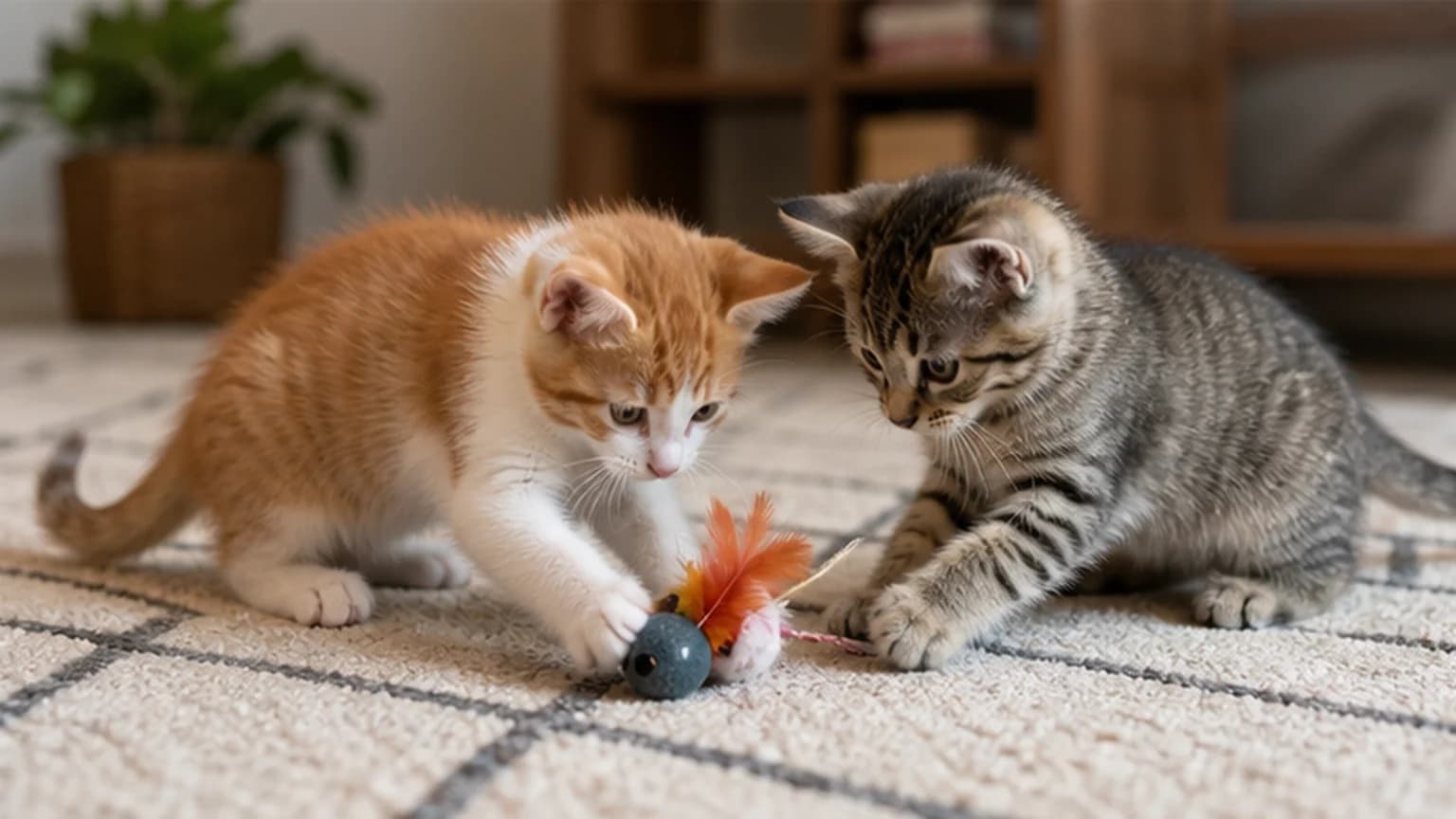
A bonded pair may already be comfortable together and can share some social learning and play. Two also means duplicate food, litter, veterinary, insurance, and emergency costs, plus enough separate resources for both cats.
Consider two when:
- the shelter or foster identifies an established compatible or bonded pair;
- both kittens are healthy enough for adoption under professional guidance;
- your housing permits two adult cats;
- the household can fund routine and unexpected care for each;
- there is room for distributed litter, feeding, resting, hiding, and scratching resources;
- every caregiver agrees to the workload; and
- existing animals can be introduced safely and gradually.
Play between kittens can provide exercise and feedback about bite pressure, but it does not replace human socialization, handling practice, enrichment, training, or rest. Supervise, provide escape options, and allow each kitten time alone.
What “Bonded” Means
The word should reflect observed history, not simply two kittens photographed together. Ask how long they have lived together, whether they seek one another for rest and comfort, how they respond to separation, and whether adoption staff recommend placement together.
Littermates are not automatically bonded, and unrelated kittens can form strong relationships. A bonded pair may experience distress if separated, so give the organization's assessment serious weight.
Compatibility can still evolve. As kittens mature, preferences and social relationships may change. Provide enough independent resources even when they currently share everything.
When one may fit
One kitten may be the responsible choice when your household has limited space, budget, time, or an existing cat that needs a slow introduction. Plan daily interactive play and enrichment rather than assuming a kitten will entertain itself.
Consider one when:
- the kitten is not part of a bonded pair;
- local housing or travel plans realistically support one cat;
- two veterinary and emergency budgets would be unstable;
- the home cannot fit enough separated resources;
- an existing pet needs a carefully controlled introduction;
- caregivers can provide frequent age-appropriate play and company; and
- adoption professionals agree the individual can thrive in that placement.
Adopting one is not a commitment to entertain the kitten every waking minute. It is a commitment to provide structured play, safe exploration, rest, scratching, climbing, food puzzles, and social contact without using hands as toys.
The Existing-Cat Question
Do not adopt a kitten solely to “give the resident cat a friend.” Adult cats vary widely in social preference, energy, health, and tolerance for kitten play. A quiet senior may find one kitten difficult and two even more disruptive.
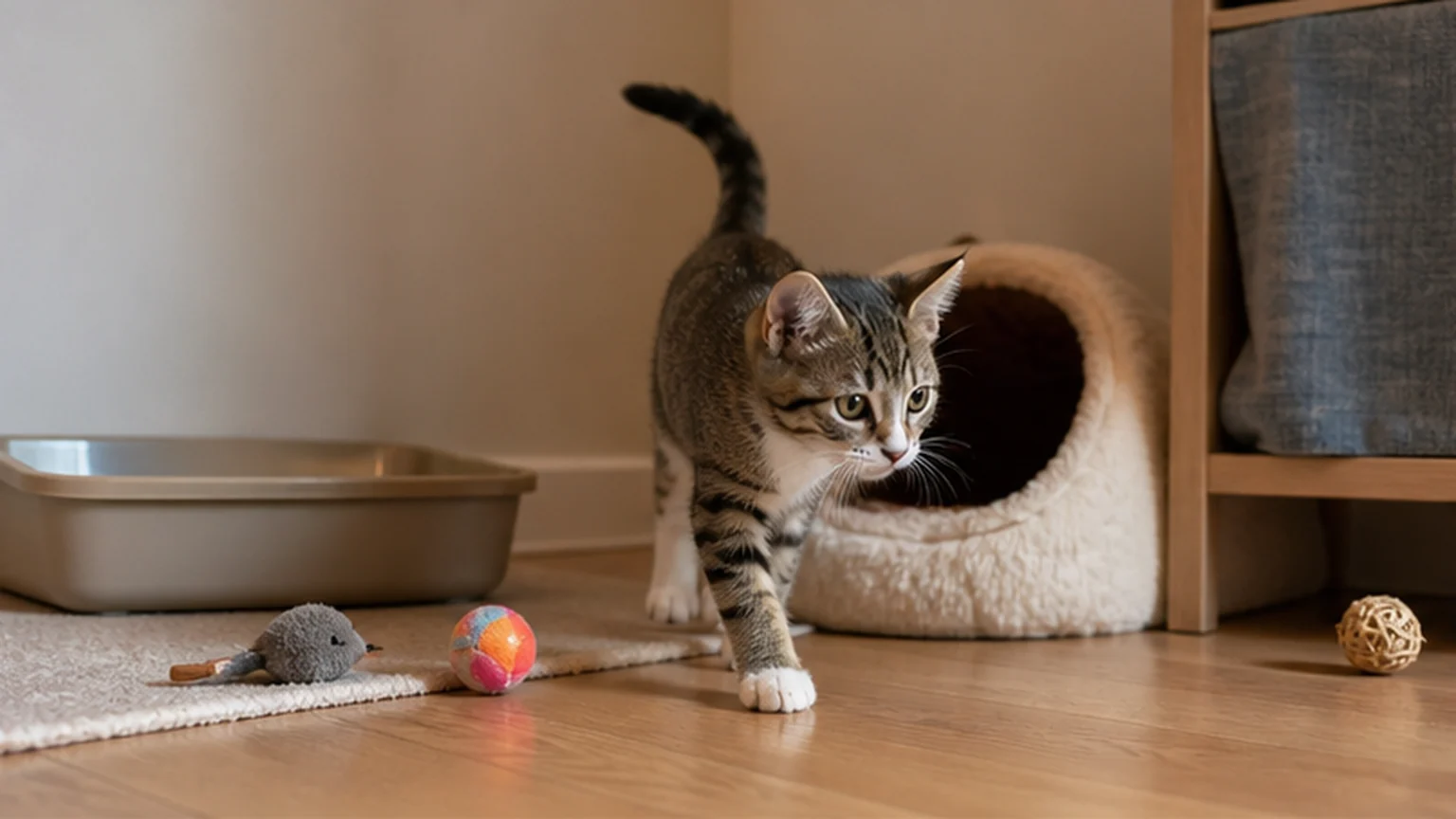
Review the resident cat's medical and behavior needs first. Prepare a closed safe room and duplicate resources. Introduce through scent and barriers before controlled visual and physical access.
Never place a kitten beside the resident cat and expect them to work it out. Hissing can be communication, but chasing, blocking resources, persistent hiding, or injury needs a slower plan and professional help.
Space and Resources for Two
Plan as though each kitten may eventually prefer separate resources:
- one carrier per cat;
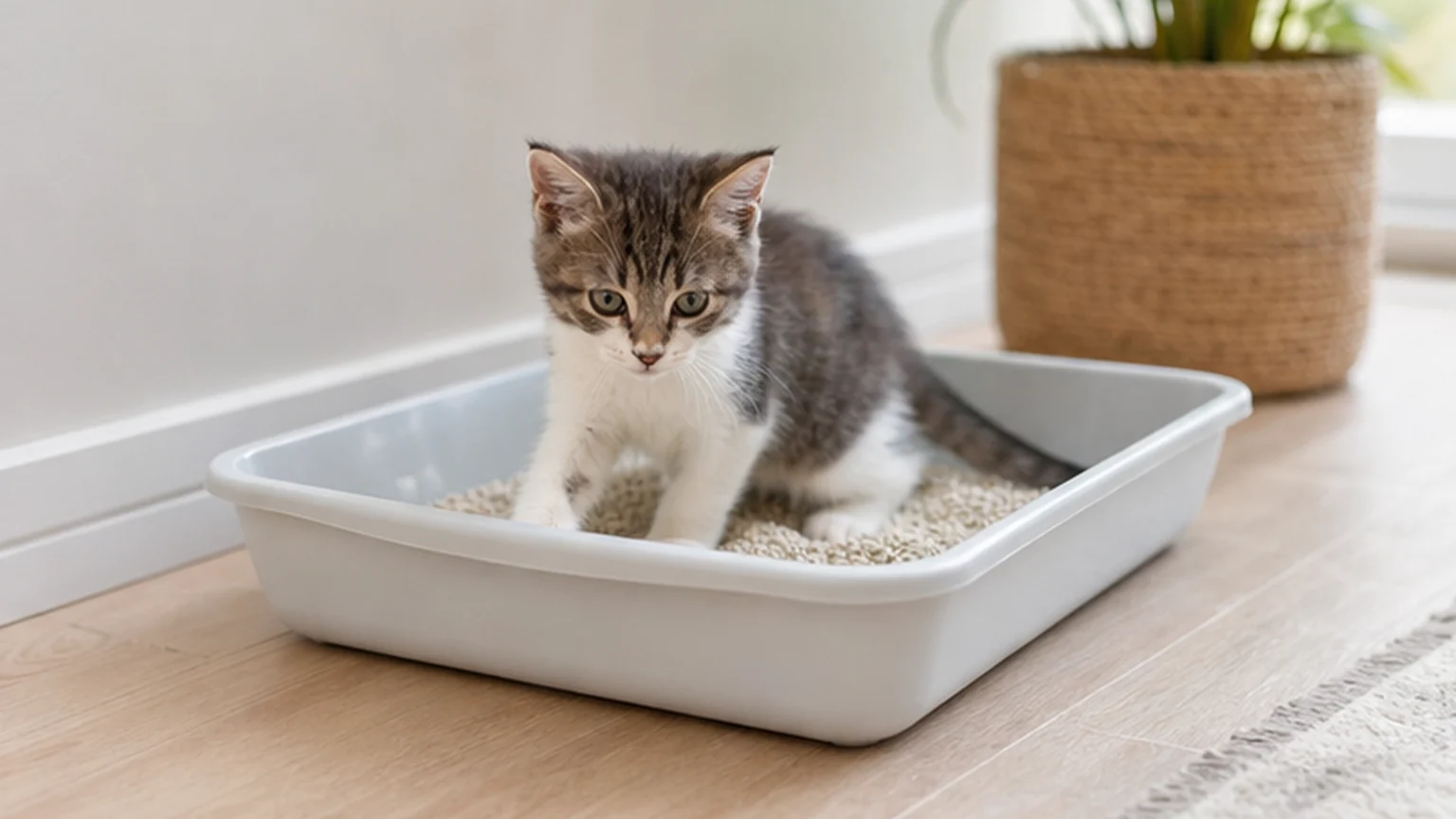
- a common litter-box starting point of one per cat plus one extra;
- multiple food and water locations;
- several sleeping and hiding places;
- vertical territory and routes through rooms;
- vertical and horizontal scratchers; and
- enough safe-room or separation capacity for illness, recovery, or conflict.
Three litter boxes lined up in one room do not offer true distribution. Spread resources so one cat cannot guard them all.
The Real Cost of Two
Some setup items and toys can be shared, but most essentials scale:
- adoption fees;
- complete food and treats;
- litter use and boxes;
- vaccination and preventive care;
- spay/neuter when not included;
- microchips and identification;
- dental and medical care;
- insurance premiums or emergency savings;
- medication;
- boarding or pet sitting; and
- replacement carriers and equipment.
Build a local budget using the cost-to-own-a-cat guide. Ask whether you could fund simultaneous illness or injury, not only a normal month.
Time and Training
Two kittens still need individual observation. Feed separately often enough to know appetite, weigh or monitor growth, check stool and urine, practice carrier entry, handle paws gently, and build separate relationships with people.
Train names and simple cues one kitten at a time before practicing together. Separate short play sessions help a quieter kitten participate without being overtaken by a bolder companion.
For one kitten, schedule several brief interactive play sessions rather than one exhausting session. Let the toy imitate prey, provide catches, and end calmly. Rotate toys and store string-like products after supervision.
Adoption-Day Questions
Ask:
- Are these kittens bonded, compatible, or simply housed together?
- How do they eat, play, rest, and respond to separation?
- Are there medical, medication, diet, or litter needs?
- What socialization and handling have they experienced?
- How do they respond to adult cats, dogs, children, and unfamiliar people?
- Does the organization recommend one specific placement?
- What support is available after adoption?
Answers should guide the decision more than a universal online rule.
Make the decision responsibly
Ask the shelter or breeder about temperament, history, health, and whether kittens are bonded. Prepare separate food, water, litter, resting, and hiding resources. Introduce cats gradually.
Prepare for Either Choice
Before arrival:
- kitten-proof cords, screens, plants, appliances, and small objects;
- set up a quiet starter room;
- keep familiar food and litter;
- arrange veterinary records and appointments;
- update identification;
- obtain appropriate carriers and litter boxes; and
- establish feeding, cleaning, play, and emergency responsibilities.
With two kittens, transport each in a secure individual carrier unless a veterinary or transport professional directs otherwise. With one, prepare sufficient enrichment before arrival rather than purchasing a companion later as an emergency solution.
Common Decision Mistakes
- Assuming every pair of littermates is bonded.
- Treating two kittens as cheaper because they share toys.
- Adopting one without planning daily play.
- Adopting two to fix an adult cat's loneliness.
- Providing one litter box and one feeding station for a pair.
- Expecting kittens to remain equally close as adults.
- Ignoring rental, travel, and emergency-care limits.
- Choosing from appearance without asking about individual history.
Frequently Asked Questions
Are two kittens always easier than one?
No. They may share play, but cost, cleaning, veterinary care, monitoring, transport, and resources increase. Household capacity determines whether shared play is a benefit.
Will one kitten become lonely?
Not automatically. Social needs vary. A single kitten needs regular interactive play, enrichment, rest, and human contact, plus a placement recommended by the organization that knows them.
Should littermates always stay together?
Littermate status alone does not prove a bond. Ask for observed behavior and the adoption organization's recommendation. Established bonded pairs should generally not be separated casually.
Can two kittens share a carrier and litter box?
Plan one carrier per cat and a common starting point of three distributed litter boxes for two cats. Sharing may occur, but independent access is essential.
Key Takeaway
One or two kittens can thrive when the placement matches the individuals and the household. Give special weight to genuine bonded pairs, then assess adult housing, lifetime cost, separate resources, existing pets, time, and emergency capacity. Two kittens can share play; one kitten can receive rich social and environmental support. The responsible choice is the one you can sustain.
See the new cat checklist, first 24 hours guide, and ownership cost guide.
Compare your cat's age with human years
Use the age calculator for a life-stage comparison, then tailor care to your individual cat.
Sources & Scientific References (3)
Share this guide
Help another cat parent find it.