
The short answer
Keep the first day quiet and predictable. Bring the cat to a prepared safe room, show the locations of food, water, litter, and hiding space, and let exploration happen gradually.
Success in the first 24 hours is not measured by cuddling, playing, or exploring the whole home. It is a secure arrival, access to essential resources, and enough calm for the cat to begin settling at their own pace.
Before the Cat Arrives
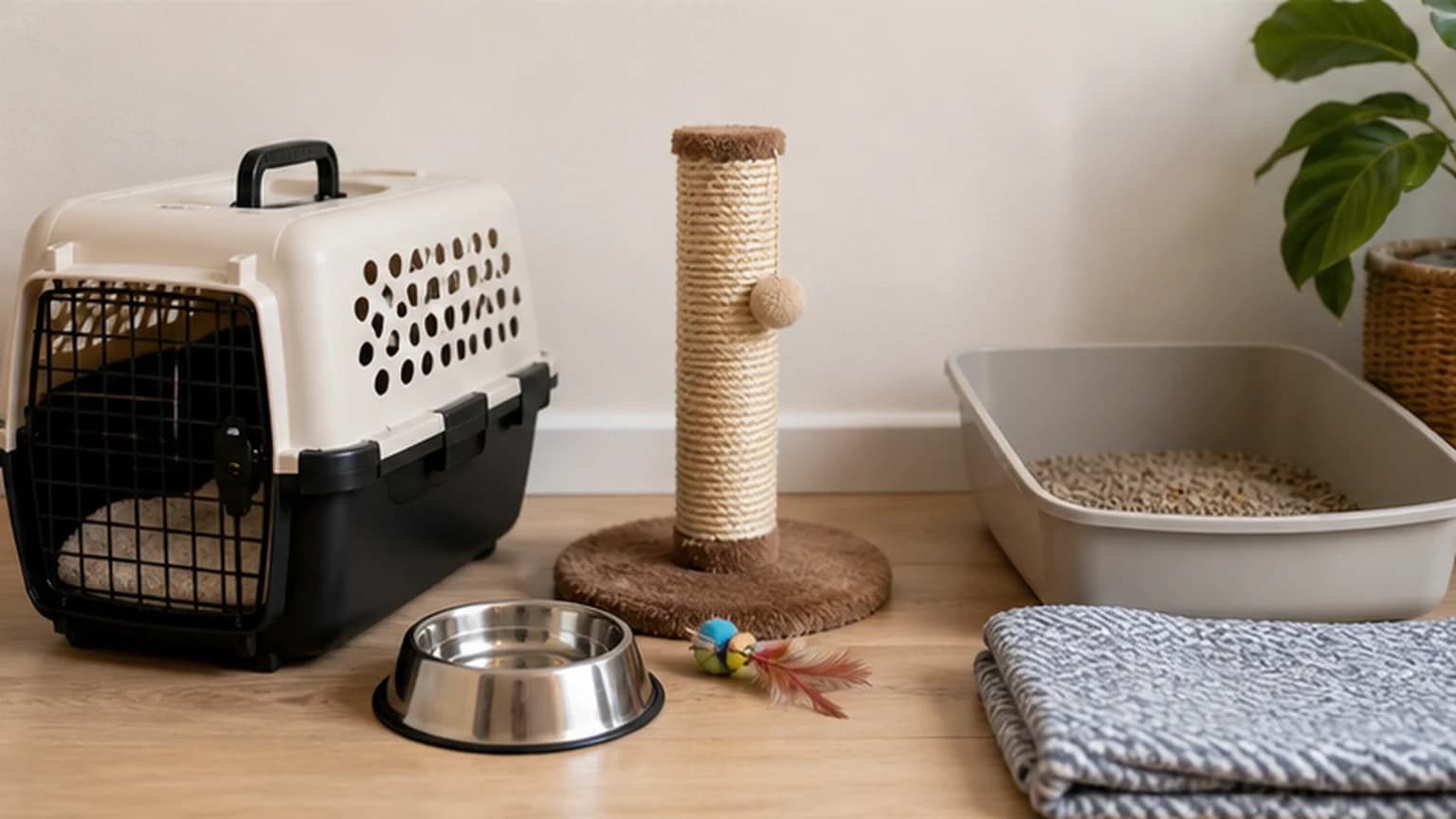
Prepare one quiet room with:
- the same food and litter used previously when possible;
- food and water in separate accessible spots;
- a large, clean litter box away from food;
- a secure hiding place such as an open carrier or box;
- a bed or washable blanket;
- a stable scratching surface;
- a few safe toys;
- closed windows, secured screens, and blocked hazardous gaps; and
- no toxic plants, exposed cords, string, medication, chemicals, or small swallowable objects.
Choose a room that can remain closed. Tell household members that the door must not be opened casually. Check reclining furniture, appliances, vents, fireplaces, and wall gaps before the cat enters.
Gather adoption records, microchip information, food details, medication instructions, and veterinary contacts. Save the nearest emergency clinic's number and route before an emergency occurs.
A first-day plan
- Secure the carrier before opening it.
- Let the cat leave the carrier in a quiet room at its own pace.
- Keep food, water, litter, bedding, and a hiding place nearby but separated appropriately.
- Limit visitors, noise, handling, and introductions to other pets.
- Keep adoption records and arrange a veterinary visit.
Eating little at first can happen during a transition, but keep track of intake, drinking, urination, and behavior rather than guessing.
Arrival: Go Straight to the Safe Room
Close exterior doors and windows before bringing the carrier inside. Take it directly to the prepared room rather than placing it in a busy shared space. Close the room door, set the carrier on the floor, and check that no other animal is present.
Open the carrier and step back. Do not tip, shake, or pull the cat out. Some cats emerge immediately; others remain inside for hours. The open carrier is a valid hiding place as long as the cat can access food, water, and litter.
Keep the first interaction quiet. Sit sideways at a distance, speak softly, and avoid staring or reaching into hiding. Let the cat initiate contact.
The First Few Hours
Show resource locations by leaving them visible, not by repeatedly carrying the cat to each one. Use shallow, stable bowls and a litter box with an entry the cat can manage. Keep the room lighting gentle and noise low.
Offer a measured amount of the familiar food. Record what was served and what remains. Strong pressure to eat, hand-feeding an unwilling cat, or changing several foods immediately can add stress and obscure appetite information.
Fresh water should remain available. Do not add unfamiliar flavoring or supplements. Scoop the litter box so urine and stool are visible and the environment stays inviting.
Hiding Is Normal
Hiding allows a cat to control exposure to an unfamiliar environment. Provide safe retreats, then leave them accessible. Never block all hiding or reach behind furniture to force interaction.
Prevent access to dangerous spaces behind appliances, inside reclining chairs, under cabinets with holes, or near electrical equipment. Replace those options with boxes, covered beds, the carrier, and elevated perches when safe.
Signs of gradual settling include eating, grooming, resting in a loose posture, using the litter box, exploring when the room is quiet, playing, and approaching voluntarily. Progress does not follow one schedule.
Visitors and Children
Delay visitors. A new cat does not need to greet friends on arrival day. Children should understand that the safe room is quiet and the cat decides whether to approach.
If a child enters, use close adult supervision, seated bodies, soft voices, and no reaching into hiding places. Keep sessions short and end before the cat becomes tense.
Resident Cats and Dogs
Do not introduce pets face to face on the first day. Keep the newcomer behind a closed door with separate resources. Resident animals may smell or hear the new cat; calm investigation is enough.
Begin introductions later using a gradual plan involving scent, separated spaces, controlled visual access, and positive associations. The timeline depends on the animals. Hissing at a door does not mean the relationship is doomed, and apparent calm does not justify rushing.
Never hold animals close together, place carriers nose to nose, or allow a dog to chase the new cat. Seek qualified help when safety, high arousal, or previous aggression is a concern.
The First Meal
Use the familiar recipe, texture, bowl, and schedule when known. A small change in intake can occur with stress, but cats should not be left without eating while caregivers wait for hunger to overcome fear or dislike.
Keep notes:
- food and amount offered;
- approximate amount eaten;
- water-bowl use when observable;
- urination and stool;
- vomiting or diarrhea;
- medication given under existing directions; and
- activity, breathing, movement, and behavior.
These notes help a veterinarian distinguish a vague impression from a meaningful pattern.
Litter-Box Setup
Use the familiar unscented litter when possible and avoid a covered or automated box unless the cat already knows it. The box should be large, stable, clean, and easy to enter.
For a kitten, provide a low entry and keep the box close enough to find. For an older cat or one with mobility limits, ensure the route is non-slip and does not require stairs.
Do not punish accidents. Clean the area appropriately, add a box near the chosen spot if useful, and assess access, litter, cleanliness, stress, and health.
Night One
Keep the cat in the safe room overnight unless an established transition plan says otherwise. Check food, water, litter, temperature, and door security before leaving.
Some vocalization can occur. Respond calmly without turning the night into repeated forced handling. A dim night-light may help in an unfamiliar room, but ensure cords are secure.
If the cat chooses to rest in the carrier or hide, allow it. Do not introduce the whole home at night simply because the cat seems active.
Records and Veterinary Planning
Review vaccination, parasite, spay/neuter, microchip, medication, diet, and previous medical records. Update microchip contact details promptly and use secure identification appropriate for the cat and home.
Arrange a veterinary visit on the timeline recommended by the adoption organization or clinic. Contact the clinic sooner if records are incomplete, medication is needed, or any health concern appears. Transport in a secure carrier.
What Not to Do
- Do not open the carrier outdoors, in a hallway, or beside an open exterior door.
- Do not give immediate access to the entire home.
- Do not force petting, carrying, play, or introductions.
- Do not change food and litter without need.
- Do not bathe a newly arrived cat unless directed for a specific reason.
- Do not give human medication, leftover pet medication, or calming supplements.
- Do not wait through major appetite, breathing, urination, or energy changes.
Contact a veterinarian promptly for breathing difficulty, repeated vomiting or diarrhea, collapse, severe weakness, injury, or a cat that stops eating or seems unable to urinate. Do not force food or give medication without veterinary direction.
Repeated litter-box trips, straining, crying, or little to no urine can be an emergency. Open-mouth breathing, persistent panting, collapse, suspected toxin exposure, severe bleeding, or inability to stand also requires urgent veterinary contact.
For reduced appetite, the safe response depends on age, health, duration, and other signs. Kittens and cats with medical conditions may deteriorate quickly. Call the clinic rather than relying on a universal waiting period.
Frequently Asked Questions
How long should a cat stay in the safe room?
There is no fixed number of days. Expand territory gradually after the cat eats, toilets, rests, and explores confidently and after pet introductions are appropriately planned.
Should I sleep in the room?
Only if your presence helps and you can avoid crowding the cat. Quietly sitting nearby is often enough. Some cats explore more readily when alone.
What if the cat will not leave the carrier?
Leave it open in the secure room with resources available and give space. Contact a veterinarian if the cat does not eat, appears unwell, or shows concerning physical signs.
Can friends visit on the first day?
It is better to delay nonessential visitors. Predictability and low pressure help the cat establish a baseline.
Key Takeaway
The first day should be small, safe, and uneventful. Prepare one secure room, open the carrier only inside it, maintain familiar food and litter, and let the cat control exploration and contact. Track essential functions, postpone introductions, and contact a veterinarian promptly when appetite, urination, breathing, strength, or other health signs are concerning.
See the new cat owner checklist, kitten shopping list, and carrier guide.
Compare your cat's age with human years
Use the age calculator for a life-stage comparison, then tailor care to your individual cat.
Sources & Scientific References (3)
Share this guide
Help another cat parent find it.