The short answer
No, grain-free cat food is not "healthier" for the average cat, and grains are not a hidden enemy in your cat's bowl. The scientific evidence currently available shows that most healthy cats do very well on diets that include grains, and no reliable research proves that grain-free diets prevent allergies, obesity, or diabetes. In fact, veterinary researchers have spent the past several years investigating a possible connection between certain grain-free diets — especially those built around legumes and potatoes — and heart disease in dogs, with a much smaller number of cases reported in cats. The practical takeaway: choose a complete and balanced food your cat enjoys and tolerates, and let your veterinarian guide any special diet needs, rather than chasing a label.
What "grain-free" actually means
Under standard definitions, a grain-free cat food contains no wheat, corn, rice, barley, oats, or other cereal grains. But removing grains does not remove carbohydrates. Those calories have to come from somewhere, and they usually come from white potatoes, sweet potatoes, peas, lentils, chickpeas, or tapioca. A grain-free diet can therefore be just as high in carbohydrates as a diet that contains grains — sometimes higher.
It is also important to separate "grain-free" from "low-carb" or "high-protein." A diet can be grain-free and still contain a modest amount of protein and a substantial amount of starch. Likewise, a diet that contains rice or corn can be high in animal protein. The ingredient list tells you more than the front-of-bag marketing.
Why grain-free became so popular
The grain-free trend in pet food did not come from veterinary research. It grew out of human dietary fads, savvy marketing, and a small but persistent belief that grains are "unnatural" for cats. The 2007 melamine contamination scare, in which wheat gluten imported from China was tainted and made many pets sick, also made grains look guilty by association — although the problem was contamination and quality control, not grain itself.
Some brands lean into the "ancestral diet" narrative, claiming that since cats evolved as desert hunters, they should not eat "fillers" like corn or rice. There is little science behind that story. Domestic cats have lived alongside people for thousands of years, and their digestive systems handle well-cooked grains easily. Cats are obligate carnivores, meaning they need certain nutrients found naturally in animal tissue, but that is not the same as saying cats cannot digest plant foods — most commercial cat foods, including grain-inclusive ones, contain some carbohydrates and plant ingredients.
What the science says about grains in cat food
When researchers measure how well cats digest cooked grains, the results are reassuring. Corn, rice, and other cooked cereal grains are highly digestible for cats and provide useful energy plus small amounts of protein, fatty acids, and fiber. Fiber, in particular, can help with hairball passage and stool quality.
What about the worry that grains cause obesity or diabetes? Studies have not shown that grain itself drives weight gain — excess calories do. The most reliable predictor of a heavy cat is how much food goes into the bowl, not whether the kibble contains corn or peas. Diabetes in cats is a complex disease with multiple risk factors. Carbohydrate restriction is frequently used in the management of diabetic cats under veterinary supervision, but there is no solid evidence that feeding grain-free food prevents a cat from ever developing diabetes.
The same logic applies to allergies. True food allergies in cats are uncommon — far less common than fleas or environmental allergens — and when they do occur, the usual triggers are animal proteins such as beef, fish, chicken, or dairy. Grain allergy is rare. Switching a cat to a grain-free food because of itchy skin or digestive upset often fails because the protein source is unchanged, and the real trigger is still in the bowl.
Does grain-free hurt the heart? What the FDA found
In 2018, the U.S. Food and Drug Administration (FDA) announced it was investigating reports of dilated cardiomyopathy (DCM), a form of heart disease, in dogs eating certain pet foods. The pattern was unusual: many affected dogs were eating diets labeled grain-free, or diets in which peas, lentils, chickpeas, and potatoes were among the main ingredients, or "boutique" diets with unusual protein sources. FDA updates in 2019 and afterward confirmed that the connection could not be traced to one brand or product, and the exact mechanism remains unclear. Taurine deficiency was long considered the classic cause of feline DCM, but most of the affected dogs had normal taurine levels, suggesting something else about the diets — perhaps how ingredients or processing affect nutrient absorption — plays a role.
Reports in cats are far rarer, and the FDA's investigation was centered on dogs. But the lack of data cuts both ways: feline DCM is now uncommon largely because commercial cat foods are reliably supplemented with taurine. That does not mean grain-free diets are dangerous; it means the science is incomplete. Until researchers understand more, many veterinary nutritionists recommend choosing a well-established brand with a long history of safety and quality control rather than a novel, trendy formula.
If your cat eats a grain-free or boutique diet and you notice lethargy, weakness, rapid breathing, or collapse, contact a veterinarian right away — do not wait for a scheduled appointment. Also, never switch a cat with a known heart condition to a new diet without veterinary guidance, and avoid homemade grain-free diets unless a veterinary nutritionist designed them.
Choosing a diet: what to look at instead of the "grain-free" label
Since the label itself tells you very little about quality, try comparing foods on the things that actually matter.
| What to compare | Grain-free diet | Grain-inclusive diet |
|---|---|---|
| Main ingredients | Grains replaced with potatoes, peas, lentils, or tapioca | Often rice, corn, wheat, oats, or barley |
| Animal protein content | Varies widely, check the label | Varies widely, check the label |
| Carbohydrate content | Can be high, sometimes higher than grain-inclusive | Can be moderate or high |
| AAFCO nutritional adequacy statement | Not automatic; must be on the label | Not automatic; must be on the label |
| Allergy resolution | No guarantee without an elimination trial | Not automatically allergy-causing |
| Cost | Usually more expensive | Usually more affordable |
| Safety history | Shorter track record for novel formulas | Longer history of use |
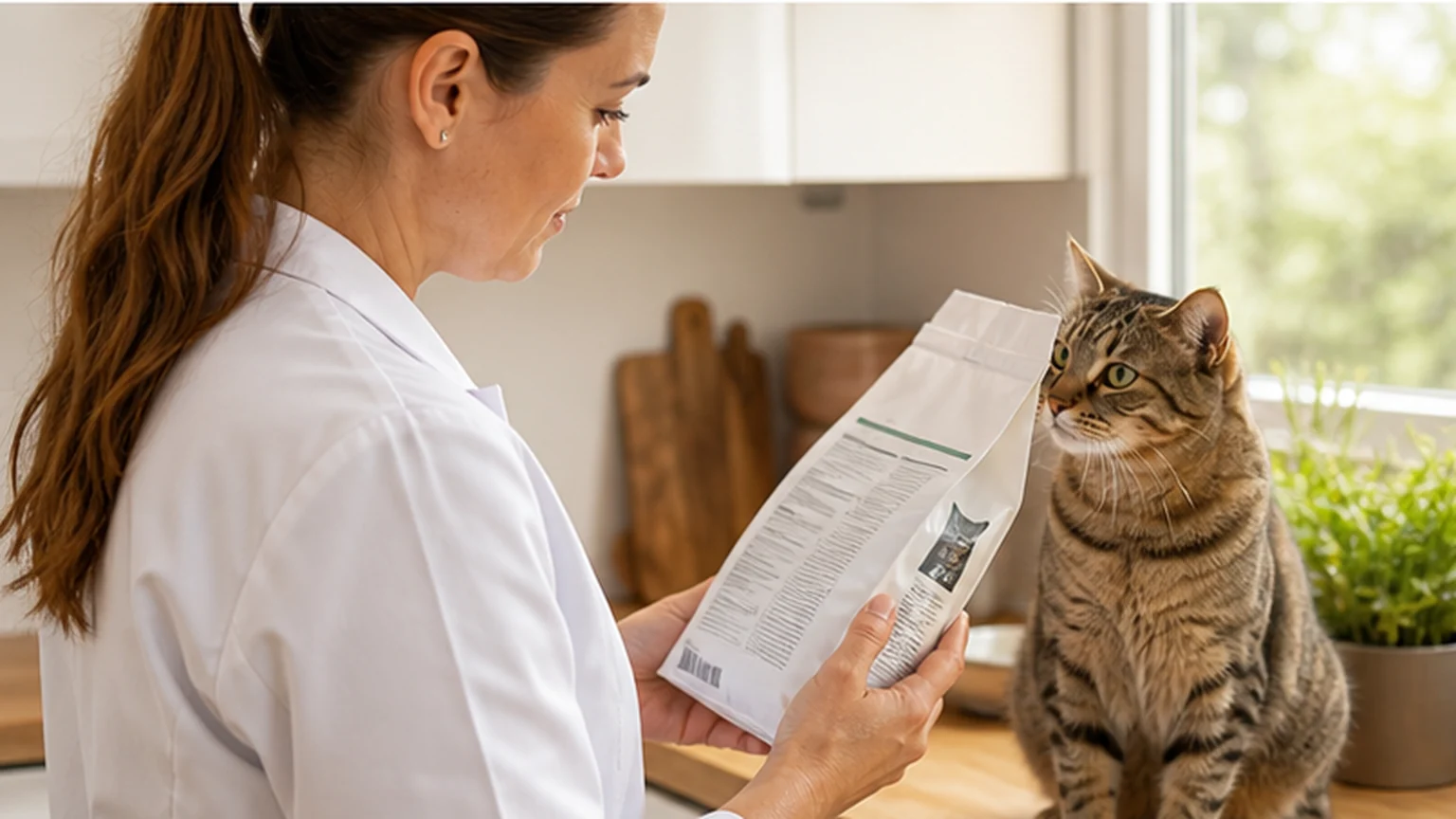
Before you worry about grain, answer these questions instead: Is the food labeled "complete and balanced" for your cat's life stage, with an AAFCO adequacy statement? Does it list a named animal protein such as chicken, turkey, or fish among the first few ingredients? Is the company established, with veterinary nutritionists on staff and a history of rigorous safety testing? Is your cat maintaining a healthy weight, good energy, and a shiny coat?
If the answer to all four is yes, the food is doing its job — with or without grain.
Frequently Asked Questions
Does grain-free food help cats with allergies?
Usually not. Most feline food allergies are reactions to animal proteins like beef, fish, chicken, or dairy. Grains are rarely the trigger. If you suspect an allergy, work with your veterinarian on a proper elimination diet; randomly switching to grain-free foods rarely solves the problem.
Are grains just "filler"?
No. "Filler" is a marketing term, not a nutritional one. Grains provide digestible carbohydrates, energy, fiber, and some vitamins and amino acids. A true filler would be an ingredient that provides nothing of value — cooked grains provide plenty to a cat.
Is grain-free food safer because of past recalls?
Not automatically. The 2007 recall involved contaminated wheat gluten, but recalls happen across all diet types. What protects your cat is a manufacturer's quality-control system, not the presence or absence of grain.
Should I switch to grain-free to prevent diabetes?
There is no strong evidence that grain-free diets prevent diabetes. Maintaining a healthy weight, feeding measured portions, and regular veterinary checkups are the most effective strategies for cats at risk.
My cat has been on grain-free food for years and seems fine. Should I change?
If your cat is healthy, at a good weight, and eating a complete and balanced diet, there is no emergency reason to switch. But given the unresolved questions around novel ingredients and heart health, the smart move is to review the diet with your veterinarian and decide together.
Key Takeaway
Grains are not toxic, and "grain-free" is not a badge of quality. The best diet for your cat is complete and balanced for their life stage, made by a reputable company, and chosen with the input of your veterinarian. When a label becomes a marketing story rather than a nutritional statement, it is time to look past the packaging and at the science.
Sources & Scientific References (3)
Cornell Feline Health Center
Cornell Feline Health Center • Accessed 2025-04-01
Questions & Answers: FDA's Work on Potential Link Between Diet and Canine Heart Disease
U.S. Food and Drug Administration • Accessed 2025-04-01
Advice Hub for Cat Owners
International Cat Care • Accessed 2025-04-01
Share this guide
Help another cat parent find it.