Use this as a starting estimate
A calorie result is an estimated starting range, not a prescription. Adjustments may be needed for body condition, age and life stage, neuter status, activity, medical conditions, food calorie density, and weight trend over time.
The short answer
“Indoor” is useful context, but it does not determine one exact portion. Use the calorie calculator, check body condition and activity, convert calories using the food label, and monitor weight over time.
What matters more than the indoor label
Consider age, neuter status, daily activity, body condition, food calorie density, treats, and the cat's weight trend. Two indoor cats can have very different needs if one plays actively and the other spends most of the day resting.
| Factor | Question to ask |
|---|---|
| Life stage | Is the cat growing, an adult, a senior, pregnant, or nursing? |
| Body condition | Can you feel the ribs with a light covering, and is a waist visible? |
| Activity | How much does the cat run, climb, explore, and play on a typical day? |
| Neuter status | Has this been included in the starting calorie estimate? |
| Food density | How many calories are in the exact can, pouch, cup, or gram? |
| Extras | Are treats, toppers, and shared food included? |
| Trend | Is weight and body condition stable, rising, or falling over time? |
An indoor lifestyle can reduce opportunities for spontaneous activity, but it does not tell you how energetic an individual cat is. Nor does it account for frame size, muscle, appetite, or food density. Use it as one observation, not as a fixed discount applied to every portion.
Start with calories, then use the label
Use the cat calorie calculator to organize a starting range. Then find the calorie statement on the exact food. It may list calories per can, pouch, tray, cup, kilogram, or gram.
For dry food listed per kilogram:
Calories per kilogram ÷ 1,000 = calories per gram
Then:
Estimated daily calories ÷ calories per gram = starting grams per day
For wet food, divide the estimated range by calories per container or gram. These calculations translate energy into a measurable amount; they do not turn the estimate into a prescription.
Recheck the label whenever you change recipe or package size. Two foods that look similar can have different calorie densities, so the old scoop or number of cans may no longer represent the same energy.
Choose wet, dry, or mixed feeding
Both wet and dry foods can be used when they are complete and balanced for the cat's life stage. Wet food supplies more water with meals. Dry food is convenient to weigh, use in timed feeders, and distribute through puzzles. A mixed routine can use both.
Whichever format you choose, calculate one daily allowance. If wet food supplies part of it, subtract those calories before measuring dry food. Treats and food used for training or enrichment also count. Serving a full wet allowance plus a full dry allowance can unintentionally add two separate plans together.
Make the routine measurable
Measure the day's food, divide it into meals, count treats, and use play or food puzzles to add activity without automatically adding calories. Recheck portions after changing food because recipes can differ substantially in calorie density.
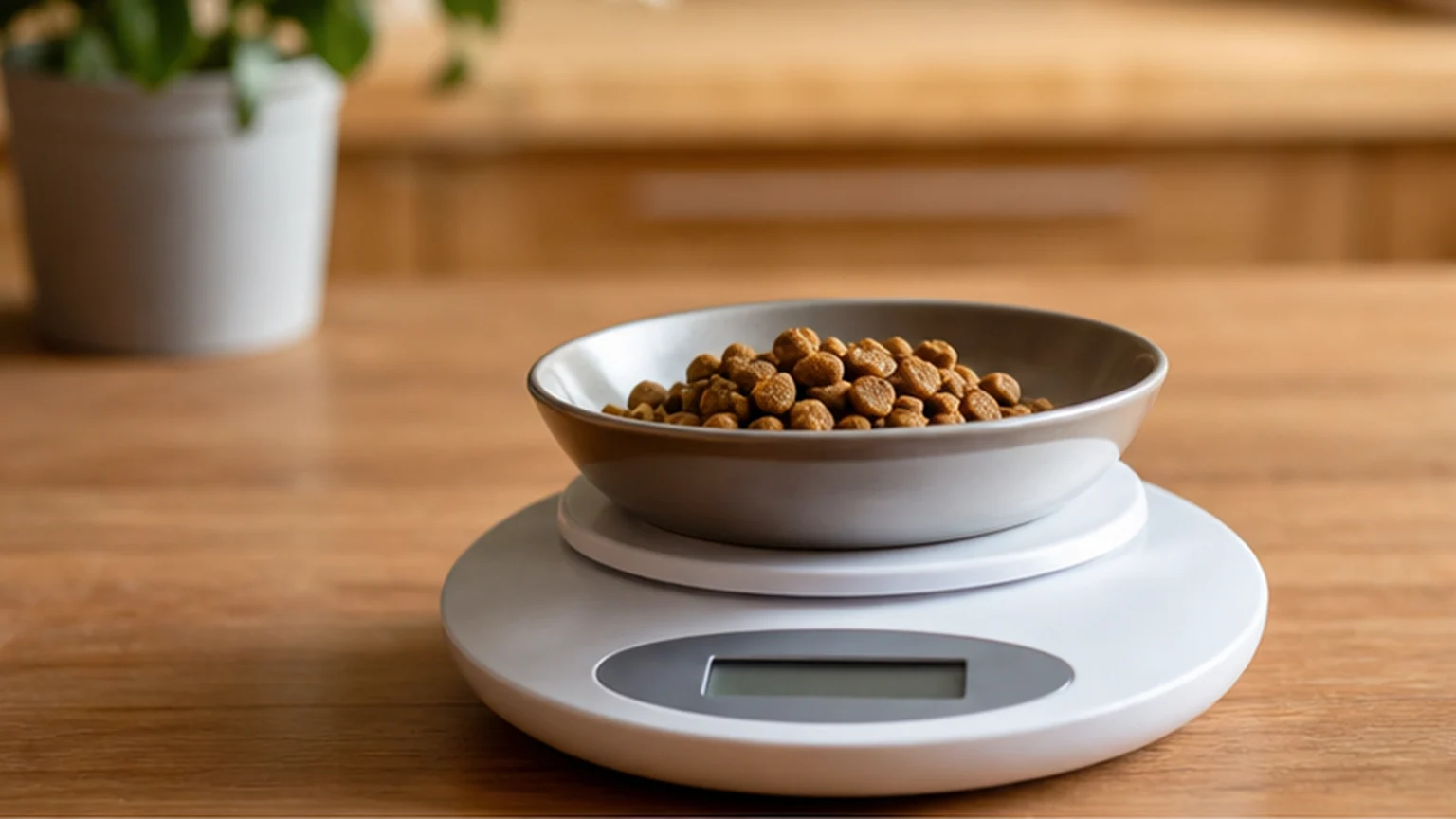
For dry food, a kitchen scale provides a repeatable gram amount. You can weigh the whole day's allowance into a container and take meals and puzzle-feeder kibble from it. For wet food, note the portion of each package served and refrigerate leftovers according to the label.
Avoid repeatedly topping up a shared bowl. It becomes difficult to know what any one cat ate, especially when several people feed. A simple checklist or designated daily container can prevent accidental second breakfasts.
In a multi-cat home, feed separately when portions differ. Supervised meals, separate rooms, or microchip feeders can help a slow grazer receive their food without an enthusiastic housemate finishing it.
How many meals should an indoor cat eat?
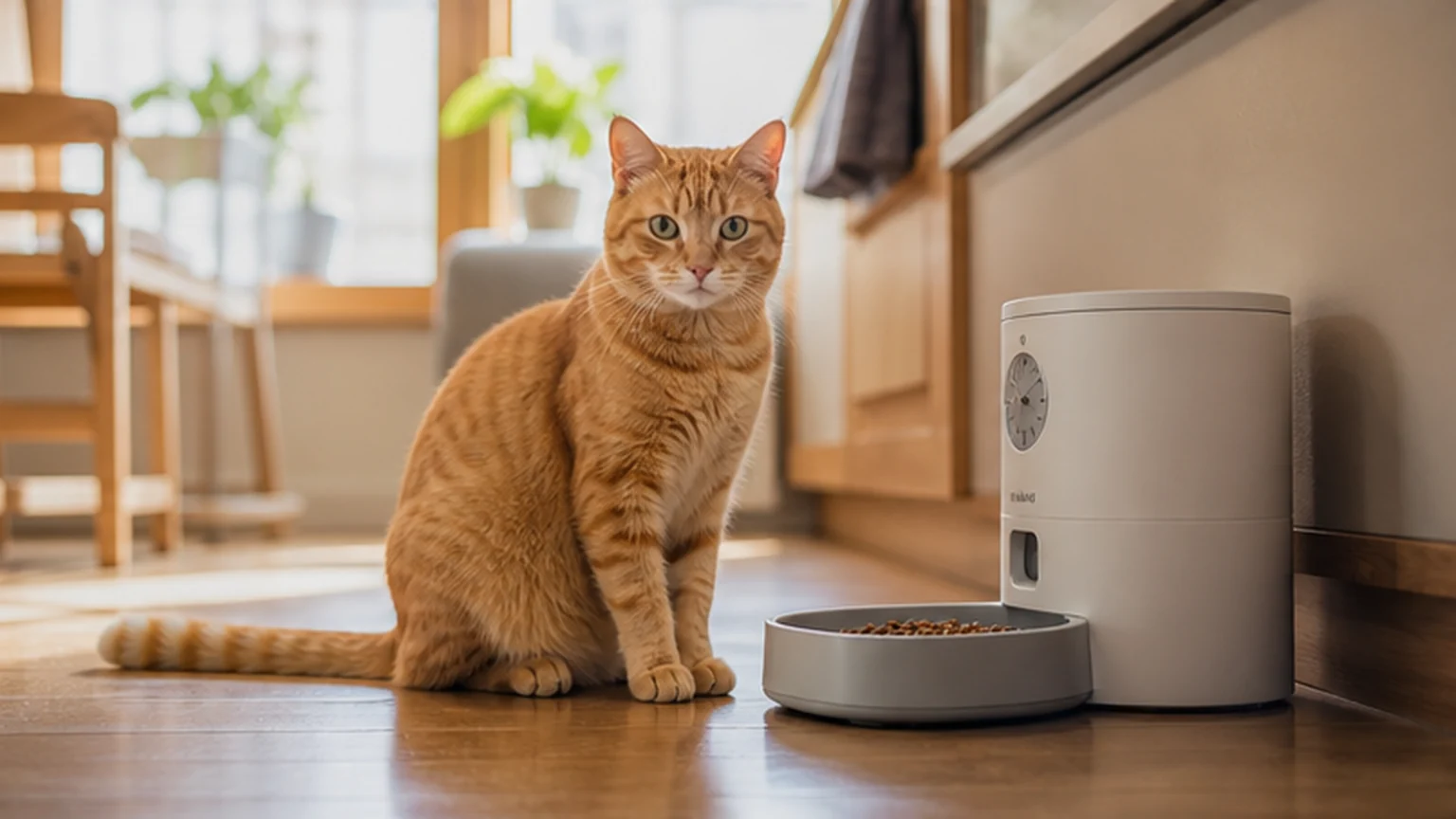
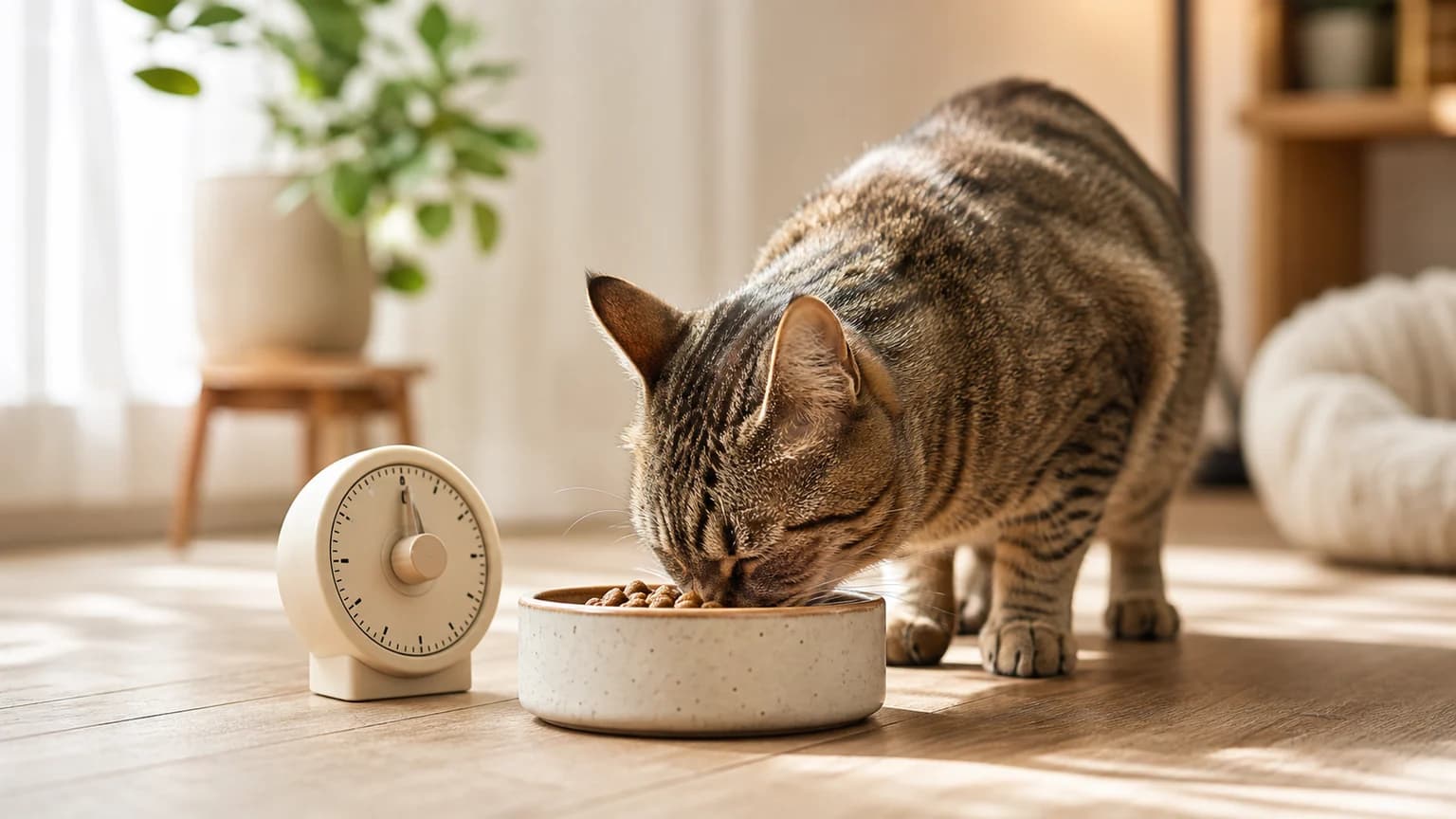
Meal frequency divides the daily allowance; it should not expand it. Many cats enjoy several small meals, while two or three measured meals may be more realistic for a household. Timed feeders can provide small portions when people are away or asleep.
Predictable meals make appetite easier to observe. If a cat normally appears for breakfast but suddenly does not, that change is clearer than it would be with an always-full bowl. Cats that graze can still receive a pre-measured daily amount so leftovers are visible.
Add activity without adding food
Indoor enrichment supports movement, problem-solving, and normal behavior. Try short interactive play sessions, climbing furniture, window perches, hiding places, scratching surfaces, and toy rotation. Match play to the cat's age, mobility, confidence, and preference.
Food puzzles can turn part of a meal into foraging. Start with an easy puzzle and use kibble from the measured allowance rather than adding extra treats. Wet food may work with suitable lick mats or washable puzzle products if used and cleaned according to their instructions.
Not every indoor cat becomes active because more toys are available. Participate in play, vary the location and movement of toys, and allow the cat to stalk, chase, and catch. Stop if your cat seems tired, frustrated, or uncomfortable.
Track body condition and weight
Use the same scale and similar timing when practical, then look for a sustained trend rather than reacting to one reading. Body condition adds information that weight alone cannot: consider the ribs, waist, and abdominal profile. A veterinary professional can demonstrate an appropriate body-condition assessment.
If weight changes, verify the basics before changing food. Confirm the product and label, measurement method, treats, access to another pet's bowl, and whether every caregiver follows the same plan. If the records are consistent or the change is substantial, ask a veterinarian how to adjust safely.
Do not make aggressive reductions. Cats need adequate complete nutrition, and a rapid or unexplained loss of weight deserves professional attention rather than a home-calculated correction.
Common indoor-feeding mistakes
- Treating “indoor” as an exact calorie multiplier.
- Leaving an unmeasured bowl available and topping it up.
- Using package volume without checking calorie density.
- Adding treats and puzzle food on top of the daily allowance.
- Assuming begging always proves hunger.
- Ignoring food stolen from another pet.
- Changing portions sharply after a single scale reading.
- Focusing on weight while overlooking muscle and body condition.
When begging is part of the routine
Cats can learn that vocalizing, waking a person, or walking toward the cupboard produces food. First confirm that the measured allowance is reasonable and that appetite and weight are stable. Then make meals predictable and avoid rewarding every request with an untracked snack.
Attention, play, grooming, or access to an interesting perch may meet the underlying request when food is not due. A timed feeder can also separate meal delivery from a person's arrival. Persistent increased appetite, particularly with weight or behavior changes, should be discussed with a veterinarian.
Do not sharply restrict food based on an indoor-cat rule. Ask a veterinarian about unexpected weight change, obesity, poor appetite, pregnancy, growth, or a medical condition.
Frequently asked questions
Do indoor cats always need less food?
No. Indoor living is only one factor. Activity, life stage, body condition, neuter status, health, and calorie density all affect the starting estimate.
Should food stay available all day?
Some cats graze successfully from a weighed daily allowance. Scheduled meals give clearer information and may help with portion tracking. Shared, repeatedly refilled bowls are the hardest arrangement to measure.
Is “indoor cat” food required?
The product name does not determine suitability by itself. Check the nutritional adequacy statement, calorie density, manufacturer information, your cat's response, and any veterinary advice.
How often should I recalculate?
Review the plan after changing foods, life stage, activity, or weight goal, and whenever appetite, weight, or body condition changes unexpectedly.
Key takeaway
An indoor label cannot tell you an exact serving size. Estimate calories, convert them using the exact food label, count every food source, and use measured meals or a measured daily allowance. Pair the routine with appropriate enrichment, then let body condition, weight trend, and veterinary guidance show whether the starting portion fits your cat.
Continue with daily calorie requirements, the feeding guide, and feeding frequency.
Estimate your cat's daily calorie range
Use PurrWise's calculator for a practical starting estimate, then compare it with body condition and weight trend.
Sources & Scientific References (3)
Share this guide
Help another cat parent find it.