The short answer
Yes, cats can eat sardines, but only under a few clear conditions. The version to offer is plain sardines packed in water, with the bones removed, served in small pieces as an occasional treat. Sardines should never replace a complete and balanced cat food. They are a treat food, not a diet, and too much of any fish can throw off the balance of nutrients your cat needs from their regular meals.
For most adult cats, a few small bites of a water-packed sardine, offered once or twice a week, is a reasonable amount. Keep the fish boring on purpose: no added salt, no oil, no garlic, no onion, no spices, and no sauce. The simpler the sardine, the safer the treat.
Why sardines can be a good treat
Sardines are small, oily fish that are naturally rich in nutrients cats can use. They are an excellent source of high-quality protein, and they contain omega-3 fatty acids — including EPA and DHA — which may support a healthy skin and coat, and are sometimes used to support joint health in older cats. Sardines also contain taurine, an amino acid that cats must get from food because their bodies cannot manufacture enough on their own. Taurine is important for the heart, eyes, and immune system.
Other nutrients in sardines include B vitamins, selenium, phosphorus, and vitamin D. Because the fish are small and low on the food chain, they also tend to accumulate far less mercury than larger predatory fish such as tuna or swordfish. That makes sardines a smarter fish choice for cats than many other options.
There is a catch, though. Sardines are calorie-dense for their size, because they are a fatty fish. A couple of small sardines can contain a surprising number of calories for a cat weighing only a few kilograms. If you treat generously, those calories add up quickly and can quietly contribute to weight gain. Treats of any kind — including sardines — should only make up a small slice of your cat's total food intake.
Treat rule one: water-packed, nothing else
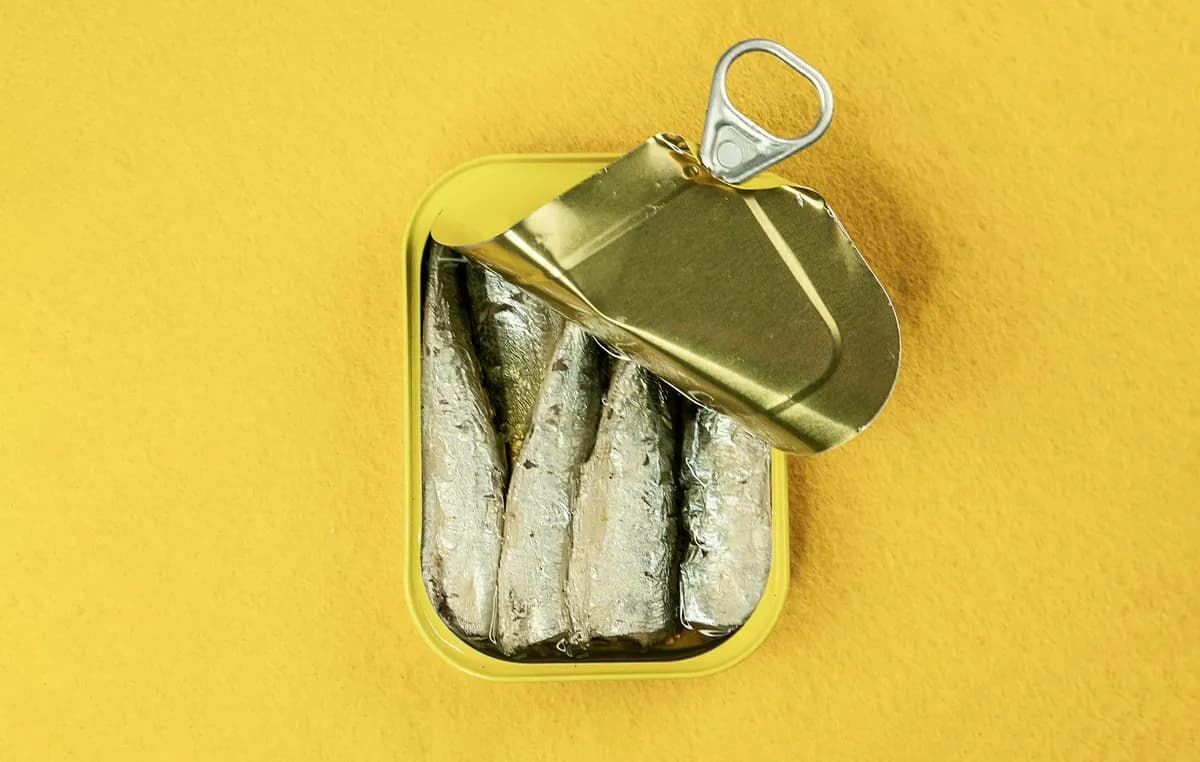
The safest sardine for your cat is plain, packed in water, with no salt added. Grocery store shelves are full of fancier versions — sardines in olive oil, soybean oil, tomato sauce, mustard sauce, chili oil, or salted brine. All of those are poor choices for cats.
Oil-packed sardines are much higher in fat, and a sudden fatty meal can cause stomach upset. In a worst-case scenario, very fatty food can trigger a painful inflammation of the pancreas, a condition called pancreatitis, which requires veterinary treatment. Sauces are just as problematic. Tomato and mustard sauces often contain onion or garlic powder, and both onion and garlic are unsafe for cats. Even small amounts can damage a cat's red blood cells over time. Brine-packed sardines are heavy on sodium, and high salt intake is a concern for any cat, especially one with heart or kidney problems.
The table below sums up the common options you will see at the store:
| Packing type | Safe for cats? | Why |
|---|---|---|
| Water, no salt added | Yes | Lowest sodium and simplest ingredient list |
| Water with added salt | Use with caution | Rinse the fish first and still offer only small amounts |
| Olive or vegetable oil | No | Extra fat can upset the stomach and add too many calories |
| Salted brine | No | Sodium levels are far too high for a cat |
| Tomato, mustard, or chili sauce | No | Often contains onion, garlic, sugar, or spices that are unsafe |
Treat rule two: remove the bones
Canned sardines are usually cooked with their bones in, and those bones are very soft. In theory, soft bones are easy to chew, and some people intentionally mash canned fish with its bones for cats. In practice, though, bones are not worth the risk. A bone could get stuck in a cat's throat or cause a scrape in the mouth or digestive tract, which is a much more serious problem than the treat is worth.
The easiest solution is to buy boneless, skinless sardine fillets packed in water. If you can only find whole sardines, gently squeeze the fish and pick the bones out with your fingers or a fork before serving. For a small cat, a kitten, or a cat who likes to gulp food without chewing, removing the bones is the safest choice by far.
Treat rule three: small portions, occasionally
Frequency matters as much as the type of sardine. For a typical adult cat weighing roughly 4 to 5 kilograms (about 9 to 11 pounds), a reasonable serving is about a quarter to a half of a small sardine, or around one teaspoon of mashed fish, once or twice a week. If your cat is overweight or on a calorie-restricted diet, you should skip fish treats entirely unless your veterinarian says otherwise.
A useful rule of thumb is that treats should make up no more than 10 percent of your cat's daily calories. Cats are small, so a whole sardine can easily blow past that 10 percent mark for a single day. That is exactly why the portion size for a treat should look tiny to you — your cat's entire daily energy budget is only around 200 to 250 calories for a typical adult.
:::caution Treats are extras, not meals. Sardines are not nutritionally complete, so they should never replace your cat's regular food. Also, do not add sardine oil, fish skin crisps, or other high-fat fish products on top of regular meals. Keep the total treat budget small. :::
Mercury and salt: the two things to keep in mind
When people ask about fish and safety, mercury is usually the first thing that comes up. The good news for sardine lovers is that sardines are small fish that eat plankton, not larger fish, so they do not build up high mercury levels the way big predatory fish do. Sardines are considered one of the lower-mercury seafood options. Mercury is therefore not the main concern when sardines are an occasional treat. The bigger, everyday concern is sodium.
Canned fish is often packed in salted water or brine to preserve it, and cats are very sensitive to salt. A sudden salty snack can make a cat unusually thirsty, and long-term high sodium intake is risky for cats with heart disease, kidney disease, or high blood pressure. Always check the label for "no salt added" or "unsalted" water-packed sardines. If the label does not say it, the sardines probably contain added salt.
One easy trick is to drain the liquid, rinse the sardines under fresh running water, and pat them dry before serving. That removes a meaningful amount of surface salt. Even with rinsed fish, keep the portion small and keep the treats occasional. A regular diet of salty fish is not appropriate for any cat.
:::caution Cats with kidney disease, heart disease, or high blood pressure are more sensitive to sodium than healthy cats. If your cat has any chronic condition, ask your veterinarian before offering sardines or any salty treat. :::
How to serve sardines to your cat
Here is a simple step-by-step approach:
- Choose wisely. Buy plain sardines that are packed in water with no salt added. Read the ingredient list — there should be basically just sardines and water.
- Drain and rinse. Open the can, drain the liquid, and rinse the fish gently under water. This helps reduce surface sodium. Do not use the oil or liquid from the can.
- Remove the bones. Pick out any visible bones with your fingers or a fork, or buy boneless fillets to make it easy.
- Serve a small piece. Offer a quarter to a half of a small sardine, or about a teaspoon of mashed fish. You can put it in your cat's bowl, on a plate, or use tiny bits as a training reward.
- Store leftovers properly. Transfer the remaining sardines to a sealed container and refrigerate. Use them within a couple of days, and do not leave wet canned fish sitting out at room temperature.
Frequently Asked Questions
Can kittens eat sardines?
A kitten can have a very small taste of water-packed, boneless sardine after weaning, but the main diet should always be a complete kitten food made for growth. Sardines do not provide balanced nutrition, so they are only a tiny occasional taste, and only if your kitten tolerates them well.
Can cats eat sardines in olive oil?
No. Oil-packed sardines are too fatty and calorie-dense for cats, and they are much more likely to cause stomach upset. Stick to water-packed sardines.
How often can I give my cat sardines?
For most cats, once or twice a week in small pieces is plenty. If your cat has a medical condition, especially kidney or heart disease, check with your vet before offering any new treat.
Are freshwater sardines okay?
The sardines you find in cans are almost always marine fish. If you happen to have access to fresh sardines, cook them plainly by poaching or baking without oil, salt, or seasoning, and remove the bones. Raw fish can carry parasites and should not be fed to cats as a rule.
Can sardines replace my cat's dinner?
No. A single sardine is not a balanced meal. It lacks the full range of vitamins and minerals that manufacturers carefully add to complete commercial cat foods. Treating your cat to a sardine snack occasionally is great, but dinner should stay a complete and balanced cat food.
Key Takeaway
Sardines can be a healthy and much-loved occasional treat when you follow three rules: choose plain water-packed sardines, remove the bones, and keep portions small. Watch the salt on the label, skip oil and sauces, and remember that treats are extras, not meals. When you are unsure about what is safe for your individual cat — or if your cat has a health condition such as kidney or heart disease — ask your veterinarian before introducing any new food.
Check a food before you guess
Search the PurrWise food checker for a specific ingredient and review the recommended safety action.
Share this guide
Help another cat parent find it.