The short answer
Yes, carrots are safe for cats to eat as an occasional snack when they are cooked until soft, served plainly, and cut into small pieces. Cats are obligate carnivores, so they do not need carrots in their diet from a nutritional standpoint. The risk with carrots comes from the way they are prepared and served, not from the vegetable itself. A plain steamed carrot piece the size of a pea is very different from a raw carrot stick that could be a choking hazard.
Why cats are carnivores
Cats evolved as hunters that eat whole prey. Their digestive systems are built to process animal proteins and fats, and they have very limited ability to use plant matter as an energy source. A healthy adult cat needs certain nutrients, such as taurine and arachidonic acid, that are found naturally in animal tissue. These nutrients are either absent or present in tiny amounts in carrots.
Carrots also contain beta-carotene, which many animals can convert into vitamin A. Cats, however, do not convert beta-carotene efficiently and need preformed vitamin A from animal sources such as liver and muscle meat. This is why carrots should never be used as a substitute for a complete, balanced cat food. A cat's body is designed to get what it needs from meat, not from vegetable roots.
Are cooked carrots safe? Yes, with a few kitchen rules
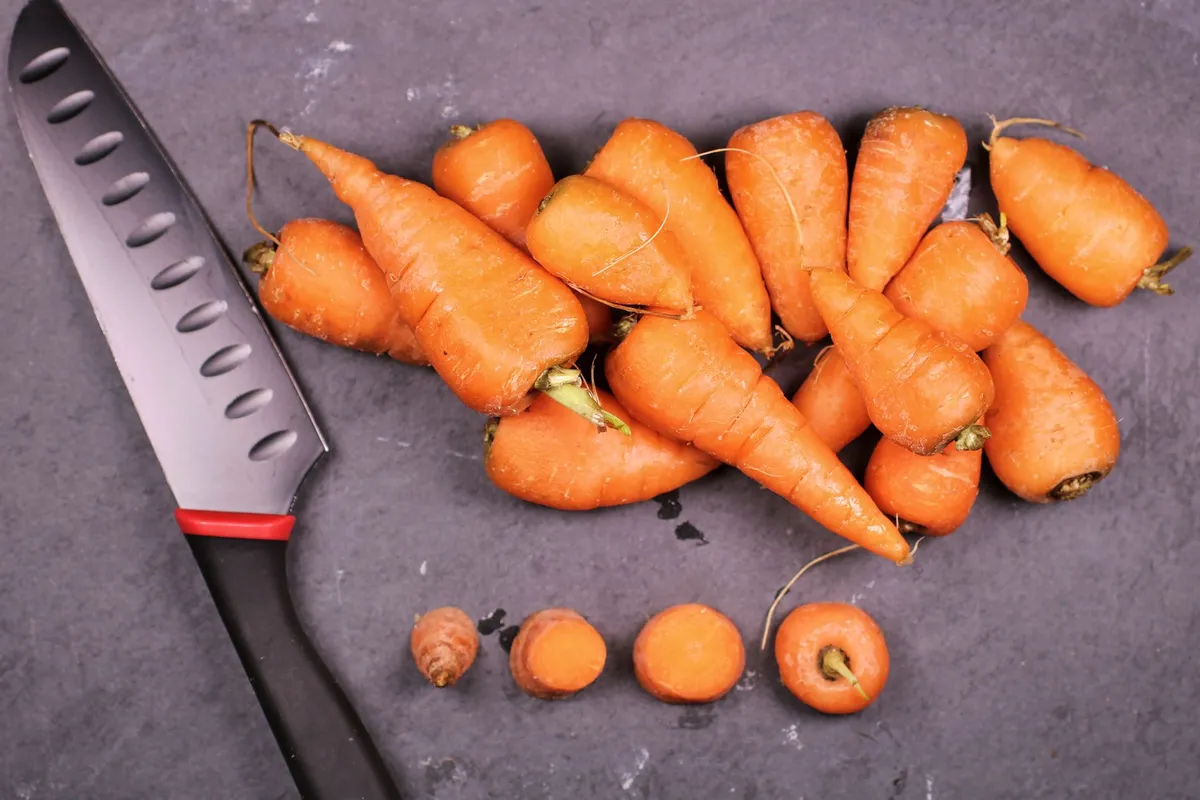
Cooked carrots are safe because the heat softens the fibrous structure, making them easier for a cat to chew and digest. Raw carrots are hard and dense, and a larger piece can easily get stuck in a cat's throat. If you decide to offer a carrot treat, follow these steps:
- Wash and peel the carrot to remove dirt and any residue from handling.
- Boil or steam it until a fork can pierce it easily. Do not add salt, oil, butter, honey, or other seasonings.
- Let the carrot cool completely before serving. Hot food can irritate a cat's mouth.
- Cut it into tiny pieces, about the size of a pea or smaller. Smaller is always safer.
- Offer only one or two pieces at a time, and never force a cat to eat it.
The same rules apply to baby carrots, which are still raw and firm. A baby carrot should be cooked before serving. Carrot peels are fine to include after washing, but peeling gives a softer texture and avoids any residue on the skin. If you have a cat that tends to gulp food, use even smaller pieces or skip the treat altogether.
Safe and unsafe carrot preparations
The table below shows which forms of carrot are appropriate for cats and which ones should stay on your plate.
| Carrot preparation | Safe for cats? | Why |
|---|---|---|
| Steamed or boiled, no seasoning, cut into small pieces | Safe | Soft texture and simple ingredients |
| Raw whole carrots or large chunks | Unsafe | Hard texture increases choking risk and is difficult to digest |
| Canned carrots with added salt | Unsafe | Excess sodium can be hard on a cat's system |
| Butter-glazed or honey-roasted carrots | Unsafe | Added fats and sugars offer no benefit and can cause digestive upset |
| Carrots cooked with onion, garlic, or heavy spices | Unsafe | Onion and garlic are harmful to cats, and spices can irritate their stomach |
This table is not a list of forbidden foods. It is simply a reminder that the safest treat is one that is as close to plain as possible. When you share a vegetable with your cat, the simpler the prep, the better.
How to introduce carrots to your cat
Cats are individuals. Some will sniff a carrot piece and walk away, and others may happily eat it. The first time you offer a carrot, choose a time when your cat is calm and not already full. Place one tiny piece on a plate or in your palm. If your cat shows interest, let them take it and watch how they chew and swallow. If they swallow the piece whole, make future pieces even smaller. If they lose interest, do not insist. There is no reason to add carrots to a cat's diet if they do not like them.
After that first taste, wait at least a day before offering carrots again. That gives you time to notice any unusual digestive upset. Because every cat is different, what is fine for one cat may not be fine for another. When in doubt, check with your veterinarian before adding any new food to your cat's routine.
How many carrots can a cat have?
Carrots are not a natural food for cats, and they should be viewed as a treat, not a meal. A good rule of thumb is to keep treats to less than 10 percent of a cat's daily calorie intake. Since carrot calories are low, this translates to roughly one to two pea-sized pieces two or three times a week for an average adult cat. If your cat is overweight, has kidney disease, diabetes, or any other health condition, ask your veterinarian first. A healthy treat for one cat may not be suitable for another.
Remember that treats should never replace the nutrition from a complete and balanced cat food. Carrots do not contain protein, taurine, or the vitamins and minerals cats need in the amounts they need them. They add variety and a little fun but nothing that a cat cannot get better from meat.
Carrots are a novelty, not a vegetable meal
Some commercial cat foods include vegetables or fruit as minor ingredients, but these foods are still designed around animal products. In the wild, a cat consumes the stomach contents of prey from time to time, which gives a tiny amount of plant material. That is not the same as a bowl of carrots. A cat's digestive tract is short, and it is not equipped to break down large amounts of fibrous plant matter. A small carrot piece is fine; a pile of carrots is not.
If you are thinking about using carrots to add bulk to a cat's meal or to help with weight management, that is not a good idea. Changing the balance of a cat's meal can mean your cat fills up on low-protein food and misses out on essential amino acids. Always choose a nutritionally complete cat food for the main diet and keep carrots firmly in the treat category.
Common carrot mistakes to avoid
- Offering a whole raw carrot as a toy or snack. It is hard enough to damage a tooth and can cause choking.
- Cutting carrot pieces too large. If the piece is bigger than a pea, skip it.
- Serving carrots straight from a hot dish. Heat can hurt a cat's sensitive mouth.
- Dressing carrots with dip, dressing, butter, or sauce. Every addition makes the treat less safe.
- Using carrot juice as a supplement. Juice is high in sugar and has none of the chewing benefits of a cooked piece.
- Feeding carrot baby food without checking the label. Some baby foods contain onion powder or other additives that are not appropriate for cats.
When you avoid these mistakes, a carrot is about as harmless as a treat can get. But harmless is not the same as necessary, and your cat will be just as happy with a small piece of cooked plain meat as a special snack.
Carrots are safe only when they are plain, cooked, and cut small. Do not serve raw carrot sticks, large chunks, canned carrots, or vegetables cooked with onion, garlic, butter, or salt. Supervise the first few bites and stop offering carrots if your cat chews awkwardly, swallows with difficulty, or seems to have an upset stomach afterward.
Frequently Asked Questions
Can cats eat raw carrots?
Raw carrots are not a good idea. They are very hard, and a cat may try to bite off a piece that is too large to swallow safely. Even grated raw carrot can be inhaled if a cat sniffs it. If you want to give carrots, cook them until soft and then cut them small.
Can cats eat carrot tops or greens?
Carrot greens are not a normal part of a cat's diet. While a tiny nibble of a leaf is unlikely to cause a problem for most cats, there is no benefit, and the leaves can be stringy. Keep the greens out of your cat's bowl and stick to the cooked root.
Are carrots good for a cat's eyes?
Not really. Many people associate carrots with eye health because of beta-carotene. Cats have a limited ability to convert beta-carotene into vitamin A, so carrots are a poor source of this nutrient for them. A healthy cat gets the vitamin A it needs from animal foods like meat and organ meat.
Can kittens eat carrots?
Kittens need a specially balanced diet to support growth. Their calorie needs are high and their stomachs are small, so treats like carrots can crowd out more valuable food. If you are considering any treat for a kitten, it is best to wait until they are older and to check with your veterinarian first.
Key Takeaway
Plain cooked carrots, cut into small pieces, are a safe occasional treat for most adult cats. The heart of the matter is preparation: soft, unseasoned, and tiny. Even so, carrots are nutritionally unnecessary for cats and should never replace a meat-based diet. When in doubt, keep the portion tiny, keep the carrot plain, and keep the main bowl a high-quality cat food.
Check a food before you guess
Search the PurrWise food checker for a specific ingredient and review the recommended safety action.
Share this guide
Help another cat parent find it.