The short answer
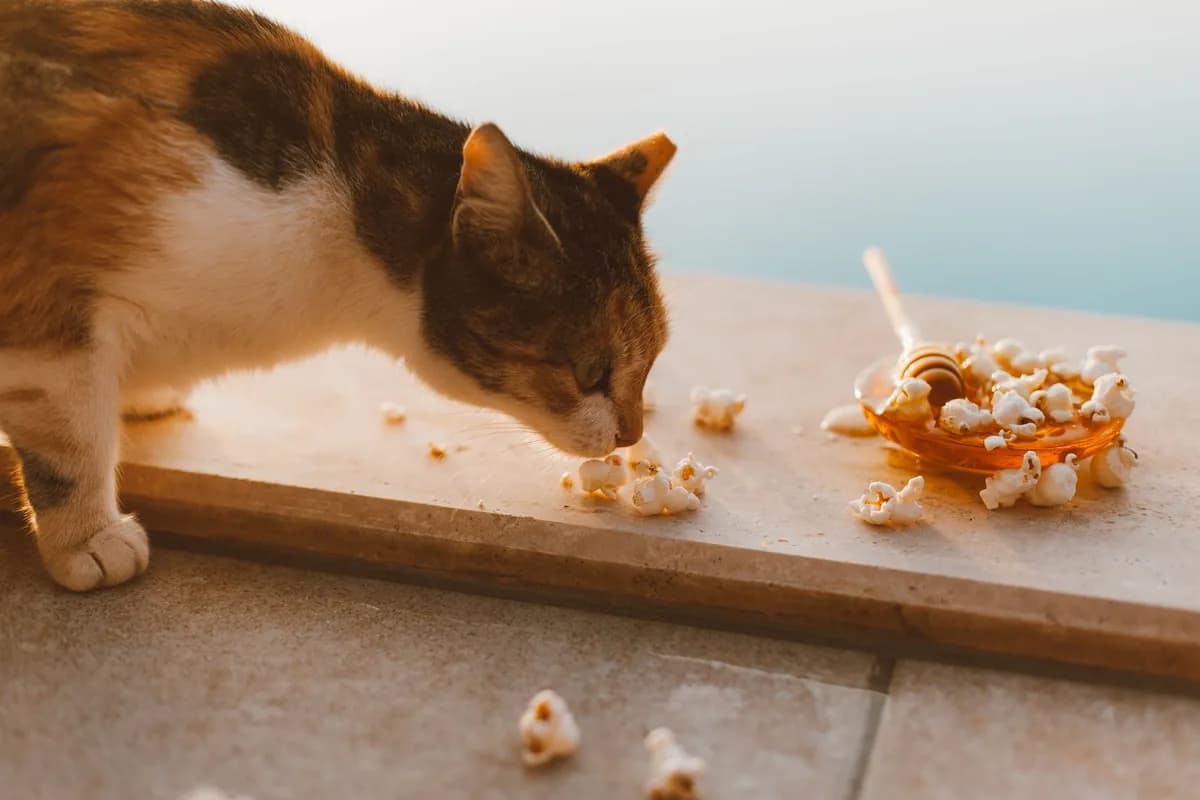
Yes, plain air-popped popcorn is generally safe for healthy adult cats to eat in tiny amounts as an occasional snack. A few unseasoned puffs are not a problem for most cats. But the usual toppings — butter, salt, oil, caramel, or cheese — can make popcorn unsafe for a small cat. The hard kernels and sharp hulls also carry real risks, so preparation matters a lot. Popcorn should never be a regular part of a cat's diet; it offers no nutritional benefit and is only a fun, low-calorie novelty. If you do share it, keep portions tiny, remove every kernel and hull, and watch your cat as they chew. When in doubt, the safest choice is simply to keep your hand away from the bowl instead of tossing a puff your cat's way.
Why are cats curious about popcorn?
Cats are attracted to movement and sound, and popcorn has both. The rustle of a bag, the tiny puff flying, or the crunch under a human's hand can trigger a cat's hunting instincts. Cats also learn quickly that when humans are eating, sometimes a piece lands on the floor. That learned association makes them appear at attention the moment the microwave beeps.
The smell of popcorn — especially butter-flavored varieties — is intensely appealing to many humans, but cats have a relatively small sense of smell compared to dogs. Still, the warmth and the novelty of a bouncing white puff can be enough to put your cat in an "I want that" mood. It's not that popcorn is a natural feline craving; it's that cats are opportunists. They will investigate anything that moves, smells edible, or is attached to your attention. So don't be surprised by the curious paw reaching toward your bowl.
Is plain air-popped popcorn safe for cats?
Plain, air-popped popcorn is not listed as a dangerous food for cats. It is a whole-grain snack made from corn, and a few unseasoned puffs contain very little that would harm a healthy cat. A single piece of popped corn is mostly air and fiber. The protein and fat content are low, and it is not fatty or salty on its own.
That said, "safe for cats" does not mean "good for cats." Cats are obligate carnivores, meaning their digestive systems are designed to get nutrients from animal tissue. Plant-based snacks like popcorn pass through with very little nutritional value. A puff here and there will not cause harm, but it also won't fill any nutritional gap. The real question is not whether the puff itself is safe, but what is on it and how it is prepared. A plain air-popped kernel with no toppings, no salt, and no oil is a low-risk snack for an otherwise healthy cat.
The risks: kernels, hulls, and toppings
The main risks with popcorn come in three layers. First, unpopped and partially popped kernels are hard and can damage a cat's teeth. A cat's teeth are built for shearing meat, not for crunching hard corn. Trying to bite down on a kernel can crack a tooth or break a piece that gets lodged.
Second, the hulls — those thin, tough pieces of the kernel that can stick in human teeth — are also a problem for cats. If a cat ingests a hull, it can irritate the stomach or intestines. In some cases, a large amount of hulls could cause a blockage that would require a vet. Even without a severe event, hulls can make a cat gag or vomit.
Third, toppings. Butter, salt, sugar, and artificial flavorings are the biggest safety issue. Cats are small — a 4 kg cat eating even a quarter teaspoon of salt can be upset. Onion and garlic powders, sometimes used in savory popcorn, are unsafe for cats. Cheese or caramel flavors pack in sugar, fat, and chemical additives that a cat's system is not built to handle.
How to share popcorn safely
If you decide to share popcorn, you need to be very particular. Pop the corn yourself, with plain kernels and no oil — or use an air-popper. Once popped, sort carefully. Remove every unpopped and half-popped kernel. Then remove as many hulls as you can; a simple way is to pick out the fluffiest white puffs that have no dark brown piece attached. Break the puff into small pieces, smaller than your cat's typical bite, to minimize any chance of gagging.
Give no more than two or three tiny pieces at a time. These are not a meal and should never be used as a regular snack. A rare, single puff is a reasonable reward. Watch your cat as they eat to ensure they are chewing and not ingesting large pieces whole.
Here's a quick reference table for safe and unsafe popcorn:
| What's in the popcorn? | Safe for cats? | Why |
|---|---|---|
| Plain, air-popped, no toppings, no kernel pieces | Yes, in tiny amounts | Low risk; no added salt, fat, or flavorings |
| Butter or oil | Unsafe | Excess fat can cause digestive upset |
| Salt | Unsafe | High sodium risk for small cats |
| Cheese, caramel, or chocolate flavors | Unsafe | High sugar, fat, and possible dairy issues |
| Unpopped or half-popped kernels | Unsafe | Hard texture can break teeth or cause oral injury |
| Microwave "movie-style" popcorn | Unsafe | Usually contains butter, salt, and artificial flavorings |
Never give popcorn with onion powder, garlic powder, or chocolate flavoring. These ingredients are unsafe for cats even in small amounts. If your cat has a known health condition, is overweight, or has a history of intestinal issues, skip popcorn altogether and consult your vet first.
When popcorn should stay off the menu
There are some cats for whom popcorn is not worth the risk, even in tiny bits. Very young kittens have delicate teeth and immature digestive systems; their diet should be strictly mother's milk or a complete kitten food. Senior cats with dental disease may struggle with any firm texture. Cats with kidney disease, heart disease, or high blood pressure need to avoid salt entirely, and any salty snack like popcorn — even a little — could be problematic.
Overweight cats should also avoid popcorn. Even a few kernels contain calories that add up in a cat that needs to lose weight. If you're using snacks for bonding or to support positive behavior, choose a better option: a small piece of cooked plain chicken, a bit of steamed fish, or a freeze-dried meat snack made specifically for cats. These options deliver protein and are much closer to what a cat's body actually needs. Plain, unseasoned, cooked meat is almost always the smarter, safer choice than any salty, seasoned human snack.
Frequently Asked Questions
How much popcorn can I give my cat?
For an average adult cat, one or two small popped pieces — carefully de-kerneled and unseasoned — is enough. Giving more than that increases the risk of stomach upset and is not necessary. If your cat has any health issues, skip it.
Is buttered popcorn safe for cats?
No, butter and oil add fat a cat doesn't need, which can lead to an upset stomach or contribute to weight gain over time. Even a small amount of butter can be too rich for some cats.
Can kittens eat popcorn?
Kittens should stick to a complete kitten food. Their teeth and digestive systems are still developing, and hard pieces like popcorn kernels can be risky. Offer age-appropriate snacks instead.
What should I do if my cat eats a piece of popcorn with a kernel?
In most cases, a single hard kernel will pass without issue, but watch your cat closely for a few hours. If they seem uncomfortable, gag repeatedly, or refuse to eat, contact your veterinarian for advice.
Key Takeaway
Plain air-popped popcorn can be an occasional, tiny snack for a healthy cat, but it's never a nutritional need. The safest approach is to skip the toppings, remove every kernel and hull, and keep the portion to a piece or two. If you're unsure about your cat's health or dietary needs, talk to your veterinarian before offering any human food. When in doubt, choose a high-protein, cat-friendly snack instead. Your cat will appreciate the attention more than the popcorn.
Check a food before you guess
Search the PurrWise food checker for a specific ingredient and review the recommended safety action.
Share this guide
Help another cat parent find it.