The short answer
Yes, plain cooked peas are safe for most cats in small amounts. Peas are not a necessary part of a cat's diet, and cats do not need vegetables to thrive. But if your cat is curious about a pea that rolls across the kitchen floor, a few plain, fully cooked peas can be a fun, fiber-rich treat. Serve them plain—no salt, butter, oil, or seasonings—and keep portions tiny. Peas should never replace the meat-based meals that make up the foundation of a healthy cat diet. As with any new food, introduce peas slowly and watch your cat for signs of digestive upset.
Why peas are a safe occasional treat
Cats are obligate carnivores, which means their bodies have evolved to get most of their nutrition from animal tissues. They do not have a dietary need for vegetables. But that does not mean every plant food is dangerous. Peas are a low-calorie vegetable that contains fiber, plant protein, and a range of vitamins. In small amounts, they can add variety to a cat's snack rotation and may help some cats feel full between meals.
Fiber can be useful in tiny portions. A few peas may help a cat with occasional hairballs pass hair more easily, although individual results vary. If your cat has a medical condition or a prescription diet, ask your veterinarian before adding any treat, including peas. A vet's guidance matters more than any general feeding rule.
A quick guide to pea forms
Not every pea product is equally safe. The chart below shows what to serve and what to skip.
| Pea form | Safe? | Why / what to do |
|---|---|---|
| Fresh or frozen peas, cooked and plain | Yes, in small amounts | Cook until soft, cool completely, and cut or mash. |
| Raw peas | Not recommended | Hard and tough to chew; harder for cats to digest and easier to choke on. |
| Canned peas | Skip | Usually contain added salt, sugar, or preservatives that are not good for cats. |
| Peas cooked with onion, garlic, butter, or salt | Skip | Onion and garlic are unsafe for cats, and high-fat sauces can cause stomach upset. |
| Pea pods | Skip | Tough and stringy, which can be difficult for cats to chew and swallow. |
How to serve peas safely
Follow these steps when offering peas to your cat.
- Choose plain fresh or frozen peas. Avoid seasoned or sauced products.
- Cook them until soft. Steaming, boiling, or microwaving with a little water all work fine.
- Cool the peas to room temperature. A hot pea can irritate a cat's mouth.
- Flatten or mash each pea. This removes the round shape and makes swallowing easier.
- Offer no more than a few peas. Start with one pea and see how your cat responds.
- Keep the serving unseasoned. No salt, no butter, no oil, no spices, no garlic or onion powder.
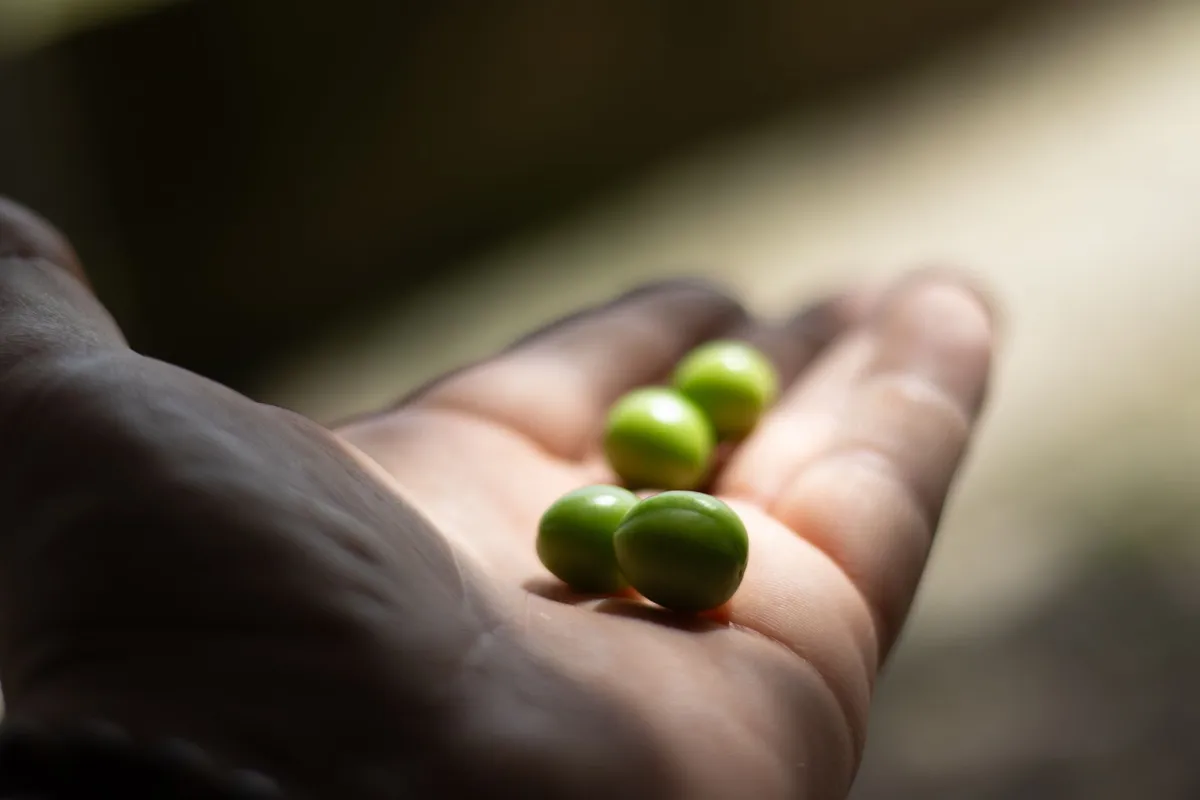
Peas are round and can be a choking hazard, especially for kittens and cats that swallow food quickly. Always flatten or mash peas before offering them, and supervise your cat the first time they try this treat.
How much pea can a cat eat?
A "small amount" looks tiny by human standards. For an average adult cat, that means about three to five peas, served occasionally, not every day. Some cats will eat one pea and lose interest; others may act as if you are hiding a feast. Watch your cat's reaction and keep treat calories to less than 10 percent of their daily intake.
Peas are not calorie-free, and they are not nutritionally complete. They should never be used as a meal replacement or added to every bowl of food. If your cat eats too many peas, you may notice gas, a gurgly tummy, or loose stools. If any of those signs appear, stop offering peas and stick to their regular diet.
If your cat has a health condition, is on a prescription diet, or is prone to urinary issues or digestive sensitivities, check with your veterinarian before offering peas or any new treat. General online advice cannot replace individualized dietary recommendations.
Treats have a small role
Treats of any kind should stay a tiny part of the total diet. A healthy adult cat eating a complete-and-balanced cat food already gets everything it needs from meals. When treats are added, calories can creep up surprisingly fast. A few peas may not seem like much in a human-sized bowl, but for a ten-pound cat, every extra bite counts. Keep the daily intake in mind, and if you are unsure how many calories your cat needs, ask your vet.
If you have ever wondered why your cat acts hungry between meals, a few peas will not solve the problem. Instead, a puzzle feeder, a play session, or a small measured portion of their usual food can be more satisfying. Peas are a novelty, not a solution.
Should cats eat peas every day? No. Think of peas as an occasional snack, not a daily side dish. Daily vegetables add unnecessary plant matter and can crowd out meat-based meals. A good use of a pea treat is to add a little fun to an otherwise complete feline diet.
What if your cat ignores peas?
That is completely normal. Cats can be suspicious of new textures and smells. Offer a single pea once; if your cat sniffs it and walks away, do not insist. Some cats will never show interest in vegetables, and that is fine. A cat that refuses peas is not missing out on anything important.
Pea products to avoid
Canned peas are one of the most common pea treats people consider, but they are not a good choice. Even "low sodium" canned vegetables can contain more salt than a cat needs, along with preservatives. Frozen peas are safer as long as they are cooked and served plain.
Pea soup and other pea dishes often contain onion, garlic, cream, or spices. These ingredients are unnecessary and can be harmful to cats. Also avoid pea pods and pea shoots, which are stringy and hard to chew. Edamame are a different bean and are not the same as green peas; keep the treat simple and stick to the green peas people eat as a side dish.
What about pea protein in cat food?
You may notice pea protein, pea fiber, or pea starch on cat food ingredient lists. Those ingredients are processed and used in specially formulated complete-and-balanced foods. They are not the same as serving whole peas as a treat. A cat food containing pea ingredients has been designed to meet feline nutritional requirements; a handful of peas has not. Reading the label is a good way to understand what is really in the bowl.
Frequently Asked Questions
Are frozen peas safe for cats?
Yes, but only after they have been cooked and cooled. Frozen peas straight from the bag are too hard and too cold. Thawed peas are still too firm; cook them until soft and mash them lightly.
Can kittens eat peas?
A tiny mashed pea is unlikely to hurt a kitten, but kittens need dense, complete nutrition to grow properly. Vegetables do not help meet those needs. If you want to give a kitten a treat, ask your vet for kitten-appropriate suggestions instead.
Could peas give my cat gas?
Yes. Too many peas at once can cause gas and digestive upset because cats are not designed to process large amounts of plant fiber. Keep the portion tiny and stop if your cat shows signs of an upset stomach.
Can I add peas to my cat's regular food?
You can, in very small amounts, but check with your vet first if your cat eats a therapeutic diet. Mixing in a few mashed peas may make a meal more interesting, but it also changes the nutrient balance. Your cat's main food should always be a complete-and-balanced cat food.
Can cats eat pea puree or mashed peas?
Yes, as long as the puree is plain and made from cooked peas. Some cats with dental issues manage mashed foods more easily. Cook and mash peas at home; do not use store-bought baby food that may contain onion powder, garlic, or other seasonings. Check the ingredient list carefully.
Key Takeaway
Plain cooked peas are safe for most cats to eat in tiny amounts. They are not necessary, not nutritionally complete, and not a replacement for meat-based cat food. If you choose to offer peas, cook them, cool them, mash them, and keep the portion to a few peas. When in doubt, ask your veterinarian before adding anything new to your cat's bowl.
Check a food before you guess
Search the PurrWise food checker for a specific ingredient and review the recommended safety action.
Share this guide
Help another cat parent find it.