The short answer
Yes, most cats can eat a small amount of plainly prepared green beans as an occasional treat. Green beans are not a necessary part of a cat's diet—cats are obligate carnivores who need nutrients from animal tissue—but they are also not unsafe. The key is to serve them plain, cut them into small pieces, and offer only a few at a time. If you're unsure whether green beans are a good fit for your cat, check with your veterinarian first, especially if your cat has kidney disease, diabetes, or another health condition.
Why green beans are safe (but not essential)
Green beans are a low-calorie vegetable that provides fiber, vitamin A, vitamin C, vitamin K, and several minerals like magnesium and potassium. Humans eat them for these benefits, and some cat owners feel guilty whenever they snack without sharing. The good news is that a bite of green bean is not going to harm most cats. The better news is that you don't have to share every snack, because cats do not have a dietary need for vegetables.
Cats are obligate carnivores, which means their bodies are designed to get nutrients from animal muscle meat, organs, and bones. They need certain nutrients like taurine, arginine, and preformed vitamin A that either aren't present in plant foods or aren't present in usable amounts. Green beans may have fiber, but they don't offer the protein and amino acids a cat relies on. So green beans are a can-eat food, not a should-eat food.
Another reason green beans are a relatively gentle choice is that they are not on the list of commonly known harmful foods for cats. There are no known chemical dangers in the bean itself when prepared plainly. The risks come almost entirely from how the beans are cooked and how much you give.
How to prepare green beans for your cat
How you serve green beans matters more than the bean itself. Some forms are easy for a cat to manage; others are too hard, too salty, or too heavily seasoned. The table below summarizes common preparations.
| Form | Can cats eat it? | Best way to serve |
|---|---|---|
| Fresh raw green beans | Yes, with caution | Wash, trim ends, chop into small pieces to prevent choking. |
| Steamed or boiled | Yes, safest | Cook until soft, then cool, chop, and serve. |
| Frozen | Yes, after thawing | Thaw completely, then chop; avoid very hard pieces. |
| Canned | Only if salt-free and unseasoned | Rinse well to lower sodium, then chop. |
| Pickled or marinated | No | Vinegar, salt, and spices can upset a cat's stomach. |
| With sauces, butter, garlic, or onion | No | These add fat, salt, and ingredients that are unsafe for cats. |
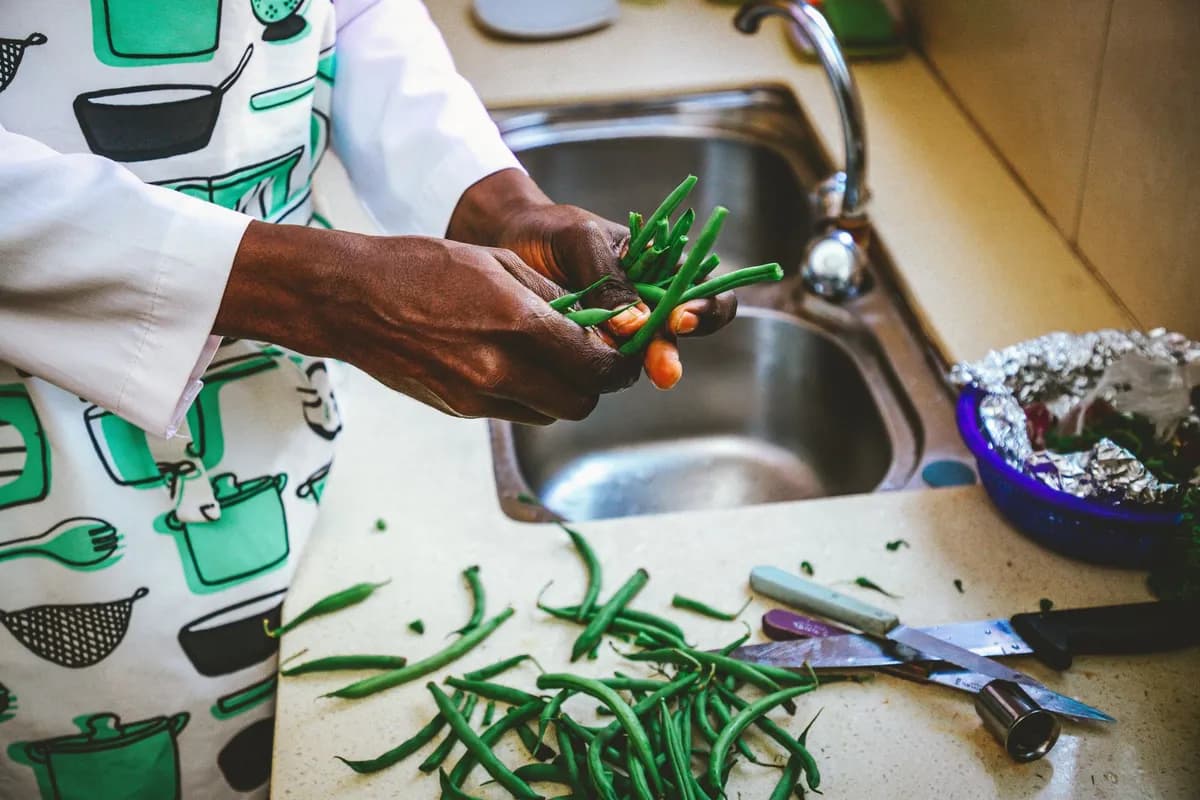
For most cats, the safest and easiest choice is a fresh or frozen green bean that you steam, boil, or roast without any seasoning. Let it cool, slice it into small pieces about the size of a pea or a coin, and offer one or two pieces. Thinly sliced beans are also easier for older cats with dental issues. If you're using frozen beans, thaw them completely first so there are no icy chunks that could hurt a cat's teeth or cause them to swallow without chewing.
Never serve green beans straight from a seasoned dish, especially if the recipe includes garlic, onion, or salt. Garlic and onion are unsafe for cats—they can cause damage to red blood cells. Even a small amount of seasoning can lead to digestive upset. The bean itself is not the concern; the extras are.
How much green bean can a cat eat?
For a healthy adult cat, small portion means a few chopped pieces—roughly 1 to 2 tablespoons in total. That should be considered a treat, not a side dish. Treats, including vegetables, should stay under 10% of a cat's daily calories. For an average house cat eating around 200 to 250 calories a day, a tablespoon of chopped green beans is a fairly small calorie footprint, which is good.
However, even low-calorie treats can be overdone. If green beans become a daily habit or you offer a big pile, the fiber can cause gas, bloating, or loose stools. Some cats will gobble down anything in front of them and later throw up because they ate too much too fast. If your cat is a fast eater, keep the pieces very small and space them out one at a time.
Also, not every cat needs treats at all. If your cat is overweight, work with your vet to plan a controlled calorie intake. You don't need to add extra food beyond the plan. If your cat has oral pain, difficulty chewing, or a sensitive stomach, skip green beans entirely and find another safe treat.
Green beans are not a meal and can't replace a complete and balanced feline diet. Never use green beans to fill up a cat without veterinary guidance. Rapid dietary changes or a high-fiber overload can cause vomiting, diarrhea, or unwanted weight loss. If your cat is on a weight-management plan or has a medical condition, get approval before adding green beans.
Can green beans help with weight management?
Veterinarians sometimes recommend low-calorie, high-fiber vegetables as a tool for overweight cats on a calorie-restricted diet. Green beans can add volume and water, which may help a cat feel full with fewer calories. But this is not something you should start on your own. Weight loss in cats needs to be slow and deliberate; losing weight too fast can trigger a dangerous condition called hepatic lipidosis. Your vet can tell you whether green beans are appropriate for your cat's specific calorie goal, how many beans are allowed, and how often to offer them.
If your cat has diabetes or chronic kidney disease, the fiber in green beans could affect nutrient absorption or blood sugar levels, depending on the individual. A few treats likely won't matter, but never assume. Always ask your vet before making changes to a medically managed diet.
Frequently Asked Questions
Can kittens eat green beans?
Kittens have very different nutritional needs than adult cats. They require a complete kitten food that's rich in protein, fat, calcium, and other nutrients for rapid growth. Green beans don't provide meaningful nutrition for kittens, so they should be avoided or at most offered as a tiny taste under supervision. If you have any doubts, wait until the kitten is an adult and choose a more appropriate treat.
Are canned green beans okay?
If the can says no salt added or low sodium, you can rinse the beans well to remove any residual sodium and offer a small, chopped portion. If beans are canned with salt, flavorings, or preservatives, don't serve them. Fresh or frozen beans cooked at home without oil or salt are a cleaner choice.
Do green beans help with constipation?
The fiber in green beans may help some cats pass softer poop if they are mildly constipated, but this is not a proven treatment or a substitute for veterinary care. Constipation often points to bigger issues like dehydration, hairballs, or underlying disease. If your cat is straining, using the litter box too often, or producing hard stools, talk to your vet rather than relying on vegetables.
What should I do if my cat eats too many green beans?
Watch for vomiting, diarrhea, gas, or a bloated belly. In most cases, a single overindulgence will cause temporary loose stools or a stomach upset that resolves on its own. If symptoms last more than 24 hours, or if your cat stops eating, acts lethargic, or seems painful, contact your veterinarian right away.
Key Takeaway
Green beans are safe for most cats when served plainly, chopped small, and offered as an occasional tiny portion. They are not a nutritional requirement and never replace high-quality cat food. The two rules to remember are: skip seasonings, and keep serving sizes small. When in doubt, ask your vet first.
Check a food before you guess
Search the PurrWise food checker for a specific ingredient and review the recommended safety action.
Share this guide
Help another cat parent find it.