The short answer
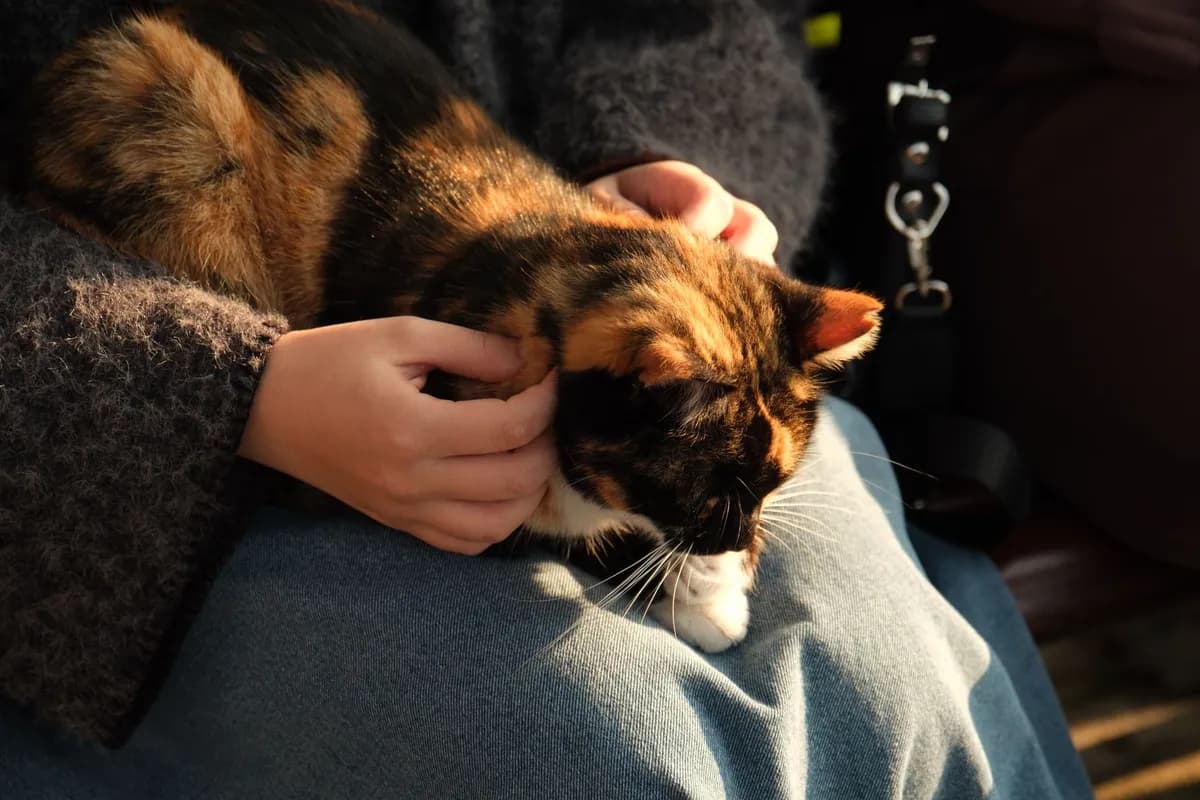
Your cat sleeps on you because you are warm, safe, and smell like home. In the wild, cats seek out sheltered, warm spots to rest, and your lap or chest provides that same comfort. But there is more to it than just a cozy blanket with a heartbeat. Sleeping on you is also a sign of trust, a way to mark you with their scent, and a leftover instinct from kittenhood. So when your cat curls up on your stomach at 3 a.m., they are not being needy—they are telling you that you are their safe place.
Why cats choose you as their bed
Cats are creatures of comfort, but they are also highly strategic. Your body offers a combination of resources that a cat would naturally seek out in the wild:
- Heat: Cats have a higher baseline body temperature than humans (about 100.5–102.5°F), and they love to conserve warmth. Your body is a perfect heat source, especially when you are under a blanket.
- Safety: When a cat sleeps on you, they are in a vulnerable position. Choosing you as their sleeping spot means they trust you to watch over them while they are unconscious.
- Scent: Cats have scent glands on their cheeks, paws, and tail. By kneading and curling up on you, they transfer their pheromones onto you, marking you as part of their territory.
- Routine: Cats are creatures of habit. If you consistently sit in the same chair or lie in the same spot, your cat learns that this is a safe, predictable place to rest.
- Bonding: Sleeping together releases oxytocin in both cats and humans, strengthening your social bond. This is not just a human thing—cats also experience a rise in this 'cuddle hormone' when they are close to their favorite person.
The science of the sleep-on-you behavior
Feline behaviorists have studied why cats choose to sleep on their owners. One key factor is the concept of 'social sleeping.' In multi-cat households, cats often sleep in a pile with other cats they consider family. When your cat sleeps on you, they are treating you as part of their social group. This is especially common in cats that were weaned early or that were hand-raised by humans, as they may imprint on you as a surrogate mother.
Another angle is the 'safe base' theory. In a 2019 study published in Applied Animal Behaviour Science, researchers found that cats are more likely to explore and play in a new environment when their owner is present—a phenomenon known as 'secure base effect.' Sleeping on you is the ultimate expression of this: you are their anchor in a world that can sometimes feel overwhelming.
The kneading and purring connection
You may notice that your cat kneads—pushing their paws in and out against your skin or clothing—before settling down. This behavior originates in kittenhood, when kittens knead their mother's belly to stimulate milk flow. Even after weaning, many cats continue this motion because it feels comforting and is associated with warmth and food. When your cat kneads you and then falls asleep, they are recreating that kittenhood safety.
Purring also plays a role. While purring is often associated with contentment, cats also purr when they are stressed or in pain. In the context of sleeping on you, a steady purr is usually a sign of relaxation. The low-frequency vibrations (around 25–150 Hz) may even promote bone and tissue healing, so your cat is not just relaxing—they are potentially doing your body a favor.
Why does my cat sleep on my chest or stomach specifically?
Cats are picky about their sleeping positions. The chest and stomach are prime real estate for several reasons:
- Rising and falling movement: Your chest moves rhythmically as you breathe, which mimics the gentle motion a kitten feels when sleeping next to its mother's belly.
- Heartbeat: The steady thump of your heart is reminiscent of the sound a kitten hears in the womb. It is a built-in lullaby.
- Warmth and softness: The torso tends to be the warmest part of the body and offers a soft, padded surface—perfect for a cat that wants to sink into a nap.
- Access to your face: Cats often like to be close to your face because that is where your scent is strongest and where they can feel your breath. Some cats even like to sleep on your head or neck for this reason.
When sleeping on you might be a concern
While sleeping on you is generally a positive sign, there are a few situations to watch for:
- Sudden change in behavior: If your cat suddenly starts sleeping on you obsessively, or conversely stops sleeping near you entirely, it could signal stress, illness, or pain. Cats are masters at hiding discomfort, so any abrupt change in sleeping habits warrants a check-up with your vet.
- Overheating: If you tend to run warm or you pile on blankets, your cat might overheat. Watch for panting, restlessness, or moving away after a few minutes. Make sure your cat always has a cooler spot to retreat to.
- Resource guarding: If your cat hisses or swats when you try to move them off you, this is not normal. It could be a sign of anxiety or possessiveness. In that case, consult a feline behaviorist.
Always let your cat choose to leave. Never trap a sleeping cat under blankets or force them to stay. If your cat wakes up and wants to move, allow them to do so. Respecting their autonomy builds trust and prevents defensive reactions.
How to encourage (or discourage) the habit
If you love your cat sleeping on you, great—there is not much you need to do. But if you prefer your own space at night, or if your cat's weight or movement disturbs your sleep, you can gently redirect the behavior:
- Provide an alternative warm spot: Place a heated cat bed (on a low setting) or a soft blanket near you. Your cat may choose it if it feels similar in warmth.
- Use a barrier: At night, keep your bedroom door closed or use a baby gate if your cat insists on sleeping on your face.
- Reward independent sleeping: When your cat settles in their own bed, give them a treat or a gentle scratch. Positive reinforcement works.
- Establish a routine: Feed and play with your cat before bedtime so they are tired and less likely to seek stimulation from you.
A comparison of common sleeping spots and what they mean
| Sleeping Spot | Likely Meaning | Best For |
|---|---|---|
| On your chest/stomach | Bonding, warmth, heartbeat comfort | Cats that are very attached |
| On your legs/feet | Warmth, but less intrusive; they can escape easily | Independent cats that still want contact |
| On your head/pillow | Scent and close proximity to your face | Cats that are especially social |
| Under the covers | Extreme warmth and security, but can be risky | Cats that like to burrow |
| At the foot of the bed | Watchful but close; they can see the room | Cats that are alert or slightly anxious |
Frequently Asked Questions
Q: Why does my cat sleep on me but not my partner?
A: Cats pick their favorite person based on who provides the most consistent care, warmth, and gentle interactions. If you are the one who feeds them, plays with them, and lets them sleep on you without disturbance, you are likely their chosen safe human.
Q: Is it safe to let my cat sleep on me at night?
A: For most healthy adults, yes. However, if you are a very heavy sleeper, you could accidentally roll onto your cat. If you have a newborn or a young child, it is safer to keep the cat out of the crib. Also, if you have allergies or asthma, sleeping with a cat can worsen symptoms.
Q: Why does my cat knead me before falling asleep?
A: Kneading is a leftover kitten behavior that signals comfort and contentment. It is a way for your cat to 'make a nest' and to deposit scent from their paw pads. It also feels good to them, so let them knead unless their claws are painful.
Q: Should I worry if my cat stops sleeping on me?
A: Not necessarily. Cats change their sleeping preferences with age, season, and mood. If the change is gradual and your cat is otherwise eating, playing, and using the litter box normally, it is likely just a preference shift. But if it happens suddenly and is accompanied by lethargy or hiding, consult your vet.
Q: Can I train my cat to not sleep on me?
A: Yes, with patience. Use positive reinforcement to reward independent sleeping spots, and make your own sleeping area less appealing (e.g., keep the door closed). Never punish your cat—that will only damage your bond.
Key Takeaway
Your cat sleeping on you is a beautiful compliment. It means they trust you, feel safe with you, and consider you family. While the habit can be inconvenient at times, it is a sign of a strong human–cat bond. Appreciate the warmth, but always respect your cat's autonomy and watch for any sudden changes that might indicate a health issue. A cat that chooses you as their sleeping spot is a cat that loves you deeply.
Share this guide
Help another cat parent find it.