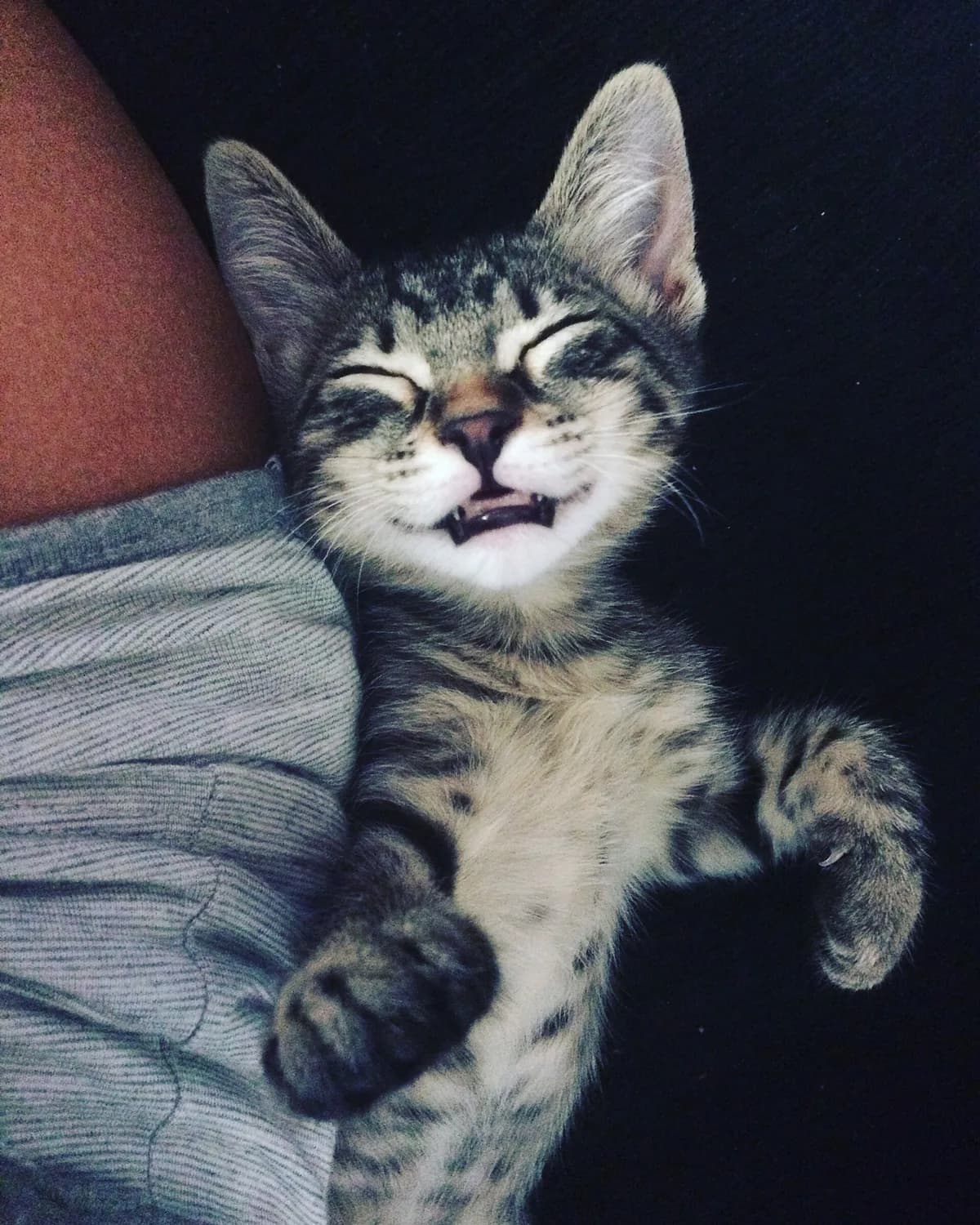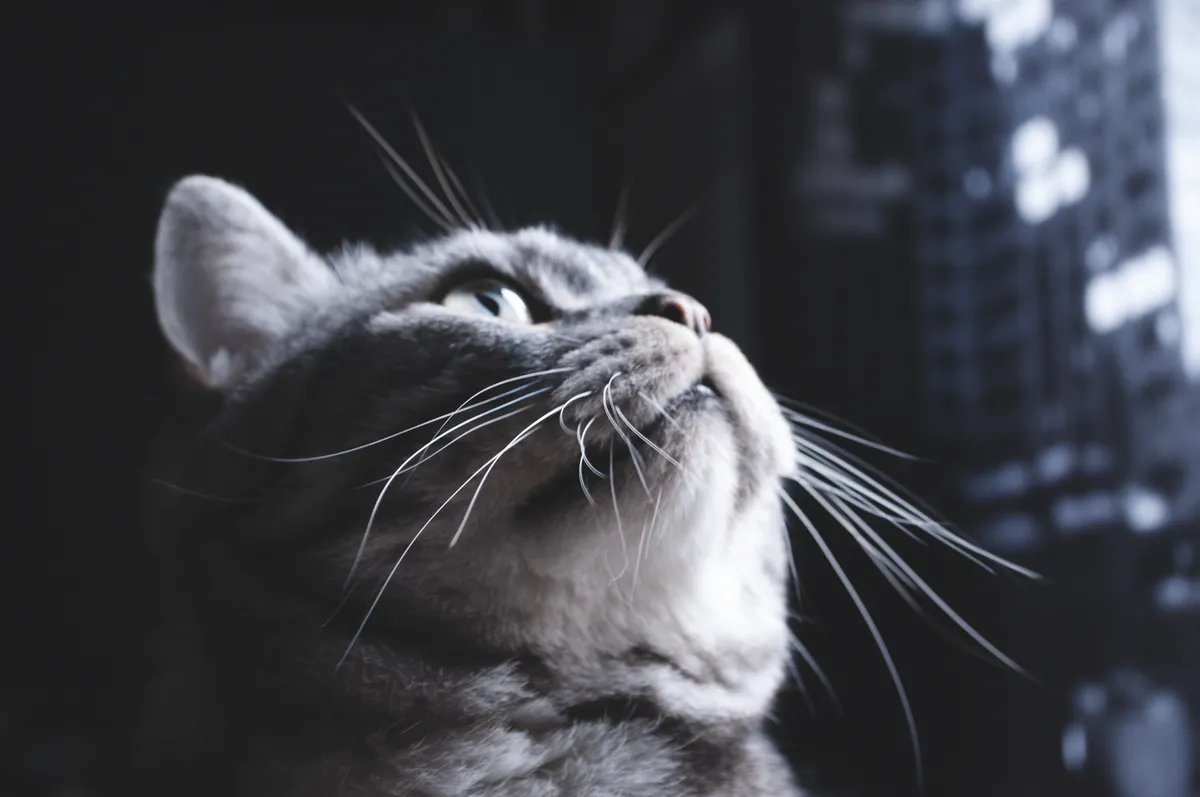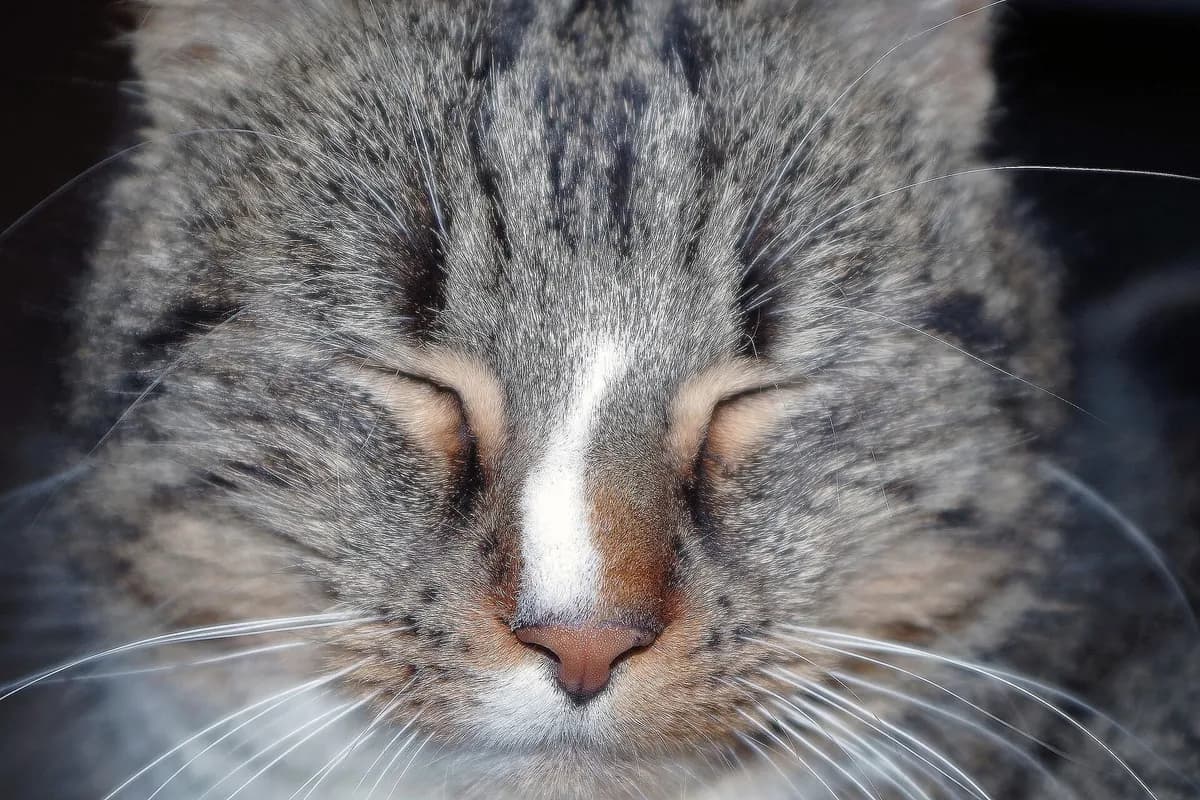
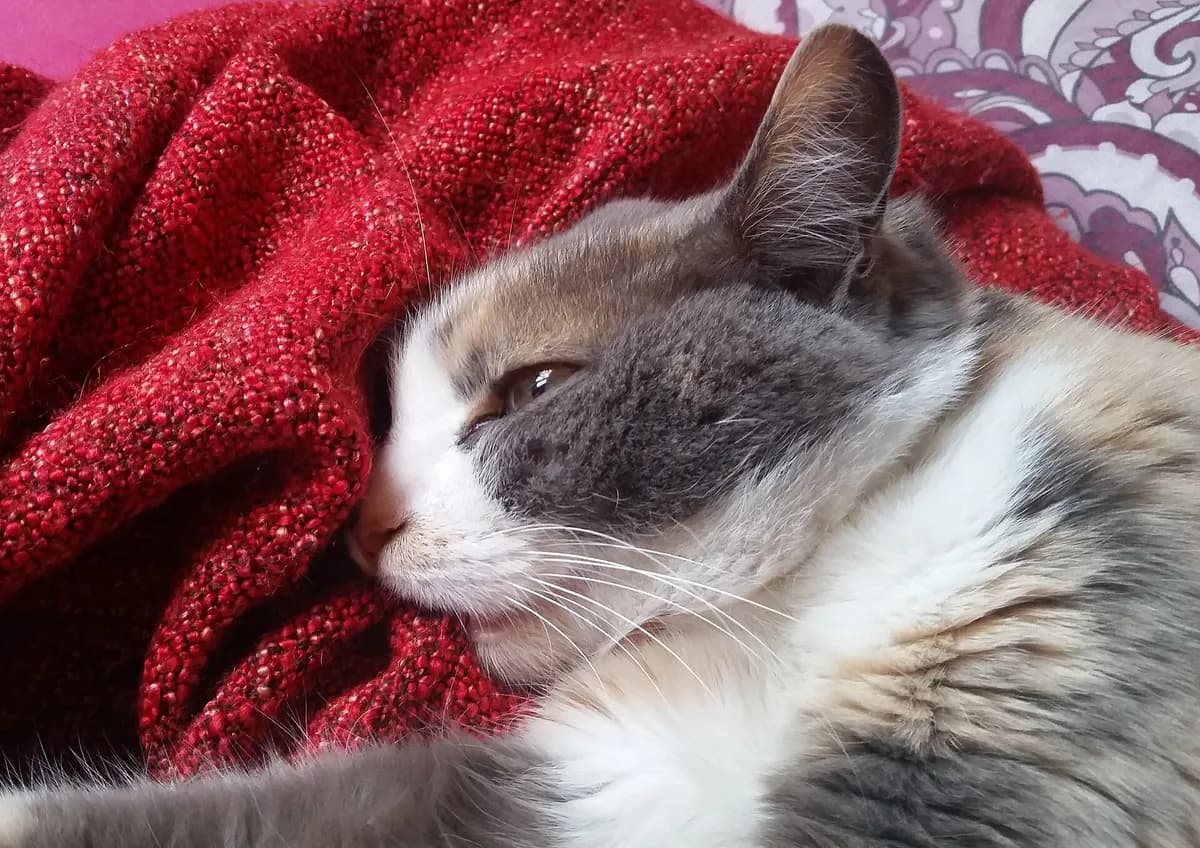
When your cat rhythmically pushes their paws left and right against a soft blanket, pillow, or your lap, they are engaging in a behavior commonly called "making biscuits."
Quick Answer
The Short Answer: Kneading is a self-soothing rhythm originating from kittenhood nursing that adult cats use to signal deep comfort, bond with owners, and deposit scent markings.
Most kneading is ordinary behavior. Cats differ in how often they do it, which surfaces they choose, whether they purr or drool, and whether claws extend with each push. The context and the cat's overall body language are more informative than one universal explanation.
Why Cats Knead
- Instinctual Memory from Kittenhood: Kittens knead their mother's belly during nursing to stimulate milk flow.
- Deep Relaxation & Bonding: Adult cats knead when feeling safe, relaxed, and affectionate.
- Scent Marking: Scent glands in paw pads deposit subtle scent markings to claim territory.
A Behavior That Begins During Nursing
Newborn kittens rhythmically press their paws against the area around a mother's mammary glands while nursing. The movement is associated with obtaining milk, warmth, close contact, and safety. Many cats continue a similar pattern long after weaning.
Calling adult kneading a “memory” is a convenient description, but we cannot know exactly what a cat is recalling. It is safer to say the movement originates in kittenhood and remains associated with comfortable contexts in many adults.
Comfort and Settling
Adult cats often knead before lying down, while resting on a familiar person, or on soft materials. The repeated movement may be part of a settling routine, much like circling before sleep. A relaxed face, neutral ears, loose posture, purring, and slow blinking support the interpretation that the cat is comfortable.
Not every purring or kneading cat wants prolonged petting. Continue to watch the tail, ears, skin, head turns, and muscle tension. Pause contact if the cat stiffens or shifts away.
Scent and Familiarity
Cats use scent as part of how they organize familiar spaces and social relationships. Paw contact may add scent while the claws and pressure leave a subtle physical trace. Kneading on a favorite blanket or person can therefore combine comfort with making the place smell familiar.
This does not mean the cat is trying to dominate or possess a person. Territorial language is often too broad to explain a relaxed social behavior.
Preparing a Resting Place
Another proposed explanation connects kneading with pressing down vegetation to make a resting area. Domestic cats do commonly knead just before settling, but this idea is difficult to prove as the cause of every episode. Several functions can overlap: stretching, testing the surface, scent, and a learned comfort routine.
What Kneading Body Language Can Tell You
| Observation | Possible context |
|---|---|
| Loose posture, half-closed eyes, purring | Relaxed settling |
| Kneading a lap before sleep | Comfort and social proximity |
| Kneading one familiar blanket | Strong surface and scent preference |
| Claws extending rhythmically | Normal motor pattern that may be uncomfortable for a person |
| Sudden tension, tail flicking, or head turn | Interaction limit may be approaching |
| New, repetitive behavior with other changes | Reason to observe more closely and seek advice if persistent |
The table is not a diagnostic tool. Look at the full situation and what is normal for that individual.
Why Some Cats Knead More Than Others
Individual history, temperament, preferred textures, and reinforcement all matter. A cat who receives warmth and attention every time they knead a particular blanket may repeat the sequence. Another cat may show comfort through head rubbing, sleeping nearby, or slow blinking instead.
Early weaning is sometimes suggested as a reason for intense kneading, but kneading occurs in cats with many different histories. Do not infer that a cat was separated too early from this behavior alone.
Some cats knead with all four paws, suck or chew fabric, drool, vocalize, or carry a blanket. Mild drooling during a deeply relaxed routine can occur, but new or excessive drooling, difficulty eating, mouth discomfort, or other changes deserves veterinary attention.
Practical Guidance: What You Can Do
- Place a soft fleece blanket on your lap before your cat settles down.
- Keep claws trimmed to prevent accidental snags during affectionate kneading.
Make Lap Kneading More Comfortable
Put a thick folded blanket between the paws and your skin before inviting the cat onto your lap. Choose tightly woven material that does not easily catch claws. If pressure becomes uncomfortable, stay calm and slide additional padding underneath rather than pushing the cat suddenly.
You are allowed to end the interaction. Stand up slowly or lure the cat toward a prepared bed with a toy or treat from the daily allowance. Avoid shouting, tapping paws, or spraying water; punishment can make a comfortable social moment confusing or frightening.
If the cat consistently chooses one blanket, keep it available in a washable resting spot. Familiar scent may be part of its appeal, so replacing or strongly perfuming it may reduce use.
Claw Care Without Stopping the Behavior
Trimming sharp tips can reduce scratches and fabric snags, but it does not eliminate the need to knead or scratch. Introduce paw handling gradually when the cat is relaxed. Touch briefly, reward, and stop before resistance.
Use tools designed for pets and remove only the safe tip. If you cannot clearly identify where to cut, ask a veterinary professional or experienced groomer to demonstrate. Never restrain a panicking cat to complete every claw in one session.
Check older cats' claws regularly. Reduced scratching and activity can allow claws to overgrow. A claw curling toward the pad, swelling, bleeding, limping, or repeated paw licking needs veterinary attention.
Fabric Sucking and Chewing
Kneading may occur alongside sucking on blankets or clothing. If the cat merely mouths one safe fabric while relaxed, protect the item and supervise. Loose threads, yarn, fringe, foam, and pieces of fleece can become swallowing hazards.
Remove damaged materials and provide a tightly woven alternative. Persistent chewing or ingestion of non-food items is different from kneading and should be discussed with a veterinarian. Do not pull string or fabric from a cat's mouth if it may already be swallowed; seek urgent veterinary guidance.
Redirecting Kneading From Delicate Surfaces
If a cat kneads expensive bedding, a leather chair, or another unsuitable place, identify what the site offers: warmth, elevation, softness, familiar scent, or closeness to you. Put an acceptable blanket or bed directly at or beside the location.
Reward voluntary use of the alternative. Once it is established, move it gradually if needed. Blocking the favored site before an equally useful option exists may simply shift kneading to another unwanted surface.
What Not to Assume
- Kneading does not prove a cat was weaned too early.
- It is not an attempt to dominate a person.
- Claw use is not deliberate punishment.
- A cat who does not knead can still feel safe and bonded.
- Purring and kneading do not guarantee unlimited consent to petting.
- One unusual session does not identify a medical or emotional cause.
When a Change Deserves Attention
Kneading is usually harmless, but a sudden change should be considered alongside the rest of the cat's behavior. Contact a veterinarian if new or intense kneading appears with restlessness, hiding, appetite change, unusual vocalization, difficulty settling, mobility changes, paw injury, excessive drooling, or fabric ingestion.
A cat who kneads one area of the body, seems unable to get comfortable, or reacts painfully to touch needs assessment rather than repeated testing at home. Record when the behavior occurs and any accompanying changes to help the veterinary team.
Frequently Asked Questions
Why does my cat knead me but not other people?
Your lap may offer the preferred combination of warmth, texture, position, scent, and history. It can reflect comfort without meaning the cat ranks people in a strict hierarchy.
Why do claws come out during kneading?
Claw extension can be part of the alternating paw movement. Use a thick blanket and maintain safe claw care rather than punishing the cat.
Why does my cat drool while making biscuits?
Some cats drool mildly when deeply relaxed. New, heavy, or persistent drooling—especially with mouth odor, eating difficulty, pawing at the face, or other changes—should be discussed with a veterinarian.
Can I stop my cat from kneading?
It is better to redirect the location or add padding than to suppress a normal behavior. Provide an acceptable soft surface and calmly end lap sessions when needed.
Key Takeaway
Kneading begins as a kitten nursing behavior and often continues as part of adult comfort, settling, scent, and social routines. Offer a safe blanket, protect your lap, maintain claws gently, and allow the cat to choose contact. Enjoy “making biscuits” without assuming it has one meaning in every cat, and seek advice when the behavior changes alongside physical or behavioral concerns.
Share this guide
Help another cat parent find it.