The short answer
Yes, cats dream. The scientific evidence comes from the way cat brains behave during sleep, not from a cat telling us what they saw. Cats share humans' basic sleep structure, including rapid eye movement (REM) sleep, the stage of sleep most strongly associated with dreaming. When a cat is in REM sleep, their brain waves look similar to when they're awake, their eyes flick beneath closed lids, and their whiskers, paws, ears, and tail often twitch. Researchers have even shown that when the brain mechanism that keeps a sleeping cat's body still is interrupted, cats get up and act out dream-like behaviors such as stalking and pouncing. So while we can't open a cat's dream journal, the evidence points to one conclusion: your cat is not just "sleeping hard" — they're dreaming.
How cat sleep actually works
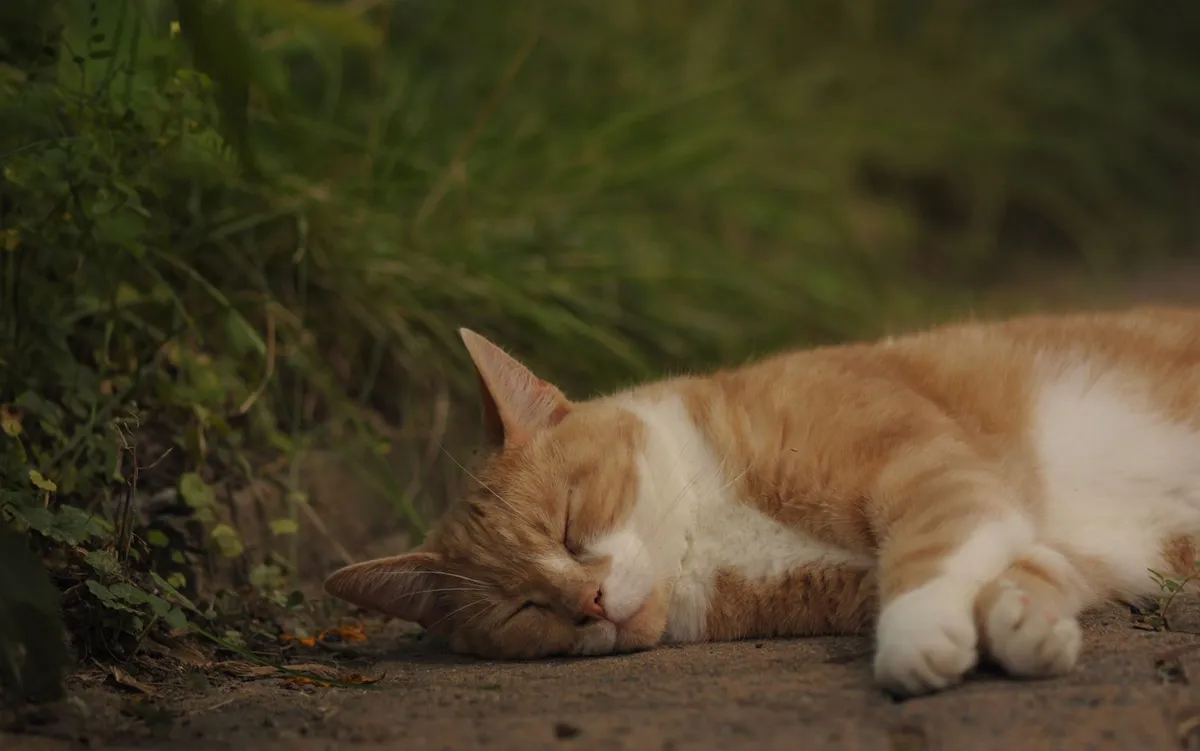
Cats are famously sleepy creatures. A healthy adult cat typically sleeps between 12 and 16 hours a day, and kittens and senior cats often sleep even more. But cat sleep isn't one long nap. It cycles between non-REM sleep and REM sleep just like human sleep does, only faster. A full human sleep cycle takes around 90 minutes; a cat's cycle takes roughly 25 to 30 minutes. That means a cat packs many more sleep cycles into a single day.
Non-REM sleep comes first; body temperature drops, breathing slows, and the cat is quiet but can wake easily if needed. Then REM sleep follows. During REM, the brain becomes nearly as active as when awake, but the body is kept immobile by a protective brain mechanism that temporarily "paralyzes" major muscles. This muscle atonia is why a dreaming cat doesn't actually leap across the room while chasing a dream-mouse. What we see instead is the twitching residue: whiskers flicking, paws swimming the air, tiny chirps escaping — the same sort of prey-chatter vocalizations cats make at birds through the window.
The REM stage is the dreaming stage. In humans, waking people from REM sleep yields dream reports most of the time. Since cats have the same brain regions involved in dreaming — the same cortex, hippocampus, and brainstem structures — scientists infer that REM in cats is also a dreaming state.
The scientific trail that led to "cats dream"
We didn't always know this. Sleep research in cats goes back decades. In the 1960s, a French researcher named Michel Jouvet noticed something remarkable while studying REM sleep in cats. He found a small region in the brainstem — the pons — that generates the signals responsible for keeping the body still during REM. When that region was damaged in laboratory cats, the "sleep paralysis" stopped working. The cats, still in REM sleep, would lift their heads, act as though they were stalking something, and even exhibit hunting-like movements while clearly asleep. This told researchers that the brain is actively producing complex, motivated behaviors during cat REM sleep — not just random nerve noise.
Other lines of evidence point the same way. Cats produce sharp electrical waves called PGO waves during REM sleep. These waves are also seen in humans and are tied to the vivid imagery of dreams. And in studies with rats — another mammal with similar sleep architecture — researchers recorded brain cells that fired in a specific sequence while the rat ran a maze; during sleep, those same cells fired in the same sequence, like a replay of the day's experience. Replay is considered a core part of dreaming and memory consolidation.
Taken together, the evidence is strong: mammalian brains, including cats', are built to generate dream experience during REM sleep. The specific content isn't verifiable in a non-verbal animal, but the process is real.
What cats probably dream about
If dreams are built from waking experiences, a cat's dreams are likely full of cat life: stalking, hiding, pouncing, grooming, exploring, eating, and the people around them. Your cat might dream about the feather wand you played with this morning, the sunny windowsill they love, or the ritual of dinner. They almost certainly don't dream about grudges or revenge; that kind of storytelling isn't how cat brains work. Dream content tends to reflect recent, meaningful experiences, and for a well-cared-for cat, those experiences are mostly pleasant.
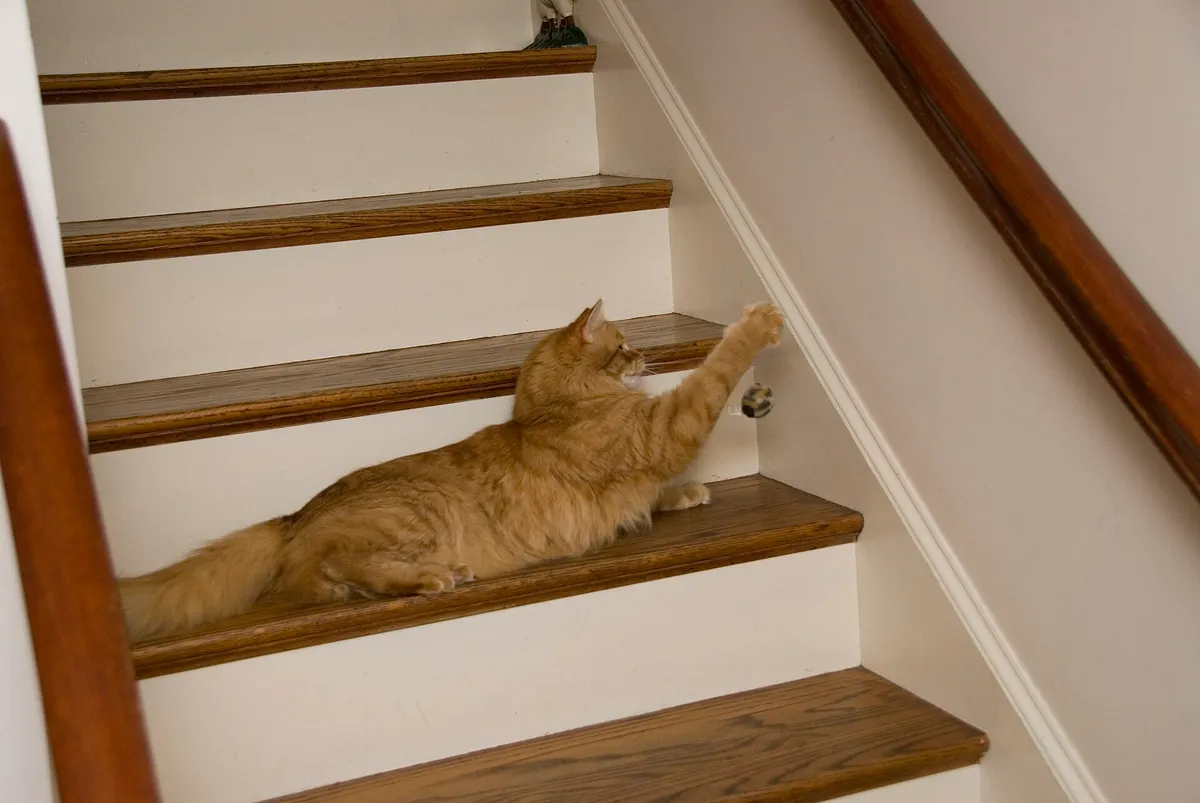
Some cat behavior experts also suspect that cats dream about hunting above all else, because hunting-related behaviors dominate a cat's waking mental life. Even indoor cats who never catch a mouse spend a huge portion of their day practicing hunt sequences: watching, stalking, chasing, pouncing, batting. It would be surprising if that didn't show up in their dreams.
The telltale signs your cat is dreaming
How can you tell if your cat is dreaming right now? Look for these clues, usually in REM sleep, which comes in bursts throughout a cat's nap:
| Sign you might notice | What it usually means | Do you need to act? |
|---|---|---|
| Whiskers twitching | Tasting or smelling something in a dream | No — perfectly normal |
| Paws paddling or "swimming" | Running, jumping, or batting in a dream | No — leave them be |
| Eyes moving under closed lids | REM sleep: the dreaming stage | No — this is the signature of REM |
| Ears flicking, tail twitching | Tracking imaginary prey or sounds | No — normal dream behavior |
| Soft chirps, squeaks, or purr-like sounds | Vocalizing in a dream | No — unless it becomes distressed crying |
The only time to take a closer look is if the movements seem rigid, if your cat can't be woken, if there's drooling or loss of bladder control, or if these episodes happen daily and last a long time. In those cases, a video recording plus a vet check can help rule out medical issues. Occasional twitchy sleep, however, is just dreaming.
Let sleeping cats lie. If you wake a deeply dreaming cat abruptly, they may be disoriented and could swat or hiss, not out of anger but out of surprise. If you want to wake them, use a gentle noise or a soft touch near their back rather than shaking them awake. And remember: a cat with a relaxed body and twitching face is usually having happy dream activity — no intervention needed.
Do kittens dream more than adult cats?
Yes, and it's one of sleep science's more charming facts. Kittens spend a much larger percentage of their sleep time in REM than adult cats, and there's a good reason for it. REM sleep is when the brain consolidates learning, and a kitten's brain is developing at an astonishing rate. Each day is packed with new experiences: the first jump, the first pounce, the discovery that their human's feet move. All that learning gets processed during sleep. So when a kitten's paws twitch furiously mid-nap, they're probably replaying the biggest moments of their short, eventful life. Adult cats still dream, but kittens likely dream "more" in both quantity and intensity — a sleep-time version of their daily growth spurt.
Should you ever worry about night-time noise or movement?
A cat who is active at night is a different issue from a cat who dreams. Many indoor cats are naturally wired to be active at dawn and dusk, which can overlap with human sleep. That's not dreaming; that's instinct. If your cat wakes you at 5 a.m., the fix is usually enrichment and routine — more interactive play earlier in the evening, a puzzle feeder, and ignoring attention-seeking behavior at night. Dreaming, by contrast, is quiet, self-contained, and ends the moment the cat glides into lighter sleep. And a mid-nap chirp is a million times less concerning than a 3 a.m. concert on your chest.
Frequently Asked Questions
Do cats dream every time they sleep?
Not continuously. Cats cycle in and out of REM sleep throughout a nap, so they're likely to dream in bursts several times during a day of sleeping. Between those bursts, they're in quieter, non-dreaming sleep.
Can cats have nightmares?
Because cats dream, it's reasonable to think their dreams can be emotionally intense, including frightening ones. An occasional startled wake-up is normal. But if your cat is regularly crying out in sleep or waking agitated, talk to your veterinarian — pain, stress, or sleep disorders could be at play.
Do kittens dream more than older cats?
Kittens spend a greater portion of their sleep in REM, so yes, they tend to dream more — which makes sense given how much their brains are learning and growing. Senior cats still dream, though total sleep time and sleep quality can shift with age and health.
Should I wake my cat if they're acting out a dream?
No. Let them finish the sleep cycle. If you're worried they're distressed, make a soft sound from across the room or let them wake naturally. Smacking, stomping, or picking up a deeply dreaming cat is a good way to get startled.
Key Takeaway
Cats dream, and the evidence is as solid as it gets for a non-verbal species. The twitches, paws, and tiny sounds your cat makes during sleep are signs of a healthy brain replaying waking life — usually the hunt, the play, the good spots to nap. The best thing you can do is give them a comfortable, restful place to sleep and let them. If you want to support their happiest waking hours too, make sure their days are full of enrichment: climbing spots, puzzle toys, and interactive play that give them the experiences worth dreaming about.
Share this guide
Help another cat parent find it.