Scratching is an essential physical and psychological need for all cats. Punishing a cat for scratching is ineffective; instead, cat parents must provide preferred scratching alternatives. A well-chosen cat tree can serve as a scratching station and climbing perch in one.
Quick Answer
The Short Answer: Cats scratch to maintain claw health, stretch back and shoulder muscles, and deposit scent markings from paw glands to establish territorial security.
Your sofa is not being targeted out of spite. It may simply be tall, stable, textured, prominent, and positioned exactly where your cat wants to leave a visual and scent mark. Successful redirection starts by copying those useful features.
Why Cats Need to Scratch
- Claw Maintenance: Removes the dead outer sheath of the claw.
- Stretching Muscle Groups: Exercises shoulders, back, and leg muscles.
- Scent & Visual Marking: Deposits pheromones from paw glands onto surfaces.
Claw Maintenance
Scratching helps remove worn outer claw sheaths. You may find curved, translucent pieces near a favorite scratcher; these are commonly shed layers rather than entire claws. Scratching does not replace regular observation of claw length, particularly for older or less active cats.
Stretching and Movement
A tall vertical surface lets a cat extend the front legs and lengthen the body. Horizontal scratching uses a different posture. This is why one small post may not satisfy every preference, even if its material seems ideal.
Communication
Scratches leave a visible mark and scent from the paws. Cats often scratch in socially important places: near sleeping areas, doorways, routes through the home, and shared rooms. Hiding the only post in an unused corner can make it less relevant than a sofa beside the family's main walkway.
Excitement and Routine
Some cats scratch after waking, during play, when people return home, or around predictable household events. The behavior can be part stretch, part communication, and part release of arousal. Notice the timing because it tells you where and when an alternative should be available.
Identify Your Cat's Scratching Preference
Observe the surface your cat already chooses:
| Feature | What to notice |
|---|---|
| Angle | Vertical sofa arm, horizontal rug, or angled surface |
| Material | Woven fabric, sisal, cardboard, wood, or carpet-like texture |
| Height and length | Whether the cat fully stretches or scratches low |
| Stability | Whether the surface stays completely still |
| Location | Near sleep, a doorway, a window, or family activity |
| Timing | After waking, during excitement, or at a particular time |
Treat unwanted scratching as information. A cat using the carpet may ignore a vertical rope post but accept a flat cardboard pad. A cat stretching on a sofa arm may need a tall, rigid post rather than a short, wobbling model.
Choose an Effective Scratcher
A vertical post should allow a full-body stretch and remain stable when the cat pulls with full force. A broad base helps, but some products still need secure wall or furniture attachment according to their instructions. If a post tips once, the cat may avoid it.
Offer material variety. Sisal fabric or rope, corrugated cardboard, wood, and other cat-safe surfaces feel different. Avoid assuming every cat prefers the same texture. Carpet-covered posts can be attractive, though some cats may find them similar to household carpet; placement and reinforcement still matter.
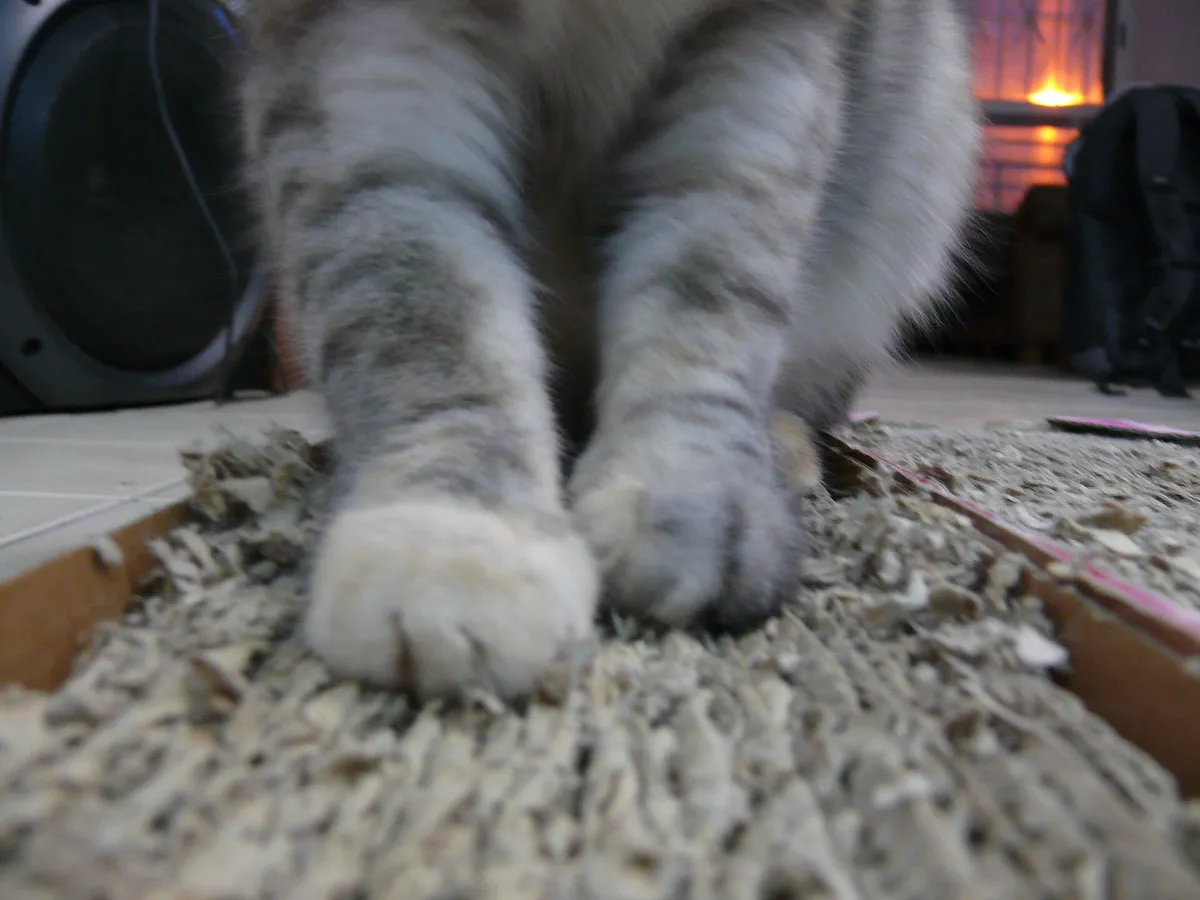
Horizontal scratchers should be large enough for the cat to stand on while scratching. Weight or non-slip backing can prevent movement. Angled scratchers provide another posture and may suit cats who switch between vertical and flat surfaces.
In multi-cat homes, provide several options in separated locations. One cat may guard a popular post, and individual preferences can differ.
Practical Guidance: What You Can Do
- Provide Sturdy Sisal Posts: Posts must be tall enough for a full stretch and stable.
- Match Scratching Angle: Some cats prefer vertical posts; others prefer horizontal cardboard scratchers.
- Location Matters: Place scratchers right next to furniture that your cat previously targeted.
A Step-by-Step Redirection Plan
1. Put the New Scratcher at the Target
Place it directly beside or in front of the scratched area. The first goal is not interior-design perfection; it is making the appropriate surface easier to choose than the furniture.
If the cat scratches after waking, add another option beside the sleeping place. If scratching happens near the entrance when you return, put a stable scratcher along that route.
2. Make the Furniture Temporarily Less Satisfying
Cover the specific target with a tightly secured furniture protector or another material safe for the surface and cat. Avoid loose coverings that catch claws or can wrap around the animal. Test adhesives on furniture and keep sticky products away from fur and skin.
Do not use essential oils, strong scents, cayenne, or homemade chemical deterrents. Some substances are irritating or unsafe, and frightening the cat near an important room can create new problems.
3. Make the Scratcher Easy to Discover
Play with a wand toy near the scratcher without dragging the cat's paws across it. Place a few treats nearby if food is appropriate, or reward the cat immediately after voluntary scratching. Catnip or silver vine may interest some cats when used safely, but not every cat responds.
Never hold a cat against the post or manually rake their paws down it. Forced contact can make the new surface unpleasant.
4. Reinforce the Choice
Keep rewards calm and immediate. Praise, a brief play opportunity, or a treat from the daily allowance can strengthen the preferred behavior. Continue even after the first successes; established furniture scratching has a long history of being rewarding.
5. Move the Scratcher Gradually
Once the cat uses it reliably, shift it a small distance at a time only if needed. Moving it straight to a hidden corner can restore the furniture's advantage. Some scratchers should remain in prominent places because the location is part of their purpose.
Protecting Common Furniture Targets
For sofa corners, use a tall post or a securely designed corner scratcher that matches the preferred height. For rugs, place a large flat scratcher directly over or beside the target and prevent the rug from sliding. For doorframes, use a stable vertical alternative nearby and a surface protector compatible with the frame.
Trim loose furniture threads so they do not become swallowing or entanglement hazards. Repair exposed staples, foam, or sharp internal parts. If damage has created an unsafe opening, block access until it is repaired.
Claw Care and Scratching
Regular nail trims can reduce sharp tips and accidental damage, but they do not remove the need to scratch. Introduce paw handling and trimming gradually with rewards. Use cat-appropriate tools and ask a veterinary professional to demonstrate if you are unsure.
Older cats may need closer claw checks because reduced activity can allow overgrowth. Contact a veterinarian for a claw growing into the pad, bleeding, swelling, limping, repeated paw licking, or a sudden refusal to use familiar scratchers.
Nail caps are not a substitute for environmental setup and require correct sizing, application, monitoring, and replacement. Discuss them with a veterinary professional if considering them. Declawing removes part of each toe and is not a routine solution to furniture scratching.
Common Redirection Mistakes
- Buying one short, unstable post and concluding the cat dislikes scratchers.
- Choosing a vertical post for a cat who scratches rugs horizontally.
- Placing the alternative far from the established target.
- Punishing after the event, which does not show the desired location.
- Spraying water or using frightening noises.
- Moving a successful post too quickly.
- Replacing every scratcher at once and removing familiar scent.
- Expecting nail trimming to eliminate scratching behavior.
When Scratching Changes Suddenly
Normal scratching varies among cats. A sudden increase can accompany environmental change, conflict, or arousal, while a sudden decrease can reflect mobility or paw discomfort. Look at the broader pattern: movement, climbing, grooming, appetite, social behavior, and claw condition.
This article cannot diagnose the reason for a change. Contact a veterinarian if scratching changes abruptly or occurs with limping, pain, swelling, damaged claws, hiding, reduced activity, or other physical signs. For persistent household marking or conflict after health concerns are addressed, a qualified feline behavior professional can help assess the environment.
Frequently Asked Questions
Why does my cat scratch beside the post instead of on it?
The post may differ in angle, material, stability, size, or exact location. Compare it with the chosen surface and adjust one feature at a time.
Should I replace a shredded scratcher?
Many cats prefer a well-used surface carrying familiar marks and scent. Replace it when unstable or hazardous, and introduce the new one beside it before removing the old one.
Can I train an adult cat to use a scratching post?
Yes. Match the existing preference, put the alternative at the target, reward voluntary use, and protect the furniture during the transition.
Is scratching a dominance behavior?
Scratching communicates and maintains the claws and body; a broad dominance label does not provide a useful solution. Focus on resources, locations, triggers, and individual preferences.
Key Takeaway
Scratching is healthy, necessary behavior—not a deliberate attack on furniture. Match the angle, material, height, stability, and location your cat already prefers; place the alternative directly at the target; and reward voluntary use. Protect furniture temporarily while the new habit develops, and keep successful scratchers available where they matter.
Share this guide
Help another cat parent find it.