The short answer
Cats communicate with their whole bodies. A tail flick, ear turn, or eyelid movement means something — but only when you read it alongside everything else. The most common mistake is judging one signal in isolation. A thrashing tail can mean "stop petting me" during a cuddle, or "I'm locked onto that bird outside." The trick is reading the cluster: tail, ears, eyes, posture, and the situation around you. Put them together and you'll know when your cat wants attention, when she needs space, and when she's one step away from a warning nip.
See the whole picture first
Cats don't have words, so they rely on a rich vocabulary of visual signals. Those signals are fast and subtle, which is why context matters as much as the signals themselves. Before you interpret anything, look at four zones: ears, eyes, tail, and overall posture. Then ask: what is happening right now? A cat who swishes her tail slowly while watching a bird out the window is focused, not furious. That same cat swishing her tail fast while you pet her is likely overstimulated. Compare the picture to your cat's usual baseline: a confident cat sprawled across the floor looks different from a shy cat tucked into a corner, even when both are calm.
The tail: your cat's mood barometer
The tail is often the easiest part of the body to spot, and it is remarkably expressive. Watch the position, the movement, and whether the fur is puffed. Here is what common tail language usually means:
| Tail signal | What it usually means |
|---|---|
| Upright with a hooked tip, like a question mark | Friendly greeting: "I'm happy to see you" |
| Upright and still | Alert, confident, curious |
| Upright and vibrating | Intense excitement, often at greeting time |
| Puffed out like a bottle brush | Startle or fear |
| Tucked low or between the legs | Anxiety, nervousness, or feeling unwell |
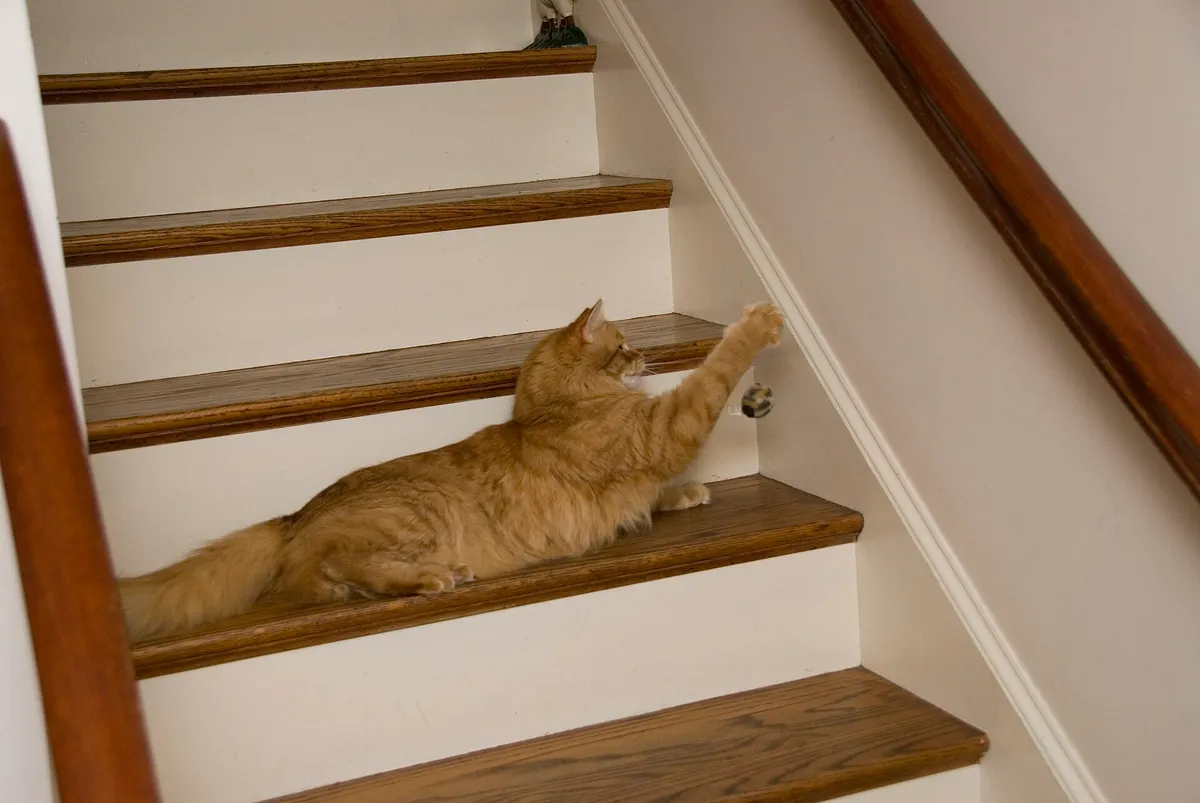
| Swishing slowly side to side | Focused attention, often while watching prey |
| Thrashing or lashing quickly | Agitation or overstimulation; back off |
| Wrapped around your leg or arm | Affection and social bonding |
Context shapes the meaning. A puffed tail with a sleek, crouched body usually signals fear. A puffed tail with an arched back is the classic Halloween-cat pose, a startle response meant to make the cat look bigger. Both say "give me space." A tail wrapped around your leg is the feline version of an arm around a shoulder — your cat is claiming you as part of her safe world.
Eyes: slow blinks and hard stares
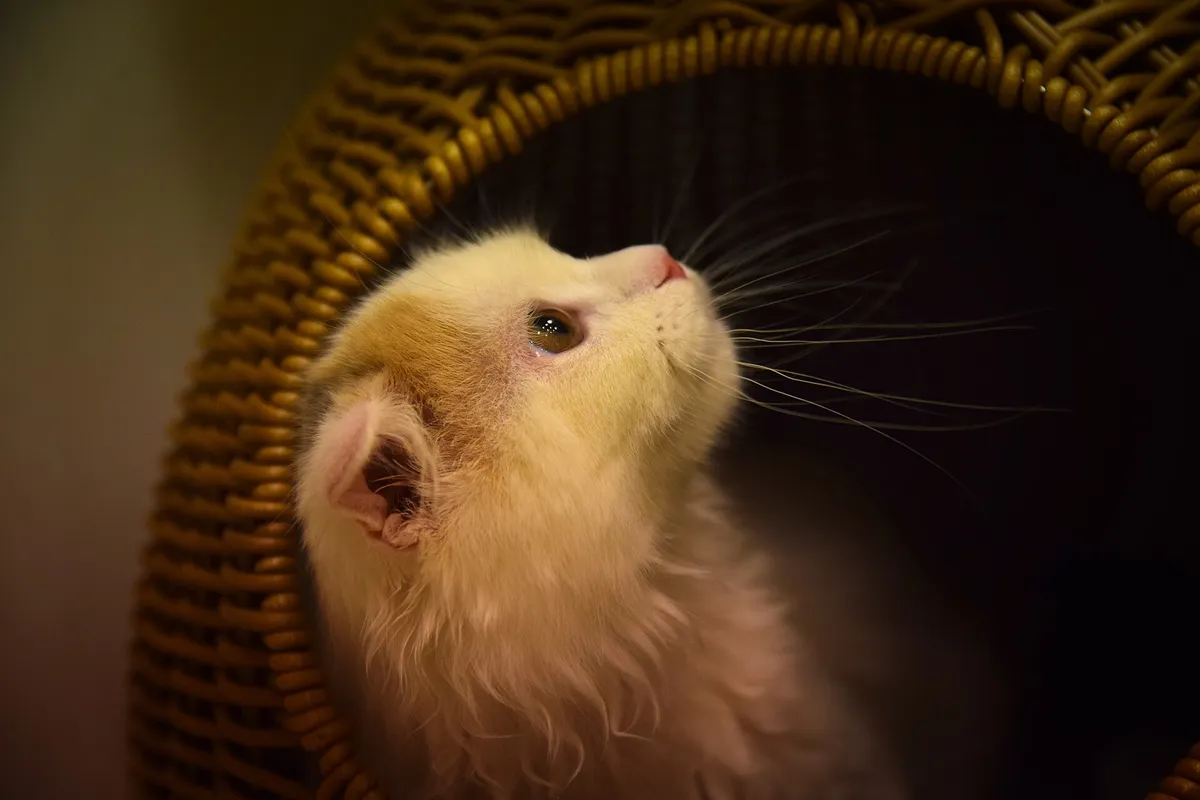
Feline eyes are finely tuned mood indicators. The shape of the eye, the size of the pupil, and the length of a gaze all carry meaning.
- Slow blinks. When a cat looks at you and lowers and raises her eyelids slowly, she is showing trust and relaxation. Researchers have found that cats are more likely to narrow their eyes in response to a person's slow blink, and more willing to approach afterward. Try it: blink slowly at your cat and wait. Many cats blink back (this is the behavior behind why cats slow blink at you).
- Dilated pupils. Large, dark pupils mean arousal. That arousal can be excitement during play, fear, or surprise. Always check the rest of the body to decide which one you are seeing.
- Constricted pupils. Narrow, slitted pupils can signal tension or aggressive intent. They can also simply mean bright light, so notice the lighting before you judge.
- Hard stare. An unbroken, unblinking stare is a challenge in cat language. If your cat stares hard at another cat, she may be working out a conflict. Avoid a staring contest with your cat: blink slowly and look away to signal that you mean no harm.
Ears: front, sideways, or pinned flat
Cats have roughly 30 muscles in each ear, which makes them extremely mobile and honest about mood.
- Neutral and forward: relaxed, alert, and interested in what is ahead.
- Swiveled sideways or backward — "airplane ears": irritated, anxious, or annoyed. This is an early warning sign. If you notice airplane ears during petting, it is time to stop.
- Pinned flat against the head: fear, defensiveness, or active aggression. A cat with flattened ears is telling you, very clearly, to back off.
Ear positions change in a heartbeat. A cat who seemed relaxed a second ago and suddenly flashes airplane ears is giving you a real-time update, and it is worth taking seriously.
Posture: the whole-body message
Posture is what ties the signals together.
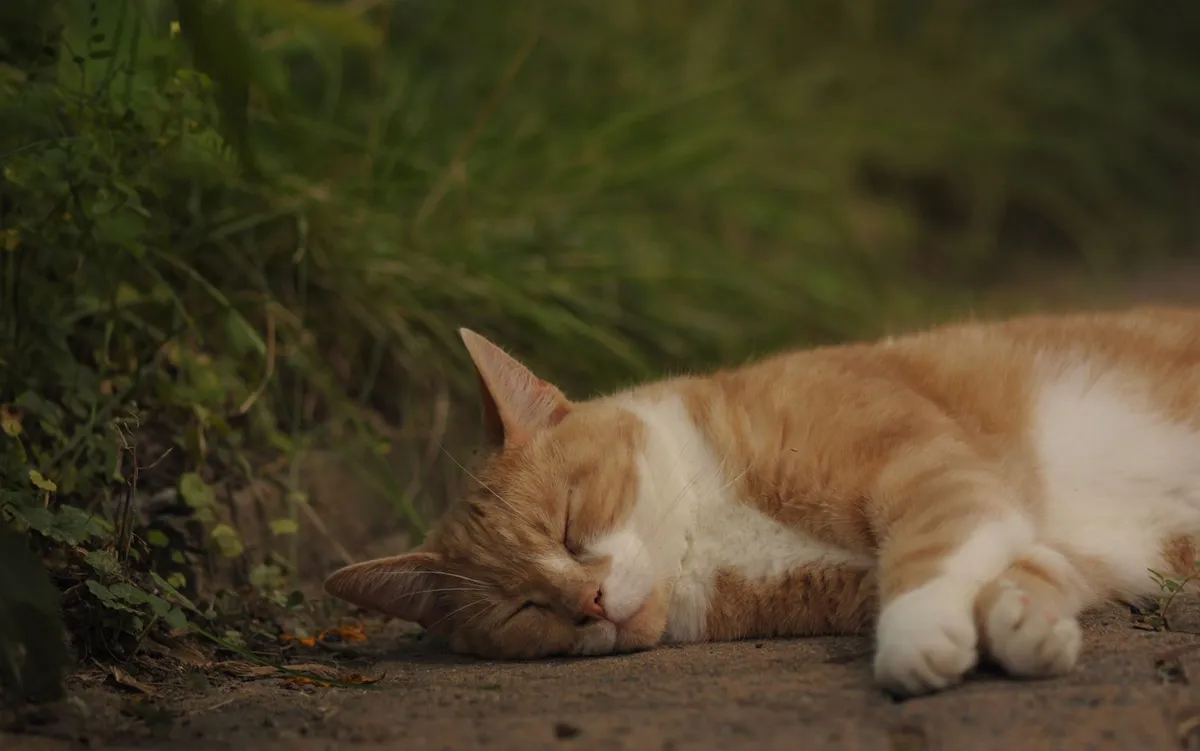
- Relaxed loaf or sprawled side-lying: comfortable and safe. A cat resting with paws tucked under her chest is content, not depressed.
- Crouched low with the belly close to the ground: stalking or cautious. Check where the gaze is aimed. Toward a toy or bird? Stalking. Toward a stranger or loud noise? Cautious.
- Arched back with raised fur: startled and trying to look large. The tufted, puffed tail often joins this pose.
- Rolling over to show the belly: a trust display, and sometimes a trap. Many cats love a gentle chin scratch but do not want their belly rubbed. Let your cat guide you, and stop if her tail starts to swish.
- Rubbing her head, cheeks, or chin on you: friendly scent marking. Your cat is placing her scent on you and claiming you as part of her safe territory.
- Turning her back to you: a request for space, or a signal of non-aggression. Cats who want to avoid conflict will angle away and break eye contact.
When sounds join the picture
Body language rarely travels alone. Sounds add extra clarity.
- Purring most often means contentment, but cats also purr when stressed, in pain, or even during labor. It can be a self-soothing behavior. Always read purring in context.
- Trills and chirrups are friendly greetings or signs of excitement, often used when a cat sees a favorite person or a bird outside.
- Growls, hisses, and spits are unmistakable warnings. If you hear them, freeze, pull your hand back slowly, and give the cat space.
Never punish a cat for hissing or growling. These are honest warnings, not misbehavior. A cat who learns that warnings are punished may skip the warning altogether and go straight to scratching or biting. If a cat shows flattened ears, a thrashing tail, dilated pupils, and a hiss or growl, stop what you are doing and walk away slowly.
Putting it together: three common scenes
Scene 1: The welcome home. You walk in and your cat trots up with her tail upright and hooked, ears forward, maybe a chirp, and then she rubs her cheek on your leg. This is a happy greeting. Return it with a slow blink and a soft word, and let her set the pace for more contact.
Scene 2: The petting timeout. You are stroking her back. Her tail starts to swish faster, her ears rotate sideways, her pupils widen, and the purr fades. These are escalating signs of overstimulation. Stop petting, rest your hand still, and let her decide whether to stay or walk away. This one habit prevents an enormous number of bites and scratches.
Scene 3: The startled window cat. A strange cat appears outside. Your indoor cat's tail puffs, her back arches, and she stares with wide pupils — maybe a low growl joins in. She is in defensive mode. Do not pick her up or comfort her physically; a startled cat can redirect her fear onto you. Close the blinds and give her a quiet place to settle.
Frequently Asked Questions
Why does my cat show me her belly if she doesn't want it rubbed?
Showing the belly is a trust display, not a request. In cat-to-cat life, flopping over and showing the belly is a friendly, non-threatening signal. Instead of reaching for the belly, try a chin or cheek scratch, and watch her reaction. If her tail starts to swish, switch to no-touch affection.
Is a slow blink really a sign of love?
It's a sign of social relaxation and trust. Closing the eyes in someone's presence is a cat's way of signaling "I don't expect an attack." Research suggests cats respond to a human's slow blink by narrowing their own eyes and are more likely to approach afterward. It is one of the easiest ways to communicate friendliness to your cat.
Why does my cat puff up her tail even when I'm being friendly?
A puffed tail means sudden arousal or startle. She may have heard a noise, seen an unfamiliar animal, or been woken abruptly. It is not about you. Give her time and space to settle, and she will lower her tail when she feels safe.
What if I miss the signs and get scratched or bitten?
It happens to the best of us. Gently disengage, take a breath, and give your cat space. Then replay the sequence in your mind: her tail, ears, eyes, and posture before the strike. Most "sudden" bites have a visible chain of earlier warnings. With practice, you will catch the chain earlier.
Is a purring cat always happy?
No. Cats also purr when stressed, in pain, or during labor. It appears to be a self-soothing behavior. Let the rest of the body language — ears, tail, posture — tell you whether the purr means contentment or distress.
Key Takeaway
Reading your cat's body language is not about memorizing a cheat sheet for every twitch. It is about watching, waiting, and responding to the whole picture — and respecting what your cat tells you. Look before you touch. Stop when the signals say stop. Your reward is a cat who trusts you, fewer misunderstandings, and a bond built on the language you both worked to understand.
Sources & Scientific References (3)
Cornell Feline Health Center — Feline Health and Behavior Resources
Cornell Feline Health Center • Accessed 2025-01-15
International Cat Care — Cat Behaviour and Communication Advice
International Cat Care • Accessed 2025-01-15
The role of cat eye narrowing movements in cat–human communication
Scientific Reports (Nature Research) • Accessed 2025-01-15
Share this guide
Help another cat parent find it.