The short answer
A happy cat advertises its feelings in small, repeatable ways: a tail carried high with a relaxed tip, slow blinks from across the room, and a confident walk toward you for attention. Happiness also shows up in daily life. A cat that eats well, sleeps in relaxed positions, plays, grooms, and uses its litter box consistently is almost certainly doing fine. No single sign proves a cat is happy, but when several appear together on a regular basis, you can trust what your cat is telling you.
What "happiness" means for a cat
Cats do not experience emotions exactly the way humans do, and researchers are careful about drawing direct comparisons. What owners can observe is whether a cat is relaxed, comfortable, and engaged with its environment — the feline equivalent of contentment. A cat that feels safe, has its basic needs met, and gets appropriate social interaction will show it through body language and routine behavior.
Remember: cat behavior is not a human report card. A cat that naps a lot is not "lazy," and a cat that ignores you is not "mad." Cats are predators who are also prey for larger animals, so they have evolved to communicate subtly. Learning to read those signals is the real skill.
Reading the body: tail, ears, eyes, and whiskers
The tail is one of the most honest parts of a cat. Happy and confident cats often walk with their tail upright, sometimes with a slight curve at the tip, like a question mark. A tail that swishes or thrashes is a different story — that usually signals overstimulation or irritation, not joy.
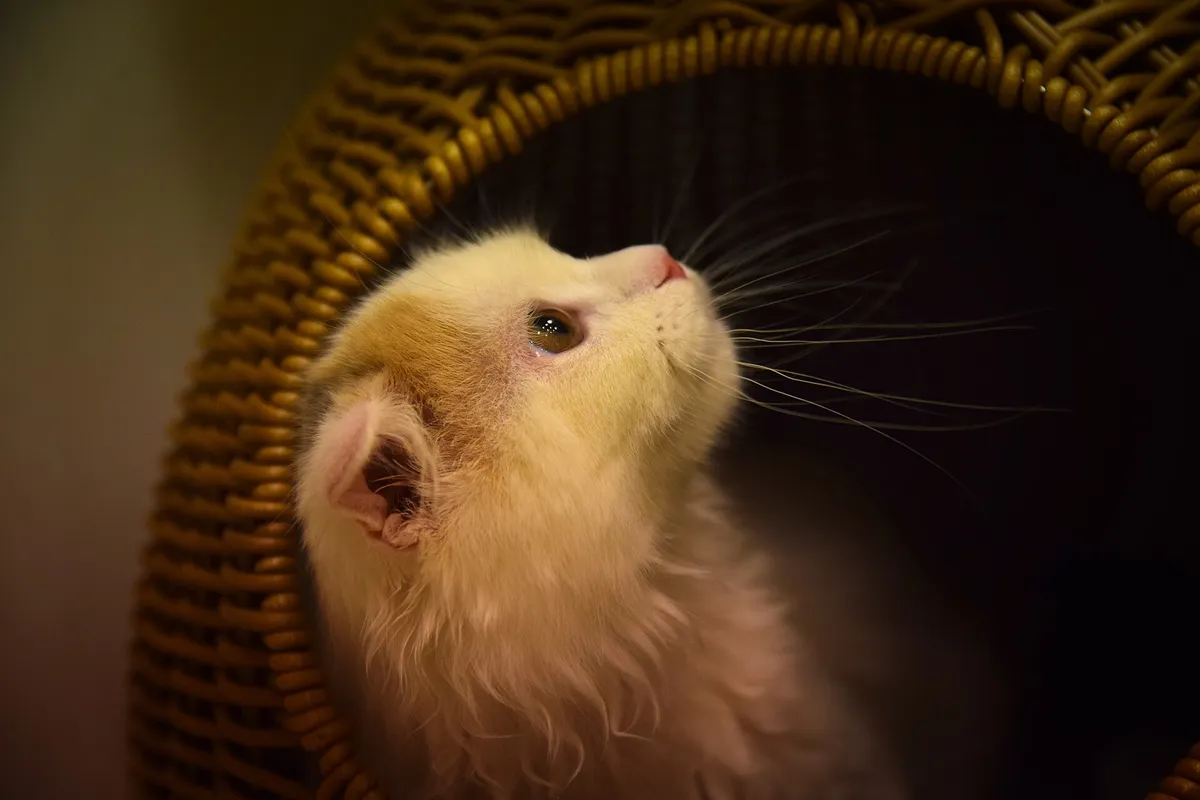
Ears pointing forward and slightly outward signal a cat that is interested and at ease. Ears flattened sideways or pinned back suggest fear or annoyance. The eyes tell a story too. Soft, relaxed eyes with normal blinking — and the famous "slow blink" — indicate a cat that feels safe enough to look away and close its eyes around you. Dilated pupils can mean excitement or fear depending on the situation, so always read the whole picture.
Whiskers are a lesser-known clue. Relaxed whiskers point outward and slightly downward. Whiskers pulled tight against the face signal stress. None of these signs should be read in isolation; look at the whole cat, and look over time.
| Signal | What it usually means |
|---|---|
| Tail held high with relaxed tip | Confident, friendly, approachable |
| Tail wrapped around another cat or you | Affectionate, comfortable |
| Tail puffed up and bristled | Startled or frightened |
| Tail thumping or lashing | Overstimulated or annoyed |
| Slow blink | Trust and relaxation |
| Soft, almond-shaped eyes | Calm and content |
| Ears forward and relaxed | Interested, at ease |
| Ears flattened sideways | Worried or defensive |
| Whiskers relaxed, pointing out | Calm |
| Head bunting against you | Marking you as safe and familiar |
Use the table as a starting point, not a rulebook. Every cat has its own style, and the same signal can mean different things in different moments.
What purring does — and doesn't — tell you
Purring is the most famous cat sound, but it is not a simple "I'm happy" button. Cats purr when they are content, but they also purr when they are in pain, anxious, or giving birth — probably as a self-soothing mechanism. A cat purring while curled on your lap with soft eyes is very likely content. A cat purring while hiding under the bed or refusing food needs a closer look, not a pat on the head.
Other vocalizations add context. Short, high-pitched chirps and trills are often friendly greetings, especially when your cat makes them as you walk in the door (distinct from the prey-chattering sounds cats make at birds). Quiet, pleasant meowing can be a request for food or attention. In contrast, yowling or hissing clearly signals distress or fear. The tone, the situation, and the rest of the body language matter far more than the sound in isolation.
Affection behaviors that signal trust
Cats show trust through physical rituals. Head bunting — pressing their forehead or cheek against you — is a way of depositing scent from glands near their face. When a cat does this, it is literally marking you as part of its safe territory. Kneading, the rhythmic push-pull motion with the front paws, is a leftover kitten behavior associated with nursing and comfort; adult cats often do it on soft blankets or laps when they feel secure (we dig deeper into why cats knead separately).
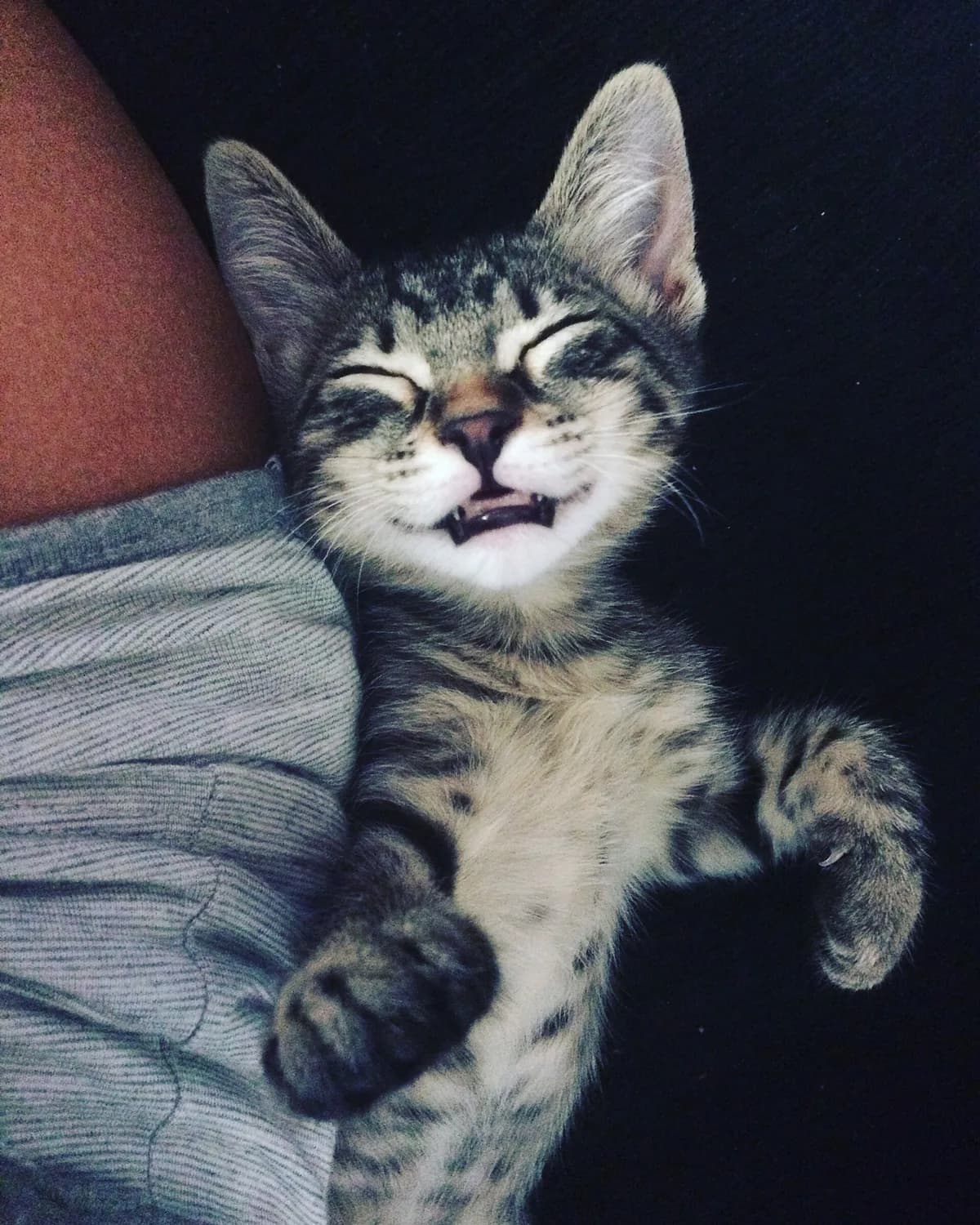
Slow blinking is one of the most reliable signs of feline trust. If your cat looks at you and deliberately narrows its eyes into a slow blink, it is signaling that it does not consider you a threat. You can blink back slowly; many cats will continue the exchange. Rolling over to expose the belly can mean trust, but it is not an invitation for a belly rub — many cats roll over to show they feel safe, then swat if you touch that vulnerable area. Respect the signal.
The rhythms of a contented cat
Day-to-day routines reveal a lot. A happy cat generally:
- Eats meals with a normal appetite
- Uses the litter box without accidents or straining
- Grooms itself regularly and keeps its coat smooth
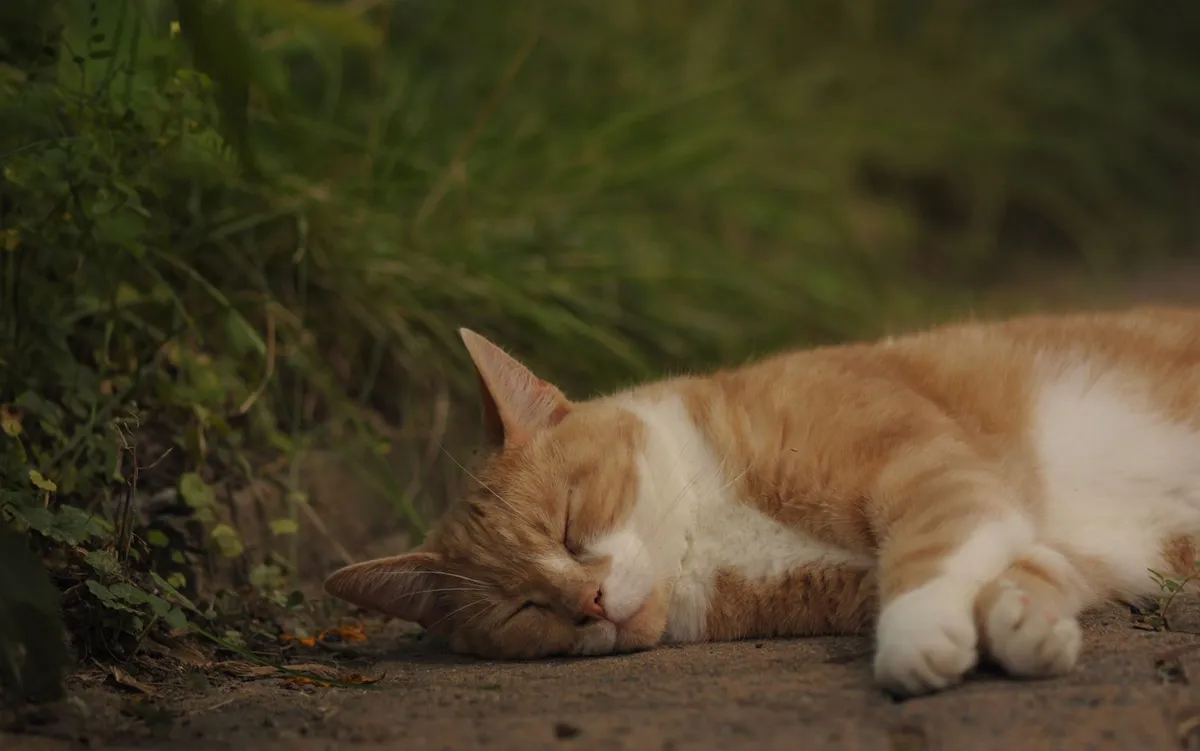
- Sleeps in relaxed, exposed positions (curled up is fine, but stretched out on their side or back suggests deep comfort)
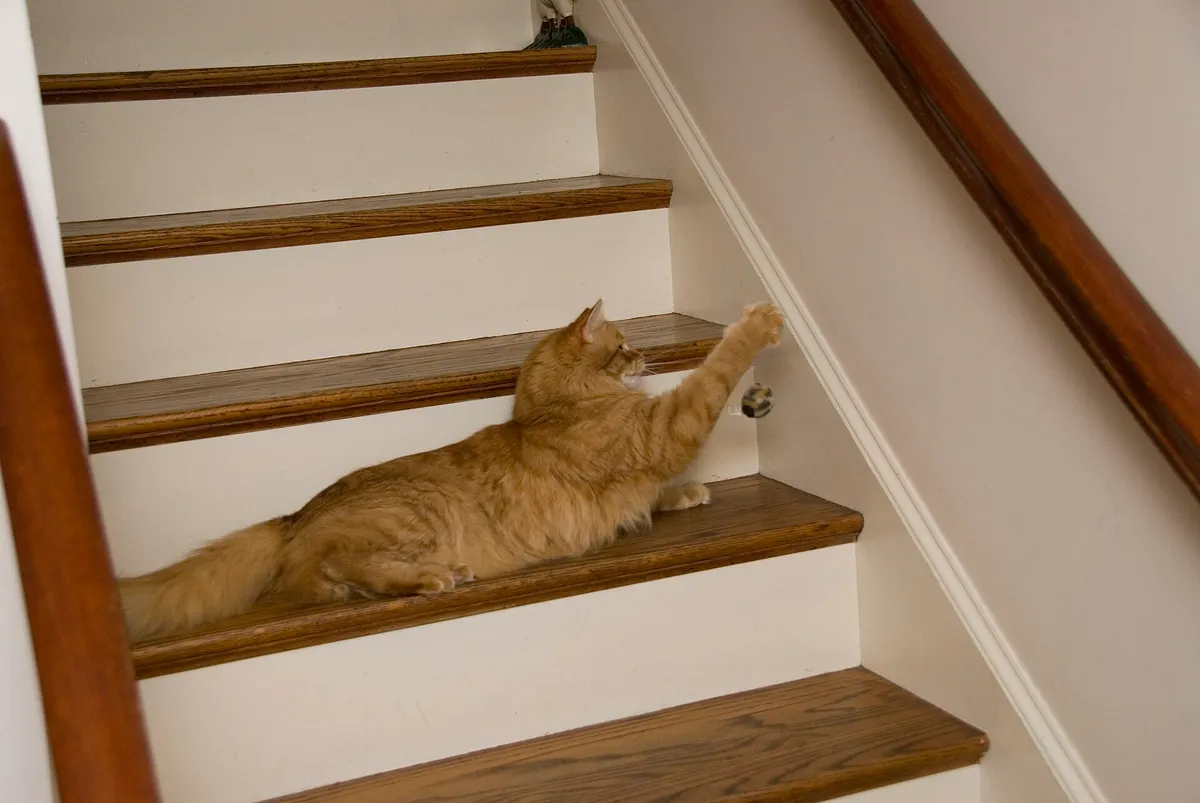
- Plays, pounces, and engages in short bursts of activity
- Greets you at the door or in the morning
- Seeks out spots near you, even if not on your lap
Cats are creatures of habit. A cat that maintains its routines through changes — a new schedule, visitors, a new piece of furniture — is coping well. A sudden change in any of these habits can be an early sign that something is off, even if the cat otherwise seems fine.
Context matters: personality and environment
Every cat is an individual. A confident, outgoing cat may show happiness by following you room to room. A shy cat may show happiness by staying in the same room with you, even from a distance. Comparing your cat to a viral video cat is a mistake; compare your cat to its own baseline.
Environment plays a huge role in feline contentment. Cats need vertical space, hiding spots, scratching surfaces, and opportunities to hunt and play. A cat in a well-designed environment will show more relaxed and social behavior than the same cat in a sparse one. If you are unsure whether your cat is happy, improving the environment — adding a shelf, a window perch, or a puzzle feeder — is often the most effective first step.
Signs that need a closer look
Some popular "happy" signals deserve caution. A cat that purrs constantly but also hides, avoids food, or shows tense body posture may be masking stress. A cat that suddenly becomes very clingy or very withdrawn can be signaling discomfort. And a cat that stops grooming, stops using the litter box, or stops eating needs veterinary attention, not just behavioral tweaks.
Never punish a cat for hissing, swatting, or hiding. These are communication signals, not misbehavior. Punishment increases fear and undermines trust. If your cat's behavior changes suddenly — especially appetite, litter box use, or energy — consult a veterinarian to rule out medical causes before assuming it is emotional.
Frequently Asked Questions
Why does my cat follow me to the bathroom?
Many cats follow their humans everywhere because they simply prefer to be near them. Bathrooms are small, warm, quiet rooms, and you are a sitting companion. It usually signals attachment and curiosity, not anxiety.
Is a purring cat always happy?
No. Cats can purr when in pain, stressed, or unwell, likely as a self-soothing behavior. Look at the whole picture: posture, appetite, activity, and the situation. A purring cat that is also relaxed, eating, and socializing is probably fine.
My cat sleeps all day. Is that normal?
Yes. Adult cats sleep roughly 12 to 16 hours a day, and that sleep is often spread across several naps. What matters is whether the cat is alert and active during the awake hours. A cat that sleeps all day and also lacks energy when awake may need a checkup.
Do cats like being picked up?
It depends on the individual. Some cats love it, others merely tolerate it, and some actively dislike it. Watch your cat's body language: relaxed ears, a soft tail, and no struggling suggest acceptance. Stiff body, flattened ears, or attempts to jump down mean respect the boundary.
Can my indoor cat be happy without going outside?
Yes. Indoor cats can thrive when their environment offers climbing, scratching, hiding spots, play, and social interaction. The outdoors is not required for happiness, and indoor life protects cats from traffic, predators, and disease.
Key Takeaway
A happy cat is a relaxed, engaged cat — one that eats well, plays, grooms, sleeps comfortably, and shows you trust through slow blinks, head bumps, and a confident high tail. No single gesture is proof of happiness; instead, look for patterns over time. Learn your cat's unique baseline, improve the environment, and never punish communication. If your cat's routines suddenly change, see a veterinarian before assuming it is a behavior issue. The more you understand your cat's signals, the more you will notice contentment hiding in plain sight.
Share this guide
Help another cat parent find it.