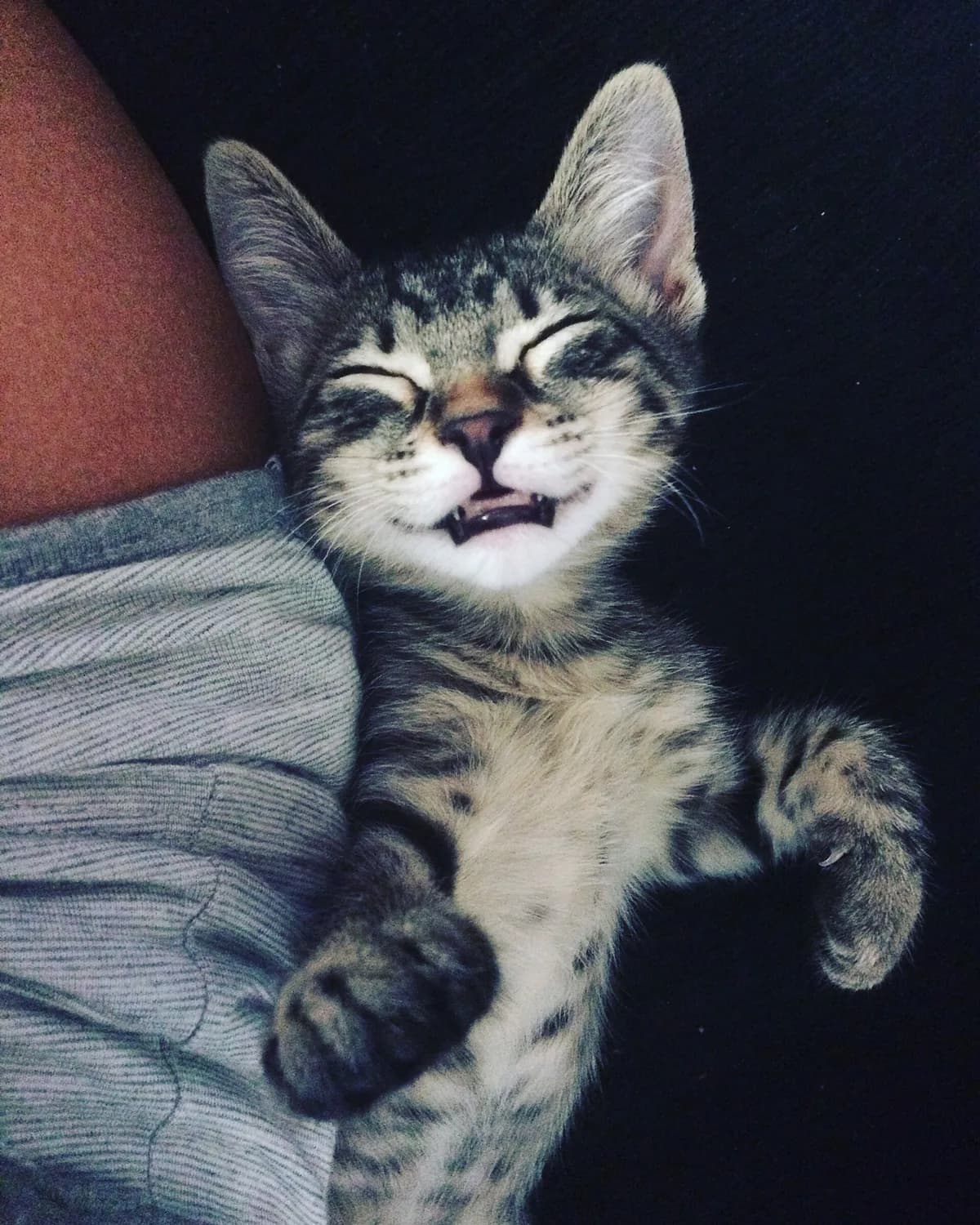

It can be confusing when your cat is enjoying pets one moment and suddenly turns to nip your hand the next. Feline biting is rarely random—it is a primary communication tool.
Quick Answer
The Short Answer: Cats bite during interaction primarily due to petting-induced overstimulation, play aggression, or as gentle "love bites" signaling affection and proximity.
1. Petting-Induced Overstimulation
Cats have delicate skin receptors. Repeated stroking in sensitive areas (such as the stomach, tail base, or lower back) can cause physical overstimulation.
- Warning Signs: Twitching tail, flattened ears, dilated pupils, or skin rippling.
- Solution: Pause petting periodically to allow your cat to initiate further contact.
“Overstimulation” is a useful description, not a diagnosis. A cat may enjoy the first few strokes and then reach a limit. The number of strokes, preferred body areas, pressure, surrounding noise, and the cat's state that day can all affect the response.
Watch for early signals before the bite: the tail begins to flick, ears rotate back or sideways, the body stiffens, the cat turns toward the hand, pupils change, skin ripples, or purring stops. End contact at the earliest cue instead of waiting for a dramatic warning.
Try a consent check. Offer one or two gentle strokes around areas the cat usually prefers, then pause with your hand still. If the cat leans in or initiates more contact, continue briefly. If they turn away, groom, move, or remain neutral, let the interaction end.
2. Play Aggression & Instinctive Hunting
Kittens learn hunting skills through pouncing and mouthing. If humans use hands instead of toys during kittenhood, adult cats may continue viewing hands as prey targets. Always redirect play onto wand toys, kickers, or plush toys.
Play biting often includes stalking, pouncing, grabbing, and kicking. The cat may target moving ankles or hands, especially when bored or during energetic periods. This differs from a defensive bite, although both can hurt.
Use toys that create distance between teeth and skin. Move a wand toy like prey, allowing stalking, chasing, and catching rather than waving it directly in the cat's face. End with a successful catch and put string-like toys away after supervised use.
Never wrestle with hands, wiggle fingers under blankets, or encourage kittens to chase bare feet. Inconsistent rules are confusing: a hand cannot be the toy during one session and forbidden prey during the next.
3. Fear and Defensive Biting
A frightened cat may bite when escape feels blocked. Triggers include unfamiliar handling, being cornered, a carrier, loud noise, another animal, or contact with a sensitive area. Hissing, growling, crouching, flattened ears, a tucked body, and attempts to retreat are requests for distance.
Stop approaching and give the cat a clear exit. Do not reach into a hiding place or punish warning signals. Hissing and growling are valuable communication; suppressing them does not make the cat feel safer.
For necessary handling, such as carrier training or grooming, break the task into small voluntary steps paired with rewards. If routine care cannot be performed safely, ask a veterinarian or qualified feline behavior professional for a plan.
4. Redirected Arousal
Sometimes a cat becomes highly aroused by something they cannot reach—another cat outside a window, a loud event, or conflict elsewhere—and bites the nearest person or animal. The bite is not revenge and may not be directed at the original trigger.
Do not touch or pick up a visibly aroused cat. Create distance, separate household animals safely, reduce visual access to the trigger when possible, and allow time to settle. Reintroducing cats immediately after an incident can prolong conflict.
Repeated episodes deserve professional help because the environment and relationships may need a structured plan.
5. “Love Bites” and Gentle Mouthing
Some cats use very light mouthing during social contact. The pressure is controlled, the body remains relaxed, and the cat releases immediately. People often call this a love bite, but the affectionate label should not obscure boundaries.
If teeth on skin are uncomfortable, calmly stop interaction and offer an appropriate toy later. Do not allow increasingly hard bites because the first ones seemed cute. Children should not be taught to tolerate mouthing as proof of affection.
Read the Whole Body
The same open mouth can occur in different contexts. Look at posture, movement, trigger, pressure, and what the cat does afterward:
| Pattern | Common context | Helpful response |
|---|---|---|
| Tail flick and head turn during petting | Contact limit reached | Stop touching and allow space |
| Stalking and pouncing on moving limbs | Play behavior | Redirect to distance toys |
| Crouching, hissing, and retreating | Fear or defense | Increase distance and provide an exit |
| Intense focus after seeing another cat | Redirected arousal risk | Avoid handling and reduce the trigger |
| Sudden bite during previously tolerated touch | Possible pain or discomfort overlap | Stop and arrange veterinary advice |
This table helps with observation; it cannot identify a medical or behavioral cause on its own.
Practical Guidance: What You Can Do
- Observe subtle body language cues like tail flicking before nipping occurs.
- Never use hands as toys during interactive play.
- Provide structured play sessions using wand toys twice daily.
Keep a Bite Log
Record the time, location, people or animals present, what happened immediately before the bite, body-language signals, bite pressure, and what happened next. Patterns may reveal a petting threshold, predictable play period, guarded route, or environmental trigger.
Avoid deliberately recreating severe incidents. The log is for ordinary observation and for sharing with veterinary or behavior professionals.
Build Better Play
Offer several short play opportunities matched to the cat's energy rather than relying on one long session. Rotate safe toys to maintain interest, provide climbing and scratching options, and use food puzzles with part of the measured daily allowance.
Let the cat catch the toy. Constantly preventing success can cause frustration. Store toys with strings, feathers, or small pieces after use and inspect them for damage.
Respond Calmly to a Bite
Freeze briefly rather than pulling away quickly, which can intensify grabbing and tear skin. Do not hit, yell, scruff, or spray the cat. Once released, create space and end the interaction.
If a bite breaks skin, wash it promptly with soap and running water. Cat bites can become infected; seek medical advice, particularly for punctures, bites to the hand or face, increasing pain, redness, swelling, discharge, fever, or if your health status raises infection risk.
Children and Visitors
Supervise all interactions between cats and young children. Teach children to invite the cat rather than chase, carry, hug, or disturb them while eating, sleeping, hiding, or using the litter box. Provide a retreat that children and visitors never enter.
Visitors should allow the cat to approach. A social cat may still have limits with unfamiliar touch. Show guests where the cat prefers to be petted and ask them to stop at the first sign of tension.
What Not to Do
- Do not punish biting or warning signals.
- Do not continue petting to “prove” the cat should tolerate it.
- Do not use hands and feet as toys.
- Do not corner, restrain, or reach into a hiding place.
- Do not immediately touch a cat aroused by another animal.
- Do not assume a sudden behavior change is spite or dominance.
- Do not attempt high-risk behavior modification without professional support.
A sudden or persistent change in biting behavior can indicate physical pain, dental discomfort, or illness. If biting is new, persistent, or accompanied by changes in appetite or movement, contact a veterinarian.
Pain can change tolerance for touch, handling, movement, or proximity. Arrange veterinary assessment when biting begins suddenly, targets a specific body area, occurs during eating, or appears with hiding, mobility, grooming, appetite, or litter-box changes. Do not test a painful area repeatedly.
For ongoing biting after medical concerns are addressed, seek a qualified feline behavior professional who uses reward-based methods. Severe or unpredictable aggression, bites causing injury, or conflict involving vulnerable people or animals needs prompt individualized help.
Frequently Asked Questions
Why does my cat bite while purring?
Purring does not always mean a cat wants continuous touch. Watch the rest of the body and use short petting with pauses. Stop when the cat turns, stiffens, flicks the tail, or moves away.
Should I hiss at my cat after a bite?
No. Hissing, yelling, or punishment can add fear and does not teach an appropriate alternative. End the interaction calmly and change the setup before the next one.
Will my kitten grow out of biting?
Play style can change with maturity, but habits also strengthen through rehearsal. Teach early that toys—not skin—are for chasing and biting.
Why does my cat bite only one person?
That person may pet differently, move in a way that invites play, miss earlier signals, or be present around a particular trigger. Compare interactions without blaming the person or cat.
Key Takeaway
Biting communicates information about contact limits, play, fear, arousal, or discomfort. Observe the trigger and full body language, stop interactions before escalation, keep teeth away from skin during play, and provide choice and safe outlets. New or worsening biting needs veterinary attention, while persistent behavior concerns benefit from qualified, reward-based support.
Share this guide
Help another cat parent find it.