The short answer
Socializing a kitten means helping them learn that the human world is safe, interesting, and nothing to fear. It's a process of showing, not telling: every new person, sound, surface, and animal can become a source of curiosity instead of stress. The most important window is roughly 2 to 7 weeks of age, but you can still make great progress through 14 weeks and beyond. The golden rule is simple: let the kitten set the pace, pair every new experience with something positive (treats, play, gentle praise), and never force an interaction. Take it slowly, keep sessions short, and be consistent. If you do this, you'll be rewarded with a confident, well-adjusted cat who greets visitors, tolerates the vet, and handles life's little surprises with ease.
The sensitive window
Kittens go through a sensitive period that begins around two weeks of age, when their eyes open and they start to explore. During this time, the brain is highly plastic — meaning it's especially good at learning what is safe and what should be avoided. Positive encounters with people, animals, and everyday objects during this window create a foundation for a calm adult cat. If kittens are handled gently and exposed to the normal sights and sounds of a home, they're more likely to remain relaxed in new situations later.
This window isn't magic, and it doesn't shut completely at eight weeks. Kittens continue to learn throughout adolescence, but lessons may take longer to stick. If you adopt a kitten who's already six months old or an adult with limited experience, it's not too late — you just need more patience, smaller steps, and extra consistency. Always meet the cat where they are, not where you wish they were.
The wider point is that socialization isn't just about the first few weeks. It's an ongoing habit. Even after the kitten has settled in, keep giving them new experiences — a new toy, a cardboard box, a trip to the vet clinic for a quick treat-and-go visit — so they stay adaptable.
Handling basics
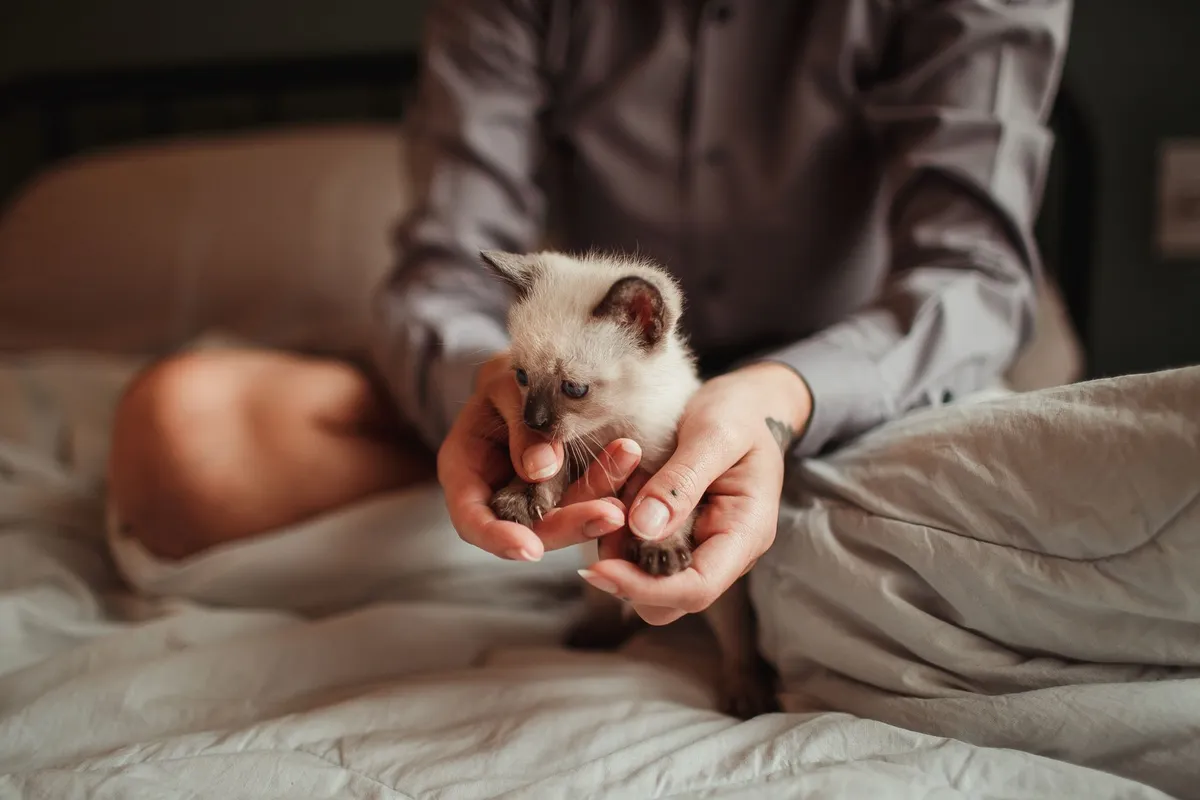
Start by letting the kitten come to you. Sit on the floor, offer a treat or a toy, and let them sniff your hand before you try to touch them. Some kittens will walk straight over; others need a few quiet sessions first. That's fine. The goal is to make yourself a source of good things.
When the kitten is comfortable, you can begin short handling sessions — just one or two minutes at a time. Always end on a high note, before the kitten gets fussy. You want the last thing to be positive, so the kitten looks forward to the next session.
Make handling a positive ritual by pairing it with food or play. For example, offer a tiny bit of wet food while you gently touch their paws, or use a wand toy to satisfy their prey drive immediately after a brushing session. The message is clear: being handled means good things happen.
Use the table below to practice a few key handling skills. Do each one a few times a week, always with rewards, and keep sessions very short.
| Area to handle | Why it matters | How to make it positive |
|---|---|---|
| Paws | Makes nail trims easier later | Touch a paw and immediately offer a treat; repeat 5 times |
| Ears | Helps with cleaning and vet exams | Gently rub the base of the ear, then praise |
| Mouth and teeth | Helps with tooth brushing later | Tickle the gums with a fingertip, then reward |
| Tail and back | Keeps handling comfortable all over | Stroke from head to tail, stop before they tense up |
| Belly | Cats often guard this area | Let the kitten decide to show the belly; only touch briefly |
Beyond these areas, introduce cat-care routines like sitting in your lap for a few seconds, being lifted gently, and having their nails touched with a clipper (without cutting). The more positive associations you build now, the easier vet visits will be for the rest of their life.
New experiences and sounds
Kittens need to learn that everyday objects and noises are not threats. Introduce new things gradually, always at a distance or volume that doesn't scare them. For example, start with a hair dryer on low heat at the other end of the room, or a vacuum cleaner unplugged and still. Let the kitten approach and investigate on their own. Each time they do, reward them with a treat. You can also use a clicker if you've taught the kitten that a click means rewards.
A "socialization soundtrack" is another powerful tool. Play recordings of storms, traffic, fireworks, doorbells, or even a baby crying at a very low volume while you are playing with the kitten. Over time, slowly raise the volume. If the kitten shows signs of fear — ears flattened, tail tucked, freezing, or moving away — you are going too fast. Turn the volume down and give them a break.
When the kitten is confident indoors, add new surfaces and locations: a cardboard box, a cat tree, a carrier, the bathroom, a covered balcony, or a catio. Carry the kitten from room to room (if they want to be carried) and let them explore. Every excursion should be short and full of rewards. For more enrichment ideas, read our guide to feline enrichment for indoor cats.
Meeting people and other pets
People
Invite friends and family members over to meet the kitten, including people of different ages, sizes, and genders. Ask each guest to let the kitten approach them first, and to use a quiet, friendly voice. A small treat placed near the guest helps a shy kitten connect "new person" with "good thing." Repeat these visits often, and keep them brief so the kitten never gets overwhelmed.
Children need extra supervision. Teach them the "look, don't touch" rule, and let the kitten approach when ready. Avoid letting children chase, grab, or carry the kitten against their will. If the kitten hides, it's time to take a break.
Other cats
If you are introducing a new kitten to a resident cat, start by confining the new arrival to one room. Swap bedding and toys between the two cats so they can get used to each other's scent before they ever meet face to face. After a few days, let them see each other through a baby gate or a cracked door while you give both cats treats. Only let them share the same room when both appear relaxed. Some cats will become inseparable; others will just coexist. Both outcomes are fine.
Dogs
Introduce a kitten to a dog only when the dog is calm and on a leash. Allow the kitten to come and go freely, and never allow the dog to chase. Watch for body language from both animals: stiff posture, growling, hissing, or staring are signs to end the session. For more on getting started, see our guide on the first 24 hours with a new cat.
What NOT to force
As important as it is to expose a kitten to new things, it's even more important to respect their comfort zone. Forcing a kitten to stay in someone's arms, pushing them toward a barking dog, or holding them down to "get used to it" can backfire. The kitten learns that new situations are scary and that humans can't be trusted. Punishment — such as hissing, spraying water, or scolding — has the same effect. It doesn't teach; it frightens.
Never wake a sleeping kitten for a handling session, never pull them out of a hiding spot, and never use flooding — forcing a kitten to remain in a scary situation until they stop responding. These tactics can create lasting stress and may lead to fear-based aggression.
Instead, watch the kitten's body language. If they want to leave, let them. A kitten who chooses to stay is learning far more than a kitten who is trapped. You can build excellent results with short, repeated, positive sessions; the moment the kitten seems upset, go back to something easier and end the session with a treat. If you are working with a deeply fearful kitten, consider asking your vet or a certified cat behavior consultant for help. You can also practice gentle grooming once the kitten is comfortable.
Frequently Asked Questions
At what age should you start socializing a kitten? Start as soon as possible. The ideal window is 2 to 7 weeks of age, but you can begin at any age. Even adult cats benefit from gentle, gradual introductions to new things.
How long does it take to socialize a kitten? There is no fixed timeline. Most kittens relax within a few weeks of consistent positive exposure. Shy kittens may need months of daily sessions. The key is to work at the kitten's pace rather than trying to rush the process.
What if my new kitten hides all day? Hiding is a normal reaction. Give the kitten a quiet room with food, water, litter, and a cozy bed, and spend time in the room reading or talking in a soft voice while ignoring them. This helps the kitten learn your presence is safe. Let the kitten emerge on their own.
Should I use treats or toys as rewards? Yes. High-value treats, wet food, and interactive play all work well as rewards. Pay attention to what your kitten loves most and use that resource to build positive associations.
Can a kitten who had bad early experiences learn to trust? Yes. With time, patience, and consistent positive interactions, many cats recover from rough starts. The formula is the same: always let the cat choose, and pair every new experience with something they enjoy.
Key Takeaway
Socializing a kitten is one of the best gifts you can give them — and it's a process, not a race. Focus on the sensitive early window, use treats and play to build positive associations, respect the kitten's signals, and never force an encounter. With steady effort, your kitten will grow into a confident cat who feels safe in your home and curious about the world. Keep introducing new things, keep rewarding bravery, and enjoy watching your kitten blossom.
Share this guide
Help another cat parent find it.