
The short answer
Raising a kitten week by week is a series of small, predictable changes. In the first weeks, your role is mostly to keep the environment safe and give the mother cat or a substitute caregiver the support they need. From around two to nine weeks of age, the kitten enters a sensitive window where new people, sounds, and experiences shape how comfortable they will be with the world. By six months, most kittens are confident, coordinated, and ready for a lifetime of supervised exploration—but they still need your patience, play, and routine.
Why a weekly calendar helps
A weekly view of kitten development helps you know what to expect before behavior becomes frustrating. It also reminds you that some milestones are natural and do not need to be taught. A five-week-old kitten is not stubborn for wobbling—it is simply developing muscle coordination. Understanding the timeline builds empathy and helps you match your care to your kitten's actual abilities.
Weeks 0-4: Newborns and leaving the nest
Kittens are born blind, deaf, and unable to control their body temperature. They rely completely on their mother for warmth, food, and stimulation. If you are caring for a newborn kitten, keep the nesting area warm, quiet, and low-traffic. Weigh each kitten at the same time each day; consistent weight gain is a good sign. If you have any concerns about nursing, call a veterinarian.
During the second week, eyes begin to open and the ear canals start to unfold. Around week three, hearing sharpens and the first wobbly steps happen. By week four, baby teeth are coming in and the kitten can start exploring a very small, kitten-proofed area. This is the beginning of socialization: gentle, short periods of handling each day help kittens become comfortable with human touch.
Weekly milestone table
| Age | Milestones you may see | How to help |
|---|---|---|
| Week 1 | Eyes and ears closed; sleeps most of the day; depends on mother for warmth | Keep the nest warm and quiet; weigh kittens daily; ensure easy access to mother |
| Week 2 | Eyes begin to open; sense of smell sharpens; body temperature control improves | Continue gentle handling for a few minutes daily; keep the nesting box clean |
| Week 3 | Ears unfold; first attempts to stand and wobble; baby teeth begin to erupt | Offer soft, shallow surfaces; begin short play sessions with a gentle hand |
| Week 4 | Walking more steadily; explores close to mother; may show interest in food | Introduce a shallow food dish with formula or high-quality kitten food; provide low-edge hiding spots |
| Weeks 5-6 | Running, pouncing, climbing; starts grooming; begins using a litter area if available | Set up a very shallow litter box with unscented litter; encourage play with littermates and supervised handling by humans |
| Weeks 7-8 | Social confidence sharpens; bite and claw inhibition developed with littermates; immune system matures from mother's milk | Expose the kitten to new people and everyday sounds (vacuum cleaner from a distance, doorbells, quiet voices); take them for their first veterinary visit |
| Weeks 9-12 | High energy, teething, and independent exploration; establishes social preferences | Provide interactive toys, cat-safe scratching posts, and safe vertical spaces; practice gentle handling of paws and ears |
| Weeks 13-16 | Juvenile curiosity; learns from play and social cues; testing boundaries | Keep routines consistent; offer puzzle feeders; continue positive-training sessions |
| Weeks 17-24 | Adolescence begins; sexual maturity can appear (often 5-6 months); energy may be intense | Talk to your veterinarian about spaying or neutering; increase interactive play to redirect energy; maintain an enriching environment |
Note: These are typical ranges, not exact schedules. Individual kittens vary widely.
Feeding and care by stage
From birth to about four weeks, kittens receive all nutrition from the mother's milk. If you are bottle-feeding, use a commercial kitten milk replacer and a bottle designed for kittens. Do not give cow's milk—it is not nutritionally appropriate. At around four weeks, you can start offering a slushy mix of replacer and high-quality kitten food, then gradually reduce the liquid over a week or two. Wet food and high-quality dry kitten food can be offered once the kitten is four to six weeks old. Always provide fresh water in a shallow dish.
Feeding frequency changes quickly. A very young kitten may eat every few hours, while a 12-week-old kitten generally does well with three or four small meals spread throughout the day. At six months, you can transition to two or three meals per day. Whatever schedule you choose, keep meal times consistent and measure portions based on the food label and your veterinarian's advice. Weight gain should be gradual; do not try to make a kitten chunky.
Socialization: the two-to-nine-week window
The most influential time for social learning is roughly the second through ninth week. During this period, kittens are open to meeting new people, other animals, and sounds. Exposure should be gradual and always paired with something positive, like a treat or a toy. Handle each kitten briefly but frequently, making sure the kitten can retreat when needed.
For kittens, especially those under 12 weeks, avoid introducing unfamiliar outdoor areas, because their immune system is still developing. Instead, create a safe home base where they can learn about household life at their pace. A calm, vaccinated resident cat can help teach social skills under supervision. Use scent swapping—swap bedding between pets for a few days before physical introductions—and keep initial meetings short.
Litter box basics
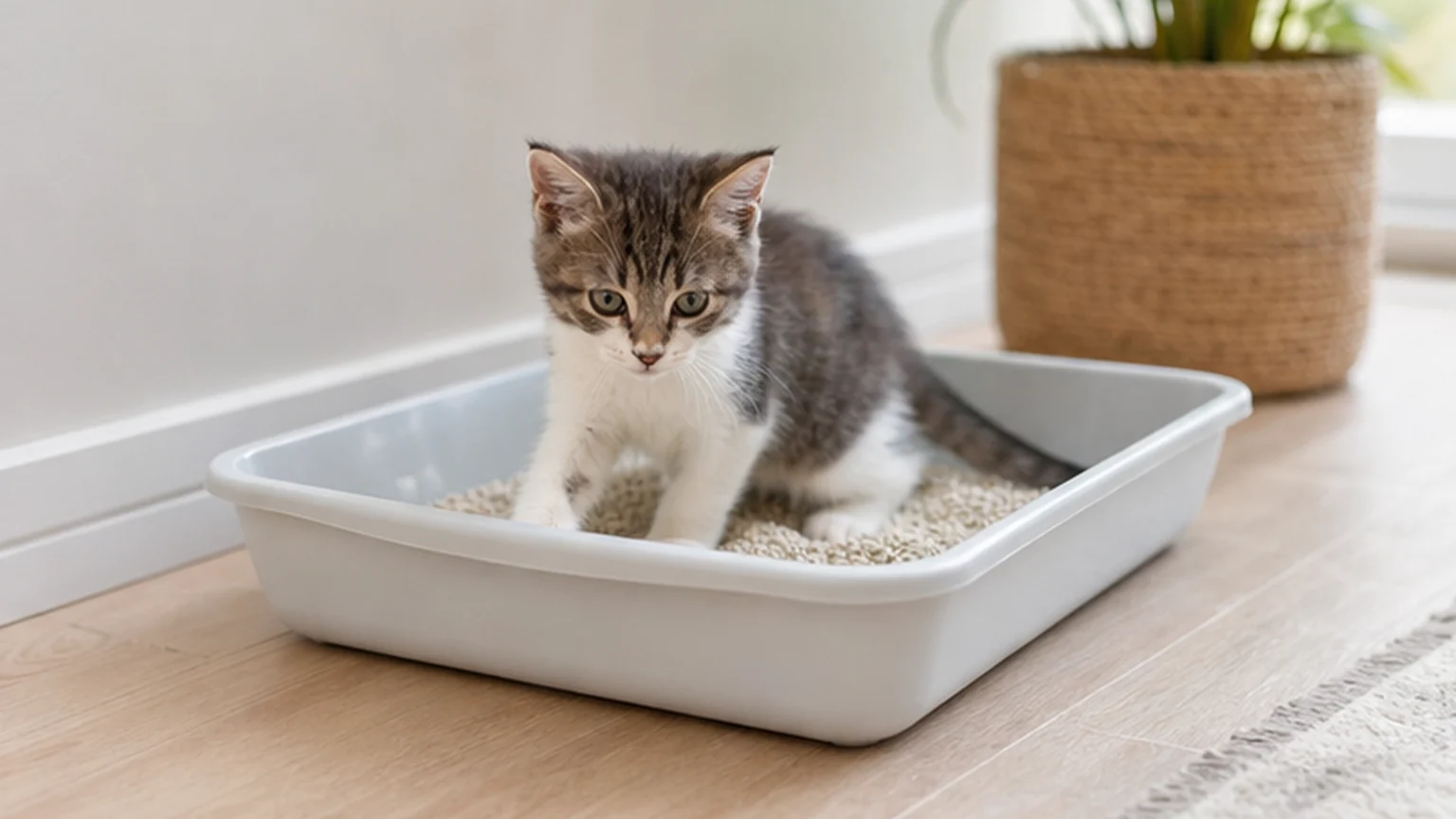
Most kittens learn litter box habits quickly if you set them up to succeed. Choose a low-sided box that the kitten can step into easily and an unscented, fine-grained litter. Place the box in a quiet, accessible spot, away from food and noisy appliances. After meals, naps, and playtime, carry the kitten to the box. If they use it, offer praise and let them leave on their own. Do not punish accidents; cleaning thoroughly and adjusting the location usually solves the problem.
Kitten-proofing your home
Kittens explore with their mouths, so anything smaller than their head becomes a toy. Go through your rooms at kitten height, and remove or secure objects that could be swallowed, broken, or tipped over. Electrical cords should be tucked away; cabinet doors need a simple lock if they hold cleaning supplies. Choose plants that are safe for cats, and keep gaps behind appliances closed off. Provide approved outlets for energy: a few sturdy scratching posts, cardboard boxes, paper bags with handles cut, and interactive toys you can move with a wand. A safe environment saves you from repeatedly saying no and lets your kitten practice natural behaviors in areas you choose.
Preparing for adolescence
Between four and six months, many kittens begin testing limits. This is not spite; it is normal exploratory behavior. Increase the amount of play and climbing opportunities so that your kitten can use energy in acceptable ways. Claw scratches on furniture are usually redirected by offering a more appealing scratching surface, not by scolding. The sixth-month mark is also a typical time to discuss spaying or neutering with your veterinarian, as well as a checkup for vaccinations and any needed preventive care.
This calendar is a general care guide, not medical advice. If a kitten stops eating, shows signs of discomfort, or simply does not seem right, contact a veterinarian immediately. Never try to treat an illness at home without professional guidance. Choose a vet before you need one, and keep their number handy.
Frequently Asked Questions
When can a kitten leave its mother?
Kittens should stay with their mother and littermates until at least eight weeks of age, and ideally until 10-12 weeks. This time helps with social skills, bite inhibition, and immune health.
How do I introduce a new kitten to my resident cat?
Go slowly. Keep the kitten in a separate room with its own food, water, litter, and bed. Swap bedding so each animal can explore the other's scent. Then allow short, supervised face-to-face sessions, gradually increasing the time. Reward calm behavior with treats.
How do I litter train a kitten?
Place the kitten in a shallow box with unscented litter after meals, naps, and playtime. Most kittens will use it naturally. If accidents happen, clean the area with an enzymatic cleaner and check that the box is easy to enter and located in a quiet spot.
Do I really need to socialize a kitten every day?
Nearly every day during weeks 2-9 is a good goal, but socializing does not mean constant handling. A calm presence, gentle touch, and exposure to daily household sounds are often enough. Quality matters more than quantity.
Key Takeaway
Raising a kitten week by week is not about hitting perfect deadlines; it is about meeting your cat where they are. Support the basics—warmth, food, litter, veterinary care—and sprinkle in small, positive social experiences. Once your kitten reaches six months, you will have a well-adjusted young cat who trusts you, and the routines you set together will carry you both for years to come.
Share this guide
Help another cat parent find it.