The short answer
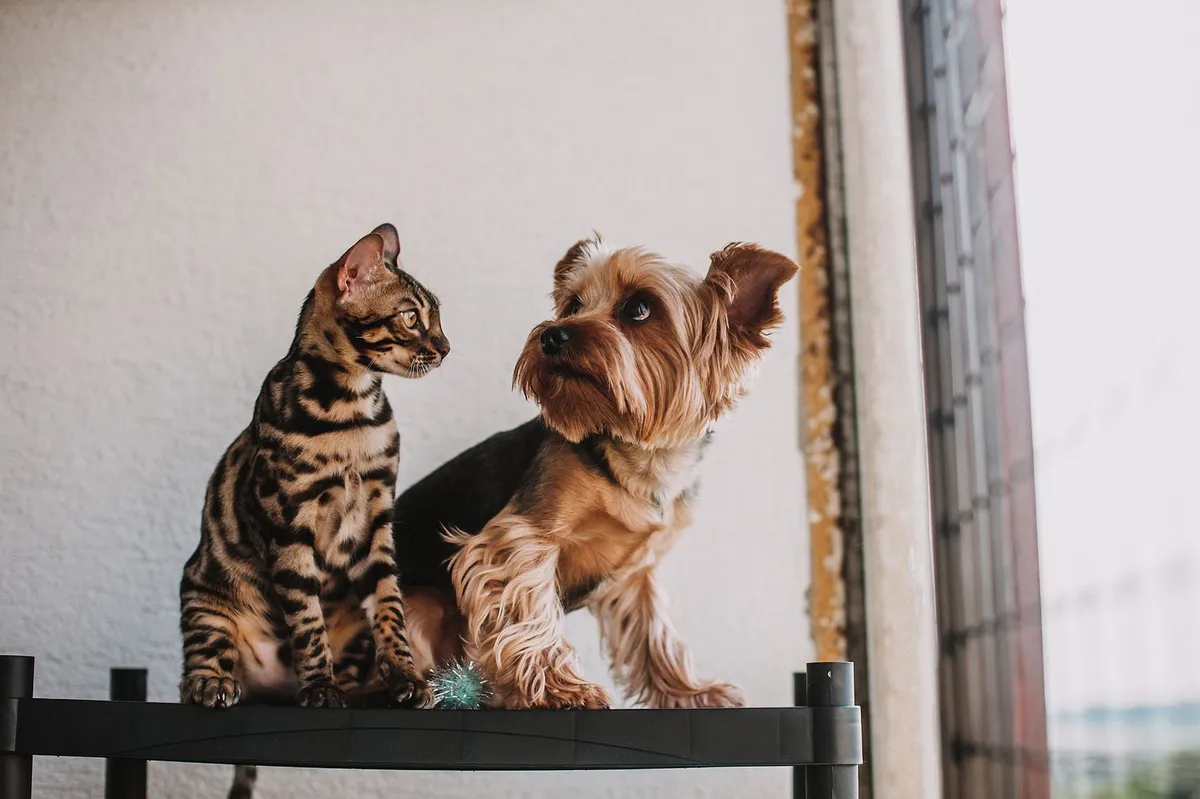
Introducing a cat to a dog is most successful when it happens in slow, controlled stages: scent first, then sight, then supervised contact. Keep the dog on a leash or behind a sturdy gate, give the cat a dog-free sanctuary with high escape routes, and let both animals set the pace. Most cats and dogs can learn to share a home peacefully, but rushing the process is the most common reason introductions go wrong. Plan for days or weeks of gradual introductions, not a single "meet and greet" moment.
Why a slow introduction matters
Cats and dogs communicate in almost opposite languages. A dog's eager approach — staring, forward ears, a wagging tail — can look like a threat to a cat. A cat's hiss or warning swat can read as an invitation to play to a pushy dog. When animals meet too quickly, these misunderstandings escalate until one of them snaps. Fights between cats follow the same escalation — see how to stop cats from fighting.
A slow introduction gives both animals time to learn that the other's presence leads to good things — treats, calm attention, safety. It also prevents the most damaging single event: a chase. If a dog chases a cat even once, the cat may stay on high alert for months, and the dog learns that chasing is exciting. Neither outcome helps your household.
Step 1: Build a cat sanctuary before they meet
Before the animals see each other, set up a room the dog cannot enter. This is the cat's safe base for the first weeks.
The room should include:
- A litter box placed away from the food and water bowls
- Fresh food and water
- A scratching post and at least one hiding spot
- Vertical space, like a cat tree or a shelf the dog can't reach
- A door or baby gate the cat can move past but the dog cannot
Spend regular time in this room with the cat, playing and petting, so it feels like a retreat rather than exile. Your cat should always have somewhere to go that the dog cannot follow — this one habit prevents most serious conflicts later.
Step 2: Swap scents before swapping space
Scent is how cats and dogs learn about each other first. Start scent swapping a few days before any visual introduction.
- Rub a clean cloth along your cat's cheeks, where the friendly scent glands are, and place it near your dog's sleeping area
- Rub a second cloth along your dog's flank and place it near the cat's feeding spot
- Swap bedding between the two areas
- Feed both animals on opposite sides of the closed door between them, so they learn that the other's presence nearby means food
If either animal hisses or growls at the scent, move the smell farther away and shorten the distance gradually. Praise calm, relaxed behavior.
Step 3: Meet through a barrier
Once both animals eat calmly with the door between them, move to seeing each other without contact. Use a baby gate, or hold a door open just a few centimeters with a doorstop.
During these sessions:
- Keep the dog on a loose leash, even behind the gate
- Reward the dog for looking at the cat without staring hard
- Reward the cat for staying relaxed nearby, using treats or gentle praise
- Keep sessions to five or ten minutes, a few times a day
- End the session before either animal becomes tense
If either animal growls, hisses, or lunges at the barrier, you have moved too fast. Go back to scent swapping for a few more days.
Step 4: Controlled face-to-face time
When both animals are relaxed at the barrier, it is time for their first shared floor time. Choose a neutral room, put the dog on a harness and leash, and let the cat move freely. Never hold the cat — a cat that cannot flee may feel trapped and is more likely to scratch.
During the meeting:
- Keep the leash loose, not taut, and guide the dog's attention back to you often
- Give the dog treats for checking in with you instead of fixating on the cat
- Let the cat approach on its own terms; no nose-to-nose greetings
- Watch the cat's body language and end the session if the cat's tail puffs or the dog's posture stiffens
Repeat these short meetings daily, gradually lengthening them as both animals stay calm.
Reading the signs: cat and dog stress language
Never punish a hiss, growl, or swat during introductions. These are communication signals, not misbehavior. Punishing them teaches your animals to hide their feelings — which is how sudden, surprising bites and scratches happen. If either animal shows true aggression, such as growling plus biting or chasing, separate them immediately and go back to the previous stage.
A hissing, growling, or swatting cat is telling the dog "too close," not "I hate this dog." This is a normal, necessary part of a healthy introduction. Scolding the cat for hissing teaches the cat to suppress the warning, not to trust the dog — and a cat that skips the warning will go straight to the claw.
| What you see | What it means in your cat | What it means in your dog |
|---|---|---|
| Hissing or growling | "Back off, I am not comfortable" | "I am upset or over-aroused" |
| Hard stare and stiff body | The cat is on high alert and ready to flee or defend | The dog is fixating, which often precedes a lunge |
| Ears flattened or turned back | Fear or tension | Fear or tension, sometimes mistaken for submission |
| Tail | Fast twitching or puffed tail means stress | Tail tucked means fear; a stiff high tail means focus |
| Yawning, lip licking | Can be a stress signal in a strange situation | Often a calming signal, not boredom |
Troubleshooting common issues
The cat hides all day. This is normal in the first weeks. Let the cat hide; do not drag it out for dog greetings. Reassure the cat in private and keep the introductory sessions short and voluntary.
The dog fixates on the cat. Staring is the earliest sign of trouble. Interrupt the stare by calling the dog's name or showing a high-value treat, and reward the eye contact with you instead.
The cat swats through the gate. This means the dog is too close. Move the gate farther away, or increase the barrier distance, and work on scent swapping again.
The dog chases. A chase must never be allowed, because it rehearses dangerous behavior. Keep the dog on a leash or a dragged house line so you can immediately prevent any chase, and give the cat an unbroken escape route.
Frequently Asked Questions
How long does an introduction take?
It depends entirely on the animals. Some cats and dogs settle within a few days; others need several months. The guideline is simple: move to the next stage only when both animals are relaxed at the current stage. If you rush, you will spend more total time fixing problems.
Is it okay if my cat hisses at the dog?
Yes. Hissing is a warning, not a declaration of war. A hiss means your cat needs more distance. Respect it, move the dog farther away, and continue at a slower pace.
Will a kitten and a puppy get along faster?
Young animals often adjust more quickly because their social windows are still open, but they also have less self-control. A playful puppy can easily overwhelm a kitten. Supervise every interaction until both are adults, and always provide the cat with escapes.
My cat is an adult who has never met a dog. Should I expect problems?
An adult cat with no dog experience may take the longest to adjust, but many learn to live with a calm dog. Cats with confident, dog-savvy personalities — or cats allowed to watch dogs from a distance — adapt sooner. If your cat is extremely anxious, talk to a certified animal behavior professional before forcing the relationship.
Can I just let them "work it out" together?
No. Leaving a cat and dog to sort out their own introduction is the riskiest approach. It can result in injury to both animals, and a deep fear response in the cat. Supervised, staged introductions give you time to protect both animals.
Key Takeaway
A peaceful cat-and-dog household is built on distance, time, and good management. Give the cat a dog-free zone, introduce scent before sight and sight before contact, keep the dog under control, and respect every stress signal you see. The goal is not instant friendship — it is calm coexistence, and when both animals can relax in the same room, you have succeeded.
Share this guide
Help another cat parent find it.