The short answer
The fastest way to stop a cat fight is to interrupt it safely — never with your bare hands — and then separate the cats into quiet rooms so everyone can settle down. Once they're calm, the lasting fix is less about punishment and more about removing the stress and competition that caused the fight, then reintroducing your cats to each other slowly, at the pace of the more nervous one. Most cats who live together can get back to peaceful cohabitation with a structured plan and a lot of patience.
Why do cats in the same home fight?
Cats evolved as solitary hunters, and they don't naturally share space the way dogs or people do. Even affectionate housemates can fight when one of them feels threatened, crowded, or unsure about the rules of the house. The most common reasons are:
- Not enough territory resources. When perches, hiding spots, food bowls, or litter boxes are scarce, cats compete for the basics and tensions rise.
- Redirected aggression. A cat sees a rival cat outside the window, feels frustrated and wound up, and turns that arousal on the nearest cat in the house.
- Fear and defensiveness. A shy cat who feels cornered may strike first to avoid being attacked.
- Pain or illness. A cat in discomfort can become irritable and defensive around other cats.
- Play gone too far. Rough play between energetic cats, especially young ones, can tip into real aggression.
Notice that spite is not on this list. Cats don't fight to punish you or because they're jealous in the human sense. They fight because they feel unsafe, outnumbered, or short on resources. Understanding the real trigger is the key to fixing the problem.
Because fighting is stressful for everyone — including your cats — early intervention matters. A single hiss isn't an emergency, but repeated fights leave lasting fear that makes peace harder to rebuild. The sooner you identify the trigger, the sooner you can remove it.
How to break up a fight without getting hurt
Never reach into a fight with your hands. An agitated cat will bite or scratch whatever is closest, and cat bites can lead to serious infections. Never grab a cat by the scruff, tail, or a leg to pull them apart, and never throw water at fighting cats or yell at them — it only increases panic and aggression. Keep a sturdy cardboard divider, a large book, a yoga mat, or a heavy blanket ready in a spot you can reach quickly.
If a fight breaks out:
- Make a loud noise, such as a sharp clap or a dropped book, to startle both cats long enough for them to disengage.
- Slide a barrier like the cardboard divider, a pillow, or a yoga mat between the cats to break their line of sight.
- Cover one cat with a blanket and carry them, still wrapped, to a separate room. Never pick up an agitated cat without protection.
- Keep them separated until both cats are fully relaxed — eating, sleeping, and acting normally. For serious fights, keep them apart for a few days before starting reintroduction.
Play fighting or real fighting? Read the signs
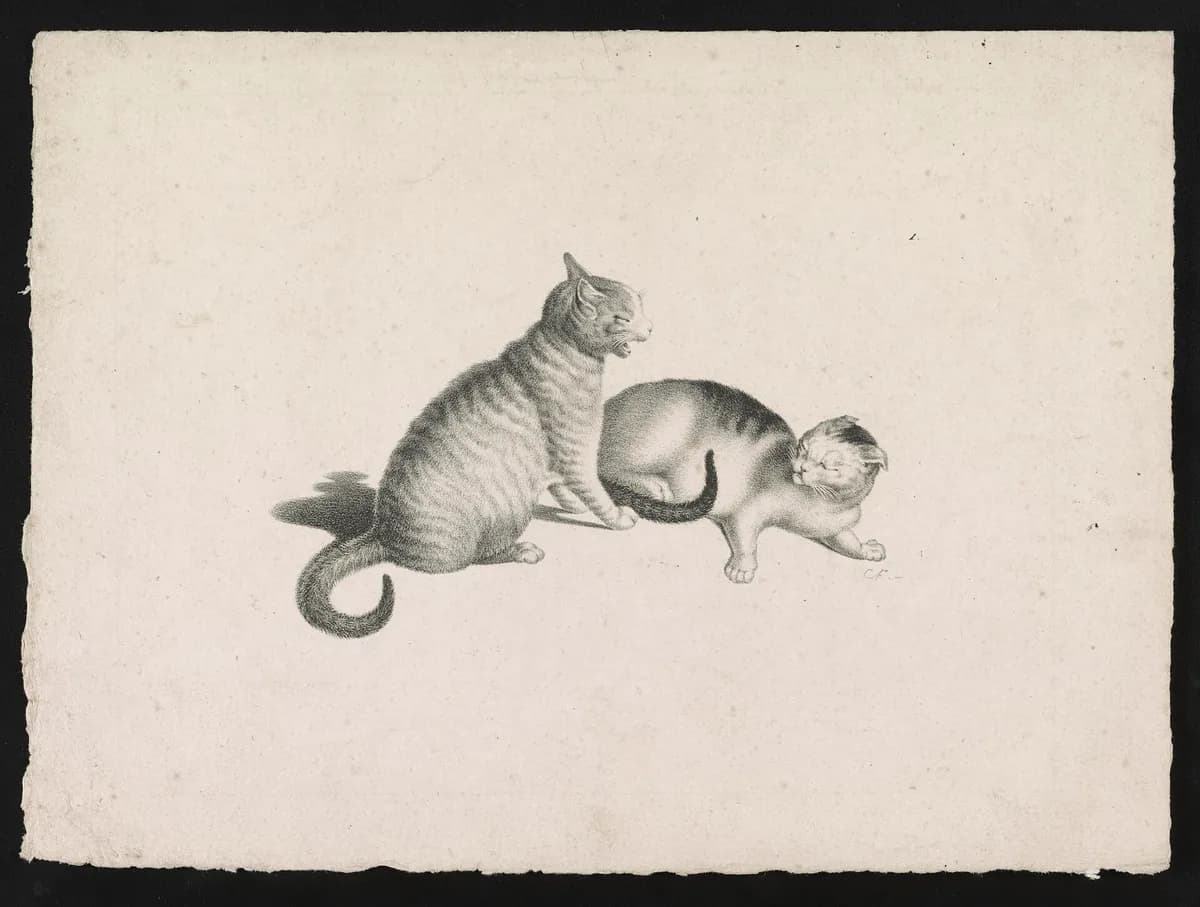
Not every wrestling match is a fight. Kittens and young cats tumble constantly, and that kind of play is healthy. The table below shows the difference at a glance:
| Sign | Play fighting | Real fighting |
|---|---|---|
| Vocalization | Quiet; occasional chirps | Hissing, growling, yowling, spitting |
| Ears | Forward or neutral | Flattened sideways or back |
| Tail | Up, swishing, or relaxed | Puffed up, stiff, thrashing |
| Body posture | Loose and bouncy with exaggerated pounces | Stiff-legged, arched back, tense |
| Claws and bites | Soft bites; claws mostly retracted | Hard bites; claws out, aimed at the neck or belly |
| Pacing | Cats take turns; frequent pauses | No pauses, no role-swapping, nonstop escalation |
| Afterward | Both cats relax and may seek each other out | One cat hides, avoids the other, and stays stressed |
If you see three or more signs from the "real fighting" column, treat it as a genuine fight and separate the cats. When you're not sure, record a video with your phone and show it to your veterinarian.
Step 1: Fix the environment
Most fights are caused by too little of something — space, resources, or escape routes. The simplest fixes often make the biggest difference:
- Litter boxes should number one per cat plus one extra, placed in different rooms rather than side by side. You'll find more detail in our guide on how many litter boxes to provide.
- Food and water belong in separate stations where cats can't see each other while eating. Some cats prefer to eat in a private spot.
- Vertical territory is cheap real estate for cats. Cat trees, shelves, and window perches let a nervous cat go up and away instead of lashing out.
- Spread the resources. If one cat guards the water bowl or the sunny spot, offer several options around the house.
- Limit the view outside. If a neighborhood cat is triggering your cats, close the blinds or apply a privacy film to lower windows.
Predictable routines help too. Cats feel safer when meals, playtime, and quiet time happen at roughly the same times each day. If your household schedule has recently changed, that in itself can raise tension.
Step 2: Reintroduce them like strangers
After a fight, many owners make the mistake of letting the cats "work it out." They won't — every fight deepens the fear response and makes the next one more likely. Instead, treat them like new cats and rebuild the relationship gradually:
- Separate into base camps. Keep each cat in its own room with food, water, a litter box, a bed, and a scratching post for several days.
- Swap scents. Rub a clean cloth on each cat's cheeks and chin, then leave it in the other cat's room. Swap their bedding too.
- Swap rooms. Once both cats are relaxed, trade their rooms for a few hours a day so they explore each other's scent without direct contact.
- Feed at a cracked door. Serve meals on opposite sides of a door opened just a few centimeters. The cats learn to associate each other's presence with something good.
- Hold supervised meetings. Start with short sessions where you play with a wand toy or offer treats. Watch body language closely and end each session before tension builds.
Move at the pace of the more nervous cat. If either cat hisses or growls, step back one stage for a few more days and try again.
Be patient. Rebuilding trust can take days, weeks, or even a few months. The biggest mistake is rushing the final stage because the cats seem fine — one sudden fight sets everything back.
Step 3: Encourage calm, not punishment
- Play every day. Cats who get to chase, pounce, and "kill" a wand toy are calmer between sessions.
- Reward calm behavior. Offer a treat or gentle praise when the cats are near each other without tension.
- Use pheromone aids cautiously. Synthetic feline facial pheromone diffusers can take the edge off in some households, but they're a support, not a cure. Ask your veterinarian which product suits your situation.
- Never punish. Yelling at or punishing cats after a fight teaches them to associate each other — and you — with fear. Punishment makes the problem worse and can push one cat into hiding.
Match play to each cat's style. Some cats prefer chasing a wand, others like batting a feather through a tunnel. When both cats play together, keep sessions brief and cheerful, and end before excitement turns into rivalry.
When to ask a professional for help
Talk to your veterinarian first if:
- The fighting started suddenly, especially in an older cat. Pain or illness could be the cause.
- A cat is hiding constantly, losing weight, or showing other stress signs.
- Fights are getting more frequent or more violent despite your efforts.
A short video of the fights is genuinely useful — your vet or a behavior consultant can spot body language details you might miss in the moment.
Your vet can rule out medical causes and, if needed, refer you to a veterinary behaviorist or a certified feline behavior consultant for a tailored plan. There's no shame in asking for help — multi-cat households are genuinely tricky.
Frequently Asked Questions
How long should I keep fighting cats separated?
Keep them apart until both are completely relaxed — eating, sleeping, and acting normal. That's often several days, but serious fights can need a week or more. Then begin scent swapping and reintroduction.
Should I let my cats "fight it out"?
No. Cats don't resolve disputes through fighting the way some people imagine. Every fight strengthens fear and aggression, so your job is to interrupt and prevent, not referee.
Is my resident cat jealous of the new cat?
"Jealousy" in the human sense isn't the right frame. A resident cat may feel threatened by a newcomer and by competition for resources. The fix is the same: more resources, more space, and a slower introduction.
My cats play-wrestle loudly — is that a fight?
Play can be loud, but it should include pauses, turn-taking, and relaxed brakes. If you hear hissing or yowling, see flattened ears, or notice one cat always running away, separate them and redirect the energy with a wand toy.
Could fighting mean a health problem?
Yes. Pain, dental disease, and other conditions can make a cat irritable and defensive. If fights appear suddenly in a previously friendly cat, book a veterinary exam before assuming it's purely behavioral.
Key Takeaway
Cats don't fight out of spite. They fight because they feel afraid, crowded, or short on resources. Break up fights safely and quickly, separate the cats, fix the pressure points in their environment, and reintroduce them like strangers at a slow, steady pace. With time, patience, and a lot of treats, most households can find peace again.
Share this guide
Help another cat parent find it.