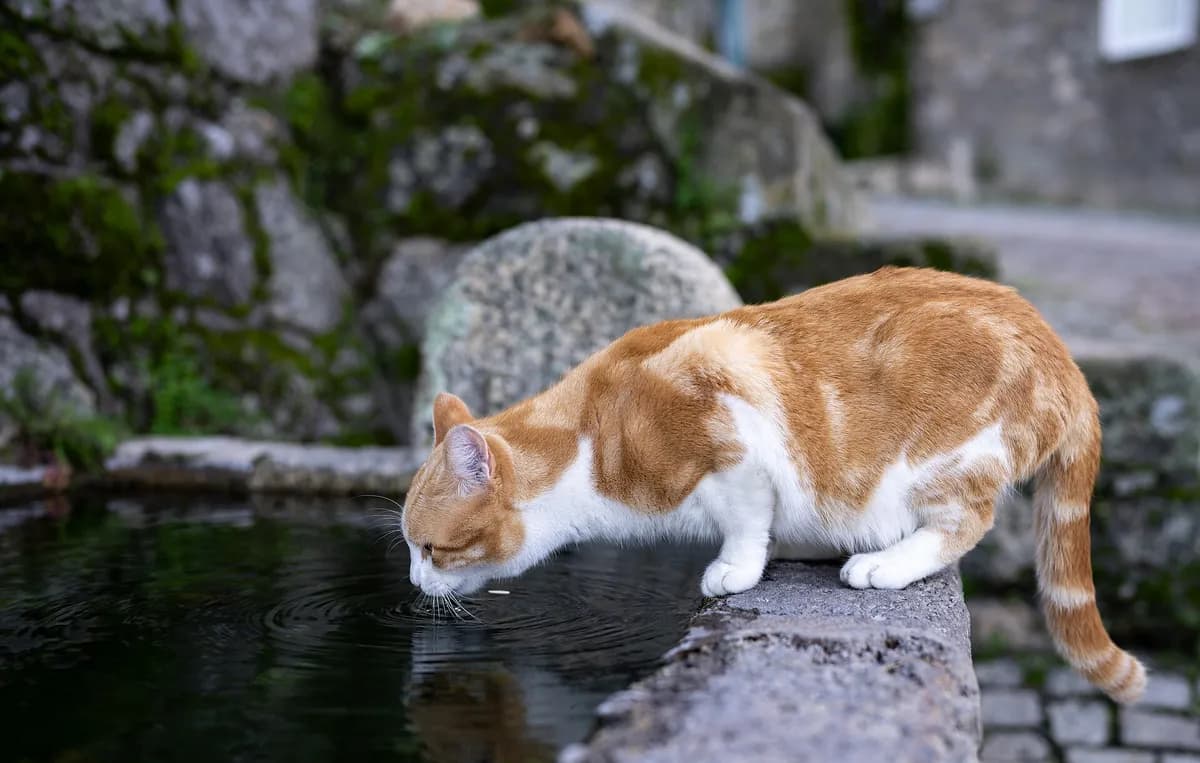
Domestic cats descended from animals adapted to relatively dry environments, and water intake can be easy to overlook when a cat drinks in small, private visits. A thoughtful home setup makes fresh water easy to find without turning hydration into a daily struggle.
Quick Answer
The Short Answer: Support your cat's hydration by offering several clean water stations in quiet, accessible places and testing bowl shapes, materials, and moving or still water. Keep the options your cat actually uses and that you can maintain reliably.
Cats also obtain water from food. A cat eating wet food may visit the bowl less often than one eating dry food, so visible drinking does not represent the whole intake. This guide focuses on routine environmental support, not diagnosing dehydration or treating disease.
Build a Hydration-Friendly Setup
| Element | Practical approach |
|---|---|
| Number | Offer more than one station, especially in larger or multi-level homes. |
| Location | Choose quiet places with easy approach and exit routes. |
| Container | Test wide, stable ceramic, glass, or stainless-steel bowls. |
| Water style | Offer still water and, if useful, a maintained fountain. |
| Cleaning | Refresh water and wash every water-contact surface regularly. |
| Observation | Note which locations and designs receive actual use. |
There is no single perfect arrangement. Treat setup as a small experiment: change one feature at a time and observe preference rather than buying many products at once.
Simple Environmental Hydration Tips
1. Separate Water and Food Stations
Some cats prefer water away from food, and separating stations also keeps crumbs out of the bowl. Try placing water several feet away or in another quiet part of the room. Do not assume distance is universally required; actual use should guide the final arrangement.
Keep water away from litter trays and strong odors. Avoid narrow corridors where another pet can block access, noisy appliances that start unexpectedly, and busy areas where the cat is repeatedly disturbed.
2. Choose Whisker-Friendly Bowls
Cats have sensitive whiskers, and some appear to prefer wide bowls that allow the face to approach without crowding. “Whisker fatigue” is often used as an explanation, but preference varies and the phrase should not be treated as a diagnosis.
Offer a wide, shallow bowl alongside the current one and compare use. The container should be heavy or non-slip enough that it does not move. Ceramic, glass, and stainless steel are easy to inspect, provided they are intact and cleaned appropriately. Replace chipped or cracked containers.
3. Offer Circulating Water Fountains
Moving water attracts some cats, while others dislike the sound, vibration, or unfamiliar shape of a fountain. Introduce one beside a familiar bowl rather than removing the existing option. Let the cat investigate without being placed next to the device.
A fountain is only helpful when maintained. Follow the manufacturer's schedule for cleaning, filter replacement, water level, and pump care. Residue can build up in reservoirs, tubing, seams, and impellers that are not visible from the drinking surface.
Place Stations Around the Home
Provide water where the cat already spends time, but not directly beside every bed or resource. In a multi-level home, put a station on each frequently used floor. Older cats or cats with limited mobility benefit from options that do not require stairs or jumping.
In multi-cat households, spread bowls so one cat cannot guard all of them. Several bowls lined up together function more like one location than independent resources. Give each station a clear approach and exit.
Keep electrical cords for fountains secured and protected from chewing. Position the device where spills cannot reach outlets or create a slippery walkway.
Keep Water Fresh
Refresh bowls at least daily and whenever the water contains food, dust, hair, litter, or debris. Empty and wash the container rather than continually topping it up. Rinse away cleaning product thoroughly and avoid strong lingering fragrance.
Use the fountain's full cleaning process, not just a reservoir refill. If parts become slimy, stained, damaged, or impossible to clean, replace them. Check water level each day because pumps can fail or run dry.
During hot weather or power outages, inspect stations more often. Never assume an automatic fountain is working simply because it is plugged in.
Consider Water From Food
Wet food contributes moisture during meals. If your cat already eats a complete wet diet, reduced bowl use may reflect that source. Dry food contains much less water, so cats eating it rely more on drinking.
Some cats accept a small amount of fresh water mixed into wet food. Start with a very small change and stop if the cat eats less. Added water changes texture and aroma and does not suit every preference.
Refrigerate opened wet food according to the label and discard leftovers that have remained out too long. Do not leave diluted food sitting at room temperature. Most importantly, do not allow a cat to go without eating to force acceptance of a wetter meal.
Changing food for a diagnosed urinary, kidney, heart, or other condition requires veterinary guidance. General hydration support is not a substitute for an individualized medical diet or fluid plan.
Practical Guidance: What You Can Do
- Set up at least two water stations in different quiet areas of your home.
- Refresh water daily and wash stainless steel or ceramic bowls regularly.
- Mix a small amount of warm water into canned wet food to boost moisture intake during mealtime.
Use that list as a trial, not a rule. A small home may not need the same number of stations as a large multi-level household, and water should only be mixed into food if the cat continues to eat normally.
Run a Simple Preference Test
Place two clean options in comparable, quiet locations. Change one feature—such as bowl width, material, or still versus moving water—while keeping the others similar. Observe for several days, then retain both if they are used.
Do not interpret one sip as a firm preference. Time of day, recent food, activity, and household movement can affect use. A phone note recording refills and locations can reveal a pattern without constant monitoring.
Avoid flavoring several stations during a test. Broth, tuna liquid, or commercial flavor products can add salt, seasonings, calories, allergens, and spoilage risk. Plain fresh water should remain available, and additives should be discussed with a veterinarian when medical restrictions may apply.
Observe Without Diagnosing
Learn your cat's normal routine: which bowl they choose, how often it needs refilling, whether wet-food intake changes, and the usual litter-box pattern. In multi-cat homes, shared resources limit what you can attribute to one animal.
Home observation cannot confirm hydration status. Skin-tenting, gum appearance, urine-clump size, and bowl measurements each have limitations. Do not use one home check to reassure yourself when the cat's behavior or physical condition has changed.
Contact a veterinarian for a marked or persistent change in drinking or urination, reduced appetite, repeated vomiting or diarrhea, weakness, unusual sleepiness, difficulty moving, or other concerns. Straining to urinate, repeated litter-box visits with little or no urine, collapse, breathing difficulty, or suspected toxin exposure requires prompt care.
Common Setup Mistakes
- Buying a fountain and removing every familiar bowl immediately.
- Refilling water without washing the container.
- Placing all bowls together where one cat can guard them.
- Positioning water beside litter, loud appliances, or a dead-end route.
- Assuming a wide bowl or fountain is preferred without observing use.
- Adding strongly flavored liquids while removing plain water.
- Changing food abruptly to increase moisture.
- Treating an environmental tip as management for a diagnosed disease.
Frequently Asked Questions
Is a fountain better than a bowl?
Not universally. Some cats prefer moving water; others prefer still water. Cleanliness, access, and observed use matter more than the product category.
Should water be kept away from food?
It is worth testing because some cats use separated water more and separation reduces food debris. Keep both arrangements if your cat uses them.
How many bowls does one cat need?
There is no fixed number. More than one location provides choice and backup. Larger, multi-level, and multi-cat homes generally benefit from broader distribution.
Can I tell whether my cat is dehydrated at home?
Home checks cannot reliably diagnose or rule out dehydration. If drinking, urination, appetite, energy, or physical condition changes, contact a veterinarian.
Key Takeaway
Supporting hydration is mainly good resource design: several clean, stable water options in quiet, accessible locations, plus food moisture when appropriate. Test preferences instead of relying on myths, maintain every bowl and fountain carefully, and learn the cat's usual pattern. Environmental support helps routine drinking; meaningful changes in intake or wellbeing belong with a veterinarian.
Sources & Scientific References (2)
Feline Hydration Strategies and Renal Health
Journal of Feline Medicine and Surgery • Accessed 2026-07-22
AAHA Feline Life Stage Guidelines
American Animal Hospital Association (AAHA) • Accessed 2026-07-22
Share this guide
Help another cat parent find it.