The short answer
Your cat doesn't have one "ideal weight" that applies to every cat. Instead, a healthy weight is one that matches your cat's ideal body condition: a shape where you can easily feel the ribs with a light layer of fat, there's a clear waist when you look from above, and a neat abdominal tuck when you look from the side. Most vets rate this as a 5 on the 9-point body condition score (BCS) scale or a 3 on the 5-point scale. If you're not sure where your cat falls, ask your vet to calculate a target weight — then use the scale and body condition checks together to keep your cat in that range.
Why there is no single "normal" weight
Cats are not all built from the same template. A fit, large-framed Maine Coon can be perfectly healthy at 14 or 15 pounds, while a small-boned Singapura might be at a healthy weight at 6. Breed standards, bone structure, muscle mass, and age all affect what the scale says. This is why a weight range such as "8 to 10 pounds" is only a rough shortcut. It's useful for a general conversation with your vet, but it cannot tell you whether your individual cat is at the right weight.
A number on a scale also can't distinguish fat from muscle. Two cats can weigh the same, yet one may be overweight and the other lean. That's why body condition matters more.
What is a Body Condition Score (BCS)?
A body condition score is a standard method veterinarians use to rate how much body fat a cat carries. In the most common 9-point system, 1 is emaciated, 5 is ideal, and 9 is severely obese. Some clinics use a 5-point system, where 3 is ideal.
The score is based on visual clues and gentle hands-on checks, not just weight. Because it looks at the relationship between skeleton, muscle, and fat, it works across different breeds and body sizes. The score is not a complicated diagnostic tool; it's a way of describing what you can see and feel.
How to check your cat's body condition at home
The best place to do this is on a non-slip surface, with quiet surroundings and a treat nearby. Move your hands gently over your cat's sides, spine, and the base of the tail. Three clues matter:
- Ribs: Run your flat fingers along your cat's ribcage. In an ideal condition, you can feel the ribs easily under a thin layer of fat, the same way you can feel the back of your hand. If you can see each rib, your cat is too thin. If you can't feel them at all, your cat may be carrying too much fat.
- Waist: Look at your cat from directly above. A healthy cat should have a slight inward curve between the ribs and hips — a waist. If the sides bulge straight out rather than curving in, weight may be an issue. If the waist is very sharp, your cat may be underweight.
- Belly tuck: Look at your cat from the side. There should be a small abdominal tuck, a gentle slope upward from the end of the ribs toward the groin. A cat with a healthy body condition has no large belly hanging down. Too much sagging fat, often described as a "primordial pouch" when it is just skin, needs to be distinguished from true abdominal fat. A loose fold of skin can be normal, especially in neutered cats; a thick, round belly is not the same thing.
Breaking down the 9-point scale
| BCS | What it means | What you see and feel |
|---|---|---|
| 1-3 | Underweight | Ribs, spine, and hip bones are easy to feel or visible; there is little muscle mass and a severe waist or absent abdominal tuck. |
| 4 | Slightly underweight | Ribs are easy to feel with almost no fat; waist is noticeable and the abdominal tuck is obvious. |
| 5 | Ideal | Ribs are easy to feel with a thin fat layer; waist is visible behind the ribcage; a small abdominal tuck is present. |
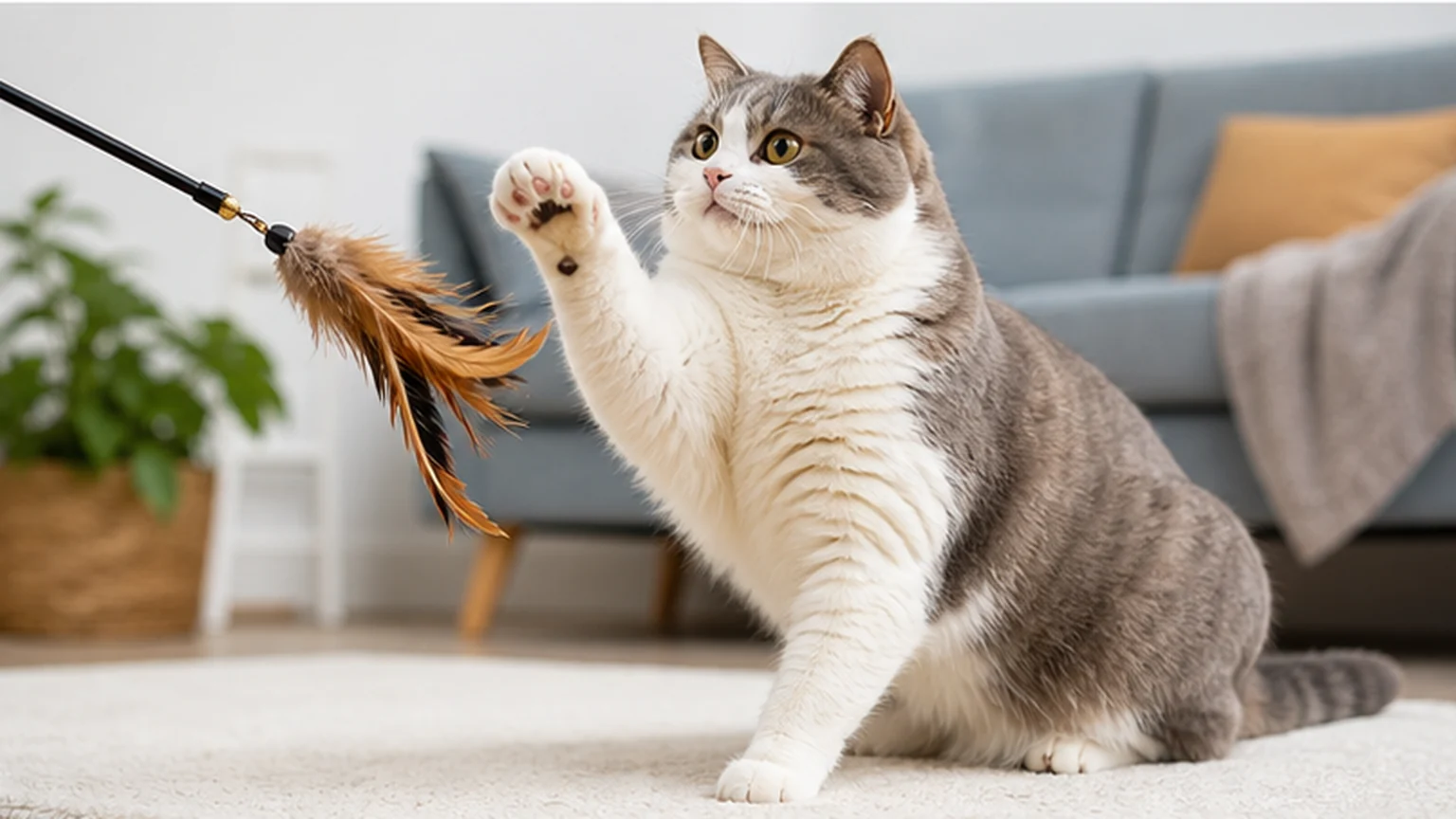
| 6 | Slightly overweight | Ribs are harder to feel; waist is difficult to see; there is some abdominal fat and a rounded belly. |
| 7-9 | Overweight/obese | Fat covers the ribs and spine; no waist is visible; there is a large abdominal pad; in higher scores, walking may be visibly difficult. |
Why the scale can fool you
Body weight can fluctuate daily by a few ounces due to water, food, and bathroom habits. A one-pound difference on the scale may not reflect a true change in body fat. At the same time, a cat can stay the same weight while losing muscle and gaining fat — exactly the kind of change that can happen in older, less active cats.
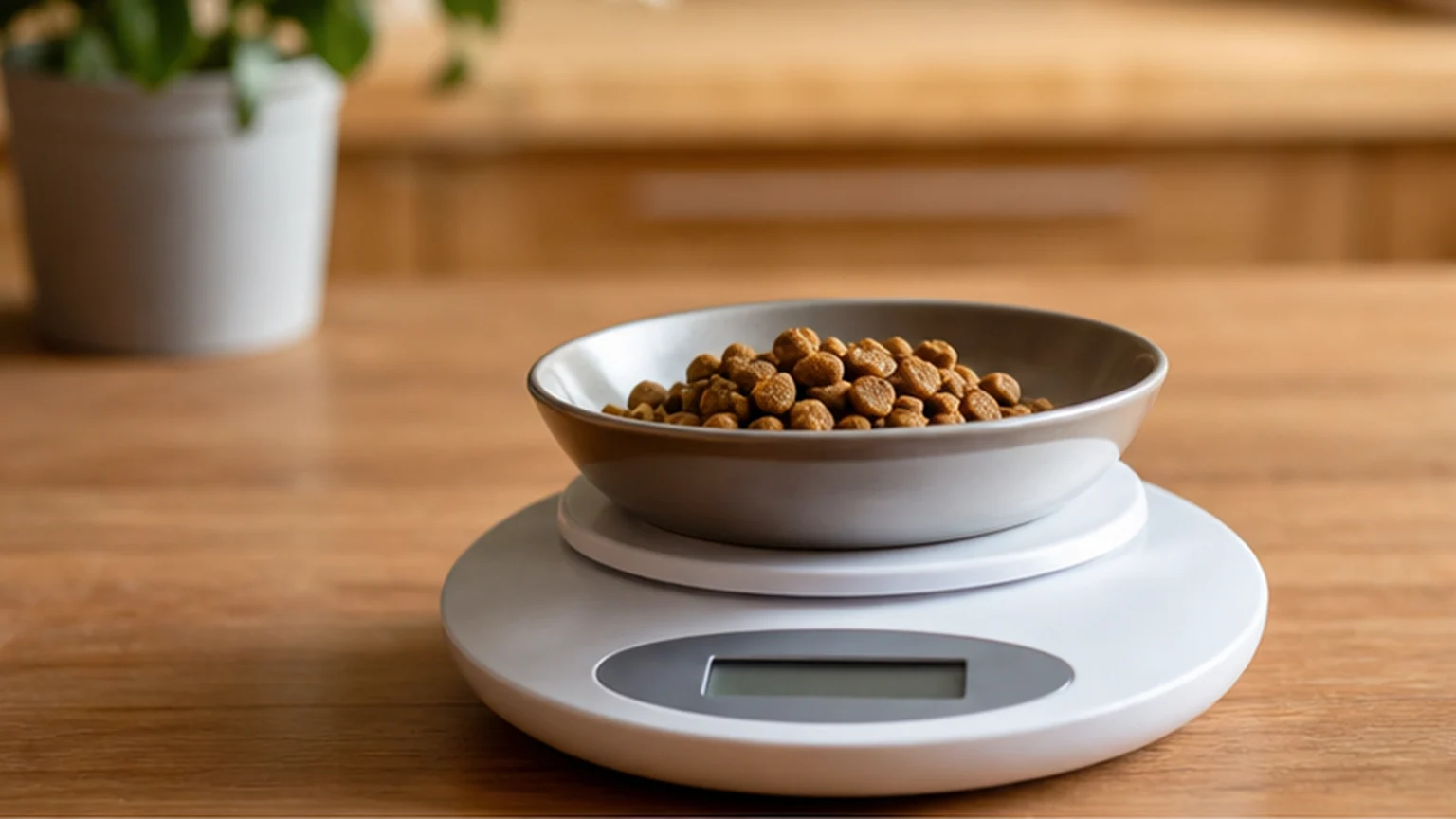
For this reason, weighing should be paired with regular body condition checks. If you weigh at home, use a baby scale or a two-step method: weigh yourself, then weigh yourself holding your cat, and subtract. Try to do it at the same time of day, before meals, and record the number in a simple log. The point is not to obsess over a single reading but to notice trends over weeks and months.
When to involve your veterinarian
Your veterinarian is in the best position to decide the ideal weight for your cat's particular frame and to track changes over time. During a check-up, the vet or a veterinary nurse can show you the exact places to feel and compare your cat's score with previous visits.
This matters because some changes are easier to identify with an objective measurement. If you are thinking about changing your cat's food, portion size, or activity plan, get a plan that is tailored to your cat. A healthy weight is not a quick fix; it's a long-term pattern of feeding, exercise, and regular checks.
Also, if you notice a sudden change in weight — especially rapid loss or gain — without any change in diet, contact your veterinarian rather than waiting.
Never put your cat on a weight-loss diet, skip meals, or restrict food without veterinary guidance. Cats can develop serious health problems if they lose weight too quickly or stop eating for even a short time. Sudden weight changes can also be a sign of an underlying condition that needs veterinary attention.
Frequently Asked Questions
How much should my cat weigh?
There is no universal number. Most unremarkable adult domestic cats fall somewhere between 8 and 12 pounds, but frame size and breed matter far more. Ask your vet to help you choose a target weight based on your cat's body condition score, and use the scale as a way to track that target.
I can feel my cat's ribs, but there is no visible waist. Is that a problem?
This is a reminder that body condition is more than one clue. Feeling ribs easily is a positive sign, but a missing waist can still mean fat is building up around the organs, particularly in the belly. Do the full three-part check: ribs, waist, and abdominal tuck, and ask your vet if you are unsure.
Is a 13-pound cat automatically overweight?
Not necessarily. A 13-pound cat could be a healthy weight if it is large-framed and muscular, or it could be overweight if it has a small frame. Body condition score and frame size, not the number alone, determine whether a cat is too heavy.
How often should I check my cat's body condition?
A simple check every two to four weeks is enough for most cats. You can sync it with claw trimming or tooth brushing. Keeping a record, including the BCS and weight, helps you notice slow trends before they become big problems.
Key Takeaway
The best way to think about your cat's ideal weight is through body condition, not a single number. Target a BCS of 5 on the 9-point scale — ribs that are easy to feel, a visible waist from above, and a gentle abdominal tuck from the side. Use regular weigh-ins as a supporting tool, and work with your veterinarian to set a personalized target and to guide any changes. With careful observation and professional backup, you can help your cat stay in the comfortable, energetic middle of the weight range — whatever number that happens to be.
Share this guide
Help another cat parent find it.