The short answer
Cats can enjoy windows and balconies safely, but only if you take deliberate precautions. Secure window screens, window stops that limit openings, balcony netting, and close supervision are all effective. Never assume a cat 'knows' not to jump or slip—curiosity and prey drive can override caution. With a few simple modifications, you can give your cat the enrichment of fresh air and bird-watching without the danger.
Why Cats Love Windows and Balconies
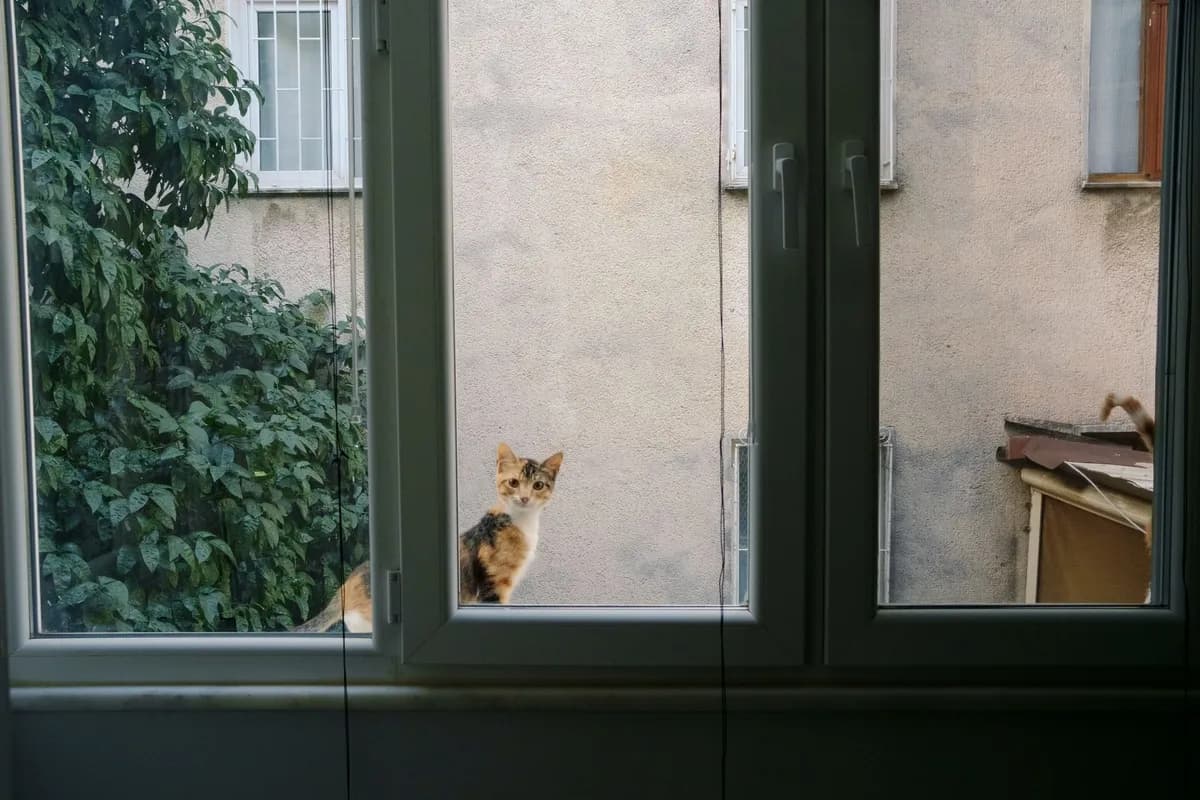
Cats are natural perchers. In the wild, they climb to high spots to survey their territory, spot prey, and bask in the sun. A sunny windowsill or a balcony railing mimics that instinctive lookout. The movement of birds, squirrels, and passing cars provides endless entertainment, and the warmth of sunlight is irresistible. For indoor cats, these spots are often the only connection to the outside world—so it's no wonder they gravitate toward them.
But that same appeal can turn deadly. A cat chasing a bird or startled by a loud noise may lunge through an open window or slip through a railing gap. Even a calm cat can misjudge a jump or lose its footing on a smooth surface. Understanding the risks is the first step to making these areas safe.
The Real Risks: Falls, Escapes, and Injuries
High-rise syndrome is a term veterinarians use for injuries cats sustain from falling out of windows or off balconies. Contrary to the myth that cats always land on their feet, falls from even modest heights can cause broken bones, lung damage, and internal injuries. Studies show that cats can be seriously hurt falling from as little as two stories, and the severity often increases with height, though some cats survive falls from great heights—but they rarely escape unscathed.
Escapes are another major concern. An open window without a screen is an open invitation. Cats can squeeze through surprisingly small gaps, and once outside, they face traffic, predators, and the risk of getting lost. Balconies present a similar hazard: gaps between railings, loose panels, or furniture that lets a cat climb over the edge. Even a screened window can become a danger if the screen is flimsy—a determined cat can tear through it in seconds.
There's also the risk of getting stuck. A cat that partially squeezes through an opening can become trapped, leading to panic, injury, or worse. And in some cases, cats have been known to chew on window screens, ingesting fragments that can cause digestive issues.
How to Cat-Proof Your Windows
Making your windows safe doesn't mean sealing them shut forever. It means choosing the right barriers and using them consistently.
Secure Screens
Standard window screens are designed to keep bugs out, not cats in. They are often made of thin fiberglass that tears easily. Look for pet-proof screens made of heavy-duty mesh or metal. These are more resistant to clawing and pushing. Even with a pet-proof screen, inspect it regularly for tears or gaps. A screen that is loose or warped can be pushed out by a determined cat.
Window Stops and Locks
Window stops (also called window restrictors) limit how far a window can open. They are simple devices that attach to the track and prevent the window from opening more than a few inches—enough for ventilation but not enough for a cat to squeeze through. For double-hung windows, you can also use a locking pin that secures the window at a specific height. These are inexpensive and easy to install.
Close Windows When Unsupervised
The simplest rule: if you're not in the room, close the window. Even with a screen, a cat can get into trouble when no one is watching. Make it a habit to close windows before leaving the house or going to bed. If you want to leave a window open while you're away, use a stop that limits the opening to under 3 inches (7.5 cm)—too narrow for most adult cats to fit through.
Create a Safe Perch
Instead of letting your cat sit on the bare sill, provide a sturdy cat perch or a window bed that attaches securely to the frame. This gives your cat a comfortable spot without the temptation to jump onto the screen. Place the perch a few inches away from the screen so your cat can't directly push against it.
How to Cat-Proof Your Balcony
Balconies are trickier because they are open to the elements and often have gaps in railings. But with some effort, you can create a safe outdoor experience.
Install Balcony Netting
Balcony netting is a mesh barrier that attaches to the railing and extends upward to the ceiling or overhead structure. It creates a secure enclosure that prevents cats from slipping through gaps or jumping over the railing. Choose netting with small holes (no more than 1 inch) and ensure it is taut and securely anchored. This is the most effective way to make a balcony safe.
Check Railing Gaps
Measure the gaps between railing bars. If they are wider than 2 inches (5 cm), a cat can squeeze through. You can fill gaps with wire mesh, plexiglass, or specially designed railing guards. Also check for any loose or broken sections that could give way.
Remove Furniture Near the Edge
Cats love to climb, so a chair, table, or planter near the railing becomes a launching pad. Move all furniture away from the edge and avoid placing anything that could be used as a step. If you want to give your cat a high perch, place it in the center of the balcony, away from the railing.
Consider a Catio
A catio is an enclosed outdoor space, either attached to a window or built on a balcony. It gives your cat the outdoor experience without any risk of escape or injury. Catios can be as simple as a mesh tent or as elaborate as a custom-built enclosure. They are the gold standard for safe outdoor access.
Supervise Always
Even with netting, never leave your cat unattended on a balcony. A determined cat can find a weak spot, and weather conditions can damage netting over time. If you can't supervise, keep the balcony door closed.
Comparing Safety Measures
The table below summarizes common options for window and balcony safety.
| Safety Measure | Pros | Cons | Best For |
|---|---|---|---|
| Pet-proof screens | Keeps bugs out, allows airflow | Can still be torn if cat is determined | Windows that are opened occasionally |
| Window stops | Limit opening, easy to install | May not prevent screen damage | Windows left open for ventilation |
| Balcony netting | Encloses the whole area, allows fresh air | Requires installation, can be unsightly | Balconies with railings |
| Railing gap fillers | Blocks small gaps, inexpensive | May not deter jumping over the top | Balconies with wide gaps |
| Catio | Fully enclosed, safe, enrichment | Costly, may require permits | Balconies or yards with space |
| Supervision | No cost, flexible | Requires constant attention | Short, monitored sessions |
Frequently Asked Questions
Can cats survive a fall from a high window?
Some cats survive falls from great heights, but they often sustain severe injuries. High-rise syndrome is a well-documented veterinary emergency. Even falls from two or three stories can cause broken bones and internal damage. Never rely on the 'righting reflex' to save your cat.
Do cats know not to jump off a balcony?
No. Cats are excellent at judging distances, but they can be distracted by prey or startled by noise. They may also slip on wet surfaces or misjudge the height of a railing. It's not a matter of intelligence—it's a matter of instinct and physics.
What's the safest way to give my cat fresh air?
A catio or a secure balcony enclosure with netting is the safest. If that's not possible, use a harness and leash and supervise your cat on the balcony. Never leave a cat on an open balcony unattended.
Can I train my cat to stay away from open windows?
You can discourage your cat from approaching open windows by providing alternative perches and using positive reinforcement. However, training cannot guarantee safety. Physical barriers are always necessary.
What should I do if my cat escapes through a window or balcony?
Stay calm and search the immediate area. Cats often hide nearby. Check under bushes, porches, and neighboring yards. If you don't find them quickly, post on local social media and contact shelters. But the best strategy is prevention.
Never leave a window open without a secure screen or stop, even for a few minutes. Cats move quickly, and an open window is a direct escape route. For balconies, always ensure netting is intact and anchored before letting your cat out. If you rent, check your lease and local regulations before making permanent modifications.
Key Takeaway
Windows and balconies can be wonderful enrichment spaces for your cat, but they are not inherently safe. By installing secure screens, window stops, balcony netting, and always supervising your cat when these areas are accessible, you can prevent falls, escapes, and injuries. The small effort it takes to cat-proof these spots is well worth the peace of mind—and your cat will thank you with hours of happy bird-watching.
Share this guide
Help another cat parent find it.