The short answer
Your cat probably isn’t waking you up to be difficult. Cats are naturally most alert at dawn and dusk, a pattern called crepuscular activity. It comes from their wild ancestors, who hunted when prey was active in low light. A cat that meows, paws at your face, or knocks things off the nightstand at 3 a.m. is usually using normal instincts, or a habit it learned because waking you often gets attention or food. The fix is not punishment — it is a more predictable routine, more daytime stimulation, and consistent responses at night. In most cases, you can shift the pattern in a few weeks.
Why cats are naturally active at night
Domestic cats have inherited a built-in rhythm from their feline ancestors. Wild cats are crepuscular, meaning they are most active during twilight hours at dawn and dusk. Those hours are prime hunting time for small prey like mice and birds. The domestic cat’s body clock still follows this pattern, even if the cat is comfortably indoors.
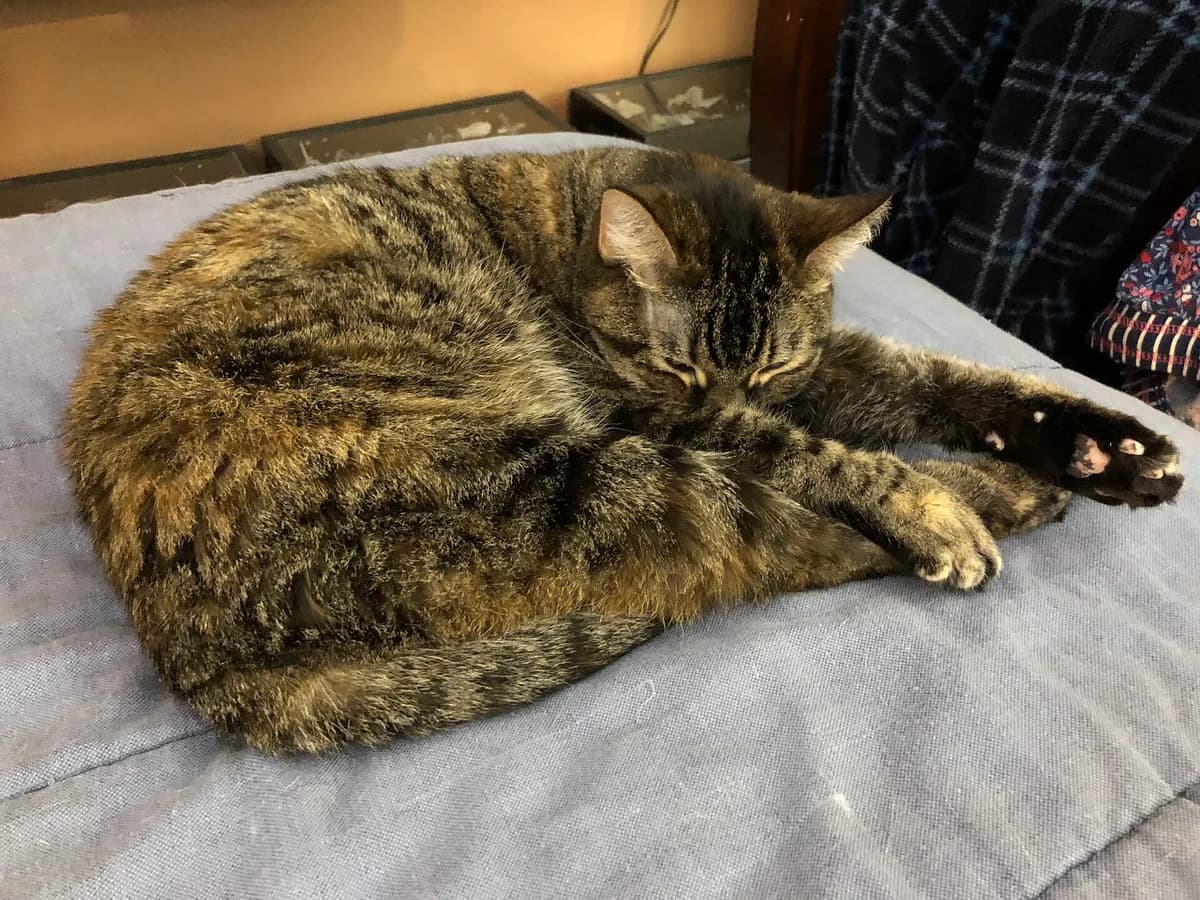
That does not mean cats need to be awake all night. Cats are polyphasic sleepers; they fall asleep and wake up many times over 24 hours instead of sleeping in one long stretch. A house cat may spend 12 to 16 hours a day sleeping, but it can be very awake in the early morning or late evening. This is why a cat is often ready to play at 10 p.m., then again at 4 a.m.
Individual cats vary. Kittens have more energy and shorter bursts of activity. Older cats may sleep more but sometimes become restless at night. Some indoor cats also adjust their rhythms to match their humans, especially when they have a regular feeding and play schedule. The important point is that night waking is a normal behavior, not a sign of a “bad” cat.
Common reasons your cat wakes you at night
There is usually a reason behind the middle-of-the-night wake-up. Common ones include:
- Learned behavior. If meowing at 4 a.m. gets you out of bed, attention, or a bowl of food, your cat learns it works. Even negative attention can be reinforcing.
- Hunger. Cats prefer smaller, more frequent meals. A long gap between dinner and breakfast can make your cat seek food.
- Boredom and under-stimulation. Indoor cats who spend the day alone while you work may store up energy for the night.
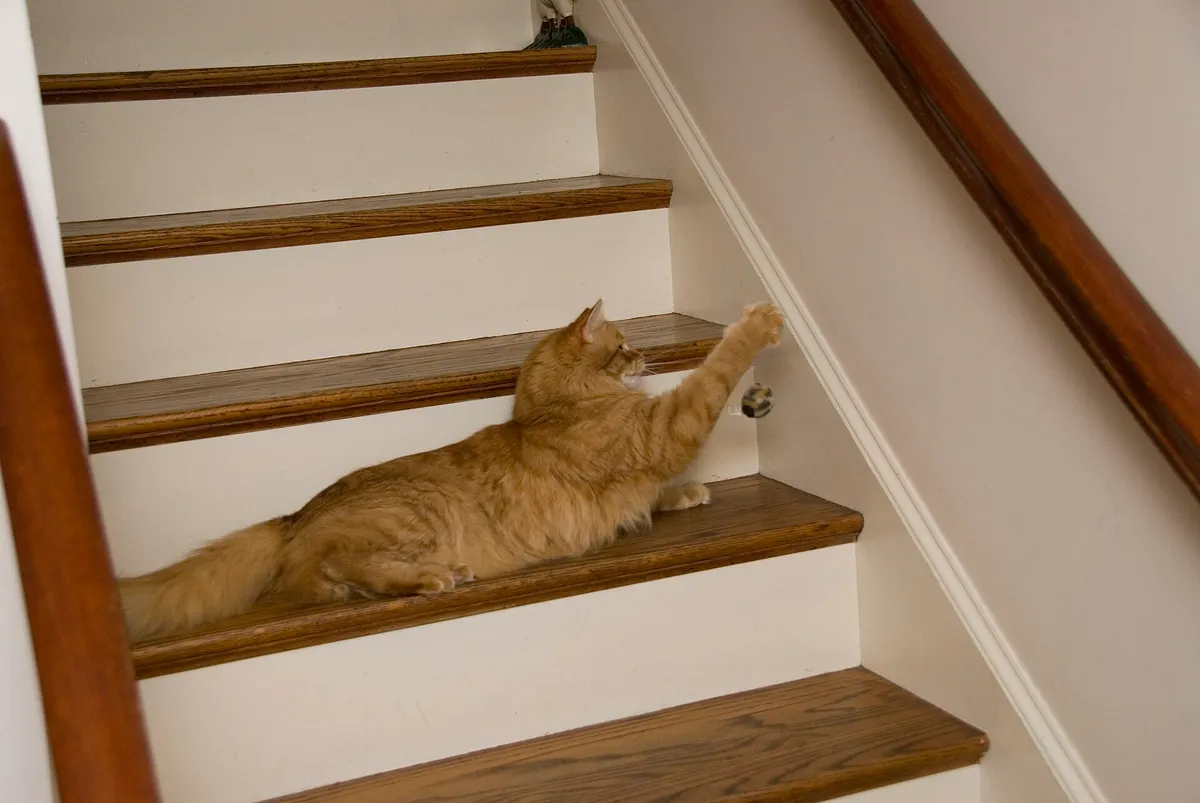
- Play drive. Stalking, chasing, and pouncing are natural instincts. At dawn and dusk, these instincts are strongest.
- Changes in the household. A new pet, a move, or a change in your schedule can disrupt your cat’s routine and cause nighttime attention-seeking.
- Age-related restlessness. Senior cats may sleep less deeply or become disoriented at night, though this is worth mentioning to a veterinarian if it’s new.
The table below shows common patterns and gentle ways to respond.
| What you might see | Likely reason | Gentle approach |
|---|---|---|
| Persistent 4 a.m. meowing | Learned habit or hunger | Ignore quietly, feed at bedtime and first thing in the morning, no middle-of-the-night meals |
| Pacing or knocking objects over | Boredom or pent-up energy | More active play sessions during the day, especially in the evening |
| Pawing at your face while you sleep | Attention-seeking | Turn away, avoid eye contact, get up only at your alarm time |
| Scratching or yowling outside a closed door | Separation or routine change | Provide a safe, comfortable alternative space with familiar smells |
How to help your cat sleep through the night
The goal is to make the nighttime less rewarding and the daytime more interesting. These steps work best when they are consistent.
Increase daytime activity. Play with your cat in short sessions. A wand toy that mimics hunting — with stalking, pouncing, and a “catch” — is ideal. Schedule one active play session close to your own bedtime. Follow it with a small meal or treat, because in the wild, cats eat after a successful hunt. That sequence can trigger grooming and resting.
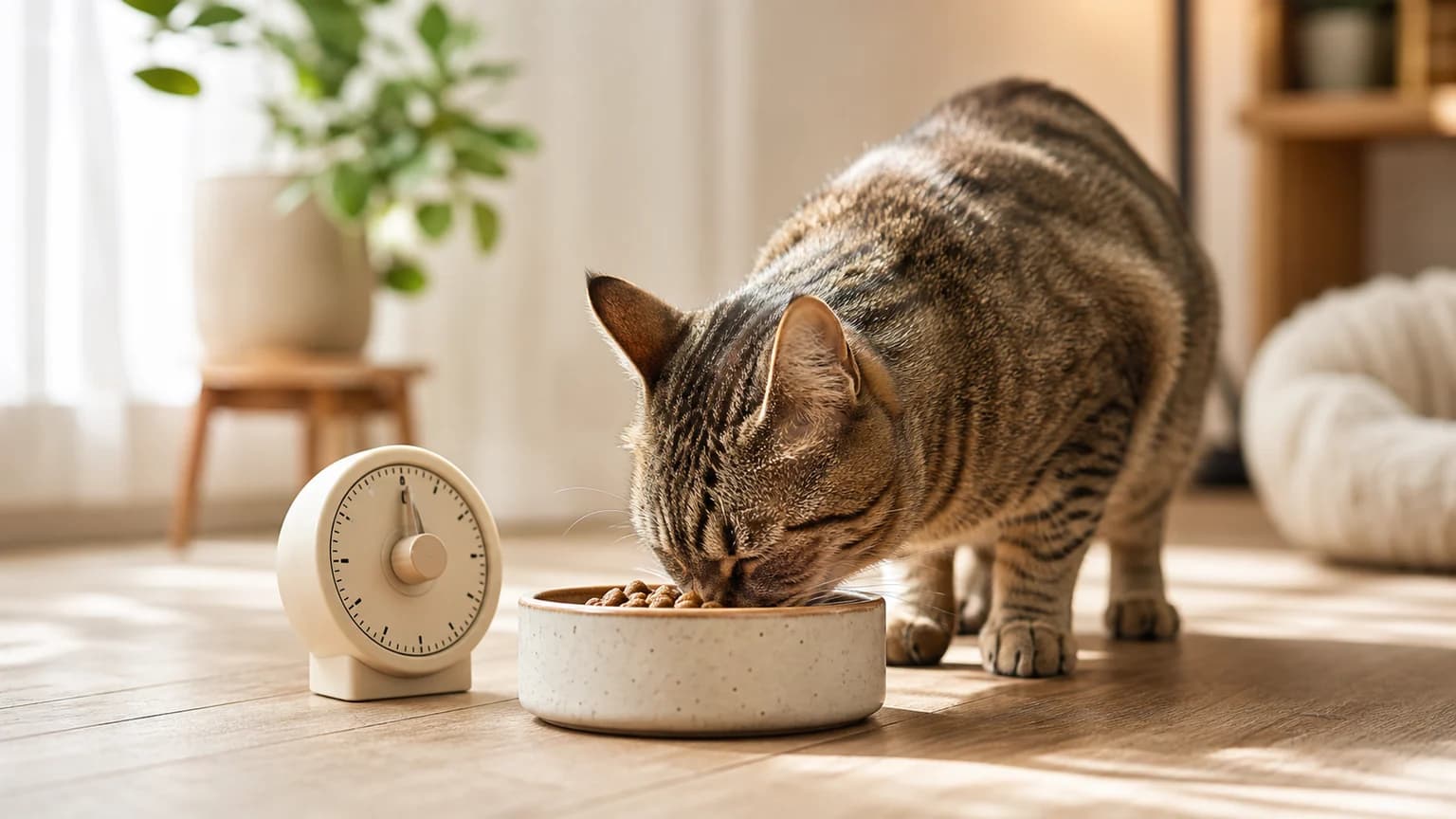
Set a predictable routine. Cats feel safer with routines. Feed meals at regular times, keep litter box scooping predictable, and create a wind-down ritual before lights out. A mechanical food dispenser set to open early in the morning can help if your cat’s main cue is breakfast timing.
Make the bedroom less exciting. If you feed or talk to your cat when it wakes you, that response is the reward. Try to give no response to nighttime meowing: no talking, no eye contact, no moving. Use earplugs if needed. As hard as it is, any response can reset the clock.
Offer alternative comforts. Provide an empty cardboard box, a favorite blanket, or a perching spot near a window where your cat can watch the outside. A clean, well-located litter box and a fresh water source should be available outside the bedroom if you close the door.
Gradually shift meal times. If your cat wakes you because it’s hungry, move its last meal about 15 minutes later every few days until it lands closer to your bedtime. A timed feeder can also break the link between “waking my human” and “getting food.”
Be consistent for at least two to three weeks. Behavior change is rarely overnight. Cats learn at their own pace, and any slip — like giving in to a 5 a.m. demand — can teach the cat to try longer next time.
Never punish, yell at, or spray your cat with water for waking you. Punishment can damage trust and make night behavior worse. Also, do not stop feeding your cat or withhold meals to make it sleepy; cats need regular meals for health. If you close your cat out of the bedroom, make sure it has access to its litter box, fresh water, and a scratching surface in another room. A sudden, unexplained change in night behavior — especially pacing, crying, or restlessness — is worth a checkup with your veterinarian to rule out a physical reason.
Frequently Asked Questions
Is my cat doing this to spite me?
No. Cats do not wake you out of revenge or spite. Their behavior is driven by instinct, habit, and consequences. If meowing gets a reaction, it will continue. It is not personal.
Should I get up and feed my cat when it wakes me?
No, unless you want to reinforce the behavior. If your cat is used to night feedings, check with your veterinarian or use a feeding plan that keeps meals regular but never tied to meowing. A timed feeder can handle early-morning hunger without involving you.
What if ignoring the meowing makes it worse at first?
This is common. It is called an extinction burst. When a behavior stops paying off, a cat may try harder before it gives up. The key is to stay consistent and wait a little longer each time. If you give in after ten minutes, you teach the cat that ten minutes of meowing works.
How long will it take to change the habit?
Most cats respond within two to three weeks when you are consistent. Some learn faster; others take longer. The biggest factor is whether the behavior ever gets rewarded.
When should I be concerned about night waking?
If night waking suddenly becomes extreme in an older cat, or it is accompanied by other symptoms such as disorientation, restlessness, or loud vocalizing, talk to your veterinarian. They can check for medical causes.
Key Takeaway
Night waking in cats is normal behavior, not an act of revenge. By understanding your cat’s crepuscular nature, increasing daytime enrichment, creating a predictable evening routine, and consistently refusing to reward night meowing, you can help your cat — and yourself — sleep better. Be patient, stay gentle, and remember that a tired cat is a quieter cat.
Share this guide
Help another cat parent find it.