The short answer
Your cat isn't out to get you. When a cat launches itself at your feet, it is usually responding to a deeply wired hunting instinct: small, fast-moving objects near the floor look like prey. Feet sliding out from under a blanket or padding down a hallway mimic the motion of a mouse or bird, and to a cat, that motion is practically an invitation to pounce. This is normal play-predatory behavior, not spite, and with a few changes to how you play, move, and set up your home, it is very fixable.
Why feet are such a tempting target
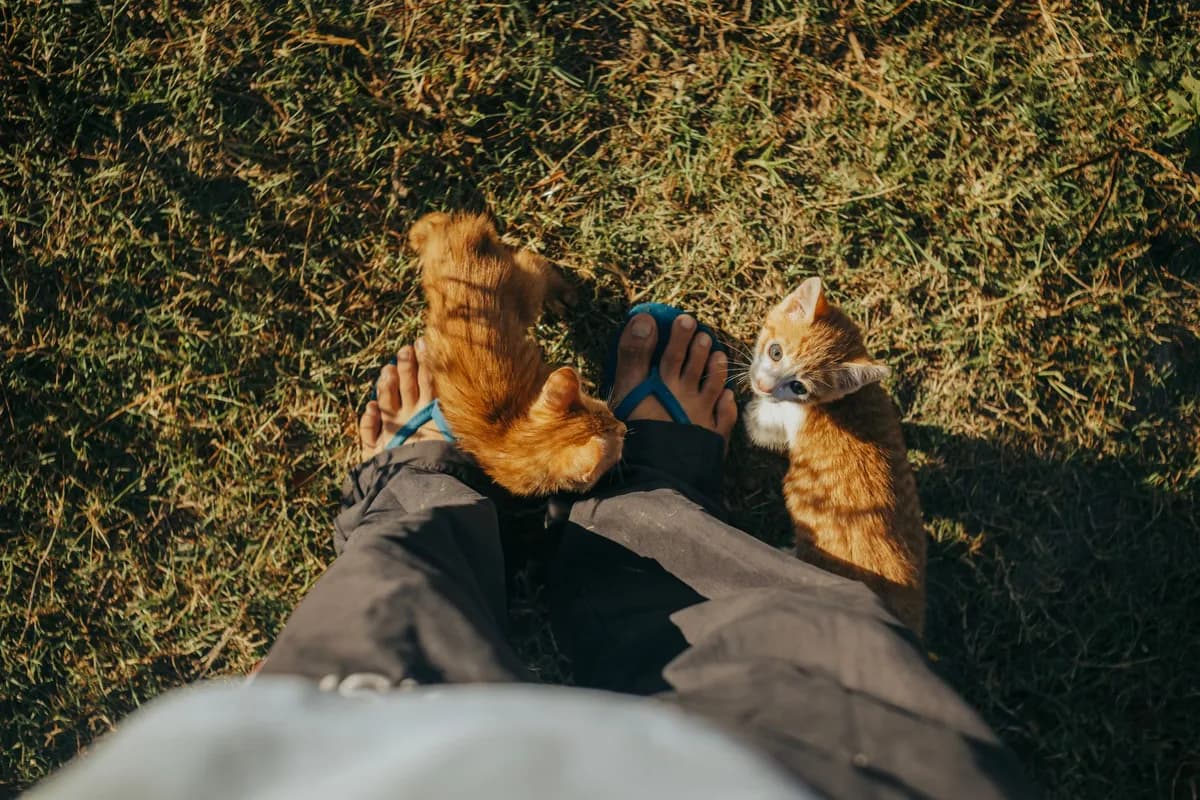
Cats evolved as solitary hunters of small prey. Even a pampered indoor cat who has never seen a mouse still carries the full hunting sequence: stalk, chase, pounce, grab, bite. Your feet hit nearly every trigger in that sequence. They are low to the ground, at roughly the eye level of a cat. They move unpredictably, changing speed and direction. And they often wear fabric, which makes them look and feel like a small, fuzzy animal.
Your cat also reads your feet as unpredictable: a foot that speeds up, slows down, or disappears under furniture behaves exactly like prey trying to hide.
There is also a learned component. Kittens who are encouraged to bat at toes, wiggle under blankets, or chase ankles quickly learn that feet are playmates. Every time you yelp, kick, or laugh and pull away, you are actually adding to the game. To a cat, a foot that moves away is prey that is trying to escape, which makes the chase even more rewarding.
The ambush zone factor
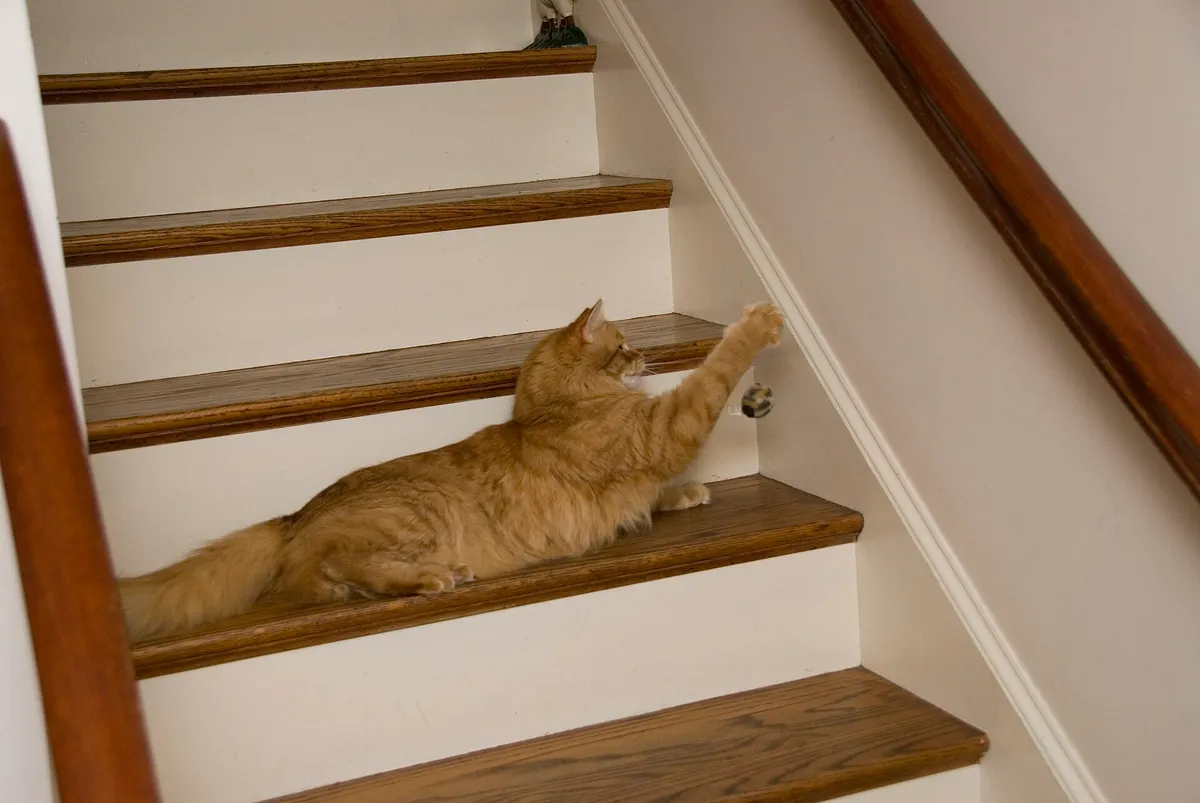
Notice where foot attacks usually happen: around corners, under the bed, at the edge of the couch, behind the door. That is not a coincidence. Those spots are perfect cover for the stalk-and-ambush phase of hunting. Cats feel more confident launching an attack when they have something to hide behind. If your cat only attacks your feet in certain places, they have likely turned that spot into their personal hunting blind. Walking past that spot at the wrong moment turns you into the prey that walks by.
Reading your cat's attack style
Not every foot attack is the same. Before you change anything, look at the body language that comes with the behavior.
| What it looks like | What it usually means | What to do |
|---|---|---|
| Silently stalks, pounces, then bounds away with ears up | Play-predatory behavior; your cat is practicing hunting | Stay still, then toss a toy and start an interactive play session |
| Grabs your ankle gently with teeth, tail swishing, ears forward | Playful hunting with a strong grab instinct | Freeze, then redirect to a wand toy |
| Bites hard, ears flattened against the head, growling or hissing | Fearful or defensive aggression, or pain | Do not move suddenly, do not punish; remove yourself calmly and talk to your veterinarian |
| Attacks only when you walk past a particular hiding spot | Ambush-style hunting; boredom or low play time may be fueling it | Increase active play sessions and temporarily block the hiding spot |
This table helps you tell the difference between ordinary play and a situation that needs professional help.
Five ways to stop the foot ambush
1. Play like a predator, on a schedule
Cats need an outlet for the hunting sequence. Two focused play sessions of ten to fifteen minutes a day, ideally before your busiest foot-traffic times, can burn off the energy that fuels ambushes. Use a wand or fishing-pole toy and move it like prey: fast scurries, pauses, little zigzags, then let your cat catch it at the end. The catch is the part that satisfies the instinct.
2. Remove the reward
The moment a foot attack begins, stop moving. A still foot is boring to a predator. Gently move your feet out of reach without kicking, nudging, or shooing. Every kick teaches your cat that feet play back, which makes them a more exciting toy, not less.
3. Redirect to the right target
Keep a few toys within arm's reach: crinkle balls, toy mice, or a wand toy. When your cat's eyes lock onto your ankles, toss a toy away from you before the pounce happens. The goal is to give your cat a prey object that is not attached to your body.
4. Make your home more interesting
Boredom turns normal hunting instinct into foot attacks. Add cat trees, window perches, puzzle feeders, and rotate toys so the environment offers something new to investigate. The more your cat can express hunting on objects that are not your feet, the less often your ankles become the target.
5. Stop using feet and hands as toys
If you have ever wiggled your toes under a blanket for a kitten, you know exactly how this habit starts. Swap that game for a fishing-pole toy. When play involves your body, you are directly training your cat to treat you as prey. It may be cute in a kitten; it is much less cute when that kitten weighs five kilograms.
What not to do
How you respond matters as much as what you do proactively.
- Do not punish. Yelling, water squirts, or tapping the nose does not teach a cat to stop hunting; it teaches them to be afraid of you. Fear makes aggressive behavior more likely, not less.
- Do not play back with your feet. Kicking, wiggling toes, or fighting back turns your body into the toy. The cat learns that feet are fun to chase and will keep coming back.
- Do not grab or pick up a cat mid-pounce. You are likely to get scratched, and the cat will associate your hands with the attack. Instead, let go, step away, and then offer a toy.
- Do not dismiss a sudden change. If a previously gentle adult cat starts attacking feet out of nowhere, book a veterinary check. Pain and illness can make cats irritable and quick to lash out.
When this is not play. If the attack comes with flattened ears, a growl, a hiss, or a hard bite, or if the behavior starts suddenly in an adult cat that has never done it before, stop reacting and do not punish your cat. Sudden aggression can be a sign of pain, fear, or redirected stress. Book a veterinary appointment to rule out medical causes, and ask for a referral to a qualified behavior professional if the pattern continues.
Frequently Asked Questions
Is my cat attacking my feet because it is angry at me?
No. Play-predatory attacks are about instinct and energy, not grudges. Cats do not attack out of revenge. If your cat were genuinely angry, you would see warning signs long before contact: a stiff tail, flattened ears, dilated pupils, and often a growl. The wide eyes, tail flicking, and pouncing posture of a playful cat look very different from the flattened ears and growling of a genuinely angry one.
Why does my cat only attack my feet when I walk past?
Movement triggers the chase response. Walking feet are fast, irregular, and close to the ground, a perfect mimic of prey. Doorways, stairs, and furniture corners give your cat cover for the ambush.
Should I punish my cat for attacking my feet?
Punishment rarely helps and often causes fear or anxiety, which can lead to more aggression. It also does not address the real cause: a need to hunt. Freezing, moving calmly, and redirecting to an appropriate toy works far better.
Will my cat grow out of this?
Some cats mellow with age, but a foot-attack habit will not disappear on its own if it keeps being rewarded. Regular play and redirection usually reduce the behavior within a few weeks.
Why does my cat only attack my feet when I wear socks?
Socks change how your feet look and move. Fuzzy, striped, or loosely fitting socks can look startlingly like a small furry animal. If socks are the trigger, try slippers that fit snugly, or pre-empt the pounce by tossing a toy when you put your socks on.
Key Takeaway
Feet attacks are one of the most common behavior complaints from cat owners, and one of the most fixable. Your cat is not being cruel; it is being a cat, practicing a hunting sequence that is millions of years old. Give that sequence a proper outlet with regular wand play, a more stimulating home, and body-free toys, and you can keep your ankles intact while strengthening your bond.
Share this guide
Help another cat parent find it.