The short answer
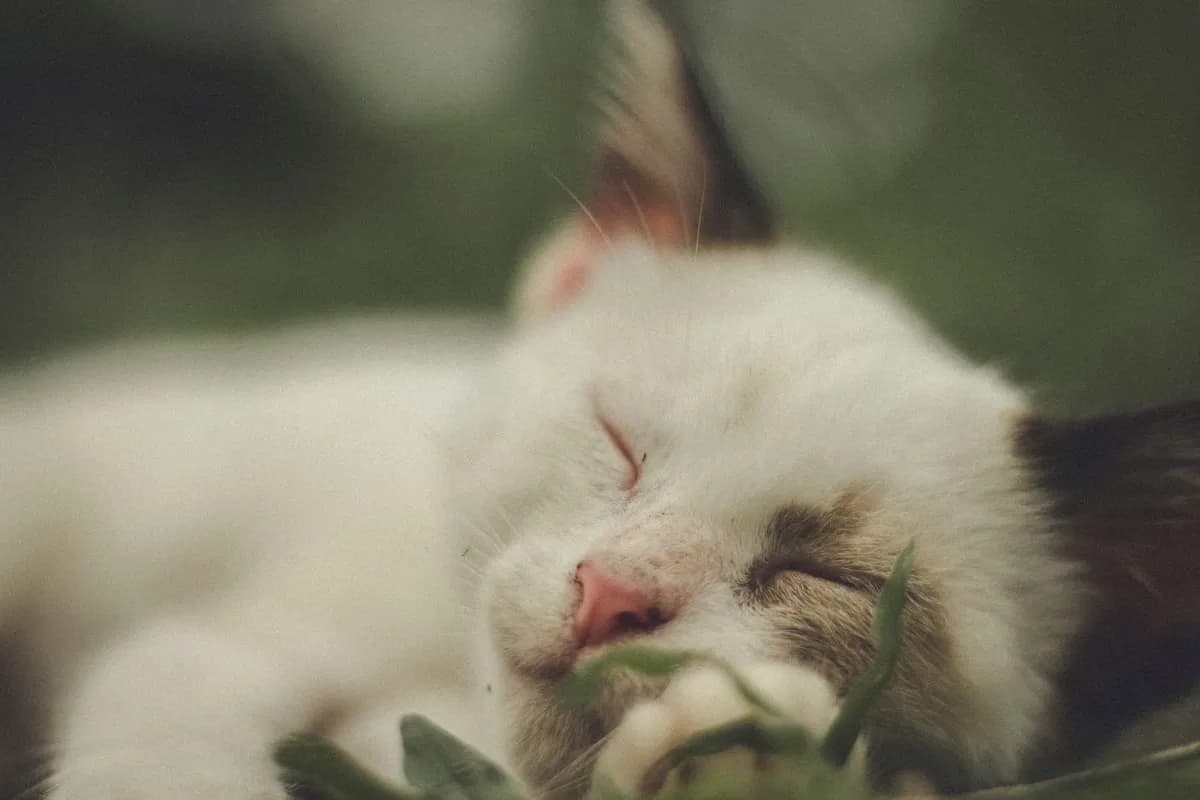
Cats twitch in their sleep because their brains stay busy while their bodies rest. The twitching — paws paddling, whiskers wiggling, ears flicking, tail curling — happens most often during REM (rapid eye movement) sleep, the stage of sleep linked to dreaming. During REM, a cat's brain is highly active, but the body is nearly paralyzed by design. The twitches you see are small bursts of movement that sneak past that "body lock." For the vast majority of cats, this is perfectly normal.
What's happening in a sleeping cat's brain and body?
Sleep in mammals, cats included, runs in cycles. Each cycle has two broad phases: non-REM sleep, which includes light and deep stages, and REM sleep. Cats spend more time in light sleep than people do, which is part of why they can go from seeming comatose to fully alert in half a second when they hear the treat jar.
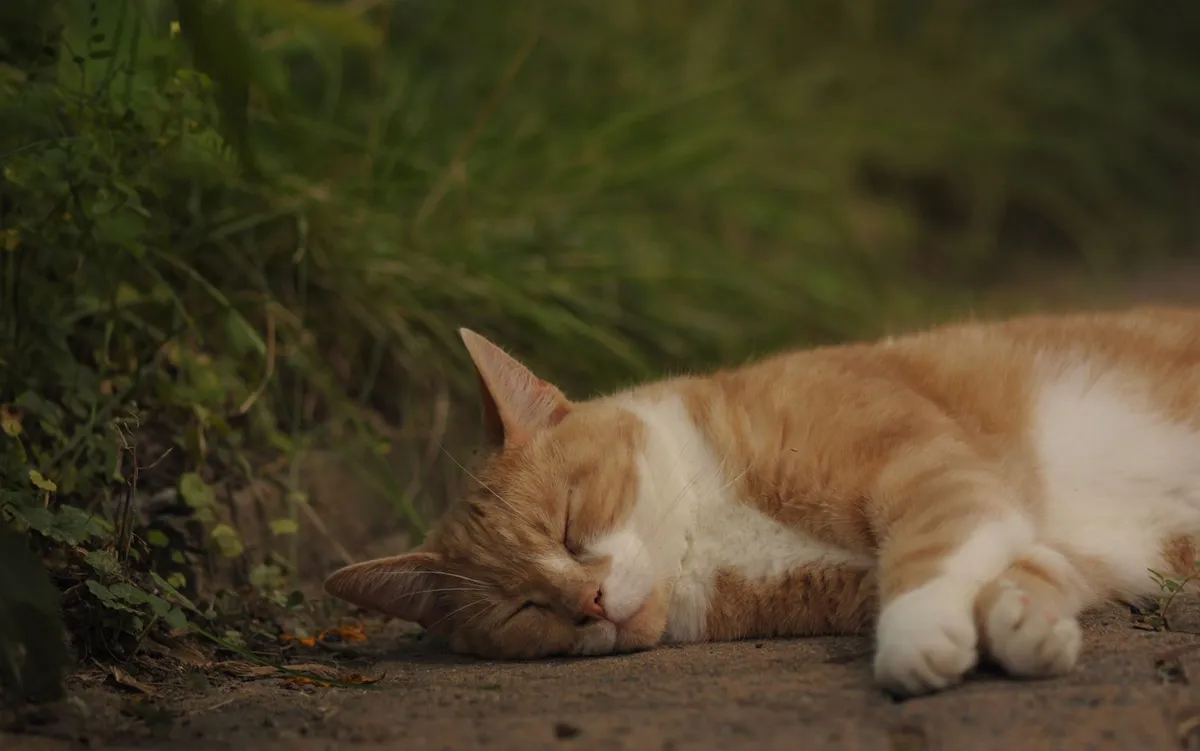
In deep non-REM sleep, breathing is slow and steady, and the body stays still. When a cat flops on her side and looks boneless, she is probably in this stage.
Then comes REM. The name comes from the rapid side-to-side movements of the eyes beneath closed lids. In this stage, the brain's activity level rivals a waking brain, heart rate and breathing become more variable, and the voluntary muscles are switched off. That built-in shutdown is called REM atonia.
REM atonia is controlled by a small region of the brainstem called the pons. The pons sends inhibitory signals down the spinal cord, effectively telling most muscles: "Do not move. Do not act out the dream." It is not a perfect system. Stray signals leak through, and small muscle groups — the whiskers, the toes, the ear tips, the tail — twitch anyway. The result is the fluttery, fascinating twitching that cat owners know well.
Some researchers think the twitches aren't just noise. They may help the nervous system refine its maps of the body. Kittens twitch so much in part because their growing brains and muscles are still learning to communicate.
Why do kittens twitch more than adult cats?
If you've watched a kitten sleep, you've probably thought she was living an intense adventure under her eyelids. Kittens twitch more often than adult cats, and they also spend a larger share of their sleep in REM.
A few reasons:
- Their nervous systems are still developing. Sleep twitches help the young brain practice and wire up movement.
- They have more to learn. Stalking, pouncing, grooming — every skill gets rehearsed somewhere in the brain while the body rests.
- Their sleep cycles are shorter, so they enter REM more frequently.
Expect a kitten's ears, paws, and whiskers to be in almost constant motion during sleep. It's a sign her brain is building itself on schedule.
Here's a quick guide to what those little movements usually look like:
| What you see | What it likely means |
|---|---|
| Whisker flutter | Light sleep; sensory organs still sampling the air |
| Paw paddling or toe twitches | REM sleep; possible dream imagery of running or pouncing |
| Ear flicks | Hearing still monitoring the room; or REM activity |
| Tail-tip twitch | Light transition sleep or REM; small muscle discharge |
| Rapid eye blinks under closed lids | Clear sign of REM sleep |
| A full-body jerk now and then | Normal "reset" when shifting between sleep stages |
Do cats dream?
No one can ask a cat what she dreamt about, but the evidence strongly suggests cats dream. The brainwave patterns seen during REM sleep in cats closely resemble those in humans, who report vivid dreams when woken from REM. Brain recordings also show that a sleeping cat's brain reactivates patterns from waking experiences. A cat who spent the afternoon stalking a toy mouse may show activity in the same brain regions while asleep.
The most famous experiment related to cat dreaming comes from the 1960s. Researchers studied the brainstem area responsible for REM atonia, and when that area was disabled in experimental cats, the animals began acting out sleep behaviors — stalking, pouncing, hissing — while still in REM. The takeaway isn't the methods of that older research; it's what it tells us. The movements we suppress during REM reflect the brain rehearsing real-life actions. A twitching cat is, in a sense, practicing her instincts in her sleep.
Twitching or seizure: how to tell the difference
Most sleep twitching is ordinary, but not every movement is the same. Knowing the difference helps you avoid both unnecessary worry and delayed care.
Normal sleep twitching:
- Is brief, jittery, and localized — a paw here, an ear there.
- Happens while the cat is deeply relaxed.
- Stops or shifts when you speak softly or call her name; a sleeping cat often repositions and returns to sleep.
- Leaves the cat waking normally, alert, and acting like herself.
A seizure is different. Any of these signs warrant a call to your vet:
- The whole body stiffens, then paddles rhythmically and uncontrollably.
- The cat does not respond to your voice or touch.
- She drools, vocalizes, or loses control of her bladder or bowels.
- After the episode she seems confused, disoriented, or unusually sleepy (the post-ictal phase).
- Episodes cluster or happen more than once in a day.
If you're ever unsure, record a short video. It's one of the most useful tools you can give your vet.
If your cat's twitching turns into full-body stiffness, rhythmic nonstop paddling, drooling, or unresponsiveness — or if episodes repeat within 24 hours — contact your veterinarian or the nearest emergency animal hospital right away. Never try to restrain a seizing cat; keep your hands away from her mouth and note the time the episode starts and stops.
When to mention twitching to your vet
You don't need to call about ordinary sleep twitching. Do bring it up if you notice:
- Twitching that happens while your cat is awake.
- A sudden increase in how often or how intensely she twitches in sleep.
- Anything that resembles the seizure warning signs above.
- Stumbling, weakness, or odd behavior after waking.
- Twitching in a cat taking a new medication, since some drugs can trigger unusual movements.
It's also worth knowing that some older cats develop REM sleep behavior disorder, where the body's REM "lock" fails and the cat acts out dreams: growling, swiping, jumping mid-sleep and falling off furniture. It can look alarming and can be dangerous, so if you see this pattern, have your vet evaluate it.
What to do while your cat sleeps
The best response to a happily twitching cat is to let her sleep.
- Don't wake her to "rescue" her from a dream. Sleep is essential for adult cats and kittens, and interrupted sleep adds stress.
- Keep her sleeping spot quiet and safe. Cats choose sleep spots where they feel secure, so respect that choice.
- If you want a photo, skip the flash. Bright light and noise startle cats and break their sleep.
Cats spend a huge portion of their lives asleep, and the twitches are a window into a rich inner world. Letting that world play out undisturbed is one small way to support your cat's health.
Frequently Asked Questions
Do cats dream?
The evidence strongly suggests yes. REM sleep brainwave patterns in cats resemble those in humans who report dreaming, and the sleeping brain reactivates waking experiences. A cat's dreams probably involve familiar cat things: hunting, exploring, eating, playing.
Is my cat having a nightmare?
There is no way to know for certain because cats can't tell us. Occasional twitching, small vocalizations, or brief movement in sleep is not a reason to assume distress. Avoid waking a cat to check; a startled cat may react defensively. If you ever see seizure-like episodes, call your vet.
Should I wake my cat when she's twitching?
No. Twitching is a normal part of the sleep cycle, and waking the cat interrupts restorative sleep. Let her finish the cycle. If she's in an awkward or unsafe position, move her bedding rather than shaking her awake.
How much do cats actually sleep?
Most adults sleep 12 to 16 hours a day. Kittens, seniors, and indoor cats can sleep even more. Cats are crepuscular — most active at dawn and dusk — so their sleep often clusters during the day and again at night.
Why does my cat twitch and then wake up looking confused?
A twitch can coincide with a transition between sleep stages. The cat wakes briefly, looks around, repositions, and usually goes back to sleep. As long as she's coordinated and normal once awake, there's no reason for concern.
Key Takeaway
Sleep twitching in cats is normal, common, and tied to the REM stage of sleep, when the brain is active but the body is deliberately switched off. Kittens twitch more because their developing nervous systems are still forming connections. Enjoy the show, resist waking your cat, and save your concern for the rare cases that look like full-body seizures — those call for a video and a veterinarian's opinion. In almost every household, a twitching cat is simply a dreaming cat.
Share this guide
Help another cat parent find it.