The short answer
Cats trill and chirp as part of their normal social and hunting vocabulary. A trill is a friendly, rolling "mrrp?" sound cats use to greet people and other pets. Chirping and chattering are higher-energy sounds cats often make when they spot birds, bugs, or toys and feel excited by the opportunity to hunt. Neither sound means your cat is in pain or angry. They are polite requests, happy hellos, and tiny hunting speeches.
What a trill sounds like
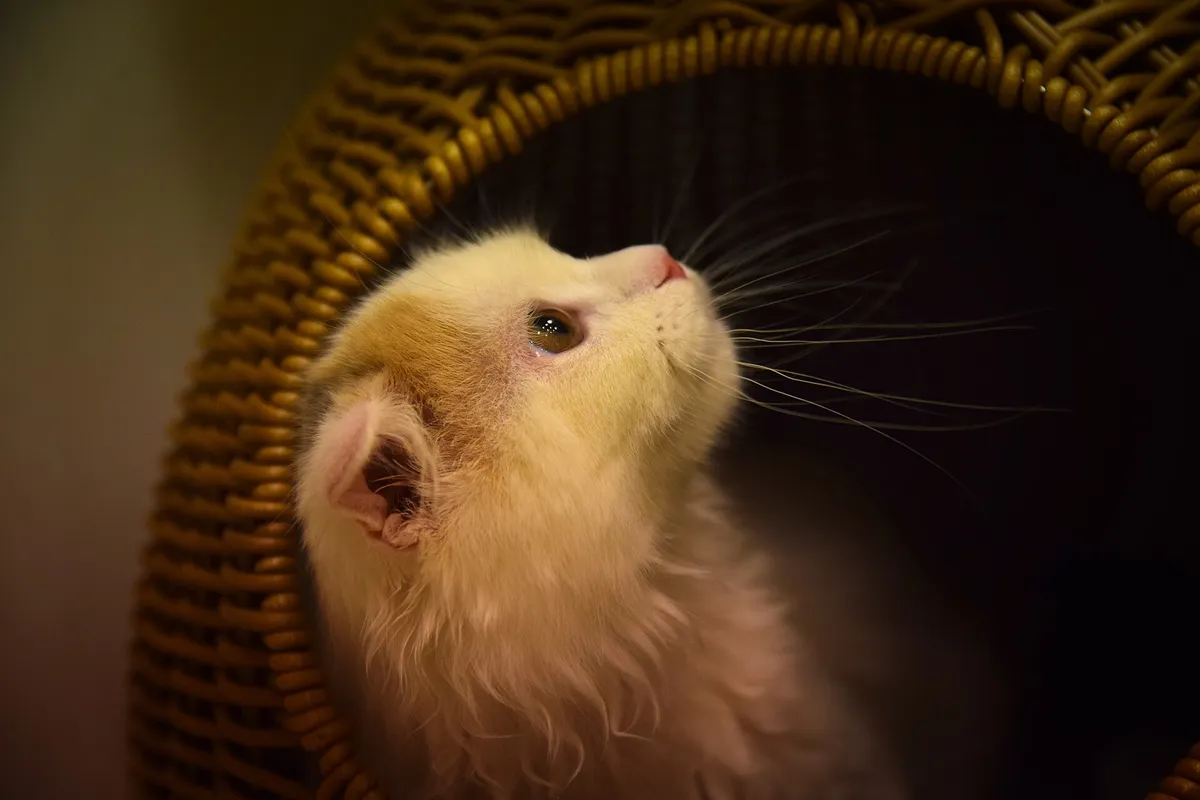
A trill is a short, soft, rising sound that rolls from the throat. It lands somewhere between a meow and a purr. If you hear "mrrp," "mhr-r-r?" or "eep?" as your cat walks into the room, you are hearing a trill. Cats keep their mouth mostly closed while they make it. A trill is usually directed at one person or animal rather than spoken to the room.
What a chirp and a chatter sound like
A chirp is a brief, high-pitched "eh-eh" or "ek ek" sound, often produced with the mouth open. It sometimes comes out as a smooth birdlike peep. When cats get very excited, chirps may turn into chattering: a rapid series of chirps combined with fast jaw movements. Many cats do this while sitting at a window watching squirrels or birds. It can look as if the cat is shivering or clicking its teeth, but the vocal part is still a chirp-like call.
Why do cats trill?
Cats trill for several common reasons, and often for more than one at a time.
Greeting and recognition. Mother cats trill to their kittens to call them or let them know food is nearby, and kittens learn to trill in return. Adult cats carry that behavior into their relationships with humans. When your cat trills as you enter the house, they are saying, in effect, "Oh, you're here! Good."
Follow-me requests. A trill often means "come with me." Cats do this before leading you to a food bowl, a closed door, or a favorite toy. It is a contact call, used to keep a friend nearby rather than to complain.
Redirected affection. Many cats trill when they are comfortable and mildly excited. You may hear it when you greet them after a nap or when they hop onto the sofa beside you.
Attention seeking. Some cats trill to test whether you are available. Because trilling is usually positive and rarely threatening, cats learn that it gets a relaxed, friendly response from humans. That makes the behavior self-reinforcing.
Why do cats chirp and chatter?
Chirping is most often tied to the hunting instinct rather than to social conversation. You are most likely to hear it when your cat sees prey through a window: birds, squirrels, rabbits, or even a housefly. The sound comes with intense staring, a crouched body, a moving tail, and sometimes small forward lunges.
Predatory excitement. For a cat, seeing prey is stimulating. The chirp may be an expression of the excitement of the upcoming "hunt." Even indoor cats who have never caught anything will chirp at birds because the instinct is built in.
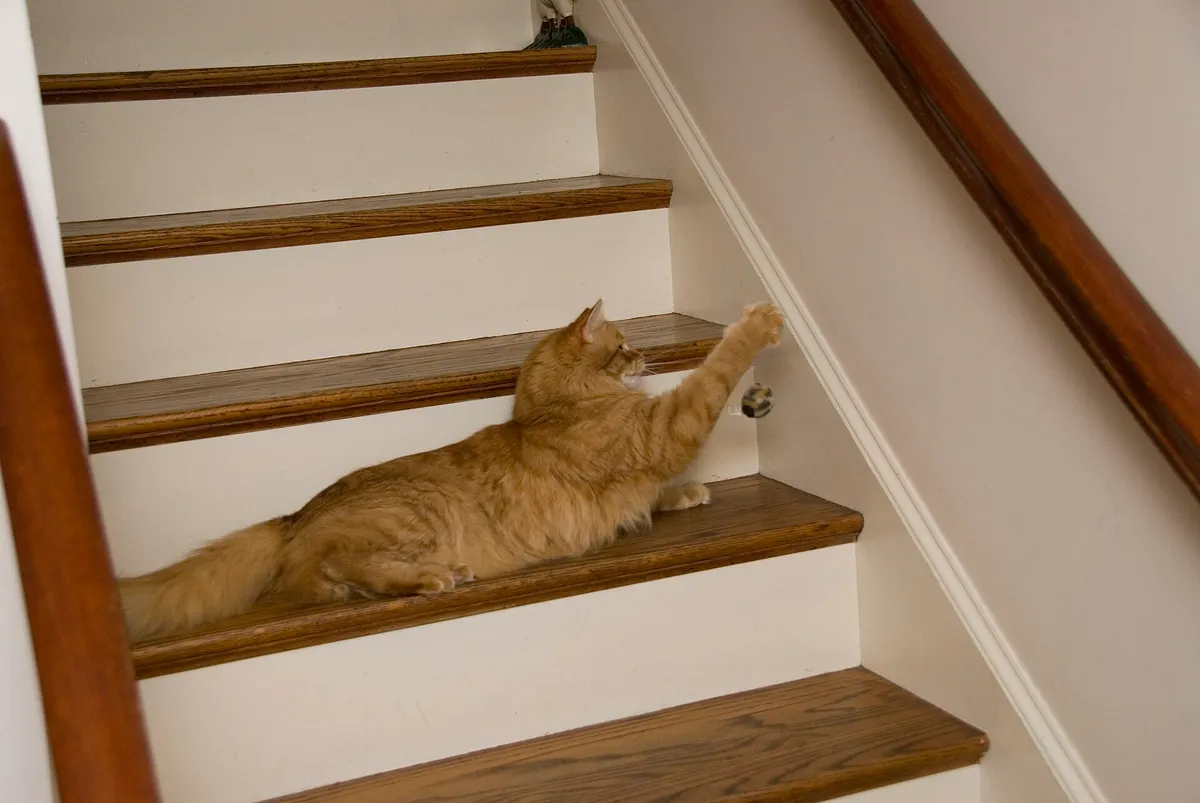
Frustration and anticipation. A chirp can also appear when the cat cannot reach the object of interest. Being separated by glass is frustrating, and the sound may be the vocal part of that frustration. Some cats chirp at toys that are just out of reach, and a few chirp when you pull out the treat package.
Possible hunting mimicry. Animal behaviorists have noted that chattering sometimes resembles the jaw movement cats use to kill prey. No one knows exactly what cats feel in that moment, but a common theory is that chattering is a sign of high predatory arousal, a kind of "that's mine" announcement rather than a full attempt to communicate with you. It is a fascinating idea, but it remains a theory, not a proven fact.
Trill vs. chirp vs. meow
Cats use different sounds in different situations. The table below shows the main contrasts.
| Sound | What it sounds like | Typical moment | Likely message |
|---|---|---|---|
| Trill | Soft, rolling "mrrp?" with a rising tone | Greeting you, entering the room, leading you to a food bowl | Friendly greeting or "follow me" |
| Chirp | Short, high "eh-eh" or "peep" | Watching birds, staring at a toy, seeing prey out of reach | Excitement, curiosity, or mild frustration |
| Chatter | Rapid chirps with fast jaw clicks | Intense staring at birds, squirrels, or prey on TV | High predatory excitement; possible kill-bite rehearsal |
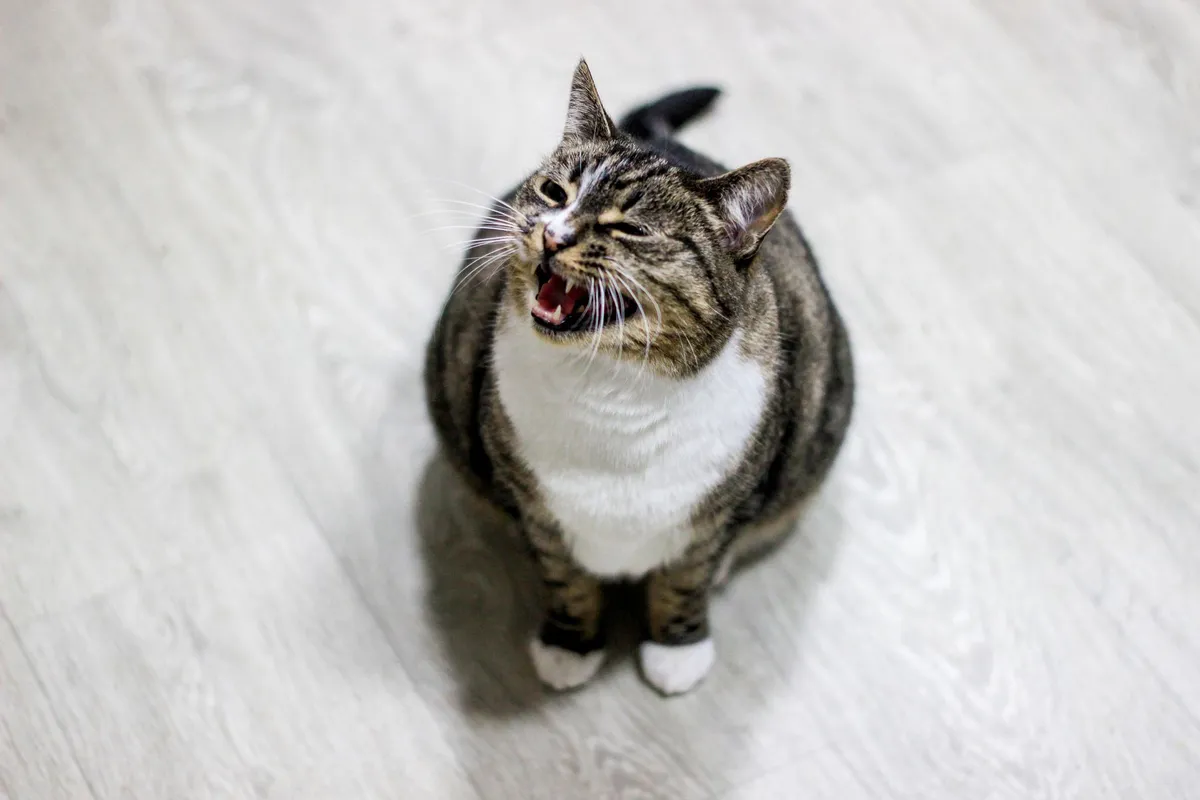
| Meow | Longer, open-mouth vocalization | Demanding food, asking to be let out, or trying to socialize | General request or complaint |
Should you ever worry?
Trilling and chirping are not symptoms of illness by themselves. Like people, some cats are simply more talkative than others. However, you should pay attention when your cat's voice suddenly changes, when vocalizing is accompanied by hiding, refusal to eat, labored breathing, or repeated distressed yowling. A sudden and lasting change in vocal behavior can be a signal that something is wrong.
If your cat was quiet and suddenly starts yowling day and night, or if a normally talkative cat goes silent, have a veterinarian check for pain, hearing loss, or other health problems. Vocal changes are not a disease, but they can be a clue.
How to respond to trills and chirps
The best response depends on what your cat wants. When they trill at the door, look and see: are they guiding you somewhere? If so, you can follow, and thank them in a soft voice. Trills are invitations, not demands.
When your cat chirps at a bird, you do not need to do anything. Letting them watch from a window is good mental exercise, but if you notice obsessive staring, pacing, or frustration, you can redirect with a puzzle feeder, a wand toy, or a different window. The chirping itself is harmless and normal.
Talking back to cats is usually encouraged. Cats often trill again when you answer. Keep your voice low and calm, and notice the exact context. Over time, you will learn which sound means "hello," which one means "follow me," and which one means "look, a bird." Avoid punishing the sound; it is a greeting, not a behavior problem.
Frequently Asked Questions
Why does my cat trill when I come home?
It is a welcome-home sound. The trill is a holdover from kittenhood, when mother cats used a similar call to greet and guide kittens. Many cats use it instinctively as a friendly "I see you and I'm happy about it."
Does chirping mean a cat is angry?
Not usually. Chirping is most common during prey watching, and it reflects excitement, anticipation, or frustration at being unable to chase. Anger in cats sounds more like growling, hissing, or a loud yowl, and it comes with flattened ears or defensive body language.
Why does my cat chirp at the TV?
Many cats chirp at moving animals on screen because the motion triggers the same predatory response as a real bird or rodent. If your cat pounces at the television, that is the same instinct at work.
Is a trill the same as a purr?
No. A purr is a continuous low vibration produced in the larynx, while a trill is a short, pitched vocalization. Some cats purr and trill at the same time, especially when they are being petted, but they are separate sounds.
Do all cats trill?
No. Cats have unique vocal styles. Some trill constantly, some meow loudly, and others hardly speak at all. A quiet cat is not necessarily unhappy; they have simply found other ways to communicate.
Key Takeaway
Trills and chirps are normal, meaningful pieces of cat language. Trills are friendly greetings and gentle requests; chirps and chatters are the sound of a hunter watching something exciting. Listen to the situation, respond kindly, and let your cat talk as much as they like.
Share this guide
Help another cat parent find it.