The short answer
Cats sometimes sleep with their eyes open because of a thin "third eyelid" called the nictitating membrane and because much of a cat's sleep is light sleep. This habit is normal, harmless, and common. The membrane sweeps across the eye to keep it moist and protected, which lets your cat rest even when the outer eyelids aren't fully shut. So the next time you catch your cat staring at nothing with a glassy look, they're probably just enjoying a catnap.
The nictitating membrane: a built-in eye cover
The nictitating membrane is a movable fold of tissue that sits between the cornea and the outer eyelid. It's sometimes called the "third eyelid" because it slides out from the inner corner of the eye, like a windshield wiper, spreading tears and sweeping away dust. Cats, dogs, birds, and many other animals have this membrane. Humans have only a tiny leftover bit of it in the inner corner of the eye.
When a cat relaxes, this membrane can slide forward even when the outer eyelids remain slightly open. That explains why cats can appear to be sleeping with their eyes open: the eye surface is actually covered by a translucent grayish or pinkish sheet. The membrane lets a small amount of light through, which may help a cat stay alert to changes in light, but it still protects the eye from drying out.
The third eyelid is not a deliberate reaction. It moves reflexively, just like blinking. It can cover one eye more than the other, which makes it look as if a cat is holding one eye open to watch you while sleeping. In fact, it's just the position of the membrane plus a relaxed set of eyelids.
Because the membrane is translucent, it can look like a thin gray film sliding across your cat's eye. Many people first spot it when their cat is lying on their side, with one eye slightly open and the membrane just barely covering the pupil. If you watch for a few seconds, you'll usually see it slide back when the cat becomes aware of you. This movement is smooth and fast, so your cat isn't in any distress.
Cats spend a lot of time in light sleep
Cats are famous for sleeping long hours, often 12 to 16 hours a day. But not all sleep is the same. Like humans, cats go through a light sleep stage and a deeper sleep stage. Cat sleep cycles are much shorter than human ones, so cats drift in and out of light sleep dozens of times over the course of a day.
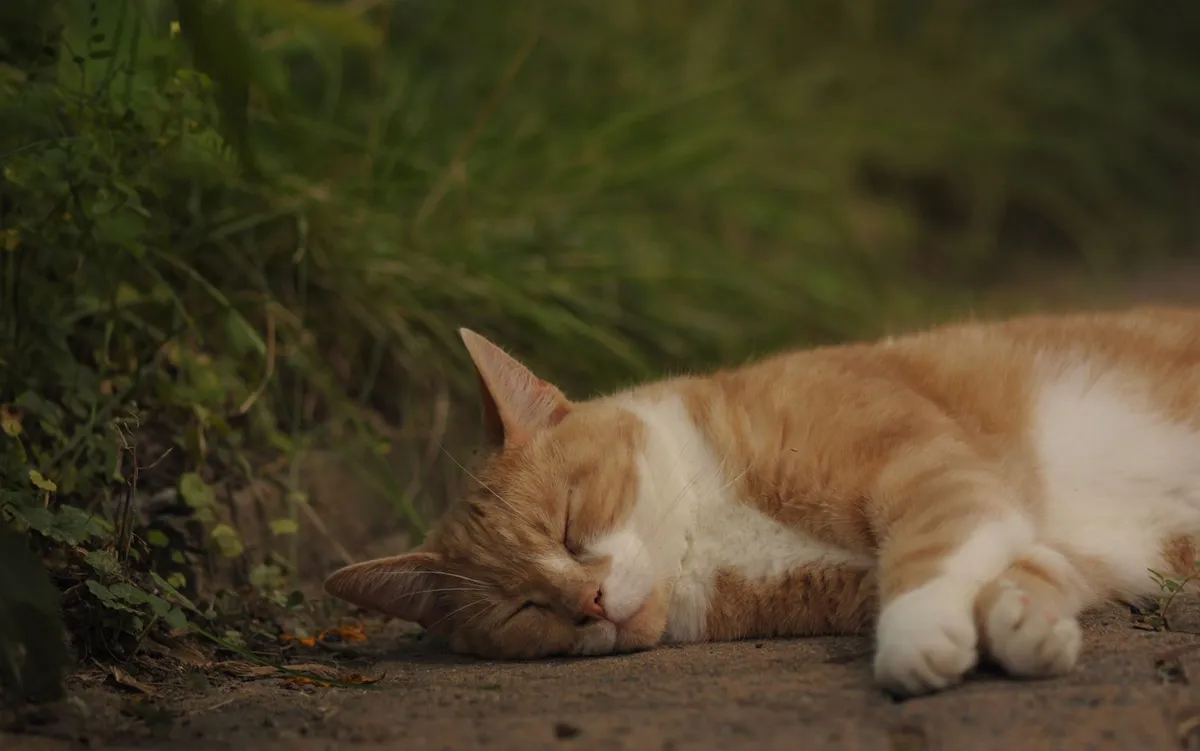
Light sleep is the stage where the open-eye look is most likely to happen. The body is still slightly on guard. The ears may swivel toward sounds, the tail may twitch, and the eyes may stay partly open. If the nictitating membrane slides across the eye during light sleep, the result is that familiar "sleeping with eyes open" appearance.
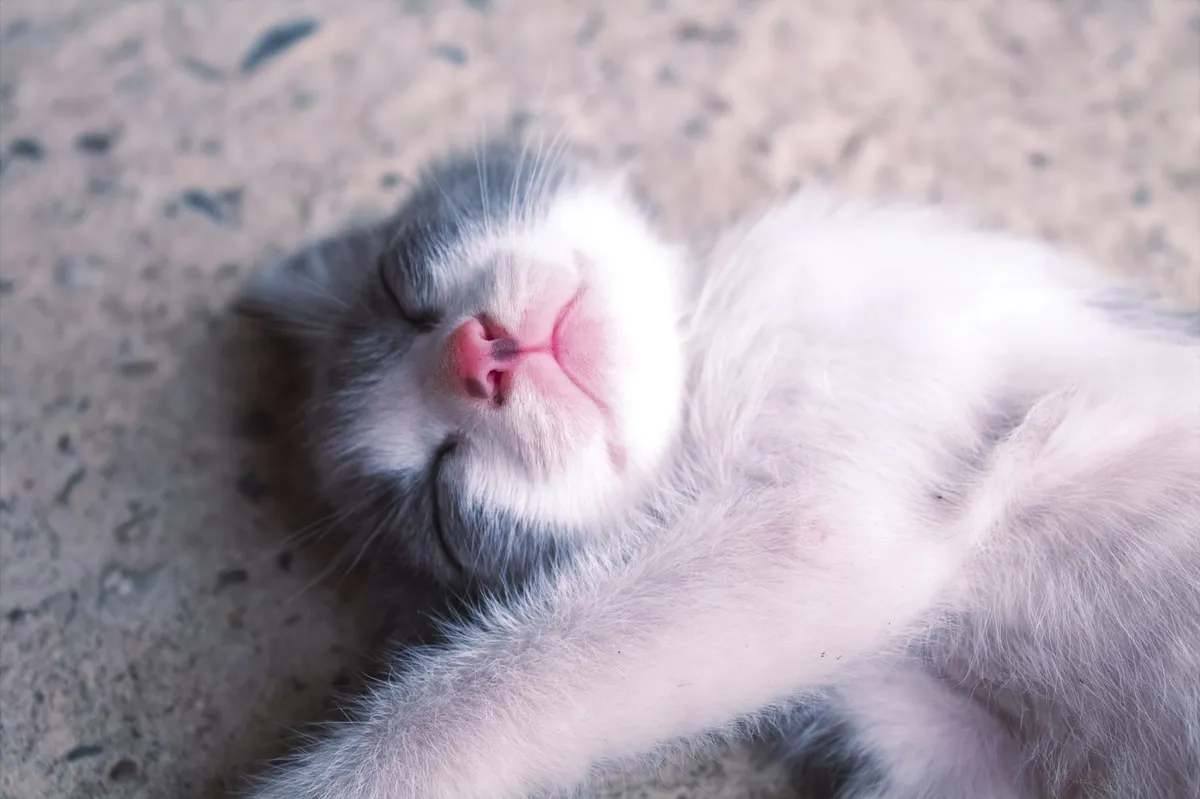
Deeper sleep usually comes a bit later in the cycle. That's when cats look fully flopped, with their eyes tightly shut, and sometimes twitching paws, moving whiskers, or making small sounds. When you see open-eyed sleep, it's usually a sign that your cat is in the lighter part of the cycle, not the deepest part.
How to tell if your cat is really asleep
Sometimes it can be hard to tell whether a cat with half-open eyes is awake or asleep. The table below shows a few clues:
| Cue | Light sleep / dozing | Deeper sleep |
|---|---|---|
| Eyes | Partly open, third eyelid may be visible | Fully closed |
| Ears | Twitch toward sounds | Still or occasional flick |
| Body | Crouched or stretched but slightly firm | Floppy and relaxed |
| Breathing | Steady, slow, easy to miss | Slower, with belly movement |
| Reaction to a quiet sound | Eyes open more, ears rotate | Slow to wake, may not move |
If your cat is breathing slowly and evenly, shows no tension in the face, and wakes easily when you crinkle a treat bag, they are almost certainly in a normal light sleep. There is no need to touch the eye or close the lid for them. The eye stays safe under the nictitating membrane.
Never touch or try to close a cat's eye during sleep. A sudden touch near the eye can startle the cat and cause a scratch reflex. Let the third eyelid do its job.
When you might notice open-eye napping
Some situations make open-eyed sleep more noticeable. Cats settling into a new home often do it more often because the environment is unfamiliar and they want to stay aware of sounds and movement. If you have just brought home a new cat, you may see this in the first few days — it's normal. Our new-cat-owner-checklist guide can help you make a calm space where they can rest.
You may also notice it during sunny window naps. The bright light makes the outer eyelids feel heavy, but the cat might still want to watch the world. The third eyelid then acts like a soft pair of sunglasses, reducing brightness while still allowing some vision.
Another common moment is right after a burst of play. A kitten will sprint across the room, stop, and then drop into a sprawled nap with eyes open for a minute or two. As breathing settles, the eyelids slowly close and the cat slides into deeper rest.
Older cats may also doze with a half-open stare, especially in their favorite sunny spot. This is all part of ordinary cat behavior. There is no special "one-eye-open guard mode" in cats; unlike some marine mammals, cats don't switch half of their brain off and leave the other half awake. It simply looks that way because the third eyelid can cover one eye while the other lid is drooped.
Why this is nothing to worry about
The reason this behavior evolved is simple: protection. Cats that sleep in the open benefit from a way to keep their eyes moist without closing both lids completely. The nictitating membrane spreads the tear film, clears light dust, and keeps the surface of the eye comfortable. That's why "sleeping with eyes open" is not a sign of stress, illness, or a behavior problem.
Many owners worry because a half-open eye looks uncomfortable. But the third eyelid prevents the eye from drying out, and the outer lid remains relaxed rather than strained. The cat's face often appears soft and peaceful. If your cat seems relaxed, breathes normally, and responds normally when awake, the open-eye nap is doing its job.
So when should you notice it? Only to appreciate it. If the open-eyed look happens when your cat is resting and the eyes look clear and normal when they are awake, there is nothing to change. The membrane may also show up during grooming or when a cat is deeply relaxed and being petted — again, normal.
If you ever have a question about your cat's eyes while they are awake, a regular check-in with your veterinarian is always a good idea. But the simple act of sleeping with eyes open, by itself, does not require treatment, correction, or worry.
Frequently Asked Questions
Is it normal for cats to sleep with their eyes open?
Yes. Because cats spend so much time in light sleep and have a protective third eyelid, open-eyed napping is a common and normal behavior.
Should I close my cat's eyes while they sleep?
No. Leave the eye alone. The third eyelid is already keeping the eye moist, and a finger near a sleeping cat's face can startle them and lead to a scratch reflex.
Why does my cat's eye look gray or pink when they sleep?
That's the nictitating membrane. It slides across the eye to spread tears and filter bright light. It's the same inner eyelid that is visible on dogs and birds.
Can cats sleep with one eye open?
It can look that way, but cats are not known to sleep with one half of their brain at a time like dolphins. The third eyelid can cover one eye more than the other, which makes a one-eyed nap look real.
Do kittens sleep with their eyes open more than adults?
Kittens have shorter sleep cycles and tend to flop from play straight into a doze, so the half-open phase is easy to spot. It's just as normal in kittens as it is in adult cats.
Key Takeaway
Cats sleep with their eyes open because a built-in third eyelid — the nictitating membrane — keeps the eye safe and moist while they doze in a light sleep phase. It's a normal cat behavior, not a sign of trouble. So when you see that glassy, half-lidded stare, let your cat be. The best response is a quiet smile and a reminder that cats are simply the world's most efficient nappers. If you're looking for more ways to support your cat's natural habits, try our feline-enrichment guide.
Share this guide
Help another cat parent find it.