The short answer
Your cat isn't possessed, and it isn't practicing for a Halloween costume contest. That comical move — arched back, puffed tail, stiff legs, sideways skitter — is one of the most recognizable routines in feline body language. Cats do the "crab walk" for three main reasons: they're flooded with playful energy, they've been startled by a sudden noise or movement, or they're faking out a target before a pounce. The behavior is wired in from kittenhood, when it helped young cats practice the footwork of hunting. Most of the time, it's an invitation: "Let's play."
What the Halloween crab walk actually looks like
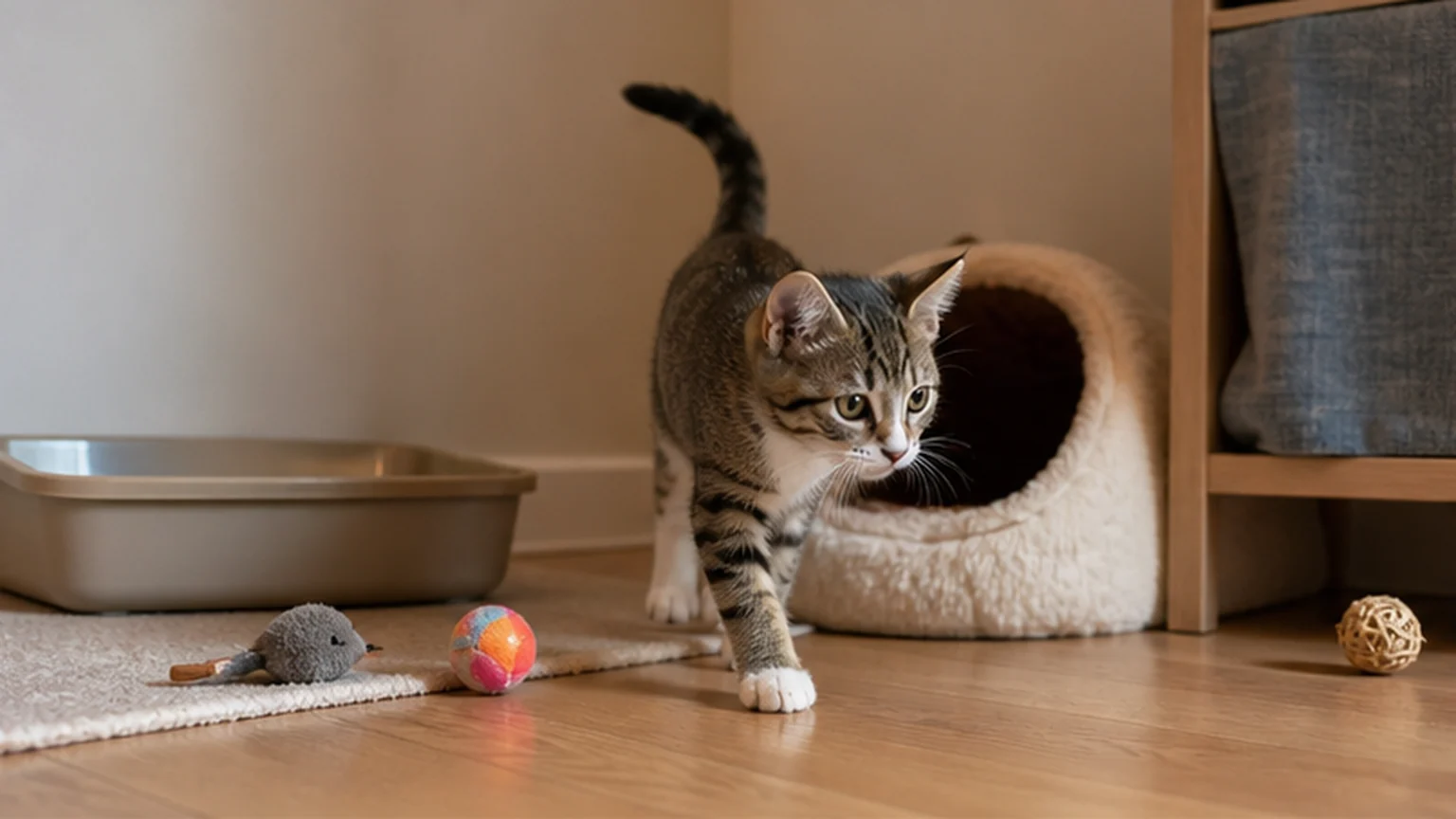
Picture this: the cat turns its body sideways, arches its back into a soft upside-down U, and every hair on its tail and spine stands on end. Its legs stay stiff, and it bounces or skitters sideways in little hops — sometimes in a circle, sometimes in a zigzag aimed at you. The tail is often straight up and puffed, making the cat look twice its size. Some cats add a chirp or trill; others stay silent and watch your reaction.
The effect is theatrical enough that owners have dozens of names for it: the crab walk, the Halloween pose, the side-hop, the "thriller dance." The arched back and raised fur are the same tricks a frightened cat uses to look bigger — which is exactly why this move can seem both hilarious and slightly confusing. The way to tell what it means is to read the rest of the cat, not just the arch.
Why cats do it: the three big reasons
1. Play arousal. The most common reason is simple excitement. Playful arousal floods the nervous system, and the sideways hop is one way that energy gets released. It's a mock-fighting posture borrowed from kittenhood, and it often appears seconds before a playful pounce. When a cat does it facing you with ears up and tail high, it's saying, "Let's wrestle."
2. The startle reflex. A sudden noise, an unexpected movement, or a door slamming can trigger a reflexive sideways leap. All four paws leave the ground at once, the back arches, and the fur puffs up. This is a flinch-and-turn move: the cat springs away from the trigger while swinging around to face it. In this version, the hop lasts a second, and the cat settles immediately after.
3. The pre-pounce fake-out. Watch a cat stalking a toy and you'll sometimes see it approach sideways in little arcs. Moving sideways keeps the claws ready while confusing the "prey," which can't tell exactly where the attack is coming from. In the wild, this shuffle helps cats land the first strike. Indoors, it usually ends with a dramatic pounce on a feather wand or a crumpled ball.
| Cue | What it looks like | Most likely meaning | Helpful response |
|---|---|---|---|
| Playful energy | Sideways hops toward you, ears up, tail high and swishing, maybe chirping | "Let's play!" | Start an interactive game with a wand toy |
| Sudden startle | One quick sideways leap, fur puffs, then settles quickly | Unexpected noise or movement | Stay calm and let the cat recover |
| Pre-pounce fake-out | Slow sideways shuffle toward a toy, eyes locked, hind legs coiling | About to strike | Let the cat enjoy the stalk before it pounces |
It's a kitten move that never really goes away
The sideways hop first appears in kittens at about three to four weeks old, once their legs are strong enough for bouncy, uncoordinated pounces. At that stage, littermates are the main play partners. A kitten hops sideways at a sibling, arches its back, and both tumble into a wrestling match that looks nothing like real aggression — no hissing, no flat ears, no claws aimed at faces. This is rehearsal. The side-hop teaches kittens to shift direction quickly and strike with both front paws, which is exactly what an adult cat needs when hunting.
The behavior is refined with age but never fully disappears. Adult cats — even seniors — still flash the crab walk when play arousal spikes. Indoor cats do it especially often because their "prey" is usually a toy, and they tend to carry surplus energy between play sessions. A cat that has napped all day may greet you with a sideways hop simply because the zoomies just kicked in. Think of it as a survival skill that got repurposed for fun.
When the crab walk means "back off," not "play with me"
Here's the catch: the same arched back and puffed tail can mean two opposite things. In a playful cat, everything stays bouncy and forward-moving. In a genuinely wary cat, the posture is serious advertising — "I'm bigger than I look, so don't come closer" — and the raised fur is driven by adrenaline.
So how do you tell the difference? Read the whole body, not just the arch.
| Signal | Playful crab walk | Defensive crab walk |
|---|---|---|
| Ears | Up and forward, or swiveling | Flat ("airplane ears") |
| Tail | High and puffed, swishing | Puffed but low, bristled, or tucked |
| Eyes | Soft, blinking, normal pupils | Dilated, hard stare |
| Voice | Chirps, trills, or silence | Growls, hisses |
| Direction | Hops toward you or a toy | Backs away, keeps you in front |
| After the move | Pounces, rolls, asks for more | Retreats or freezes |
The defensive version is common when a cat spots a strange cat through a window. The tail swells into a bottle brush, the legs stiffen, and the cat walks sideways along the sill in a slow, tense strut — very different from the upbeat bounce of the play version. If you see this, give the cat space. If outdoor cats are the trigger, close the blinds or move the cat to a quieter room.
How to respond: join in the right way
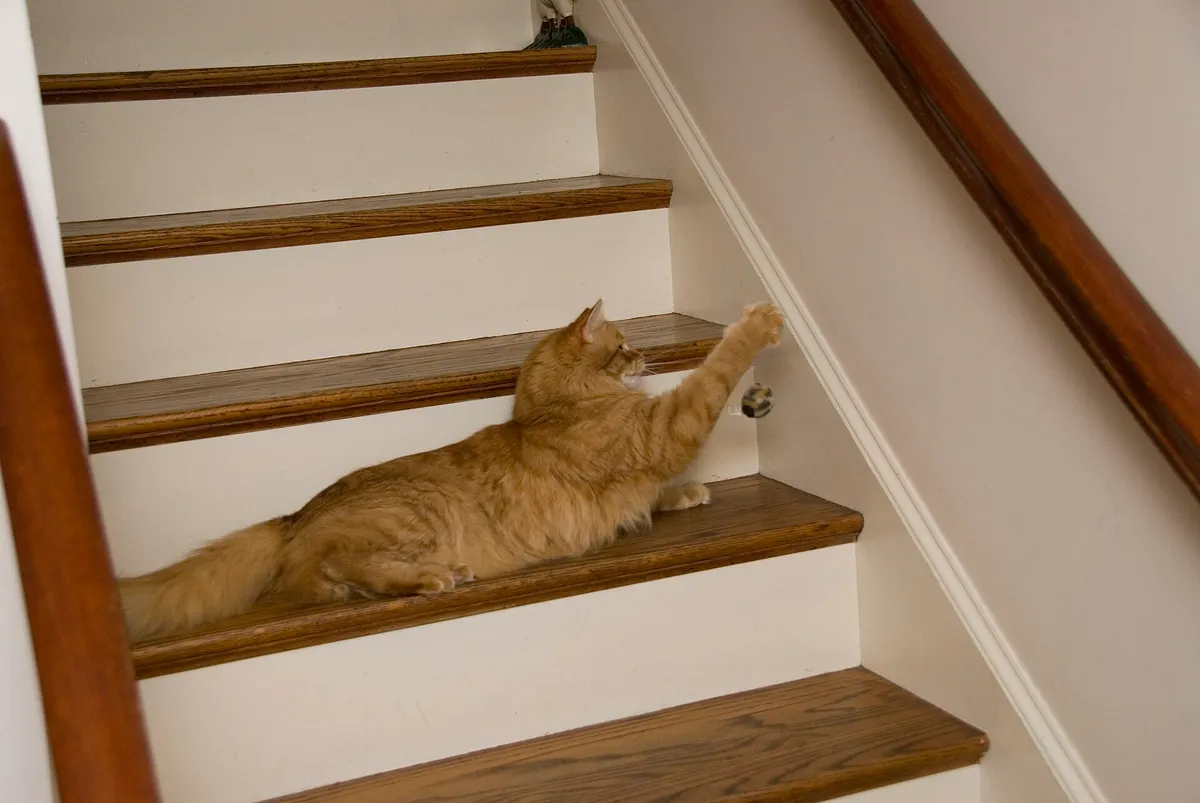
A great response to a playful crab walk is to say yes — with a toy, not with your hands. Wand-style teaser toys are ideal because they create small, erratic "prey" that darts sideways, exactly the movement your cat's stance is designed to follow. Let the cat catch the toy frequently; if every stalk ends in a miss, frustration builds and the cat may redirect its pounce to your ankles.
Structure play like a mini hunt. Let the toy skitter, allow the cat to stalk and side-hop to cut it off, then give it the kill — a satisfying pounce-and-grab. Follow up with a small meal or treat. In the wild, the sequence runs hunt, catch, kill, eat; closing the loop with food leaves a cat calm instead of keyed up.
A few ground rules:
- Never use hands, feet, or dangling fingers as play targets.
- If the crab walk becomes a pounce on your ankles, don't yell or punish — stop moving, end the session, and walk away.
- Offer two or three short interactive play sessions a day; a bored cat turns everything, including you, into a toy.
- For more play and enrichment ideas, see our feline enrichment for indoor cats.
If your cat crab-walks and then bites, bunny-kicks, or scratches during play, that's normal play aggression aimed at the wrong target — not meanness or revenge. Never punish or restrain the cat; that can turn playful arousal into genuine fear and make things worse. End the session, wait a few minutes, and restart with a wand toy that keeps your hands well away. If a normally relaxed cat suddenly becomes defensive, hissing, and hiding, give it space — stress and pain can both trigger this, and a veterinary check-up is a reasonable next step.
Frequently Asked Questions
Do all cats do the sideways hop?
Not all, but it's common in kittens and young adults, especially during high-arousal play. Some cats keep the full theatrical version for life; others mellow into a low-key shuffle before pouncing. Both are completely normal.
Is the crab walk a sign my cat is scared?
Usually not. In everyday play, you'll see chirping, forward ears, a high swishing tail, and hops that move toward you. The scared version looks different: flattened ears, a low puffed tail, hissing or growling, and the cat backs away instead of bouncing in.
Why does my cat do it when I walk in the door?
Because you've just triggered classic greeting-turns-to-play excitement. Your arrival is the most exciting thing that's happened since the last nap, and the sideways hop is an invitation to convert that energy into a game. Say hello calmly, then offer a toy.
Should I stop my cat from doing it?
No — the crab walk is harmless and natural. Instead of stopping it, aim it: redirect the energy toward wand toys so the pounce lands on prey-like objects rather than on your hands and feet.
Why does my cat do the crab walk in the middle of the night?
Cats are naturally most active at dawn and dusk, so a surge of sideways hopping after midnight usually means stored hunting energy. A longer interactive play session before bed, finished with a meal, helps shift that burst to an earlier hour.
Key Takeaway
The Halloween crab walk is one of your cat's most expressive moves. Usually it's a burst of play arousal — a leftover kitten habit that says "let's hunt and wrestle together." Sometimes it's a startled flinch. Occasionally it's a genuine "stay back." The secret is to never judge from the arched back and puffed tail alone: look at the ears, the tail, the voice, and the direction of the hop. A playful crab walk deserves an enthusiastic round of wand-toy chase. A fearful one deserves space. Either way, the sideways hop is a reminder that your cat is a small predator with big instincts — and a flair for the dramatic.
Share this guide
Help another cat parent find it.