The short answer
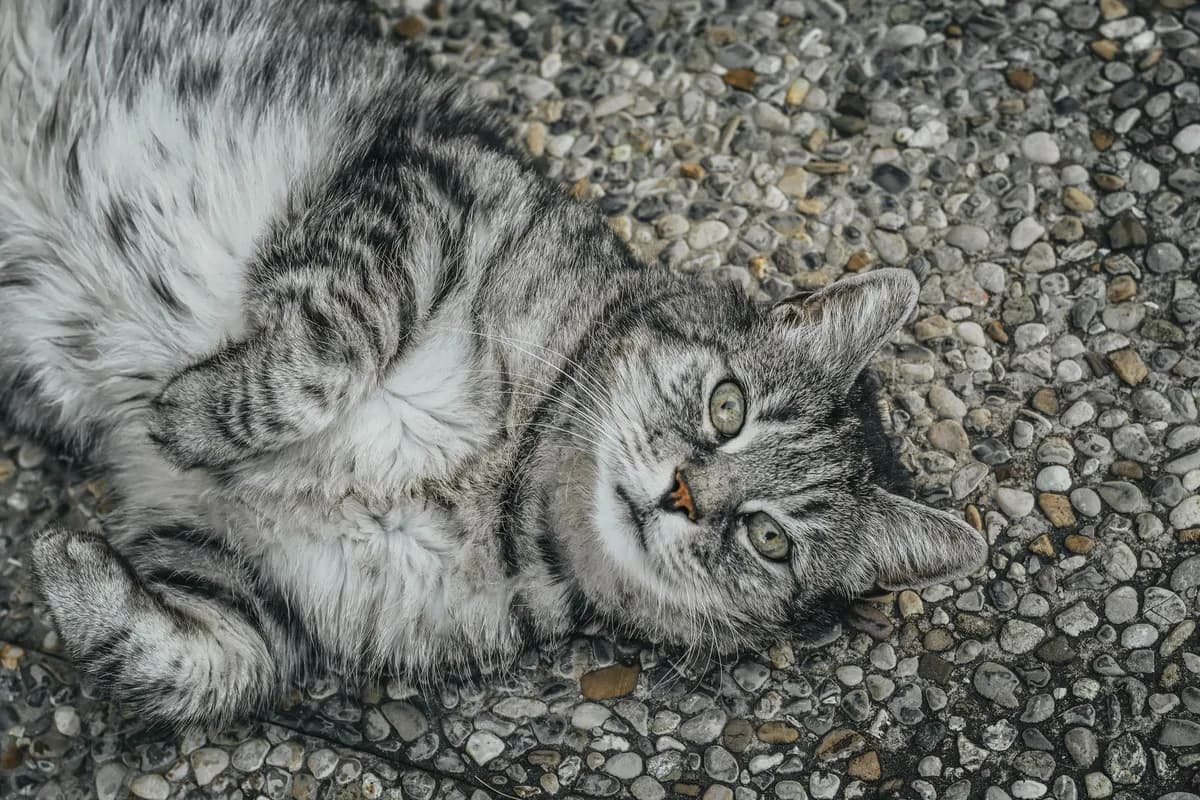
Cats roll on the ground for many overlapping reasons, and the same roll can mean different things on different days. Most often, rolling is communication: it presses the scent glands around a cat's cheeks, chin, forehead, paws, and tail against the surface, leaving a message for other cats. It also mingles the cat's own smell with the space, which is a normal way cats claim and feel secure in their territory. At other times, a roll is about physical comfort — cooling off on a cool floor, warming up in a sunny patch, stretching out stiff muscles, or scratching an itchy back. Some cats roll as a play invitation, and some roll purely because they feel safe and happy. The best way to understand a roll is to read the context: where it happens, when it happens, and what the rest of the cat's body is doing at the same moment.
Rolling is scent talk, not showboating
Cats live in a world that runs on smell. They have sebaceous (scent) glands on their cheeks, chin, forehead, paw pads, and the base of the tail. When your cat flops down and rubs those areas against the floor, they are leaving chemical notes that other cats can read long after the roll is over. In a multi-cat household, this is how a shared family scent is built: cats rub on furniture, on each other, and on you to keep the home smelling like one group. Your cat rolling on your freshly folded laundry is not being careless — they are blending your scent with theirs, which is a gesture of closeness.
Outdoor and adventurous cats also roll to collect interesting smells from the environment. A patch of grass, warm dirt, or pavement carries a world of information about neighbors, wildlife, and weather. The classic example is catnip: the plant releases chemicals that many cats find intensely pleasurable, and rolling spreads the scent over their fur. Some experts think the cat is effectively perfuming itself so the pleasant smell travels with the cat. The precise reason is not proven, but the pleasure is obvious.
The comfort roll: temperature, stretch, and itch
Watch where the roll happens. In July, cats often roll onto a cool tile floor or bare concrete, pressing the thinly furred belly and armpits against the surface to release body heat. In January, the same squirming motion might happen in a warm sunbeam, letting the body warm up like a pancake in a skillet. Rolling doubles as a whole-body stretch. The slow twist-and-arch motion helps loosen muscles after a nap, the way a morning stretch does for you. And when a cat has an itch the back claws cannot reach — the middle of the back is a classic blind spot — the floor becomes a handy scratching ridge. A relaxed, slow roll followed by a happy prance is usually just your cat feeling great in their body.
Play, trust, and the famous belly trap
Cats often roll at the edge of play. A kitten learns early that tumbling onto one side is part of the game, and many adult cats keep the move. If your cat flops in front of you with bright eyes, tail tip twitching, and a toy just out of reach, they are likely inviting you to join in. Rolling also speaks to trust. Exposing the belly is a vulnerable position in the wild, so a cat who rolls near you is telling you they feel safe. That said, a belly on display is not a request for belly rubs. Many cats are belly traps: they show the tummy in trust, and then grab and bite if a hand dives in. That response is not spite or betrayal — it is a leftover hunting reflex and sensitive skin. The polite greeting is a chin or cheek stroke, and letting the cat rub against you first.
The hormonal chapter
In unspayed female cats, rolling is one of the classic signs of estrus, commonly called heat. A female in heat may roll dramatically, rub her face on furniture, yowl, act more affectionate, and assume a crouching posture. The rolling spreads her scent and advertises her readiness. Male cats who smell a female's signal may also roll on the spot to pick up the scent into their fur. None of this means a neutered or spayed cat will not roll — they absolutely do. Hormones are just one possible chapter, not the whole story.
A quick roll decoder
| The roll | Likely meaning | What else to watch |
|---|---|---|
| Slow sideways flop with relaxed ears and tail | Contentment and trust | Purring, slow blinking, relaxed posture |
| Head, cheek, and chin pressed against the floor while rolling | Scent marking | Happens near corners, furniture legs, or after a nap |
| Vigorous wiggle on a cool hard floor in warm weather | Cooling off | Hot day, tile surface, no panting expected |
| Slow arch-and-twist roll after waking | Stretching | Happens after a long nap, no distress |
| Sudden flop in front of you with a direct stare | Play invitation | Bright eyes, tail-tip flicking, maybe a toy nearby |
| Rolling with loud calling and extra affection | Heat (intact female) | Loud yowls, crouching posture, only in unspayed females |
| Constant rolling plus biting at the back or tail | Itch or skin irritation | Fleas, scabs, bald patches, greasy fur — see a vet |
When a roll deserves a second look
Almost every roll is a normal, healthy behavior. But rolling is also how a cat scratches an itch, and an obsessive roll is a different story. If your cat rolls constantly, bites and scratches their own skin, has bald patches, scabs, dandruff, or a strong odor, the underlying problem may be fleas, an allergy, or ear discomfort. Similarly, if a senior cat starts rolling with obvious stiffness, pain, or trouble getting up, a vet visit is worth it.
A roll here and there is beautiful, normal cat language. See your vet if your cat rolls obsessively while biting at their back, tail, or paws; if patches of fur are missing or the skin looks red, scabby, or greasy; or if the rolling is paired with yowling, difficulty moving, or other symptoms. The roll is not the problem — an itchy or painful body underneath might be.
Frequently Asked Questions
Why does my cat roll on the floor when I come home?
Your cat is greeting you with scent. You come in carrying the day's smells — food, other animals, the outdoors. Your cat rolls and rubs across the path of those smells to blend them into the shared home scent. It is a welcome, and honestly a compliment.
Why does my cat roll on the ground after eating?
Many cats do a slow, satisfied roll after a good meal. A full belly, a stretching back, and a feeling of safety combine into a happy wiggle. Sometimes it also works out the stiffness of a long crouch over the food bowl.
Why does my cat roll in dirt or on pavement?
Cats roll on soil, mulch, and concrete to pick up environmental smells, to cool down on a warm day, and to scratch a persistent itch on a firm surface. In summer, check the pavement first with your own hand — if it is too hot for your palm, it is too hot for a cat's back.
Does rolling on the back mean my cat wants a belly rub?
Not necessarily. Rolling over signals trust, but many cats would rather have a chin or cheek stroke. Watch the tail and ears, reach slowly, and let your cat bring their head to your hand first. If a paw comes up, that is your cue to stop.
My cat rolls and then bites my hand — are they mad at me?
No. The grab-and-bite that follows the famous belly trap is a leftover hunting reflex, not an insult. Cats do not hold grudges about belly rubs; they simply switch into predator mode for a second. Learn the cue, and the snappy response is easy to avoid.
Key Takeaway
When your cat rolls on the ground, you are watching a little symphony of purposes: scent writing, stretching, cooling, playing, and trusting — sometimes all in one motion. Cats are efficient, and one good roll can announce that they live here, that they feel comfortable, and that it is time to play all at the same moment. Read the whole scene — the time of day, the surface, your cat's ears and tail — and let the roll be itself. Reserve worry for obsessive rolling teamed with itching, hair loss, or pain. Every other roll is simply your cat living their best cat life and letting you peek into their world.
Share this guide
Help another cat parent find it.