The short answer
Cats go crazy for catnip because of a single chemical called nepetalactone, which fits into scent receptors in their nose and briefly triggers the brain's pleasure and play systems. About two-thirds of adult cats carry the gene that makes them respond, and the effect is harmless, temporary, and usually lasts between five and fifteen minutes. The reaction is not a hallucination or a sign of distress—it's a natural sensory response that many cats clearly enjoy.
What Is Catnip?
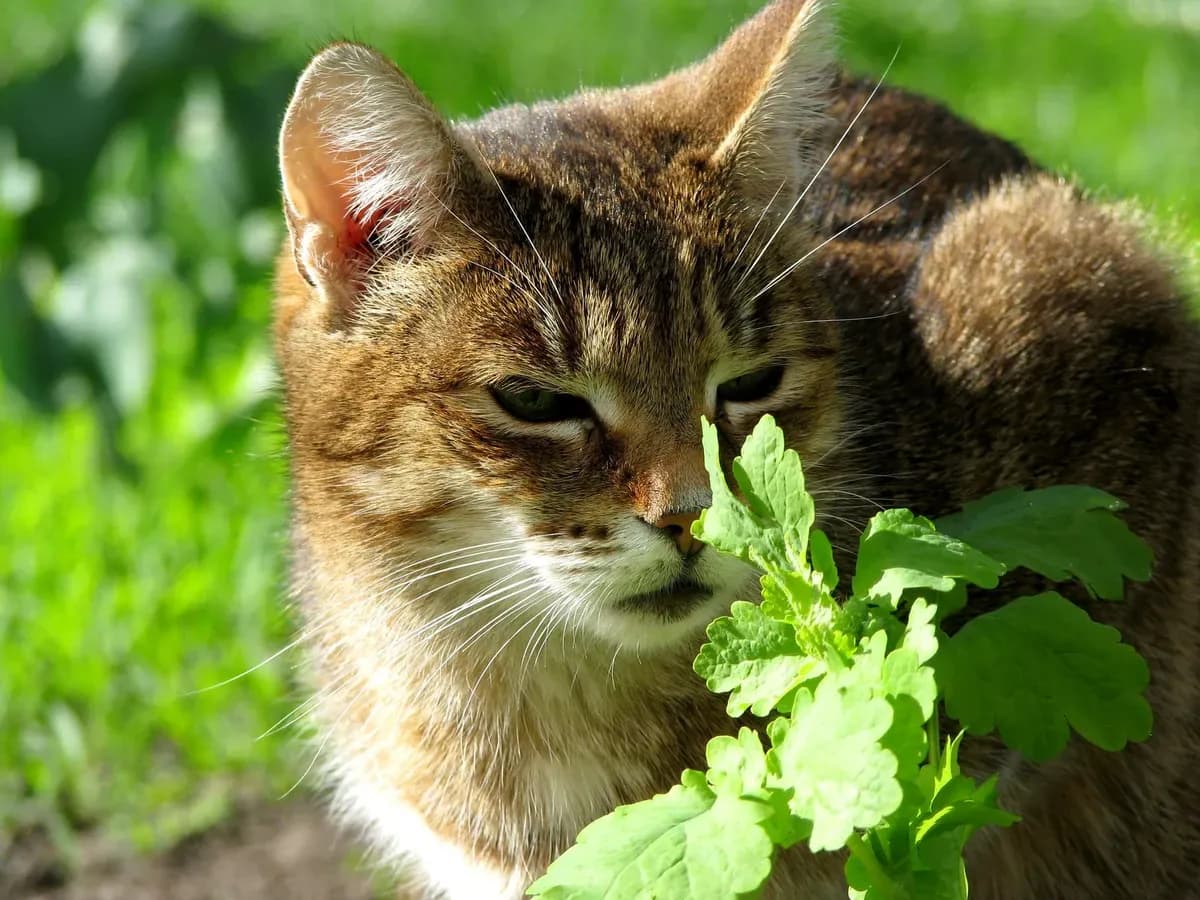
Catnip (Nepeta cataria) is a leafy, minty-smelling herb in the Lamiaceae family. It grows wild in dry, grassy areas and is popular in cottage gardens because it is easy to grow and attracts pollinators. The plant is also known as catmint, and it has been cultivated for centuries for its useful oils. The leaves, stems, and flowers all contain essential oils, with nepetalactone being the most abundant and the one that cats notice. When you see a dried catnip product, the plant has been harvested and dehydrated to preserve those oils.
Catnip is also used in herbal teas for humans, but the feline reaction is unique: people usually don't feel the same surge of playfulness. The plant is completely safe for cats to sniff, lick, or eat in small amounts, and it's one of the most widely tolerated natural enrichment tools in cat care.
How Catnip Works
Catnip's secret is nepetalactone, a terpenoid that is released when the plant is crushed or disturbed. As a cat breathes in the scent, the chemical binds to receptors in the nasal lining, which send a signal to the olfactory bulb and then to areas of the brain that control emotion and hormone-driven behavior, including the amygdala and hypothalamus. Interestingly, cats must have an intact olfactory system; if their sense of smell is compromised, they may lose interest entirely.
The result is a short-lived, euphoric feeling that often makes cats roll, purr, and dribble. The reaction is not a hallucination; it's a sensory response. It also doesn't happen when the plant is swallowed whole—eating catnip often has a mild calming effect instead. The intensity depends on the cat's genetics, the freshness of the plant, and the delivery method. Researchers have documented that the response wears off after about ten minutes, because the scent receptors become temporarily saturated, and it can take up to an hour or two before the same cat will respond again.
| What you might see | Why it happens | How long it lasts | | Rolling and cheek rubbing | Nepetalactone mimics natural chemical signals linked with contentedness | 5–10 minutes | | Vocals and purring | A comfortable, low-stress response to the brain's pleasure circuits | 5–10 minutes | | Chase-and-pounce play | The scent turns on prey-hunting instincts, but there's no real target | 10–15 minutes | | Drooling and squinting | Intense sensory engagement; normal and harmless | A few minutes | | Drowsy calm afterwards | The “reset” as the chemical signal fades | 15–30 minutes |
Why Some Cats Don't React
If your cat yawns and strolls away from a pile of fresh catnip, don't worry. The ability to respond to nepetalactone is inherited as an autosomal dominant gene, meaning a cat only needs one copy to be a responder. Roughly 50 to 70 percent of cats carry it. The remaining cats simply lack the gene and will never show the classic reaction—no matter how premium the catnip is.
Age matters, too. Kittens under six to eight weeks are usually unresponsive because their neural circuits are still developing, and some cats don't “switch on” until a few months later. Senior cats may gradually lose interest, especially if their sense of smell declines. Remember that the response is also temporary: if you give catnip every day, your cat may appear unimpressed because their nasal receptors are already saturated.
If your cat previously loved catnip and suddenly stops, check the product's freshness. Stored incorrectly or kept for more than a year, dried catnip loses its volatile oils and its power to excite. Try crushing the leaves, switching to fresh growth, or using a commercial spray with concentrated nepetalactone.
How to Offer Catnip
There isn't one “best” method; every cat likes a different delivery. Some cats enjoy batting a loose leaf, while others prefer a stuffed toy or a small mound on a scratch pad. A common trick is to sprinkle a pinch of dried catnip inside a paper bag or cardboard box—it already has the hiding and pouncing built in.
For a more intense experience, fresh leaves from a grocer or garden can be crushed so the oils release. You can also rub catnip on a scratching post to encourage marking behavior. Catnip will also last for months in the freezer if you want to keep it fresh. However, avoid overdoing it. The effect lasts only a short time, and cats build a temporary tolerance, so a small amount is enough. Use catnip as a training aid or occasional enrichment treat rather than a daily routine, and store leftovers in an airtight container in a cool, dark place to keep the oils stable.
Catnip is also a great social tool. Offer it during a one-on-one play session, or place separate piles if you have multiple cats so there's no competition. If a cat (or you) isn't a fan, try alternatives like valerian root or silver vine, which can have similar effects in some nonresponders.
Is Catnip Safe for Cats?
Yes. Catnip is safe for cats to sniff, rub against, and eat. There is no evidence that the plant or its oil causes organ damage, addiction, or long-term behavior problems. Some cats may eat a lot of leaves and later have mild, temporary digestive upset, but that is the same as eating any plant you're not used to. The plant has no known serious side effects, and the main rule is to keep the experience positive and voluntary.
The main practical safety concern is not the catnip itself but the way it's given. Check the label if you buy commercial products, and avoid catnip that contains added preservatives or pesticides. Wash fresh leaves thoroughly if you grow them indoors. And remember that while catnip is stimulating to some cats, it doesn't cause harm if your cat turns it down.
Because the “high” is short, you don't need to monitor your cat closely. Just make sure they have access to water, and set up the catnip in a place where they can jump, roll, and play without knocking over delicate items. If your cat is unusually sensitive and becomes frantic, simply pick up the toy and give them a quiet break. The effects will fade on their own.
Frequently Asked Questions
Why does my cat drool on catnip?
Drooling is a common, harmless response to the intense smell. It's a normal reflex that happens when cats are fully engaged with the scent, often while kneading or rubbing.
Can cats become addicted to catnip?
No. Catnip doesn't cause physical or psychological dependency. Cats may seek it out, but the response resets after a few hours and there are no withdrawal signs.
Is catnip safe for kittens?
Yes, it's safe, but most kittens don't react until they're at least six to eight weeks old. The response appears gradually as their nervous system matures.
How often can I give my cat catnip?
Once or twice a week is plenty. More frequent use isn't harmful, but it may reduce the dramatic reaction because the smell receptors become saturated for a while.
What if my cat doesn't care about catnip at all?
That's perfectly normal. About 30 to 50 percent of cats have no genetic response. Offer alternative plants like silver vine, or simply let your cat enjoy other forms of enrichment.
Key Takeaway
Catnip is a safe, natural plant that triggers a temporary feel-good reaction in most cats through a scent molecule called nepetalactone. The response is genetic, age-dependent, and completely harmless. By knowing how catnip works, you can use it as a simple, enjoyable enrichment tool that lets your cat play, roll, and relax on their own terms.
Share this guide
Help another cat parent find it.