The short answer
Cats loaf because the position is comfortable, warm, and reassuring. By tucking all four paws underneath their body, cats reduce heat loss, protect sensitive paw pads, and rest in a posture they can quickly leave. Loafing is a neutral behavior rather than a specific emotion, so a loafing cat may be on the verge of a nap, simply relaxing, or quietly keeping an eye on the room.
What is a cat loaf?
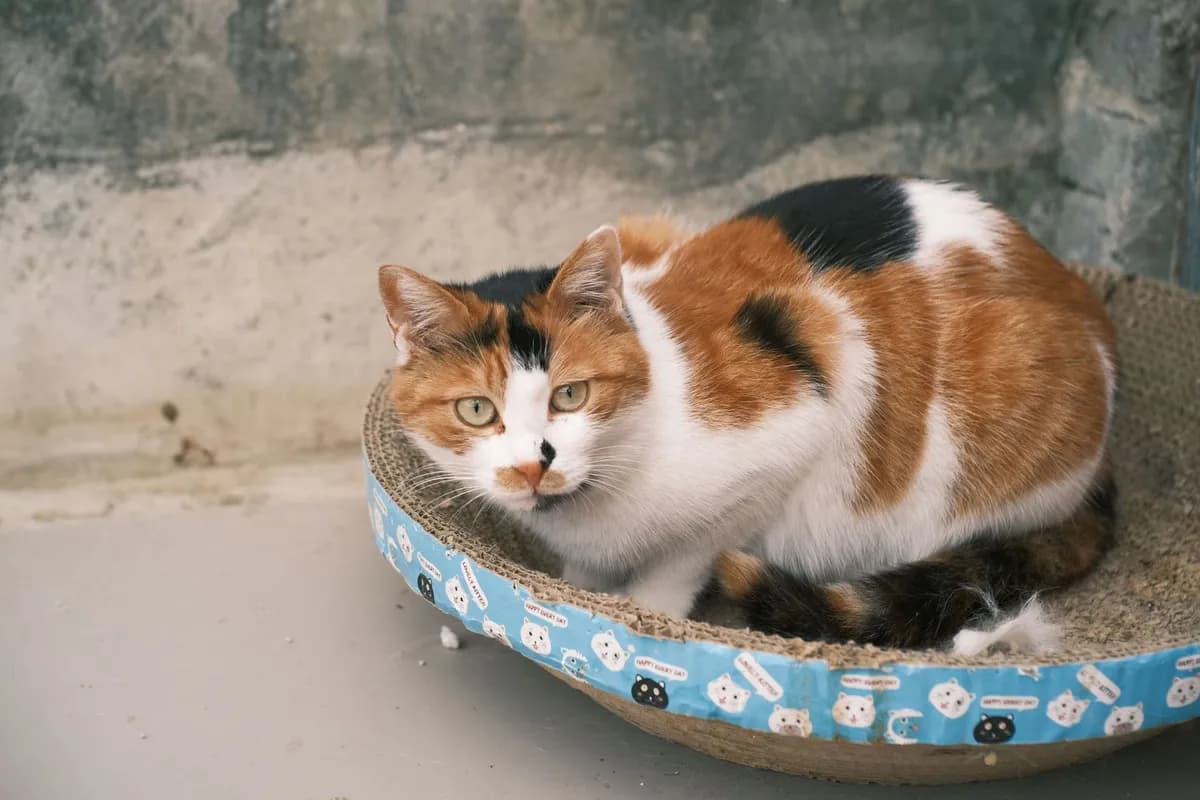
If you have ever spotted a cat who looks like a rounded rectangle with no visible legs, you have seen the loaf. In this natural resting pose, the cat sits or lies down while folding all four paws beneath the body. From above, the outline can look like a pan of dough, which is how the pose earned its nickname. The front paws may be neatly tucked under the chest, the back legs disappear into the side of the body, and the tail often wraps around the front. You might also see a variation called the "hover loaf," where the cat's front paws are slightly out, or a "faceplant loaf," where the head rests flat on the ground. Each variation is still a loaf as long as the body stays compact and the paws stay tucked.
Why do cats loaf? The main reasons
1. It helps cats stay warm
Cats are tropical animals by heritage and prefer temperatures many people find warm. Their normal body temperature sits around 100°F to 102°F, and losing heat from the ears, face, and paws uses up energy. Tucking the paws under the body shrinks the amount of exposed skin, helping the cat hold onto body heat. This is the same reason cats curl into a ball in winter: less exposed surface means less warmth escapes. On a chilly floor, the loaf also keeps the paw pads off cold tile.
2. It offers a sense of security
The loaf is a self-contained posture. The belly, throat, and internal organs are covered, and the paws are close to the body, ready to defend or flee if needed. This posture lets a cat relax without exposing its most vulnerable areas, which is why even confident cats may loaf in a familiar room, and why shy cats often loaf in a corner or under furniture while settling into a new home. Importantly, the loaf is not a sign of fear on its own; it simply offers a cat an easy way to feel protected while resting.
3. It allows quick movement
With all four limbs gathered beneath the body, a loafing cat is in a ready position. The hind legs are loaded under the hips, and the front paws can unfold quickly. A cat can burst from the loaf into a sprint, a pounce, or a jump in under a second. That makes the loaf a smart compromise between relaxing and staying alert, especially if there are other cats in the house, window birds to watch, or the possibility of a treat arriving in the kitchen.
4. It protects the paws
Cats have highly sensitive paw pads with many nerve endings. These pads also play a role in cooling because cats sweat from their footpads. On a hard floor, loafing keeps the pads covered and gives the feet a chance to warm up. Some cats also loaf on textured surfaces like blankets or rugs, where pressing down with the paws may feel soothing. In some cases, cats simply find the pressure and contact a pleasant sensory experience.
5. It is a common comfort position
After all of those benefits, the simplest answer may be that the loaf is just comfortable. Cats spend up to 15 to 20 hours a day resting, and they cycle through several postures: sprawling on their side, curling into a crescent, stretching out on their back, and gathering themselves into a loaf. The loaf sits somewhere between fully relaxed and fully alert, making it ideal for light sleep, afternoon sunbathing, or simply watching the household move by.
How to tell if a loafing cat is relaxed or tense
While the loaf is usually a comfortable position, a cat can also loaf when they feel wary. The key is to look at the rest of the body.
- A relaxed loaf often includes slow blinks, soft eyes, ears facing forward or slightly sideways, a tail wrapped calmly around the body, and relaxed whiskers. The cat's breathing will look slow and even.
- A tense loaf looks more rigid. The cat's eyes may be wide, the ears may be flattened to the sides, the back may feel stiff, and the tail may thump against the floor. The cat may also be watching a specific person, animal, or sound without breaking eye contact.
When you understand the difference, you can tell whether a loaf means "I'm settled" or "I'm staying ready."
What the loaf looks like next to other postures
To understand where the loaf fits into feline body language, it helps to compare it with other common resting positions.
| Posture | What it looks like | What it often communicates |
|---|---|---|
| Loaf | All four paws tucked, body rounded and compact | Resting, warming up, feeling safe, staying alert |
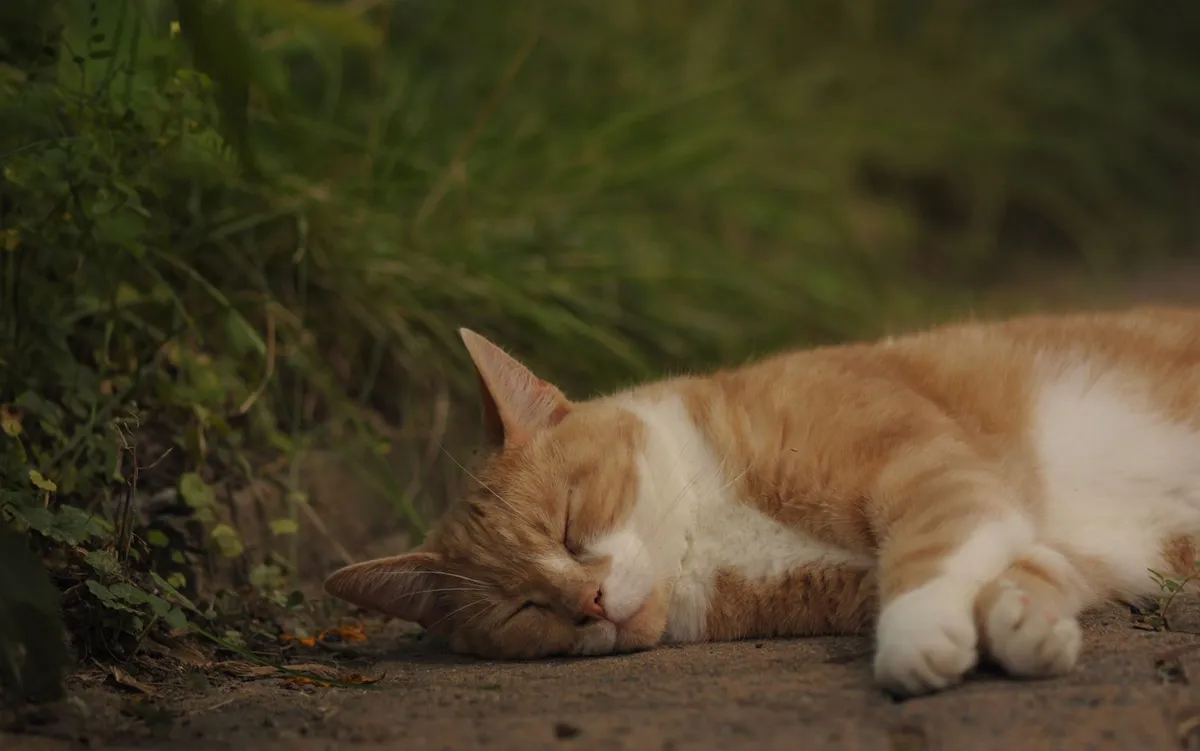
| Side sprawl | Lying flat on the side with legs extended | Deep relaxation, likely sleeping hard |
| Belly up | Lying on the back with belly exposed | Very comfortable in the environment; not an invitation to touch |
| Crouch | Body low, paws planted, eyes focused | Alert, preparing to pounce or move |
Belly exposure can be a sign of trust, but many cats dislike belly rubs, so a "belly up" cat is not always asking for one. The loaf is usually less vulnerable-looking than the belly-up position and more compact than the sprawl.
The loaf across cat cultures
Cat owners have given the position many playful names, but the science of the posture is simple. British cat charities, American veterinary centers, and feline behavior specialists generally agree that the loaf is a normal, low-stress resting position. While there is no formal catalog of posture meanings, the loaf's physical structure—paws hidden, core grounded—closely matches how cats naturally rest in safe environments. Its popularity in photos and internet culture only reflects how common it is in daily cat life.
Is loafing different for every cat?
There is no single "normal" amount of loafing. A relaxed cat might loaf several times a day, while another might prefer sprawling. Kittens loaf, adults loaf, and senior cats loaf, though older cats with joint discomfort may sometimes shift positions more often or avoid tucking their legs tightly. Temperature also plays a role: cats may loaf more in cooler rooms or during the winter months, and they may sprawl more in summer to release heat. Coat type can matter too; longhaired cats may tolerate heat differently than shorthaired cats, though every cat has their own routine and preferences.
When should you pay closer attention to a loaf?
In itself, loafing is never a reason to worry. But the way a cat loafs, and how often, can be useful information when considered alongside the rest of a cat's behavior. If a normally social cat suddenly starts loafing alone in a closet all day, stops coming for meals, or ignores things they used to enjoy, that change is more meaningful than the loaf itself.
Loafing is a normal posture, but behavior changes matter. If your cat seems unusually withdrawn, is sleeping far more than usual, or is no longer doing their normal routines, contact your veterinarian. You know your cat best, and an early conversation is always a safe step.
That said, a happy, alert cat who loafs on a sunny rug is just being a cat. You do not need to interrupt the loaf. In fact, many cats are perfectly happy to be gently respected while they sit in their compact position.
Frequently Asked Questions
Is a loafing cat always happy?
No. Loafing happens in many emotional states. A cat can loaf while deeply relaxed, while slightly stressed, or while simply waiting. It is better to read the whole body, including eyes, ears, tail, and environment, than to assume a loaf always equals happiness.
Why does my cat loaf but keep their eyes open?
When a cat loafs with eyes open, they are often resting while staying alert. The loaf makes it easy to pause and relax without missing what is happening around them. Slow, sleepy blinks suggest they feel comfortable, while wide, unblinking eyes can mean they are watching something closely.
Do cats loaf to show they trust me?
Not exactly. Loafing can accompany trust, but it usually has more to do with warmth and comfort. A cat who loafs beside you is sharing your space and choosing to rest near you, which is a positive sign. You can support that trust by keeping loud noises and sudden grabs away from them.
Why does my cat loaf on my chest?
Your chest offers a warm, slightly raised surface close to the heart, and the rhythm of your breathing is soothing to many cats. Tucking their paws while on a person creates the same sense of security a normal loaf provides, with the added comfort of your smell and warmth.
What is a "hover loaf"?
A hover loaf happens when a cat keeps their front paws slightly extended, so the paws remain visible instead of completely tucked. This is often a sign that the cat wants to switch from loafing to moving or interacting. It is still a normal resting variation.
Key Takeaway
The cat loaf is one of the most recognizable resting postures felines use. It combines comfort, warmth, protection, and readiness in one simple shape, and it usually means nothing more than a content or alert cat taking a pause. Instead of overreading the pose, let your cat's overall posture and daily habits guide you. If a loafing cat looks soft, breathes slowly, and accepts your company, they are very likely enjoying their afternoon in the most cat-like way possible: as a warm, quiet little loaf.
Sources & Scientific References (3)
Share this guide
Help another cat parent find it.