The short answer
Your cat is not trying to disgust you. When your cat drops a dead mouse, bird, or cricket at your feet, they are showing you a deep-rooted hunting instinct. Cats are solitary hunters by nature, and bringing prey to you is a normal, instinct-driven behavior, not a sign of spite or a 'present' in human terms. A kind, evidence-informed response is to stay calm, quietly praise your cat, remove the prey safely, and then focus on management and enrichment rather than punishment. Punishment does not reduce hunting behavior and can harm the relationship you share.
Why cats hunt: it's instinct, not spite
Domestic cats share a common ancestor with wildcats, and hunting is one of the most powerful behaviors in the cat behavioral repertoire. Even a well-fed, pampered house cat will chase, stalk, pounce, and sometimes kill prey. This is called prey drive, and it does not depend on hunger. In one classic study, cats that were fed a full meal still hunted for hours afterward. For cats, the chase and the capture are as rewarding as the food itself.
Cats are also opportunistic predators. They will hunt small mammals, birds, reptiles, and insects. Their hunting sequence is hardwired: stalk, chase, catch, kill, and sometimes eat. When a cat brings you the final result, they are often not thinking about sharing food. Instead, they may be looking for a safe place to eat, or they may be continuing a social pattern learned in kittenhood.
The 'gift' is about trust and teaching
Mother cats bring live and then dead prey to their kittens to teach them how to hunt. Adult cats do something similar with the humans they are bonded to. While researchers are not completely certain about the exact reason, the leading theories are:
- Teaching: Your cat may view you as a slower, less skilled hunter who needs a demonstration.
- Sharing: Cat colonies sometimes share food with close family members, and your cat may include you as part of their 'family group'.
- Safe eating: Your cat may want to bring the prey to a safe, familiar spot before eating, and your home feels safe.
None of these reasons include 'trying to annoy you.' Seeing the behavior as a sign of trust can change how you respond, even when stepping on a cold mouse at 6 a.m. is not your favorite way to wake up.
Why punishment doesn't work
Punishment is both ineffective and harmful. Cats do not learn well from punishment, especially when it comes to instinctive behaviors like hunting. If you scold, chase, or physically discipline your cat after they bring you prey, your cat won't understand the lesson; they may instead become fearful of you or of bringing things back. Punishment increases stress and can lead to other behavior problems like hiding, aggression, or inappropriate elimination. A kitten's natural instinct to hunt and pounce is not the result of a choice that your cat can reason about. The best approach is to interrupt the behavior calmly or simply prevent the opportunity.
How to respond without punishment
Here is a practical, step-by-step plan for when your cat brings you a dead animal:
- Stay calm. Take a slow breath and do not yell or run toward your cat, since that can trigger their prey drive.
- Speak softly. Say something gentle like 'good kitty' as you approach. This reassures your cat and keeps the interaction positive.
- Remove the prey safely. Use a paper towel, plastic bag, or a pair of gloves to pick up the animal. Never use your bare hands. For live animals, gently place a cardboard box or towel over it and slide a piece of cardboard underneath to trap it before moving it outside.
- Dispose or release appropriately. For dead animals, double-bag it and put it in the trash. For live animals, inspect from a distance; if the animal seems uninjured, release it near the spot where it was found, away from roads and cats.
- Wash your hands and any surfaces that touched the prey.
- Redirect the behavior with interactive play, a toss of a toy, or a treat for coming inside.
How to reduce the hunting drive
You cannot erase your cat's instinct to hunt, but you can redirect it into more appropriate outlets:
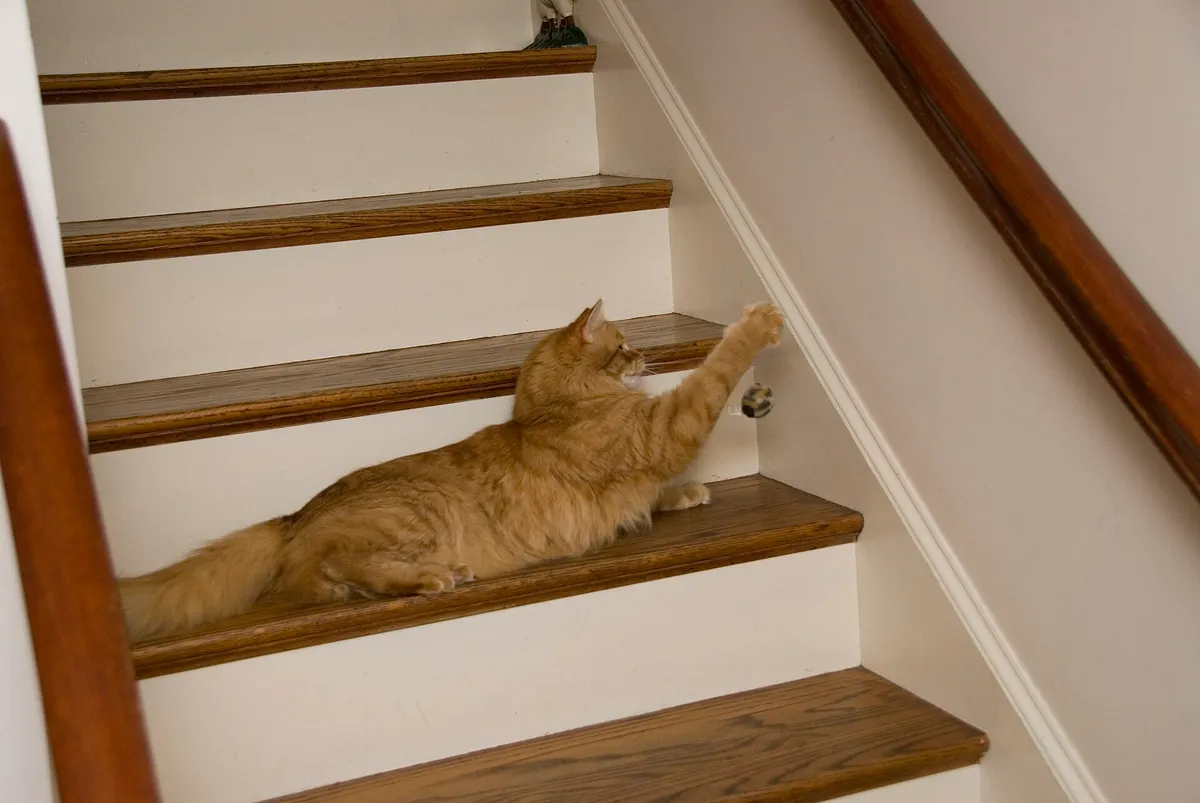
- Interactive play: Spend 15 to 30 minutes per day playing with a wand toy, letting your cat 'catch' the toy at the end of each session. This simulates the hunt from start to finish.
- Puzzle feeders: Make your cat work for food. Using puzzle feeders, treat balls, or food-dispensing toys lets your cat experience a hunting-like problem-solving activity at every meal.
- Catios and supervised time: If you want to let your cat enjoy the outdoors, consider a fully enclosed 'catio' or an outdoor enclosure. This gives fresh air and sunlight while keeping birds and small mammals safe.
- Indoor enrichment: Install cat trees, window perches, and hiding spots so your cat can satisfy their urge to climb, hide, and observe.
- Collar bells: A bell on a quick-release collar can warn prey and reduce successful catches, although evidence is mixed. Some hunters can learn to move without ringing the bell, so do not rely on it alone.
What not to do: common mistakes
| Do | Don't |
|---|---|
| Stay calm and speak gently | Don't yell, chase, or throw things |
| Praise your cat before removing prey | Don't rub your cat's nose in the prey |
| Use gloves or a bag to pick up prey | Don't grab prey with bare hands |
| Give your cat extra playtime and food puzzles | Don't reward hunting with a food treat |
| Keep your cat indoors or in a catio | Don't punish after the fact, it causes fear |
| Check with your vet about parasite control | Don't let your cat eat wild prey |
Keeping your cat safe, and wildlife safe too
Cats that roam outdoors face many dangers, including traffic, fights with other cats, and illness such as FIV or feline leukemia. They also have a significant impact on local bird and rodent populations. There is no shame in enjoying your cat's natural quirks, but you can manage hunting behavior to keep both your cat and local wildlife safer. A good compromise is a catio, supervised playtime in the yard, or a leash-and-harness walk. If your cat does catch something, call your vet to make sure their parasite prevention is up to date, since wild animals can carry fleas, roundworms, and other organisms.
If your cat brings in a dead or live animal, use gloves or a plastic bag to handle it and wash your hands afterward. Wild prey can carry parasites and diseases. Do not let your cat eat wild prey, and never use rodent poisons near your home, because a cat can be poisoned by eating a rodent that has consumed a poison bait. If you are unsure how to handle a live animal, contact a local wildlife rehabilitator.
Frequently Asked Questions
Why does my cat bring me live animals?
Cats sometimes bring live prey to a safe place so they can continue playing with or finishing the hunt away from perceived threats. This is normal, but you should still block the cat from reaching it and remove it calmly.
Will feeding my cat more food stop them from hunting?
No. Hunting is driven by instinct, not only hunger. Many well-fed cats continue to hunt because the chase and capture are very rewarding.
Is it okay to punish my cat for bringing animals?
No. Punishment does not teach your cat to stop hunting; it only makes them frightened of you. Positive management and redirection are much more effective and humane.
What should I do if I catch my cat with a live animal?
Stay calm. Confine your cat to another room, then use a towel or box to trap and remove the animal. Release it outside if it is uninjured, or contact a wildlife rehabilitator.
Does putting a bell on my cat stop them from hunting?
Bells can warn some prey and reduce the number of successful catches, but they are not reliable. Many cats can learn to stalk without ringing the bell, so combine a bell with other methods like supervised outdoor time.
Key Takeaway
When your cat brings you a dead animal, remember that it is an instinct-driven behavior rooted in trust and social connection. Punishment not only fails to stop the behavior—it damages your bond. Calm removal, safe handling, and a rich indoor environment are kind, effective ways to manage your cat's hunting drive. With patience and management, your cat can express their inner predator in ways that keep them happy and the mice out of your bedroom.
Share this guide
Help another cat parent find it.