The short answer
Cats arch their backs for a variety of reasons, ranging from a friendly greeting to a defensive posture. The arch itself is not a single message—it depends on the context, the rest of the cat's body language, and the situation. Sometimes your cat is simply stretching after a nap; other times, the same posture signals fear or an invitation to play. Learning to read the whole picture will help you respond appropriately and strengthen your bond.
Why do cats arch their backs?
The arched back is one of the most versatile postures in a cat's repertoire. Here are the most common reasons:
Stretching and waking up
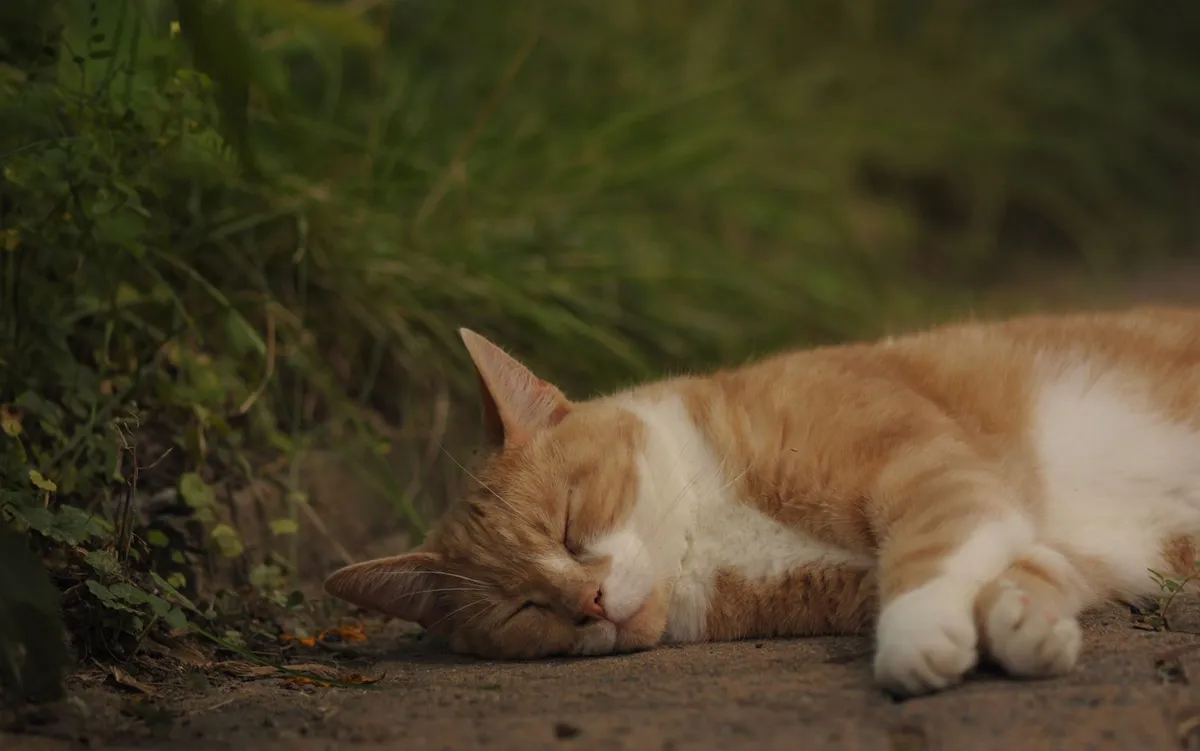
After a long nap, cats often perform a dramatic stretch that includes arching their back upward. This is a natural way to flex the spine, release tension, and get blood flowing. You'll often see a big yawn and a slow, deliberate stretch, followed by a relaxed tail and ears. This is a sign of comfort and well-being.
Greeting and affection
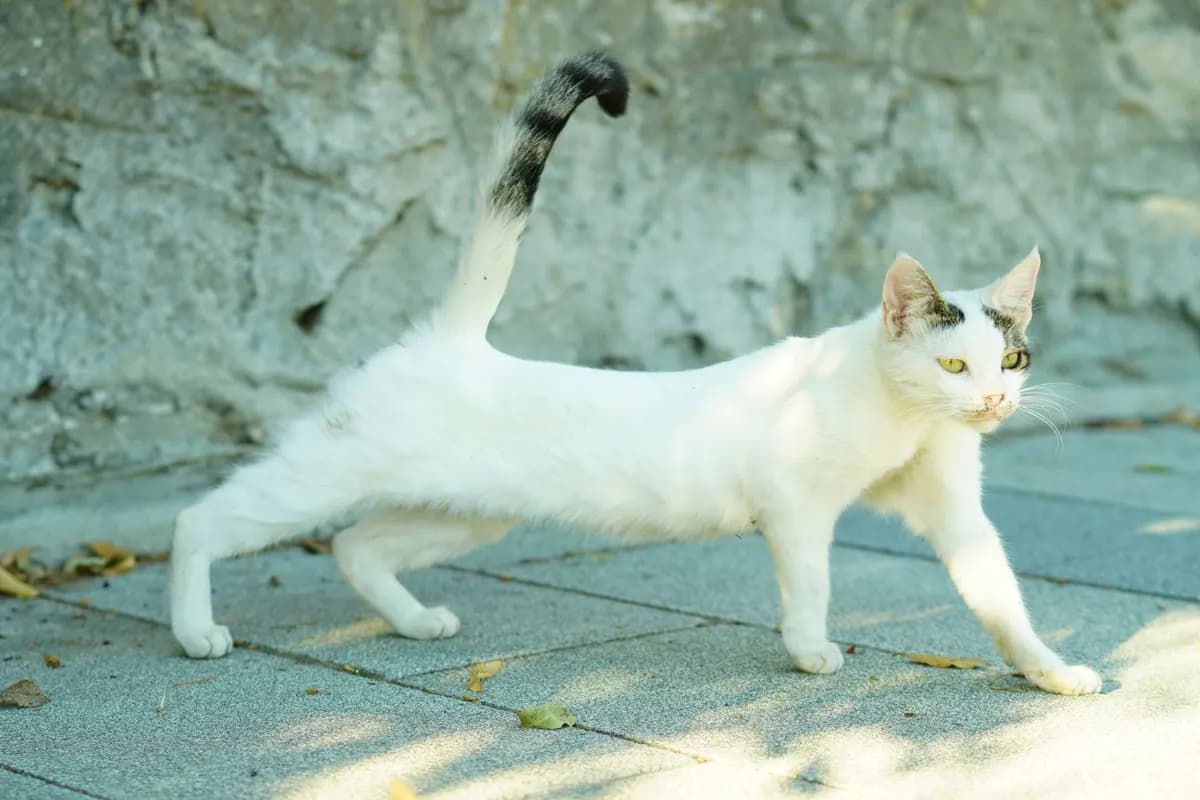
When your cat approaches you with their tail held high and arches their back while rubbing against your legs, they're giving you a friendly greeting. This behavior combines scent marking with a social signal—your cat is happy to see you and wants to share their scent with you. The arch allows them to press more of their body against you, depositing pheromones from glands on their cheeks, chin, and tail.
Fear and defensiveness
The classic "Halloween cat" posture—arched back, fur standing on end, tail puffed out—is a fear response. By arching their back, a cat makes themselves look larger and more intimidating to a potential threat. This is often accompanied by flattened ears, dilated pupils, hissing, or growling. The raised fur (piloerection) makes the cat appear even bigger. This is a clear warning to back off.
Play and excitement
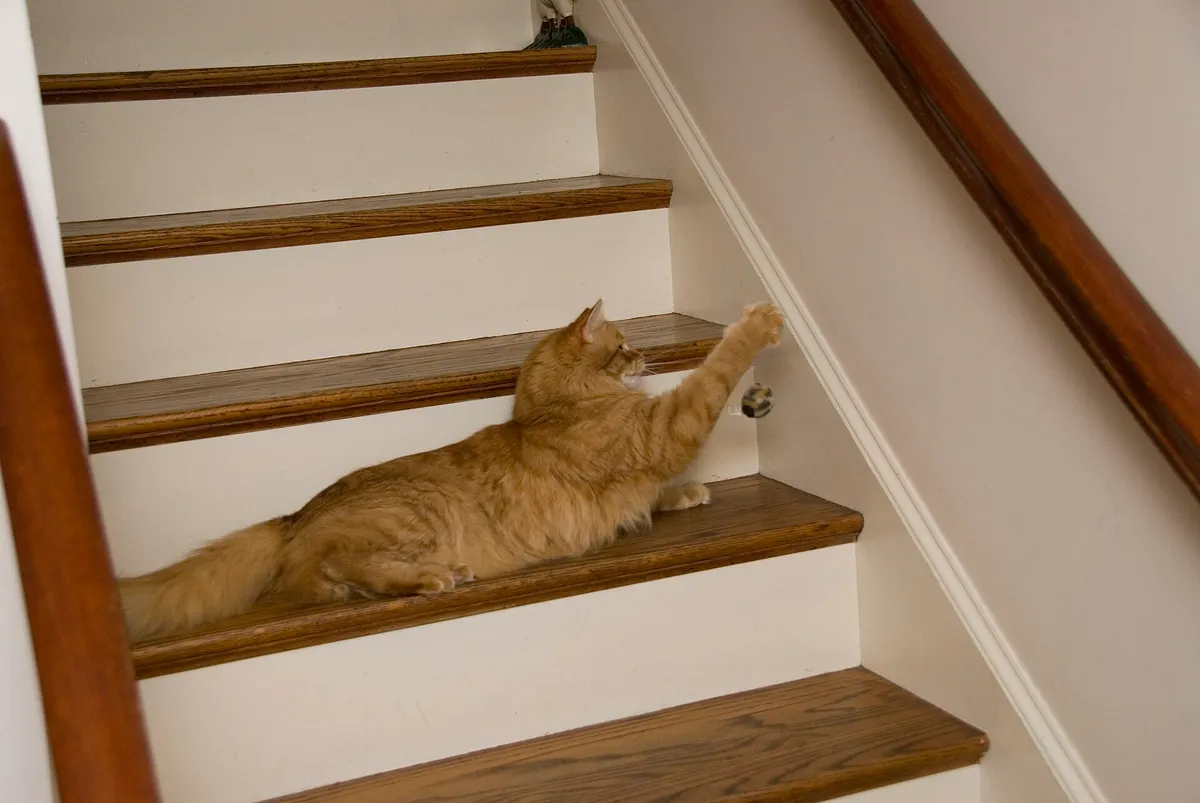
During play, especially with toys or other cats, kittens and even adult cats will arch their backs and hop sideways. This is a playful invitation, often paired with an alert but relaxed expression, ears forward, and a twitching tail. The sideways hop is a classic play move that mimics a defensive posture but is clearly not meant aggressively. If your cat does this while playing, they're having a great time.
Scent marking and communication
Arching can also be part of scent-marking behavior. When a cat rubs against a person, another cat, or an object, they often arch their back to increase contact. This deposits pheromones that mark territory and create a familiar scent environment. It's a social behavior that helps cats feel secure and communicate with others.
Reading the whole body: context is key
An arched back alone doesn't tell you what your cat is feeling. You need to look at the rest of their body language and the situation. Here's what to observe:
- Tail: A tail held high and relaxed indicates confidence and friendliness. A tail puffed out and bristled suggests fear. A tail tucked between the legs signals anxiety. A tail that's lashing or thumping may indicate irritation.
- Ears: Forward and relaxed ears suggest curiosity or contentment. Flattened ears, turned to the sides, or pinned back indicate fear, anger, or stress.
- Eyes: Slow blinks and soft, relaxed eyes mean your cat is comfortable. Dilated pupils can indicate excitement or fear, while narrowed pupils with a hard stare may signal aggression.
- Fur: Raised fur (piloerection) along the back and tail is a sign of arousal, either fear or excitement. Smooth, lying-flat fur indicates a calm state.
- Vocalizations: Hissing, growling, or yowling are obvious warnings. Purring, trills, and chirps are usually positive, but purring can also occur when a cat is stressed.
- Overall posture: A relaxed, fluid arch with soft movements suggests contentment. A stiff, rigid arch with raised fur and a tense body indicates fear or defensiveness.
By combining these signals, you can accurately interpret what your cat is trying to say.
Common arching scenarios and what they mean
The table below summarizes the most frequent situations and how to read them:
| Scenario | Body signals | What it means |
|---|---|---|
| Stretching after a nap | Yawn, relaxed ears, tail low, smooth fur | Waking up, loosening muscles |
| Greeting you at the door | Tail up, ears forward, rubbing against your legs | Happy to see you, scent marking |
| Startled by a noise | Arched back, fur raised, tail puffed, ears flattened | Fear, defensive posture |
| Playful pouncing | Ears forward, tail twitching, playful hops | Invitation to play |
| Being petted | Slight arch, tail up, purring | Enjoying attention, asking for more |
| Pain or discomfort (rare) | Arched back, hunched posture, hiding, loss of appetite | Possible medical issue—consult a vet |
While an arched back is usually a normal behavior, it can occasionally be a sign of pain or discomfort. If your cat arches their back frequently, appears hunched, and also shows signs like hiding, reduced appetite, lethargy, or vocalizing when touched, contact your veterinarian. Never assume an arched back is always harmless—context and other symptoms matter.
How to respond to your cat's arching
The best response depends on the context:
- If your cat is stretching: Let them be. They're just waking up or loosening up.
- If your cat is greeting you: Return the affection with a gentle pet or a soft voice. You can also offer a chin scratch or a slow blink to show you're friendly.
- If your cat is fearful: Give them space. Don't force interaction. Remove the source of stress if possible, and let your cat come to you when they feel safe. Avoid picking them up or cornering them, as this can escalate fear.
- If your cat is playful: Engage in interactive play with a wand toy or a favorite toy. Let them pounce and chase—this is healthy exercise and mental stimulation.
- If your cat arches while being petted: This is usually a sign of enjoyment. Continue what you're doing, but watch for signs of overstimulation, like tail lashing or ears flattening, which mean it's time to stop.
Always approach your cat with calm, predictable movements. Respect their signals and never punish them for expressing natural behaviors.
Frequently Asked Questions
Is arching always a sign of aggression?
No. Arching can be a friendly greeting, a stretch, or a playful move. Aggression is usually accompanied by other signals like hissing, flattened ears, and a stiff, tense body. Context is key—look at the whole picture before assuming your cat is upset.
Why does my cat arch their back when I pet them?
This is often a sign of pleasure. By arching into your hand, your cat is increasing contact and showing they enjoy the attention. It also helps them spread their scent onto you, which is a bonding behavior.
Why do kittens arch their backs?
Kittens arch their backs for the same reasons as adult cats—stretching, playing, or expressing fear. In play, kittens often practice defensive postures as part of learning social skills. It's normal and healthy.
Should I worry if my cat arches their back often?
If your cat arches frequently but seems otherwise healthy, active, and happy, it's likely just a normal behavior. However, if the arching is accompanied by signs of pain—such as reluctance to move, crying out, or changes in eating or litter box habits—consult your vet.
Can I train my cat to arch on command?
Some cats can learn to associate a cue with a behavior, but it's not a common trick. Since arching is often a natural response, you can reinforce it with treats when it happens in a positive context, but it's not necessary for a happy relationship.
Key Takeaway
An arched back is a versatile feline signal that can mean many things. By paying attention to your cat's tail, ears, eyes, fur, and the situation, you can accurately interpret their emotions and respond in a way that builds trust and understanding. Always consider the whole picture, and when in doubt, a calm, gentle approach is best.
Share this guide
Help another cat parent find it.