The short answer
When your cat turns around and presents its rear end to you, it's not being rude or trying to show dominance. In feline body language, this posture is a sign of trust, affection, and greeting. Cats have scent glands located around their tail base and rear, and by presenting this area, they're inviting you to exchange scents—a behavior they use with other cats they feel comfortable with. So next time your cat does this, consider it a compliment: they're treating you like part of their inner circle.
Why cats do this: The scent connection
Cats rely heavily on scent for communication. They have multiple scent glands, including those on their cheeks, paws, and around the tail base. When your cat rubs its head against you, it's marking you with pheromones. When it presents its rear, it's offering you access to its anal glands and the scent-rich area near the tail. This is a vulnerable position for a cat—they're exposing a sensitive part of their body—so doing so in front of you indicates they feel safe and secure.
In multi-cat households, you may observe cats sniffing each other's rear ends as a greeting ritual. This is how they gather information about each other's health, mood, and identity. When your cat does this to you, it's extending the same social courtesy. They're essentially saying, "You're part of my family, and I trust you enough to let you into my personal space."
The scent glands in the anal area produce unique chemical signatures. These pheromones convey a wealth of information, including individual identity, reproductive status, and even emotional state. By allowing you to smell this area, your cat is sharing its "calling card" with you. It's a deeply intimate gesture in the feline world.
Understanding feline scent glands
Cats are equipped with several scent glands that play a role in communication. These glands produce pheromones—chemical signals that carry messages to other cats. Here are the primary scent glands and their locations:
| Gland Location | Common Name | Function |
|---|---|---|
| Cheeks and chin | Facial glands | Marking objects and people by rubbing |
| Paw pads | Paw glands | Leaving scent marks when scratching |
| Tail base | Tail glands | Producing a strong scent, often involved in rear presentation |
| Anal area | Anal glands | Emitting individual-specific pheromones |
| Forehead | Temporal glands | Used in bunting (head-butting) |
When your cat rubs its head on you, it's depositing facial pheromones. When it presents its rear, it's offering access to the tail and anal glands. Each type of scent serves a different purpose, but all are part of your cat's social toolkit.
Tail position and body language
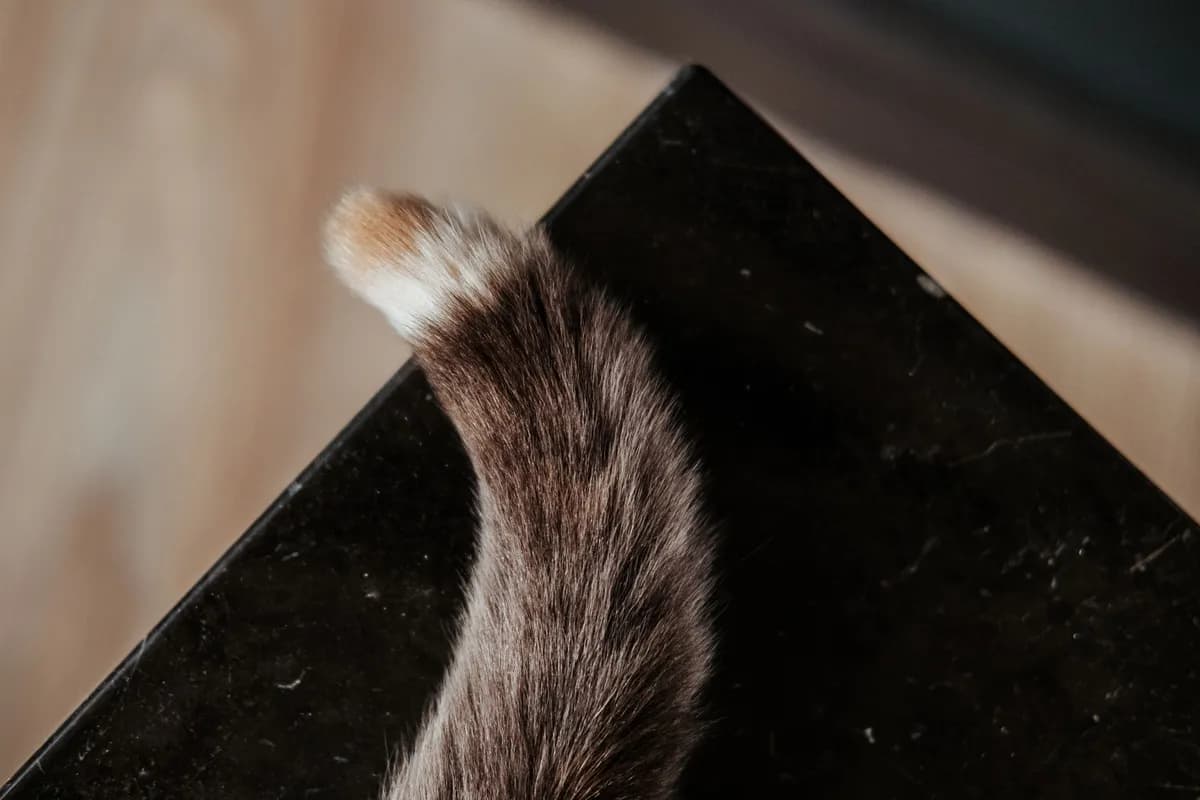
The way a cat holds its tail while presenting its rear can tell you a lot about its emotional state. A tail held high and upright is a friendly, confident signal. When combined with rear presentation, it's a clear invitation to interact. If the tail is quivering slightly, it might indicate excitement or anticipation. On the other hand, if the tail is puffed up or held low, that's a sign of fear or aggression, and you should give your cat space.
Here's a quick reference to common tail positions and what they typically mean:
| Tail Position | Likely Meaning |
|---|---|
| High and upright | Confident, friendly, open to interaction |
| High with a slight curve at the tip | Relaxed, content |
| Quivering while raised | Excited, happy to see you |
| Tucked between legs | Fearful, anxious |
| Puffed up (hackles raised) | Frightened or defensive |
| Lashing side to side | Agitated or overstimulated |
Remember, tail language is just one part of the puzzle. Always consider the whole body—ears, eyes, posture—to understand what your cat is really saying.
When your cat presents its rear: What to do
If your cat offers you its rear, the best response is to acknowledge the greeting without overreacting. You can gently stroke its back or offer a finger for it to sniff. Some cats appreciate a light scratch near the base of the tail, but be cautious—this area is sensitive, and some cats may not enjoy it. Watch for signs of enjoyment, like purring or leaning into your touch, versus signs of irritation, like tail flicking or moving away.
It's also important to respect your cat's boundaries. If your cat presents its rear but then walks away, it might just be a quick greeting. Don't chase after it or force interaction. Let your cat set the pace.
While presenting the rear is normal, if your cat suddenly starts doing this excessively, or if you notice redness, swelling, or discharge around the anal area, it could indicate a medical issue. Consult your veterinarian if you have any concerns.
The role of trust and social bonding
Cats are often perceived as aloof, but they form strong social bonds with their human companions. Presenting the rear is one way they demonstrate that bond. In the wild, cats are solitary hunters, but domestic cats have adapted to live in social groups, often with humans and other cats. Within these groups, they use scent communication to maintain harmony and recognize one another.
When your cat presents its rear, it's essentially saying, "I know you, and I trust you." This behavior is more likely to occur when your cat is relaxed and in a familiar environment. If your cat is stressed or in an unfamiliar place, it may be less likely to engage in this type of greeting.
Common misconceptions
Some people interpret rear presentation as a sign of disrespect or as an attempt to "show off." However, feline behavior is not driven by human concepts of politeness or rudeness. Cats don't have a concept of "butt" as we do. Instead, they're following their natural instincts for scent exchange and social bonding.
Another misconception is that this behavior is always a request for grooming. While some cats may enjoy being groomed around the tail area, not all do. It's more accurate to view this as a general invitation to interact, not a specific request for a particular action.
Frequently Asked Questions
Is my cat showing me its butt a sign of dominance?
No. Dominance is not a typical concept in cat-human relationships. Cats don't view humans as rivals in a hierarchy. Presenting the rear is more about trust and social bonding than about asserting authority.
Why does my cat do this when I come home?
When you arrive, your cat is greeting you. It's a way of checking in and exchanging scents. You bring new smells from outside, and your cat wants to update its information about you.
Should I let my cat do this?
Absolutely. It's a normal part of feline communication. Encouraging it by responding calmly can strengthen your bond. Just make sure you're not forcing your cat into the position—let it come to you.
What if my cat doesn't do this?
Not all cats are equally demonstrative. Some cats may show trust in other ways, like rubbing their head on you or sleeping near you. Lack of rear presentation doesn't mean your cat doesn't trust you—it's just one of many behaviors.
Key Takeaway
When your cat presents its rear, it's offering you a compliment. This behavior is rooted in feline scent communication and social bonding. By understanding what your cat is trying to say, you can respond in ways that deepen your relationship. So next time you get a rear view, take it as a sign that your cat considers you family.
Share this guide
Help another cat parent find it.