The short answer
Cats are territorial animals who rely on familiar scents, predictable routines, and safe hiding spots to feel secure. A move strips away all three at once, which is why even confident cats may hide, yowl, or skip a meal for a day or two. The short answer to moving with a cat is to treat the move as a slow, predictable process rather than one chaotic day: get your cat comfortable with her carrier weeks ahead, confine her to one quiet room while the house is being emptied, travel with her secured in a carrier, and set up a “base camp” room in the new home so she can decompress before exploring the rest. With planning and patience, most cats adapt within a week or two.
Why moving is hard for cats
Cats bond to a place through scent. When they rub their cheeks on furniture, scratch, and use their litter box, they leave pheromone messages that say “this is home and it is safe.” Packing up the house means packing away those scent markers and the security they provide.
The new house poses the opposite problem: it smells foreign, as if an unknown cat already owns it. Add the noise of moving boxes, strangers walking through, and the disappearance of her favorite nap spot, and the move registers as a threat.
Routine matters, too. Cats anchor their days around meal times, play, and litter box placement. Keeping those anchors steady is one of the kindest things you can do during a move.
Before moving day: build a calm foundation
Start preparing three to four weeks before moving day; this will matter more than anything you do on the day itself.
Carrier training first. If your cat only sees the carrier on moving day, she will read it as a trap. Leave it out with the door taped open and a soft towel inside. Toss treats and toys into it so she starts napping there voluntarily. Once she is relaxed inside, close the door for a few minutes at a time and gradually build up.
Keep the routine steady. As boxes pile up, keep feeding, playtime, and litter scooping on schedule. Predictability is your cat’s emotional anchor while everything else changes.
Designate a “cat room.” Choose a quiet bedroom or bathroom that stays off-limits to packing chaos. This is where your cat will spend moving day.
Update identification. Make sure the microchip registration has your new address and a working phone number, and put a tag on a breakaway collar. Keep the collar on throughout the move.
Gather vet records. If you are changing areas, ask your current clinic for a copy of her medical history so you can register with a new veterinarian without scrambling. If you want to try a synthetic pheromone diffuser, start using it in her favorite room about a week before the move and bring it with you to the new house so the scent travels with her.
A moving timeline at a glance
| When | What to do |
|---|---|
| 3–4 weeks before | Start carrier training; update microchip and collar tag; request vet records |
| 2 weeks before | Set up the base camp room; stock litter, food, and water bowls; start a pheromone diffuser if you plan to use one |
| 1 week before | Close off the cat room; keep her bedding, food, water, and litter there; pack everything else |
| Moving day | Feed her early; confine her in the cat room with a “do not enter” sign; carry her to the car last, in her carrier |
| Arrival | Set up base camp first; carry the carrier in, close the door, then open the carrier and let her emerge on her own |
| First 1–2 weeks | Keep her indoors; expand her space room by room; keep litter, food, and water in consistent spots |
Moving day: safety first
Moving day is the highest-risk moment: doors are open, strangers are coming and going, and escape routes appear out of nowhere.
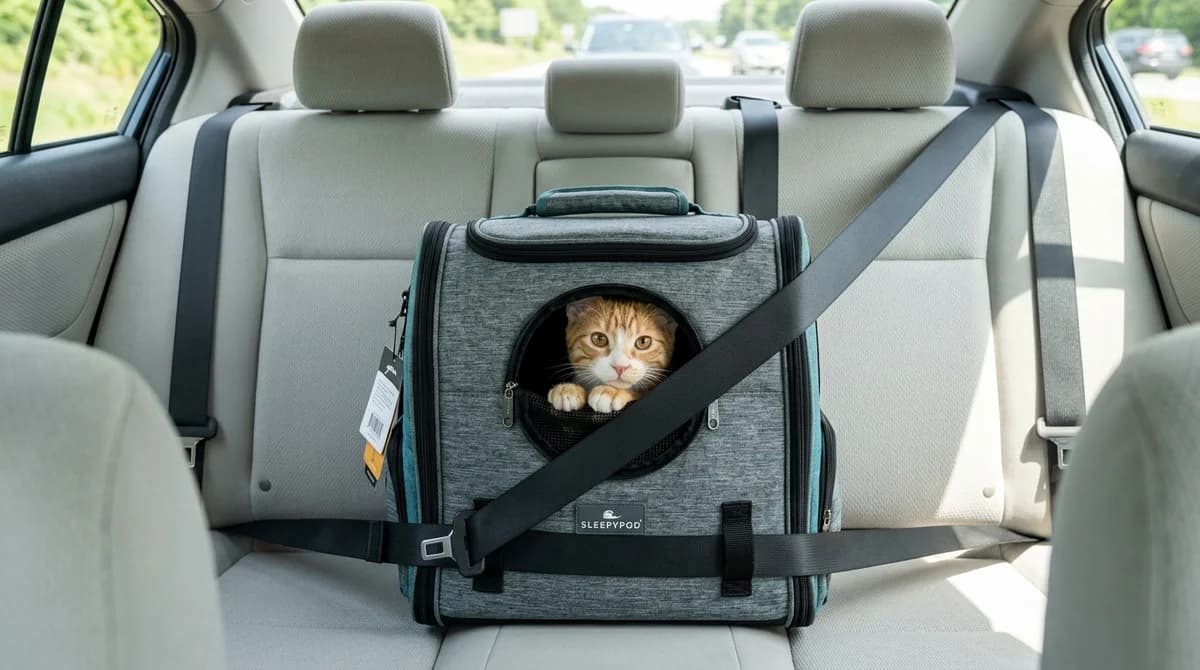
Never let your cat loose in the house on moving day. Close her in a small room with a clear sign on the door that reads “Cat inside — do not enter.” Do not open the carrier until the movers have gone. In the car, secure the carrier with a seatbelt and never open it while the vehicle is moving — a panicked cat loose in a car is dangerous for everyone. At the new house, carry the carrier straight into the base camp room and shut the door behind you before opening it.
Cover the carrier with a thin towel so your cat can’t watch the world rush by, keep the car temperature comfortable, and speak in a low, calm voice. If she is extremely anxious, talk to your veterinarian well before moving day about whether prescription anti-anxiety medication is appropriate for the trip. Never give a cat any human or over-the-counter medication, and never medicate last-minute without veterinary guidance.
Settling in: the base camp method
The most reliable way to help a cat adjust is to shrink the new territory down to one room first.
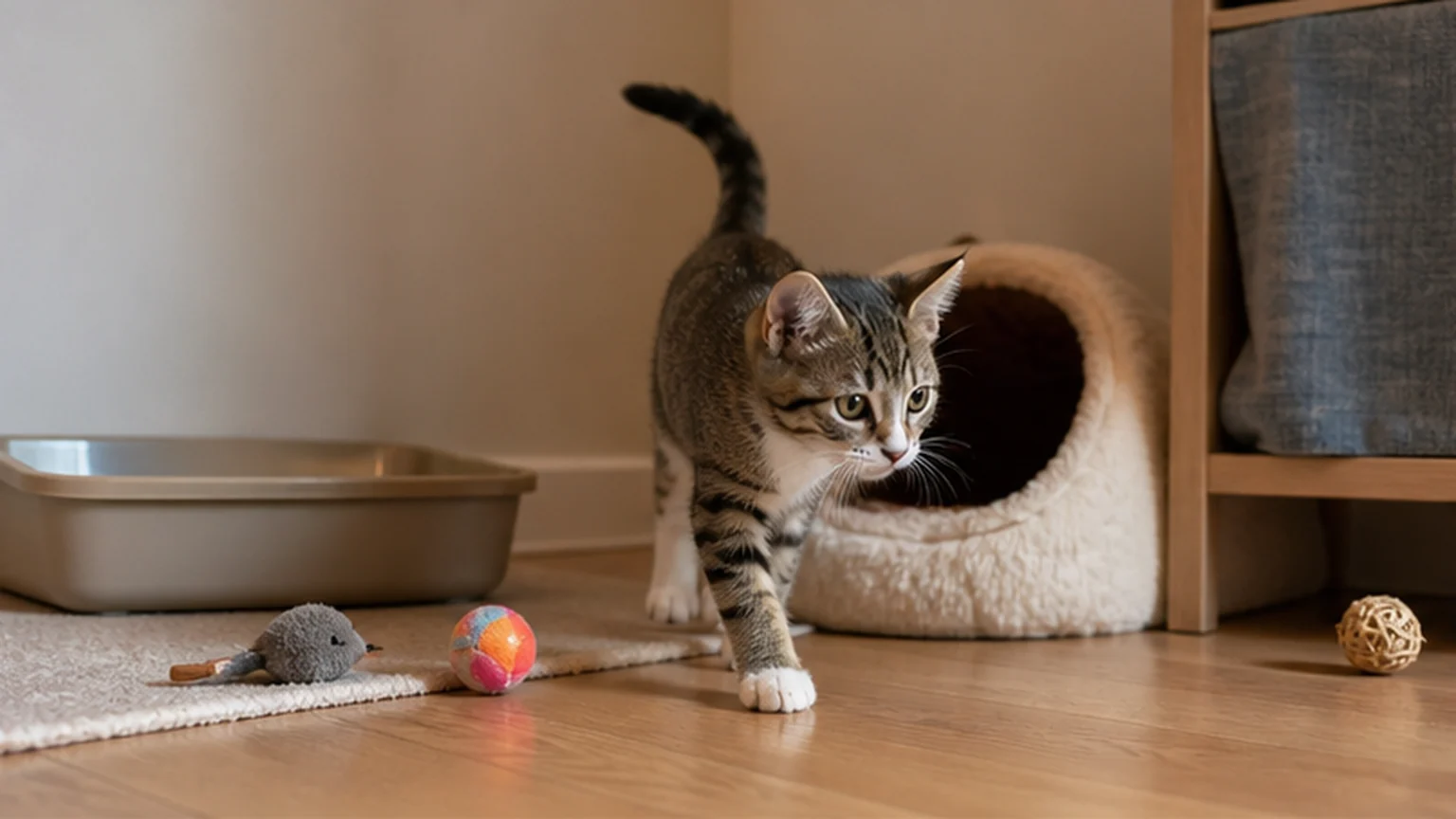
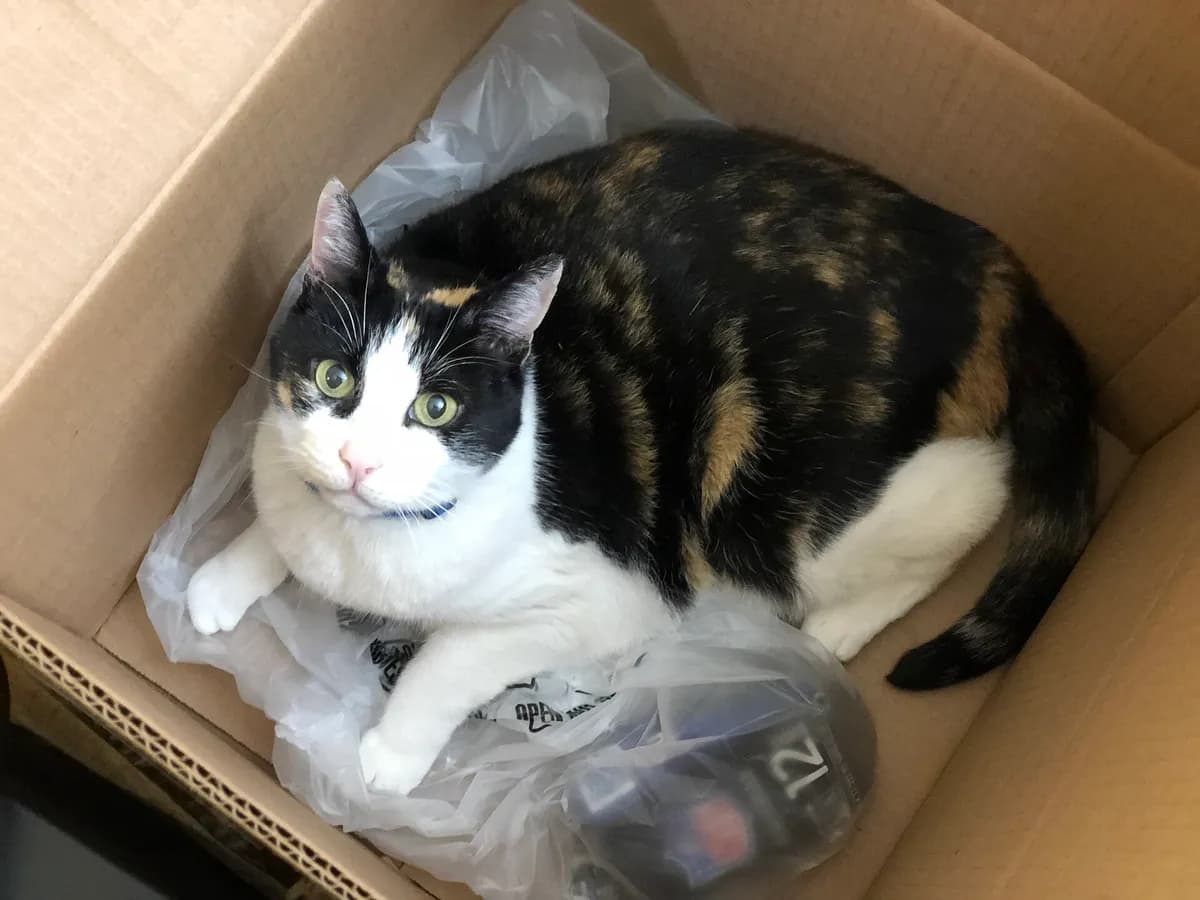
Pick a quiet room — a bedroom or spare room — and set it up before she arrives: litter box in a quiet corner, food and water away from the litter, a scratching post, and at least one hiding spot such as a cardboard box. Add her old, unwashed bedding and toys; the familiar smells will comfort her more than any new purchase.
Carry the carrier in, close the door, and open the carrier door. Do not pull her out. Many cats stay hidden in the carrier for hours before creeping out to investigate. It is tempting to scoop her up for a cuddle when she finally appears, but let her make the first move — cats who feel they control their own pace settle faster. Sit quietly nearby so she can smell you and register that you, at least, are safe. For the first day, put food, water, and litter near wherever she hides, then gradually move them to permanent spots.
After a few days — when she is eating, using the litter box, and exploring the room — open the door and let her visit one extra room at a time, supervised. Add vertical space like cat trees or shelves, since height helps cats feel in control of unfamiliar places. Keep food, water, and litter in consistent locations.
Keep her indoors for at least two to three weeks. Cats have been known to try to return to a former home after a move, and traffic, unfamiliar animals, and getting lost are real risks. The longer she is fully inside, the stronger her new scent map becomes.
Recognizing stress signals
Some stress is normal. Watch for hiding, loss of appetite, over-grooming, urinating outside the litter box, excessive meowing, flattened ears, tucked tail, or dilated pupils. Most signs ease within a week as she builds a new sense of territory. Give her space, keep routines steady, and offer gentle play once she emerges.
Call your veterinarian if your cat goes more than 24 hours without eating, develops vomiting or diarrhea, grooms fur down to the skin, or seems unusually lethargic — a health issue may be involved, not just stress.
Frequently Asked Questions
How long does it take a cat to settle in after a move?
Most cats are eating and exploring within two to three days and settle into the new routine within one to two weeks. Shy or elderly cats can take longer. Judge progress by your cat’s behavior, not the calendar.
Should I keep my cat indoors after moving?
Yes. Keep her fully indoors for at least two to three weeks. Formerly indoor cats should stay indoors permanently; if she has outdoor access, reintroduce it gradually and only once she is clearly comfortable inside.
Is it better to board my cat on moving day?
It depends. Boarding removes moving-day chaos but adds a strange facility with unfamiliar smells. For most cats, a quiet room at home with a familiar person is less stressful. If your cat panics at noise and activity, a familiar cattery may be kinder. Ask your veterinarian for a recommendation.
Do calming products help?
Some owners find synthetic pheromone diffusers helpful; they mimic the facial pheromones cats use to mark safe territory. Results vary, and they are not a substitute for good preparation. For severely anxious cats, discuss options with your veterinarian well in advance.
What if my cat hides and won’t come out?
Hiding is a normal stress response, not rejection. Leave food, water, and a litter box near the hiding spot and let her emerge on her own. Sit nearby quietly and avoid pulling her out, which can deepen her fear.
Key Takeaway
A stress-free move is not about eliminating stress — some unsettled behavior is expected. It is about layering safety and predictability: a familiar carrier, a closed room during chaos, a secure car ride, and a slow introduction to new territory. Keep routines steady, keep your cat indoors until the new house becomes home, and give her time. Most cats will adapt within a couple of weeks.
Share this guide
Help another cat parent find it.